
Reasons Helio Castroneves Supports Guaranteed Entries for the Indy 500
WALT KUHN 2024 via IndyCar
The most significant car news and reviews, no nonsense.
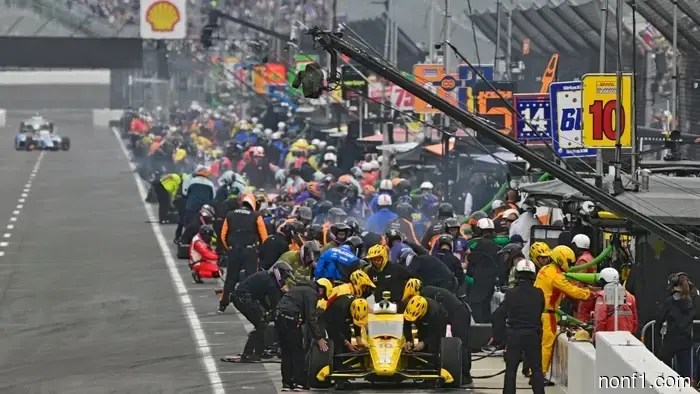
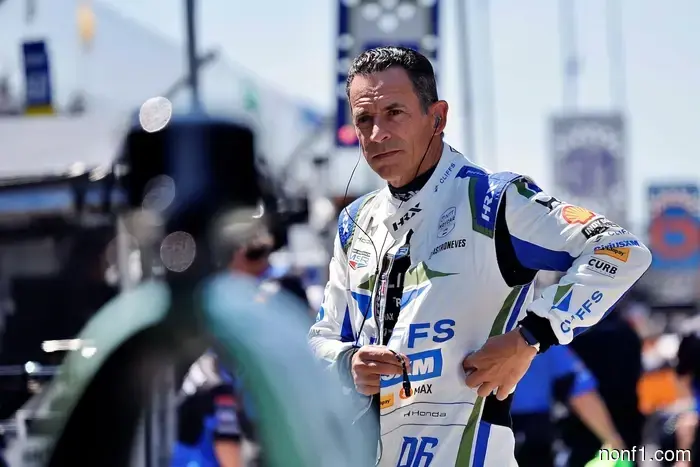
The notion of ensuring certain cars a place in the Indianapolis 500 has never been favored by racing fans, yet four-time winner and team co-owner Helio Castroneves advocates for granting chartered cars guaranteed entry into the Greatest Spectacle in Racing.
Castroneves believes that the concept of "guaranteed entries" holds business value, especially now that IndyCar has adopted a charter or franchise system that allows teams to build value beyond their physical assets. A similar initiative in NASCAR has led to skyrocketing valuations.
IndyCar
“When you have the franchise, it enhances the team's valuation,” Castroneves explained to select media ahead of the 2026 Indy 500. “It’s not just the toolbox or the shop or the truck anymore; it’s much more than that.
“I think we’ll improve further, akin to what NASCAR does for the Daytona 500, where every franchise has the right to compete. This would be significant as it adds even more value for the teams throughout the entire season. It makes sense.”
For many years, race teams were valued only by their assets. If a team folded or an owner decided to sell, the team itself held no value; it was the race shop, equipment, cars, and intellectual property that mattered—and that worth was limited, as nobody pays top prices for used gear.
To counter this, NASCAR and later IndyCar introduced a "charter system." Essentially, a charter guarantees the right to race and a set earnings amount from television deals. The right to race is intrinsically valuable, allowing NASCAR teams to sell these charters to interested buyers without needing to shut down or sell other resources. Limiting the number of entrants also allows the series to create demand, further increasing charter value.
However, the right to compete is only as valuable as the events you can enter, and the Indianapolis 500 is arguably the most prestigious race globally.
Initially, the right to compete in the Indianapolis 500 was excluded from IndyCar's charter agreement due to the controversial nature of guaranteed entries for many fans, which evokes memories of the "25/8" rule introduced during one of the sport's most divisive periods.
Chris Owens via IndyCar
In 1996, track officials declared that, out of the 33-car starting field, 25 entries would be guaranteed for participants from the Indy Racing League — the racing series owned by the same entity as the Indianapolis Motor Speedway. This left teams from the rival Championship Auto Racing Teams series to vie for the remaining eight spots on the starting grid. The ruling was so contentious that CART boycotted the Indianapolis 500 that year, opting instead to host a competing event, the US 500, at Michigan International Speedway. This decision harmed the credibility of both series and deepened the divide between rival factions in American open-wheel racing, leading to the notion of a guaranteed entry at the Speedway becoming a sensitive topic.
However, the scenario in IndyCar today is considerably different from 30 years ago. Back when two rival series were battling for position, the 25/8 rule seemed intentionally designed to slight CART for its departure. In the 2026 Indianapolis 500, exactly 33 cars qualified—meaning there was no need for “bumping” or for racers to compete for a starting position.
Still, the proposition of guaranteeing entries for chartered teams does not sit well with many fans, who value the suspense of the possibility that a legendary team or top driver could unexpectedly fail to qualify for the world's most significant race. For instance, in 1995, Team Penske—the most successful team in Indianapolis history—did not qualify for the race, marking one of the largest surprises in motorsport history. Fans argue that the absence of a guarantee is crucial to the 500’s allure.
Nevertheless, Castroneves was clear in the roundtable discussion: from the perspective of team ownership, guaranteed entries at the Indy 500 strengthen the financial viability underpinning the charter system, thereby enabling both the teams and the series as a whole to increase their value. While it may not resonate with fans, it clearly makes sense for those competing in IndyCar.
Have a tip? Email us at tips@thedrive.com.
Other articles
 Enjoy a 40% discount on the S1 Compact Tire Inflator and keep backup air conveniently with you.
The Etenwolf S1 is an ideal emergency tire inflator for cars, bicycles, sports balls, and other inflatable items. Compact enough to fit in a backpack, it is powerful enough to inflate 17 tires on one charge.
Enjoy a 40% discount on the S1 Compact Tire Inflator and keep backup air conveniently with you.
The Etenwolf S1 is an ideal emergency tire inflator for cars, bicycles, sports balls, and other inflatable items. Compact enough to fit in a backpack, it is powerful enough to inflate 17 tires on one charge.
 Federal Authorities Are Finally Considering Treating Truck Drivers As Humans by Ensuring They Have Access to Restroom Facilities.
A transportation bill presently under consideration in Congress contains measures aimed at improving conditions for truck drivers.
Federal Authorities Are Finally Considering Treating Truck Drivers As Humans by Ensuring They Have Access to Restroom Facilities.
A transportation bill presently under consideration in Congress contains measures aimed at improving conditions for truck drivers.
 No V8, No Deal: 40% of Pickup Buyers Are Unwilling to Consider a Brand Lacking One, According to Stellantis CEO
Ram reintroduced the Hemi ahead of Dodge for a specific reason. According to the CEO, purchasing one isn't necessary — the important thing is to be aware that it's available.
No V8, No Deal: 40% of Pickup Buyers Are Unwilling to Consider a Brand Lacking One, According to Stellantis CEO
Ram reintroduced the Hemi ahead of Dodge for a specific reason. According to the CEO, purchasing one isn't necessary — the important thing is to be aware that it's available.
 Ram Abandons Auto-Stop/Start and Mild Hybrid Features for Basic Muscle Trucks
It's not particularly surprising that Ram trucks are among the first to adopt the ending of start/stop technology requirements.
Ram Abandons Auto-Stop/Start and Mild Hybrid Features for Basic Muscle Trucks
It's not particularly surprising that Ram trucks are among the first to adopt the ending of start/stop technology requirements.
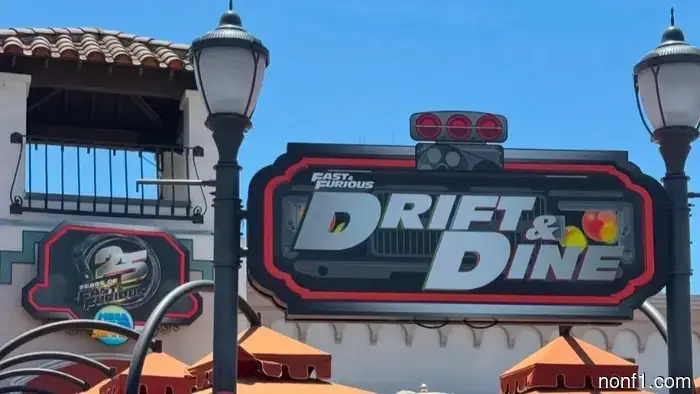 When You're Here, You're Part of the Family: Universal Studios is Launching a Fast and Furious Restaurant
When "Fast & Furious Drift & Dine" launches at Universal Studios in Los Angeles, Olive Garden will need to come up with a new tagline.
When You're Here, You're Part of the Family: Universal Studios is Launching a Fast and Furious Restaurant
When "Fast & Furious Drift & Dine" launches at Universal Studios in Los Angeles, Olive Garden will need to come up with a new tagline.
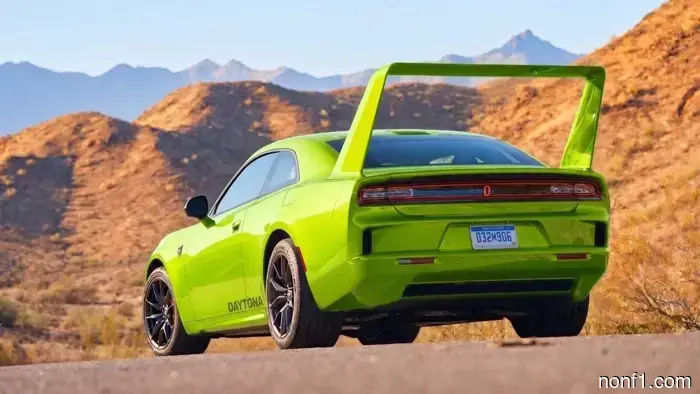 The new Dodge Charger SRT features a wing reminiscent of the Superbird era, giving it an appearance that's ready for takeoff.
Dodge presented reporters with an updated version of the Charger and the Charger SRT, the latter featuring a large rear wing, a hood scoop, and amber LED daytime running lights — the details of what’s under the hood remain a mystery.
The new Dodge Charger SRT features a wing reminiscent of the Superbird era, giving it an appearance that's ready for takeoff.
Dodge presented reporters with an updated version of the Charger and the Charger SRT, the latter featuring a large rear wing, a hood scoop, and amber LED daytime running lights — the details of what’s under the hood remain a mystery.
Reasons Helio Castroneves Supports Guaranteed Entries for the Indy 500
For many years, teams have been valued solely based on their assets. The four-time Indy 500 champion who has transitioned into a team owner now aims to draw inspiration from NASCAR.