
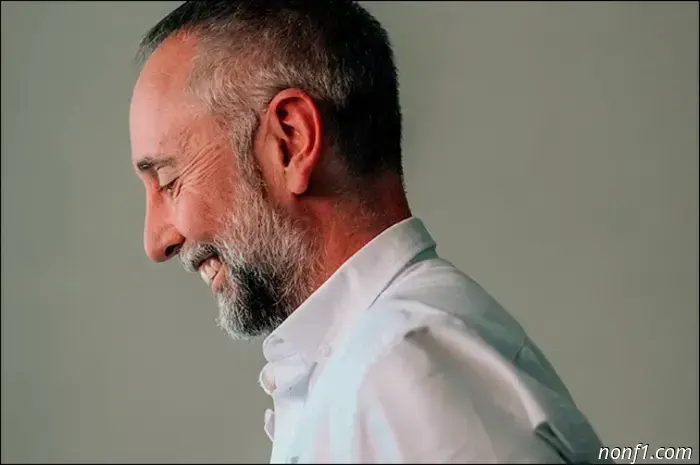
Enrico Cardile: We'll succeed in 2026!
In an interview with the press office journalists, Aston Martin’s new technical director Enrico Cardile spoke about leaving Ferrari, his vision for the future, and the team’s prospects in 2026…
Question: Enrico, can you describe the duties of a technical director? What do they include? What does your typical workday look like?
Enrico Cardile: Describing my duties isn’t difficult. I am fully responsible for the development of the car. That includes all activities related to its design and the development of the tools needed to improve its performance – from the initial concept to realization in material through work in the wind tunnel and CFD.
Describing the day-to-day is harder, because there is absolutely no routine. In that respect I’m lucky. Throughout the working week I take part in discussions and see how various projects develop and progress. It’s very interesting, dynamic, and I enjoy it. It never repeats itself and is absolutely engaging. I get paid to do what I’m passionate about, so, as I said, I’m a lucky man.
Question: The team has gathered many well-known technical specialists. How is work organised so that people don’t get in each other’s way?
Enrico Cardile: We don’t have a problem with that. If anything, the problem is the opposite: finding the best way to cooperate and combine efforts. That is key for us—and for any Formula 1 team: the exchange of information, creating something that is greater than the sum of the parts.
There’s no issue with all these good engineers being in the same building and working together. Everyone has a clear scope of responsibilities, and people don’t try to do each other’s work. We need to properly organise integration to avoid misunderstandings that lead to wasted time and reduced productivity.
There is enormous engineering talent in the team. For me, the principle is that when I’m in a briefing, I should not be the expert. If I am, something is wrong. The people I talk to—specialists—should be the best in their field. Rather than providing them with solutions on demand, I should use their skills, knowledge and experience.
Question: What is your role in those briefings?
Enrico Cardile: I see the picture as a whole. I bring my vision of how work should be organised, I bring clarity, and I’m responsible for decision-making. If I do my job properly, my task is to ask the right questions at the right time and make the appropriate decision.
Question: Are you the sort of person who needs all the information before making a decision? Do you ever rely on intuition?
Enrico Cardile: I’m fairly balanced in that regard. I’m not afraid to make decisions and I don’t need 100% of the information. In a Formula 1 team you sometimes have to make a decision based on available information… and then continue working on the problem. If in a week or two, thanks to additional information and analysis, we find that the decision was wrong, I’ll change course without problems.
Ultimately, the main thing is to win. It’s not about who was right or who was wrong. There’s nothing wrong with changing your mind and altering direction. We must remember the end goal: it’s not about who was right or who was wrong at the start, but who won in the end.
Question: Will we see you at races this year?
Enrico Cardile: I don’t plan to attend races this year. There’s a lot of work at the Aston Martin Technology Campus, and I’m fully focused on developing the 2026 car. But next year I will be coming to races.
Question: What can you say about the Aston Martin Technology Campus?
Enrico Cardile: The first time I saw the CoreWeave wind tunnel, I was impressed. It’s a true piece of engineering art, as are many of the facilities.
This technology campus has enormous potential that needs to be exploited, but to get the most out of these facilities a lot of work must be done. But that’s solvable. There are dedicated people working here with a clear plan and clear priorities, moving forward step by step, which will allow us to get better this week than we did last week.
Question: Did you move to England?
Enrico Cardile: Yes. I want to be fully focused on the job so that nothing distracts me. I now live in England; my wife spends two thirds of her time here and one third in Italy, but she will soon be here full time too. I couldn’t concentrate on the job if my life were split between Italy and England.
I decided to join Aston Martin and move to the UK because it’s an amazing project with incredible commitment and a strong will to win from the owner. You can look at the Technology Campus and see the energy and dedication that Lawrence Stroll puts into this project. I fell in love with his determination, his vision—and with the Technology Campus he built to bring it to life.
Question: Italians rarely leave Ferrari. Your entire career until now was connected to the Scuderia. What surprised you when you moved to Aston Martin?
Enrico Cardile: There is a difference in culture. The goals are the same: everyone is focused on winning, but Ferrari has a very long history, with established processes and tools. Here we are building everything anew. We have a new CoreWeave wind tunnel, a new simulator, and we need to learn how to fully exploit the potential of these tools. We need to organise processes for our way of working while avoiding unnecessary expense.
Right at the beginning I told the team: we need to find our identity and use our vision to shape the organisation so it works the way we want. You can take inspiration from other sources, but you shouldn’t copy what is done elsewhere.
We need to create something based on our strengths and capable of covering our weaknesses. We want to be a benchmark, not a clone of an existing benchmark. You can’t just copy what someone else does, however successful they might be—independent success won’t come that way.
It’s work that progresses step by step. I have a clear vision and a clear plan, agreed with Andy Cowell, Adrian Newey and Lawrence Stroll.
Question: Other members of the technical leadership came from other teams. Does that bring a fresh perspective?
Enrico Cardile: I don’t know whether it’s “fresh,” but it will inevitably be different. Whenever a new person joins an organisation, at any level, they bring a different approach based on positive experiences gained elsewhere. The organisation’s task is to understand these approaches and choose those that can improve our work. It’s a dynamic process, but it always enriches the team.
Question: You mentioned team principal Andy Cowell and managing technical partner Adrian Newey. How is the structure arranged? Who do you report to?
Enrico Cardile: I report to both. To one or the other, depending on aspects of the work, but both are my bosses. Again, I’m a lucky man. It’s an amazing team, and I’m surrounded by special people.
Question: Andy Cowell wants to see the team as a “creative, chaotic machine of innovation.” What do you think of that slogan?
Enrico Cardile: We must become a benchmark, do things differently from other teams, and that requires an innovative approach. This process will be accompanied by some chaos, and we must manage the chaos, because it will bring more positives and innovations than if we were an extremely structured, rigid organisation.
This approach is more stimulating. We will never be satisfied—once something works, we will already be looking for what’s next. We will motivate people—in a positive sense—and set ambitious goals. We will support our employees and stay close to them, working hard to understand what they face and to figure out what the organisation can do to solve those problems.
The idea is that no one will be left without help, and that complex tasks are not problems someone must solve alone, but problems that the organisation must solve. We must become one big family to achieve results.
Question: 2026, with the switch to new aerodynamic regulations and new power units, will be a year of huge change in Formula 1. How does your philosophy fit into this project?
Enrico Cardile: Much will change. The aerodynamic concept is completely changing, and weight reduction of the cars will become a serious challenge for everyone. There will be a new power unit, new fuel. Many variables make it very difficult to assess the possible pecking order.
We have clear goals we want to achieve, and we are working hard to study all possible options. It’s an interesting challenge. Partly it’s about understanding what we can risk. There are development directions that won’t bring positive results immediately but can help achieve the overall goal.
It must be understood that this project won’t end with the arrival of the new car next year. Of course we want to have a fast car at the start of 2026, and we are now trying to make the most of the remaining time, but it’s also a long-term project. We are working on organising how we work, improving our tools, refining our processes, and changing how people interact when working together. In short, we are working on the team’s culture.
Question: What do you feel when you think about the new era in Formula 1?
Enrico Cardile: Excitement. Not only because of our car. I’m eager to see the other ten cars, look at the results, and assess our form. It will be interesting.
But it’s interesting now too. Because we don’t know where we will end up, nothing we do now can be sufficient. We can’t be content with good wind tunnel results or the achieved weight reduction of the car, because we don’t have a reference point. That is true at any time, but especially true at the start of a new era. In recent years everyone saw the gaps and knew what needed to be achieved to be in a better position. For next year, nothing is known.
In 2026 we will succeed. I don’t know whether we will do it in the first race, the second, the seventh or another one. We have determination and confidence that everything will be fine. We have everything necessary to do excellent work. Failure is not an option for us!

Other articles
 Sainz listed the fastest Formula 1 drivers.
Carlos Sainz named the drivers he considers the fastest in 2025.
Sainz listed the fastest Formula 1 drivers.
Carlos Sainz named the drivers he considers the fastest in 2025.
 A former Formula 1 driver had his driving license suspended for six months.
Former Formula 1 driver Mark Blundell was banned from driving for six months for speeding.
A former Formula 1 driver had his driving license suspended for six months.
Former Formula 1 driver Mark Blundell was banned from driving for six months for speeding.
 Toto Wolff: It's not as interesting without a villain.
In an interview with Sport Bild, Wolff was asked whether he misses Christian Horner, who left the paddock...
Toto Wolff: It's not as interesting without a villain.
In an interview with Sport Bild, Wolff was asked whether he misses Christian Horner, who left the paddock...
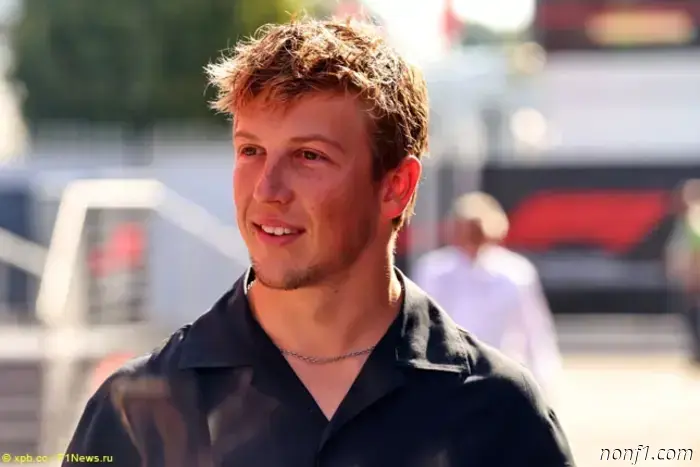 Lawson: Children should know that dreams come true.
Liam Lawson's path to Formula 1 was not easy. He was born in New Zealand and moved to Europe at a young age, but he achieved his goal and hopes others will follow him...
Lawson: Children should know that dreams come true.
Liam Lawson's path to Formula 1 was not easy. He was born in New Zealand and moved to Europe at a young age, but he achieved his goal and hopes others will follow him...
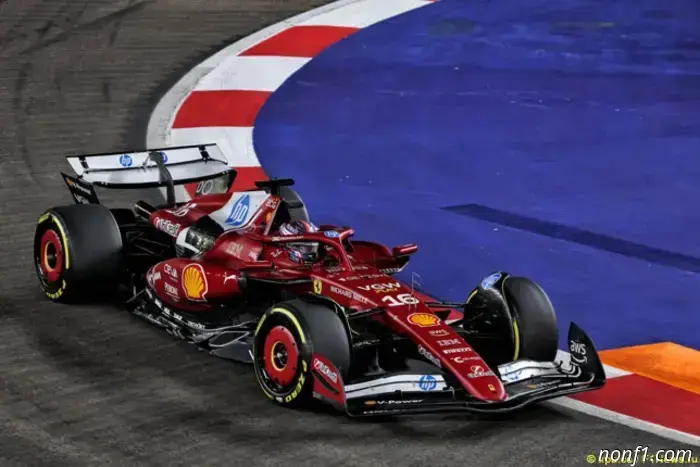 Leclerc does not expect Ferrari to make progress until the end of the year.
Charles Leclerc finished sixth in Singapore and delivered a bleak outlook for Ferrari fans.
Leclerc does not expect Ferrari to make progress until the end of the year.
Charles Leclerc finished sixth in Singapore and delivered a bleak outlook for Ferrari fans.
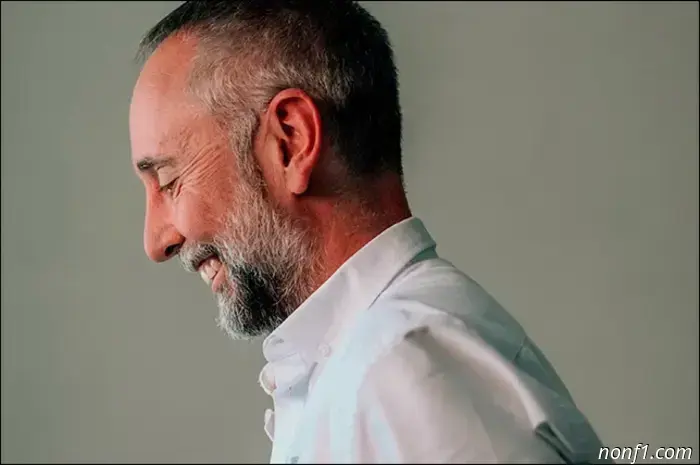 Kalle Rovanperä is moving from rallying to circuit racing.
Two-time World Rally Champion Kalle Rovanperä will end his rally career at the end of the season to compete in circuit racing. The Finnish driver will make his Super Formula debut in 2026 and plans to move to Formula 2 in 2027.
Kalle Rovanperä is moving from rallying to circuit racing.
Two-time World Rally Champion Kalle Rovanperä will end his rally career at the end of the season to compete in circuit racing. The Finnish driver will make his Super Formula debut in 2026 and plans to move to Formula 2 in 2027.
Enrico Cardile: We'll succeed in 2026!
A major interview with Aston Martin's new technical director Enrico Cardile…