

Comunicado de la FIA sobre los insultos dirigidos a Antonelli
Tras el final de la carrera en Catar, en Mercedes registraron más de 1100 mensajes ofensivos dirigidos a Kimi Antonelli, incluidas amenazas de muerte, a raíz de la situación en las últimas vueltas, cuando Lando Norris adelantó al joven italiano. La FIA no pudo permanecer indiferente.
Al final de la carrera, el ingeniero de Max Verstappen, Gianpiero Lambiase, informó por radio al piloto que Antonelli, al parecer, había dejado pasar a Norris; sin embargo, lo dijo sin ver la repetición, y el malentendido fue aclarado entre Lambiase y el director de Mercedes, Toto Wolff, tras la carrera.
Sin embargo, Marko fue más allá, declarando a Sky Germany que «era demasiado obvio» que Antonelli «había dejado pasar» a Norris. Wolff respondió emotivamente a esa declaración, pero la ola de odio se desató.
El lunes Antonelli eliminó su foto en la red social, Helmut Marko cambió de opinión y Red Bull tuvo que pedir disculpas. El lunes por la noche la FIA también reaccionó ante esta desagradable situación con un comunicado oficial.
«La FIA y su campaña "United Against Online Abuse" condenan los insultos y el acoso bajo cualquier forma. Es muy importante que todas las personas que trabajan en nuestro deporte puedan hacerlo en un entorno seguro y respetuoso. Apoyamos a Kimi Antonelli y hacemos un llamado al público en general, tanto en internet como en la vida real, a tratar a los pilotos, equipos, oficiales y a todo el ecosistema deportivo con el respeto y la comprensión que merecen», dice el comunicado de la FIA.

Другие статьи
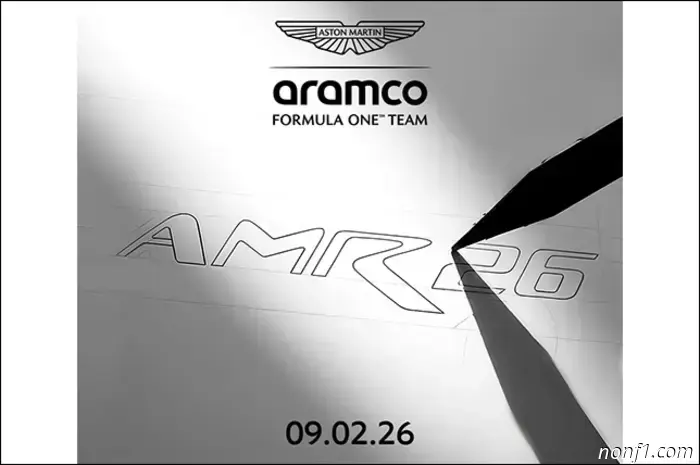 Aston Martin presentará un nuevo coche el 9 de febrero.
En Aston Martin anunciaron la fecha de la presentación del nuevo coche...
Aston Martin presentará un nuevo coche el 9 de febrero.
En Aston Martin anunciaron la fecha de la presentación del nuevo coche...
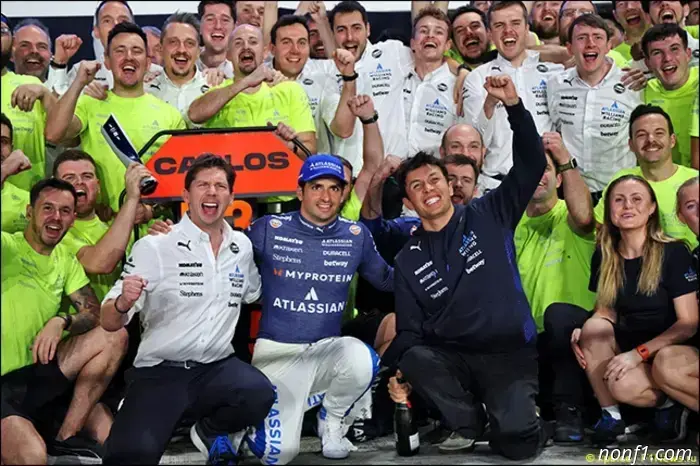 After the finish in Qatar Carlos Sainz was happy — the podium was the result of the entire team's efforts and brought fifth place in the Constructors' Championship…
Question: Carlos, on Thursday you said the team was facing the toughest weekend of the season, and now you're on the podium. How did that happen?
Carlos Sainz: I think it's down to intense preparation for this event after a very difficult weekend for us in Budapest, where in the long medium-speed corners we were uncompetitive. We developed a plan and tested several solutions in the simulator to prepare the car for tracks like this. And already in practice it looked much better than expected.
After the sprint we drew conclusions and, ahead of the main qualifying, made a couple more changes that helped a lot, especially in race pace. On Saturday we were badly hampered by front tyre degradation. On Sunday the car looked much better. If the day before Antonelli beat us in the sprint by ten seconds, in the race I managed to keep him behind.
Question: How different was the car setup in Qatar compared to Hungary?
Carlos Sainz: Very different. But I had a few ideas, the team had a few ideas — and together we achieved that the car was fast from the first lap.
It already looked decent in the simulator, but you never fully trust the simulator, you tell yourself, "It can't be that good." And then from the first lap of practice I was showing times on the level of the leaders.
Then we improved further over the weekend, had a great race with excellent pit stops, excellent strategy, excellent tyre work. We controlled the situation in the fight against cars that are usually much faster than us. We did an excellent job, which brought us third place.
Question: What might have been different if you had made these changes earlier in the season?
Carlos Sainz: That's impossible. To get there you had to try many solutions by trial and error, make lots of mistakes to understand what works, then turn in another direction that might also be wrong.
It takes time. When you move to another team it really takes time — and races. There are no tests right now. You have to test different solutions during race weekends, and the first 10–15 races are spent trying everything out and working things out.
And you need the team to be bold, willing to experiment, for people to generate ideas. It always pays off. There are no secrets in our sport. Hard work, understanding the fundamentals and correct conclusions always pay off. And, as you can see, in the second half of the season we are performing at a very high level.
Question: Given what you've said, did third place in Qatar give you more satisfaction than the podium in Baku?
Carlos Sainz: They feel different. In Baku I felt relief, because before that I had had a dozen very difficult races. In the early races I was quick, but something always happened to me and there were no results.
In an F1 driver's career there are years when for some reason nothing goes right. You're short of luck, incidents happen or something else. And nothing comes together. In Baku I felt relief — a chance appeared, I took it and gave the team a podium that we needed and that we deserved.
The podium in Qatar is more of a combination of hard work and mutual understanding. I'm very proud of the team, because at the start of the year we also experienced some difficulties with decision-making, with running qualifying and races, and this weekend everyone did a great job. And the pit stops were perfect. Everything worked perfectly — that's exactly what we all needed.
En Catar, Carlos Sainz estaba feliz: el podio fue el resultado de los esfuerzos de todo el equipo y le valió el quinto puesto en el Campeonato de Constructores…
After the finish in Qatar Carlos Sainz was happy — the podium was the result of the entire team's efforts and brought fifth place in the Constructors' Championship…
Question: Carlos, on Thursday you said the team was facing the toughest weekend of the season, and now you're on the podium. How did that happen?
Carlos Sainz: I think it's down to intense preparation for this event after a very difficult weekend for us in Budapest, where in the long medium-speed corners we were uncompetitive. We developed a plan and tested several solutions in the simulator to prepare the car for tracks like this. And already in practice it looked much better than expected.
After the sprint we drew conclusions and, ahead of the main qualifying, made a couple more changes that helped a lot, especially in race pace. On Saturday we were badly hampered by front tyre degradation. On Sunday the car looked much better. If the day before Antonelli beat us in the sprint by ten seconds, in the race I managed to keep him behind.
Question: How different was the car setup in Qatar compared to Hungary?
Carlos Sainz: Very different. But I had a few ideas, the team had a few ideas — and together we achieved that the car was fast from the first lap.
It already looked decent in the simulator, but you never fully trust the simulator, you tell yourself, "It can't be that good." And then from the first lap of practice I was showing times on the level of the leaders.
Then we improved further over the weekend, had a great race with excellent pit stops, excellent strategy, excellent tyre work. We controlled the situation in the fight against cars that are usually much faster than us. We did an excellent job, which brought us third place.
Question: What might have been different if you had made these changes earlier in the season?
Carlos Sainz: That's impossible. To get there you had to try many solutions by trial and error, make lots of mistakes to understand what works, then turn in another direction that might also be wrong.
It takes time. When you move to another team it really takes time — and races. There are no tests right now. You have to test different solutions during race weekends, and the first 10–15 races are spent trying everything out and working things out.
And you need the team to be bold, willing to experiment, for people to generate ideas. It always pays off. There are no secrets in our sport. Hard work, understanding the fundamentals and correct conclusions always pay off. And, as you can see, in the second half of the season we are performing at a very high level.
Question: Given what you've said, did third place in Qatar give you more satisfaction than the podium in Baku?
Carlos Sainz: They feel different. In Baku I felt relief, because before that I had had a dozen very difficult races. In the early races I was quick, but something always happened to me and there were no results.
In an F1 driver's career there are years when for some reason nothing goes right. You're short of luck, incidents happen or something else. And nothing comes together. In Baku I felt relief — a chance appeared, I took it and gave the team a podium that we needed and that we deserved.
The podium in Qatar is more of a combination of hard work and mutual understanding. I'm very proud of the team, because at the start of the year we also experienced some difficulties with decision-making, with running qualifying and races, and this weekend everyone did a great job. And the pit stops were perfect. Everything worked perfectly — that's exactly what we all needed.
En Catar, Carlos Sainz estaba feliz: el podio fue el resultado de los esfuerzos de todo el equipo y le valió el quinto puesto en el Campeonato de Constructores…
Comunicado de la FIA sobre los insultos dirigidos a Antonelli
En Catar, en Mercedes registraron más de 1100 mensajes ofensivos dirigidos a Kimi Antonelli. La FIA no pudo dejar de reaccionar a esto...