
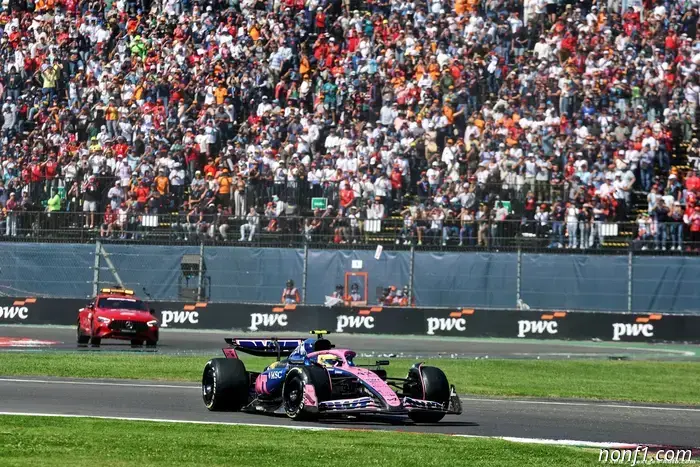
Colapinto remains undeterred by Alpine's lack of communication regarding the 2026 seat.
"Everyone has their own opinion, don’t they?"
Franco Colapinto asserts that he is not bothered by the increasing speculation surrounding his future with Alpine, noting that the lack of rumors about a possible team shakeup doesn’t imply anything definitive. The 22-year-old Argentine rookie has been at the center of attention recently, from his defiance of team orders in Austin to claims that a 2026 deal with Alpine backed by his influential sponsors is already in place. With drivers within the Red Bull family competing for a few 2026 seats, the silence from Enstone has only intensified discussions about Colapinto’s position being secure.
When asked by DAZN in Mexico why there are numerous rumors surrounding Red Bull and Racing Bulls, but none regarding Alpine, Colapinto chuckled and replied, "I have no idea. Everyone has their own opinion, right? And I think, at least lately, there isn’t much substance to those opinions. There aren’t many rumors or significant developments. As a team, we need to focus on improving the car and what lies ahead. I’m concentrating on the present and taking it race by race. Ultimately, I’m not the one making those decisions."
Colapinto’s calm demeanor stands in contrast to the chaos that ensued after the team-order incident in Austin, which led to Alpine removing a social media post referencing criticism from team boss Steve Nielsen. Nevertheless, the rookie's race day wasn’t without its challenges, as he encountered frustrations after a clash with Aston Martin's Lance Stroll. "He pushed me onto the grass," Colapinto expressed. "I’m not sure what he’s looking at when he checks his mirrors. He tends to do the same thing repeatedly."

Other articles
 Tsunoda remains in the running as the decision is postponed.
Formula 1 | The future of Yuki Tsunoda in Formula 1 is still unclear, but the Japanese driver has received an important break. Following weeks of conjecture, Dr (...)
Tsunoda remains in the running as the decision is postponed.
Formula 1 | The future of Yuki Tsunoda in Formula 1 is still unclear, but the Japanese driver has received an important break. Following weeks of conjecture, Dr (...)
 Home » Blog » What If Lincoln Had a Smartphone?
In 2008, during the early stages of my writing journey, I wrote an essay for my blog that posed an intriguing question: Would Lincoln Have Been President if He Had Email? This was one of my initial efforts to understand issues like digital distraction and focus, themes that later developed into my books Deep Work and A World Without Email. Central to this inquiry was a concerning idea that struck me while watching a documentary about our sixteenth president:
If the Internet diminishes our capacity to sit and concentrate without distraction, akin to the intense focus found in a Lincoln log cabin, we must pose the crucial question: Are we destined to be a generation lacking in grand ideas?
In essence, if Lincoln had access to the internet, would he have been too side-tracked to become the self-made individual who ultimately transformed our nascent Republic?
In that initial essay, I tended to lean towards “yes.” However, over the years, I have become somewhat of a Lincoln enthusiast, having read over six biographies about him. This exploration has led me to conclude that my initial instincts were misguided.
Lincoln, certainly, didn’t face the challenges of digital technology. Nonetheless, the rugged frontier towns of Indiana and Illinois, where he spent much of his early life, presented their own analog versions of the same distractions we associate with the modern internet.
These towns were rife with a relentless drive toward numbing distractions, particularly through alcohol. William Lee Miller noted in Lincoln’s Virtues, “Incredible quantities of whiskey were consumed,” and it was customary for every man to drink on any occasion.
There was also the real threat of “cancellation” represented by violent mobs and numerous efforts to incite radicalism or spread hatred, exemplified by the widespread antipathy toward Native Americans, which Miller referred to as a “ubiquitous western presence” at that time.
Yet, Lincoln managed to sidestep these pitfalls and significantly elevate his status. Many factors contribute to this narrative, but one is particularly notable: he honed his intellect through reading.
Here are some quotes about young Lincoln from his stepmother, Sarah Bush Lincoln, who nurtured his interest in books:
“Abe read all the books he could get his hands on.”
“I persuaded my husband to allow Abe to read and study both at home and at school… we were careful not to disturb him while he read; we let him go on reading until he chose to stop.”
“While other boys were out stealing watermelons and wasting their time, he was absorbed in his books—thinking and reflecting.”
Lincoln utilized books to enhance his intellect, opening up his world and allowing him to envision new opportunities and more meaningful futures—offering a powerful alternative to the forces that sought to hold him back.
Embedded within this narrative is guidance for our current era. To transcend the distracted shadows of the online world, we might, quite literally, take a page from Lincoln and strive to cultivate our minds rather than pacifying them.
Formula 1 | Lando Norris has assumed the lead in the world championship ahead of his teammate Oscar Piastri - however, his win at the Mexico GP was overshadowed by new allegations of (…)
Home » Blog » What If Lincoln Had a Smartphone?
In 2008, during the early stages of my writing journey, I wrote an essay for my blog that posed an intriguing question: Would Lincoln Have Been President if He Had Email? This was one of my initial efforts to understand issues like digital distraction and focus, themes that later developed into my books Deep Work and A World Without Email. Central to this inquiry was a concerning idea that struck me while watching a documentary about our sixteenth president:
If the Internet diminishes our capacity to sit and concentrate without distraction, akin to the intense focus found in a Lincoln log cabin, we must pose the crucial question: Are we destined to be a generation lacking in grand ideas?
In essence, if Lincoln had access to the internet, would he have been too side-tracked to become the self-made individual who ultimately transformed our nascent Republic?
In that initial essay, I tended to lean towards “yes.” However, over the years, I have become somewhat of a Lincoln enthusiast, having read over six biographies about him. This exploration has led me to conclude that my initial instincts were misguided.
Lincoln, certainly, didn’t face the challenges of digital technology. Nonetheless, the rugged frontier towns of Indiana and Illinois, where he spent much of his early life, presented their own analog versions of the same distractions we associate with the modern internet.
These towns were rife with a relentless drive toward numbing distractions, particularly through alcohol. William Lee Miller noted in Lincoln’s Virtues, “Incredible quantities of whiskey were consumed,” and it was customary for every man to drink on any occasion.
There was also the real threat of “cancellation” represented by violent mobs and numerous efforts to incite radicalism or spread hatred, exemplified by the widespread antipathy toward Native Americans, which Miller referred to as a “ubiquitous western presence” at that time.
Yet, Lincoln managed to sidestep these pitfalls and significantly elevate his status. Many factors contribute to this narrative, but one is particularly notable: he honed his intellect through reading.
Here are some quotes about young Lincoln from his stepmother, Sarah Bush Lincoln, who nurtured his interest in books:
“Abe read all the books he could get his hands on.”
“I persuaded my husband to allow Abe to read and study both at home and at school… we were careful not to disturb him while he read; we let him go on reading until he chose to stop.”
“While other boys were out stealing watermelons and wasting their time, he was absorbed in his books—thinking and reflecting.”
Lincoln utilized books to enhance his intellect, opening up his world and allowing him to envision new opportunities and more meaningful futures—offering a powerful alternative to the forces that sought to hold him back.
Embedded within this narrative is guidance for our current era. To transcend the distracted shadows of the online world, we might, quite literally, take a page from Lincoln and strive to cultivate our minds rather than pacifying them.
Formula 1 | Lando Norris has assumed the lead in the world championship ahead of his teammate Oscar Piastri - however, his win at the Mexico GP was overshadowed by new allegations of (…)
 Verstappen reduces gap as competitors express frustration with FIA.
Formula 1 | Max Verstappen's podium finish in Mexico maintains his title aspirations - and although Lando Norris has taken the lead in the championship, the Dutch driver actually (…)
Verstappen reduces gap as competitors express frustration with FIA.
Formula 1 | Max Verstappen's podium finish in Mexico maintains his title aspirations - and although Lando Norris has taken the lead in the championship, the Dutch driver actually (…)
 Russell discloses details of the 'automatic' Mercedes agreement.
Formula 1 | George Russell has finally revealed details about his newly signed contract with Mercedes and has even suggested some conditions that could lead to one (…)
Russell discloses details of the 'automatic' Mercedes agreement.
Formula 1 | George Russell has finally revealed details about his newly signed contract with Mercedes and has even suggested some conditions that could lead to one (…)
 McLaren supports Piastri as the downturn worsens.
Formula 1 | Andrea Stella asserts that Oscar Piastri's recent lack of performance is not related to issues with the car, despite rumors suggesting that the Australian's chassis might (…)
McLaren supports Piastri as the downturn worsens.
Formula 1 | Andrea Stella asserts that Oscar Piastri's recent lack of performance is not related to issues with the car, despite rumors suggesting that the Australian's chassis might (…)
Colapinto remains undeterred by Alpine's lack of communication regarding the 2026 seat.
Formula 1 | Franco Colapinto asserts that he is not worried about the increasing speculation regarding his future with Alpine, noting that the lack of rumors about a possible team...