
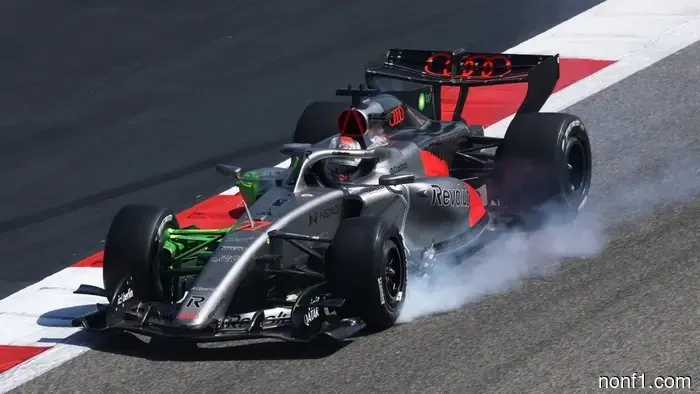
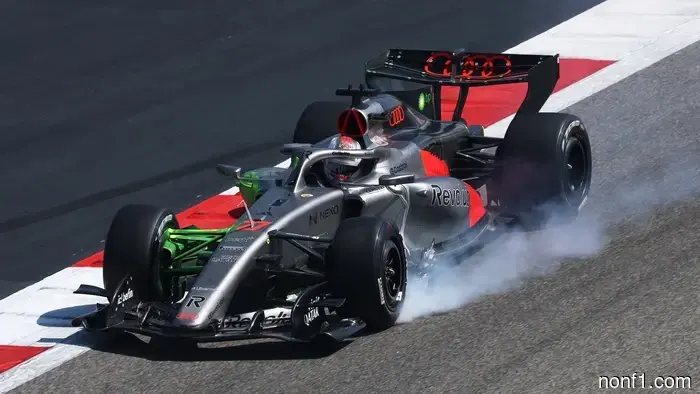
How Brembo Reengineered F1 Brakes for the 2026 Power Unit Changes
Mark Thompson via Getty
The most significant car news and reviews, no nonsense
Our complimentary daily newsletter delivers the most important stories straight to you every weekday.
By the time you read this, the 2026 Formula 1 cars will have already wrapped up both Friday practice sessions at the season-opening Australian Grand Prix. Unlike in pre-season testing, their performance at the 3.29-mile Albert Park Circuit will truly matter. Before they can secure pole positions or race victories, there is one crucial updated component all drivers and teams need to master first: the brakes.
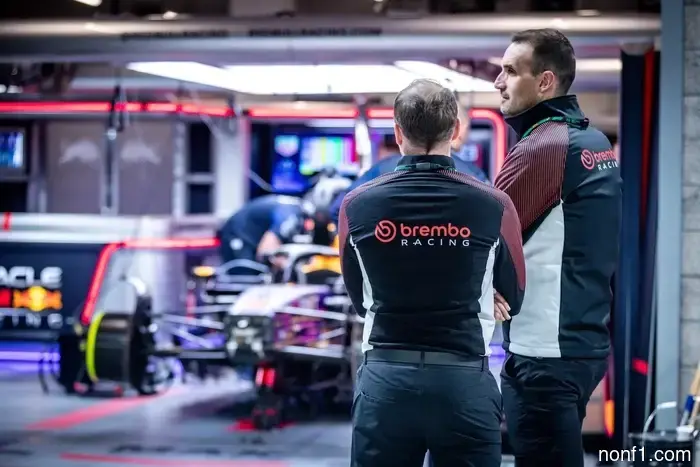
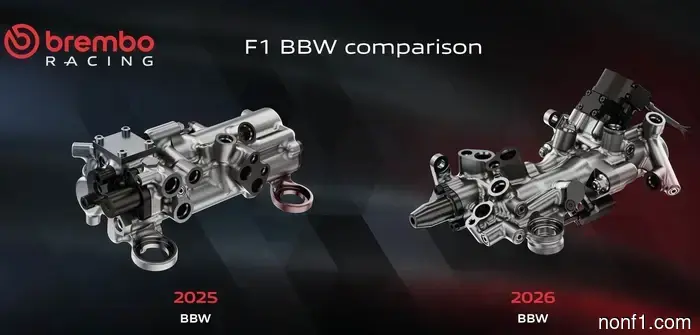
Operating under the Brembo Group, both Brembo Brakes and AP Racing provide all F1 teams with braking components. For 2026, all 11 teams will use either Brembo or AP Racing calipers, while five teams will have complete braking systems, including calipers, pads, and discs. Even those opting for different pads and discs can still employ Brembo brake-by-wire systems and master cylinders. Consequently, Brembo's engineers face a monumental task this season, collaborating internally and with all teams to meet the new regulations.
Brembo
I recently spoke with Andrea Algeri, an expert in brakes. Algeri oversees Brembo's open- and closed-wheel racing departments, making it his responsibility to understand the regulatory changes and ensure Brembo satisfies teams’ expectations and specific design requests. My first question was about the nature of these regulatory changes. He provided a comprehensive response that lasted around 20 minutes.
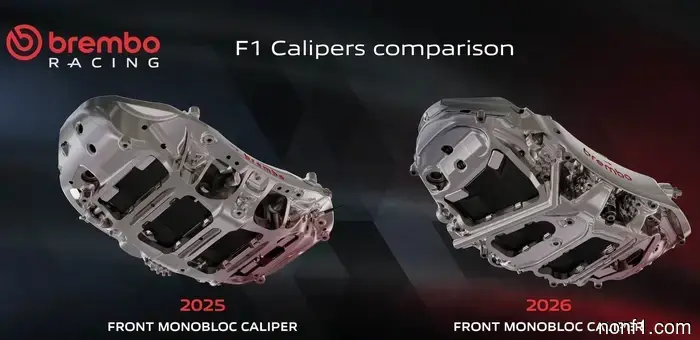
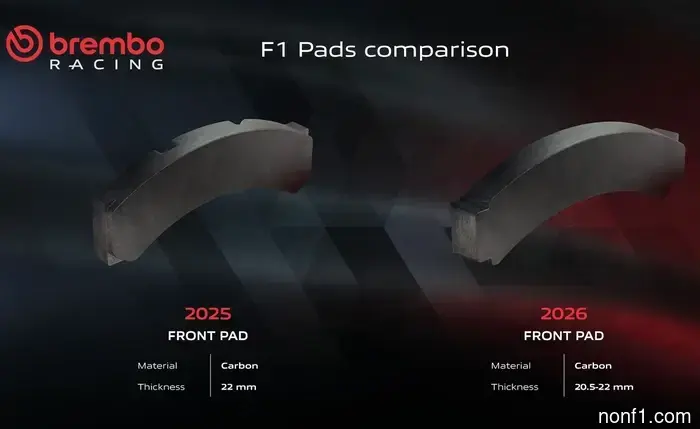
In simpler terms, the major change in the braking domain involves an increase in design options for components, particularly calipers and discs. The front calipers will continue to be aluminum monoblock, but teams can now select six- or eight-piston configurations. Previously, the six-piston setup was standard. Teams adopting more pistons must comply with several modifications to the caliper's core structure. For instance, adding two pistons means that the number of pads within the caliper will rise from two to four, and the fixing points will increase from two to three. Surprisingly, weight will actually decrease by half a kilo, or about 1.1 pounds, compared to the 2025 model, which is significant.
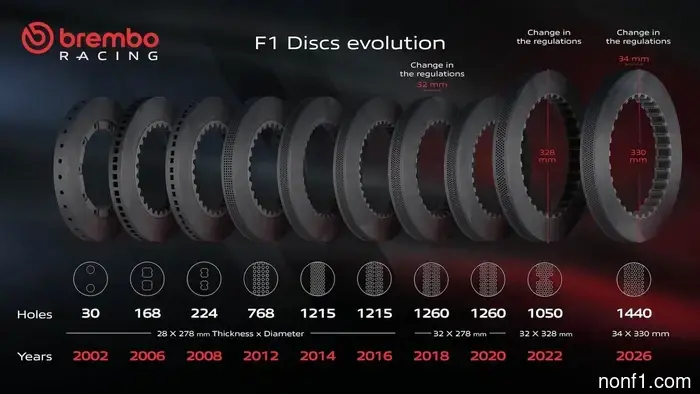
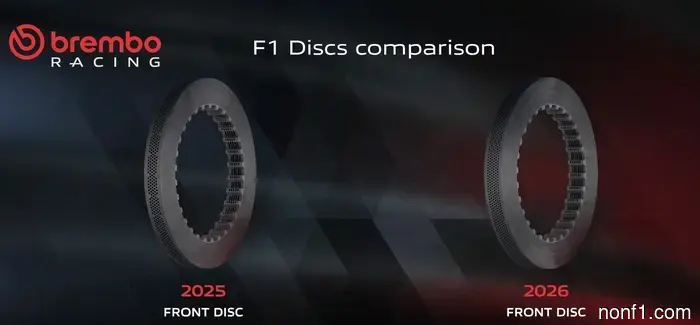
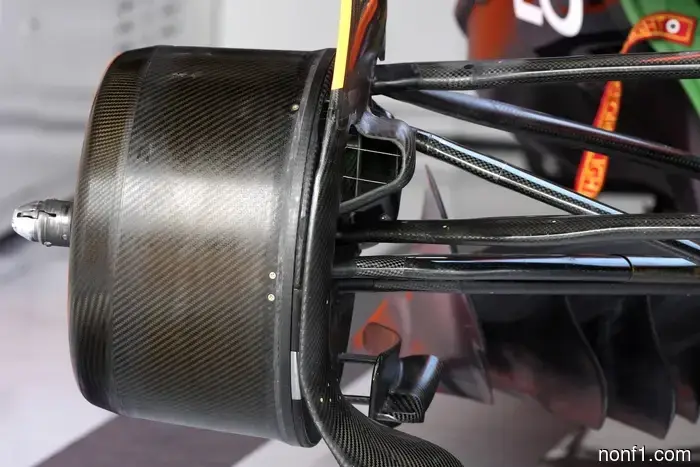
These adjustments pertain only to the calipers; there are also regulatory changes affecting the discs. For 2026, both the disc diameter and thickness, along with the number of venting holes, have been increased. The diameter (the distance across the disc) has been raised from 328mm to 330mm, with teams having the option to reach up to 345mm, depending on their chosen caliper. The thickness has seen its first rise since 2018, moving from 32mm to 34mm, although teams can opt to maintain the 32mm size depending on the caliper application. The holes have seen a substantial increase over last year’s setup, jumping from 1,050 3mm holes arranged in a honeycomb pattern to 1,440 2.5mm venting holes arranged in a linear pattern. The weight of the disc has also risen from 1.75 kilos to 2 kilos, which means each wheel corner will have approximately 4.4 pounds total weight.
Brembo
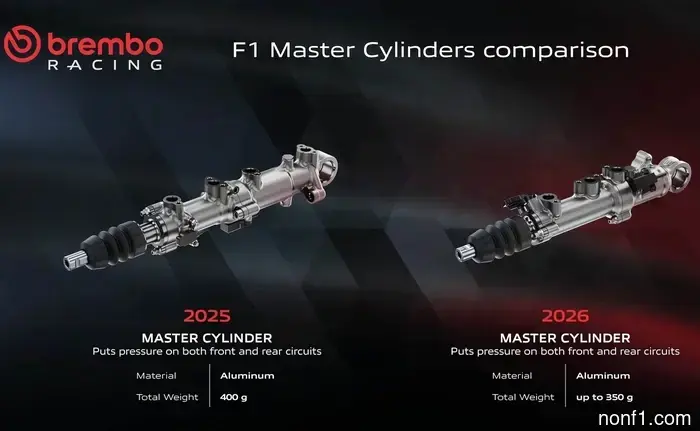
As Algeri clarified, while hardware changes are one aspect, integrating these components with the cars is an entirely different challenge. Additionally, there's the software aspect to consider. Since Brembo also provides a completely revamped hydraulic brake-by-wire unit, new code is essential to ensure the braking performance aligns with the signals from the driver, power unit, and hybrid system.
After harmonizing hardware and software, Brembo collaborates with each team to refine their setups for peak performance. This is Formula 1, after all, and no two teams use the same setups, as each believes it has a better approach. While regulations define the limits of what is permissible, this does not guarantee uniformity across all teams.
“Teams are constantly searching for an advantage, and we need to work with them to fulfill their requests, but compromise is always necessary,” Algeri told The Drive. “We have enough experience and trust on both sides that, when we have to approve or deny a request, they trust our decision. We also conduct all necessary testing to gather data, proving to them the rationale behind our choices.”
Brembo
When I inquired about the advantages of transitioning from the previous optional six-piston setup to an eight-piston caliper, Algeri noted there are benefits, but ultimately, each team must evaluate what is best for their configuration. An eight-piston setup is more mechanically complex and has a greater number of moving parts, but one positive aspect is more balanced braking pressure on the disc, along with enhanced initial torque. The increased clamping force benefits the front wheels, but the situation is quite different at the rear, where the tires are powered by the hybrid system.
This complexity increases as Brembo must comprehend
Other articles
 Schumacher cautions against TV errors as the complexity of F1 increases.
Formula 1 | Ralf Schumacher has cautioned that even the television analysts for Formula 1 may find it challenging to navigate the intricacies of the 2026 regulations, (…)
Schumacher cautions against TV errors as the complexity of F1 increases.
Formula 1 | Ralf Schumacher has cautioned that even the television analysts for Formula 1 may find it challenging to navigate the intricacies of the 2026 regulations, (…)
 Drivers have confidence in the FIA as the situation in Iran casts uncertainty over the F1 schedule.
Formula 1 | Drivers in Formula 1 express confidence in the sport's officials to make the appropriate decisions as the intensifying crisis in Iran raises concerns about the Bahrain and (…)
Drivers have confidence in the FIA as the situation in Iran casts uncertainty over the F1 schedule.
Formula 1 | Drivers in Formula 1 express confidence in the sport's officials to make the appropriate decisions as the intensifying crisis in Iran raises concerns about the Bahrain and (…)
 2026 Honda Ridgeline TrailSport Review: Practical Utility Paired with Reliable Daily Driving Performance
The Honda Ridgeline indicates that it may be beneficial to reconsider just how much truck you actually require.
2026 Honda Ridgeline TrailSport Review: Practical Utility Paired with Reliable Daily Driving Performance
The Honda Ridgeline indicates that it may be beneficial to reconsider just how much truck you actually require.
 The demolition of the Melbourne pit building is expected to cost $395 million.
Formula 1 | The pit lane structure at Albert Park will be torn down right after this weekend's Australian Grand Prix - and its successor has become (…)
The demolition of the Melbourne pit building is expected to cost $395 million.
Formula 1 | The pit lane structure at Albert Park will be torn down right after this weekend's Australian Grand Prix - and its successor has become (…)
 Forza Horizon 6’s representation of Tokyo appears stunning yet desolate.
There's no doubt that FH6's Tokyo is the most affluent city the series has ever featured. However, it still seems far from feeling truly inhabited.
Forza Horizon 6’s representation of Tokyo appears stunning yet desolate.
There's no doubt that FH6's Tokyo is the most affluent city the series has ever featured. However, it still seems far from feeling truly inhabited.
 Aston caught off guard by staffing issues at Honda - Newey
Formula 1 | Aston Martin found out only after finalizing its deal with Honda that the Japanese company had lost most of its seasoned engineers (…)
Aston caught off guard by staffing issues at Honda - Newey
Formula 1 | Aston Martin found out only after finalizing its deal with Honda that the Japanese company had lost most of its seasoned engineers (…)
How Brembo Reengineered F1 Brakes for the 2026 Power Unit Changes
Curious about why everyone is struggling and moving off course in Australia? Here’s what you need to understand about the brakes and their impact on F1 cars.