
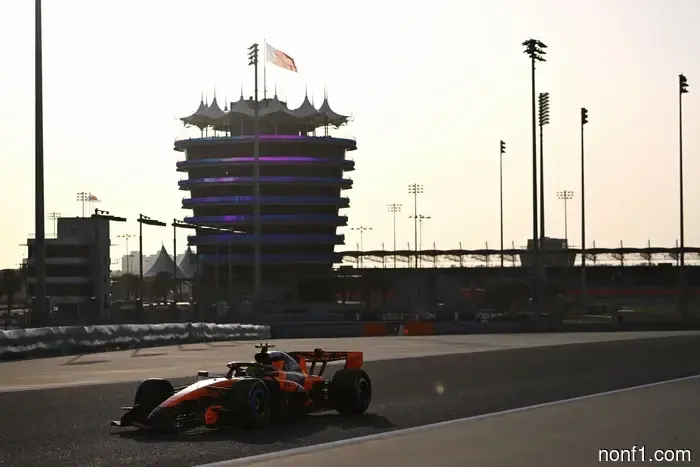
Drivers have confidence in the FIA as the situation in Iran casts uncertainty over the F1 schedule.
"The safety of everyone involved is the top priority."
Formula 1 drivers convey their confidence in the sport's leadership to make appropriate decisions, especially as the escalating crisis in Iran raises concerns about the upcoming Bahrain and Saudi Arabian Grands Prix. With both races in April potentially at risk, George Russell has noted that the situation largely lies beyond the drivers’ control. "In the end, I think all of us have faith in F1 and the FIA to arrive at the correct conclusion," said the Mercedes driver, also a director of the Grand Prix Drivers’ Association. "Conditions will likely evolve daily, and with still four to five weeks until the races, I don’t believe many are focusing on those questions at this time. It’s outside our control, so we trust the leadership to make the appropriate choice. If things go awry, I’m sure there are backup plans, but we trust they are managing the situation."
Carlos Sainz, another GPDA director, echoed this perspective. "I think Formula 1 and the FIA are much more knowledgeable about the developments due to their connections in the Middle East and worldwide. Thus, we are effectively reliant on the sport's leaders to make decisions, and I’m confident they will choose wisely when the moment arrives. Since the race is still quite far off, I don’t see the value in expending too much energy pondering the outcomes."
Dr. Helmut Marko, a former advisor with Red Bull who retired at season's end, expressed skepticism, telling Austrian broadcaster ORF that without a ceasefire, "both races are in serious danger." He also rejected the idea of using the Red Bull Ring as a last-minute substitute. "That would undermine the summer Grand Prix," stated Marko. "However, many racetracks worldwide are eager to host a Grand Prix. Logistically, though, it will be challenging to replace Bahrain and Saudi Arabia on those same dates on such short notice."
The ongoing crisis has already impacted events in Melbourne, as naming rights sponsor Qatar Airways canceled all corporate hospitality at Albert Park in solidarity with passengers stranded in the Middle East. "Due to the ongoing closure of Qatari airspace and the temporary suspension of Qatar Airways’ flights, the airline has postponed its scheduled media and partner events in Melbourne this weekend," a spokesperson commented.
Behind the scenes, it’s reported that Formula 1 plans to take another 10 days before determining the fate of the two Gulf races. A decision is expected shortly after the Chinese Grand Prix, as logistical arrangements—complicated further by the closure of the Strait of Hormuz to sea shipping—cannot be delayed much longer. If both races are canceled, the 2026 calendar might decrease from 24 to 22 events rather than incorporate replacement venues, resulting in a five-week gap between the Suzuka and Miami races. Imola, Portimao, and a double-header in Japan have all been suggested as backup options, but the financial implications are challenging—substitute venues would offer significantly lower payments than the Gulf hosts, making cancellation less costly for the teams than competing.
"In all considerations, the safety of everyone involved is the top priority," stated a Formula 1 spokesperson.
Other articles
 Ford Issues Recall for 1.7 Million Vehicles Due to Problems with Touchscreens and Backup Cameras: TDS
Erratic behavior of the infotainment system may affect the backup camera display in many Ford models, leading to another recall.
Ford Issues Recall for 1.7 Million Vehicles Due to Problems with Touchscreens and Backup Cameras: TDS
Erratic behavior of the infotainment system may affect the backup camera display in many Ford models, leading to another recall.
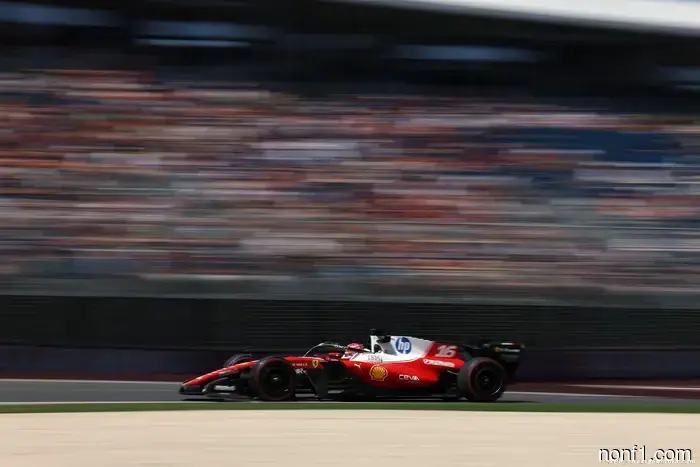 Leclerc discusses the 'relationship' with Ferrari and cautions that Mercedes appears to be in a strong position.
Formula 1 | Charles Leclerc has candidly discussed the possibility of extending his contract with Ferrari – but on the track, he cautioned that Mercedes appears to be notably more competitive than (…)
Leclerc discusses the 'relationship' with Ferrari and cautions that Mercedes appears to be in a strong position.
Formula 1 | Charles Leclerc has candidly discussed the possibility of extending his contract with Ferrari – but on the track, he cautioned that Mercedes appears to be notably more competitive than (…)
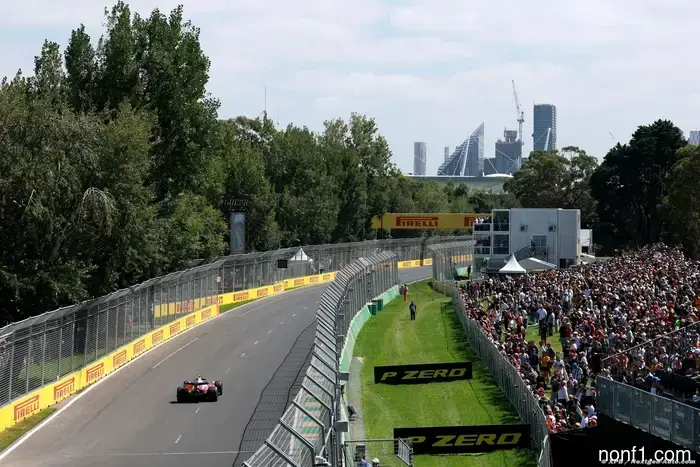 Schumacher cautions against TV errors as the complexity of F1 increases.
Formula 1 | Ralf Schumacher has cautioned that even the television analysts for Formula 1 may find it challenging to navigate the intricacies of the 2026 regulations, (…)
Schumacher cautions against TV errors as the complexity of F1 increases.
Formula 1 | Ralf Schumacher has cautioned that even the television analysts for Formula 1 may find it challenging to navigate the intricacies of the 2026 regulations, (…)
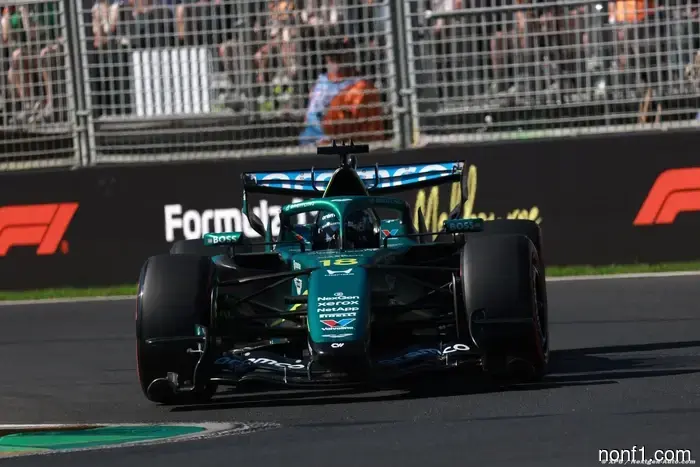 Aston caught off guard by the staffing crisis at Honda - Newey
Formula 1 | Aston Martin learned only after finalizing its partnership with Honda that the Japanese company had lost most of its seasoned engineering staff (…)
Aston caught off guard by the staffing crisis at Honda - Newey
Formula 1 | Aston Martin learned only after finalizing its partnership with Honda that the Japanese company had lost most of its seasoned engineering staff (…)
 Spy Photos: Will a Facelifted Gran Turismo and Gran Cabrio Revive Declining Maserati Sales?
Maserati is evaluating a few updated two-door models in snowy conditions.
Spy Photos: Will a Facelifted Gran Turismo and Gran Cabrio Revive Declining Maserati Sales?
Maserati is evaluating a few updated two-door models in snowy conditions.
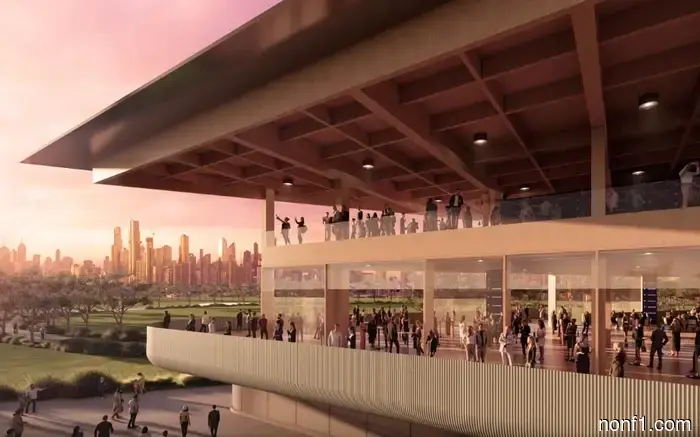 Demolition of the Melbourne pit building will incur a cost of $395 million.
Formula 1 | The pit lane structure at Albert Park is set to be torn down right after this weekend's Australian Grand Prix, and its new replacement has become (…)
Demolition of the Melbourne pit building will incur a cost of $395 million.
Formula 1 | The pit lane structure at Albert Park is set to be torn down right after this weekend's Australian Grand Prix, and its new replacement has become (…)
Drivers have confidence in the FIA as the situation in Iran casts uncertainty over the F1 schedule.
Formula 1 | Drivers in Formula 1 express confidence in the sport's officials to make the appropriate decisions as the intensifying crisis in Iran raises concerns about the Bahrain and (…)