
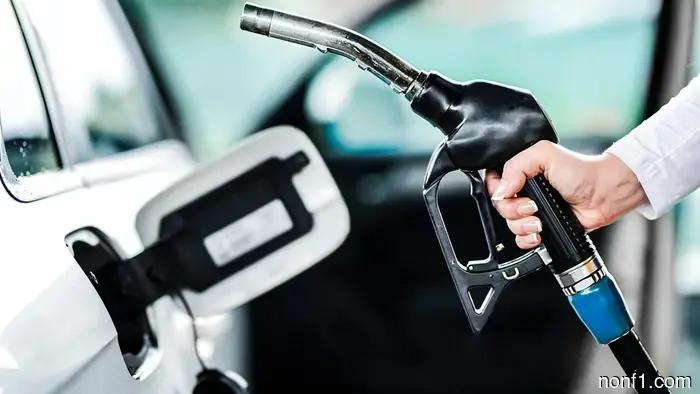
The Federal Government's Intention to Begin Diluting Gasoline This May: An Explanation
Milan, stock.adobe.com
The top car news and reviews, straight to the point
Sign up for our free daily newsletter to receive the most important stories straight to your inbox every weekday.
This week, Lee Zeldin’s EPA announced the “approval of nationwide E15,” promoting it as a way to “strengthen the domestic fuel supply.” Essentially, this means the federal government will permit more stations to blend ethanol into gasoline, which indeed makes it cheaper, but it also results in reduced power and lower fuel efficiency in your vehicle.
Quick Overview of the May 2026 E15 Gas Waiver
For those curious about what “E15” signifies and why it’s been making waves in the news recently, here’s a brief explanation.
What is E10? The majority of gasoline in the U.S. consists of 10% ethanol (corn-derived alcohol) and 90% gasoline. This is the standard fuel.
What is E15? It can be considered the “Value Pack,” comprising 15% ethanol. It is usually around 25 cents cheaper per gallon, but due to the higher alcohol content, it offers slightly less power.
Why is there a “waiver”? Typically, the EPA prohibits E15 from June to September because ethanol evaporates more rapidly than gasoline. In hot weather, that additional 5% of corn-derived liquid can lead to smog-forming pollutants more quickly than regular gasoline.
The timeline: This waiver will be in effect from May 1 to May 20. After this period, normal conditions can be expected to resume.
The condition: The government is essentially stating, “We recognize this contributes to more smog, but given the ongoing wars affecting oil supply, we’ll overlook the smog regulations so you can enjoy cheaper ethanol-blended gasoline.”
The justification: Conflicts in the Middle East combined with the ongoing war in Ukraine have resulted in what the EPA calls a “National Energy Emergency,” which is allowing fuel companies to increase prices. High gas prices lead to public dissatisfaction with the government, something the government wishes to avoid.
The precedent: This isn’t the first time an E15 waiver has been in the spotlight; it was also discussed in 2022.
The reality: Most newer cars (post-2001 models) can handle E15 without issue, but older vehicles tend to struggle with it, and small carbureted engines (such as those in chainsaws, lawn mowers, boats, etc.) can be negatively affected—it can damage old seals and rubber components. It’s wise to be cautious when fueling such vehicles, ensuring you select what’s labeled as E10 (or sometimes E0, which may be available).
Understanding ‘Boutique Fuel’ and ‘Unleaded 88’
The EPA’s announcement included information on “removing boutique fuel markets”—which is not referring to fuel from farmers’ markets.
Certain states (e.g., California and Illinois) have specific gasoline formulations to adhere to local air quality regulations. The EPA is temporarily bypassing these regulations to create a “Single National Gasoline Pool,” likely to the benefit of oil companies (less hassle for them).
Regardless of your state, fuel is generally categorized by octane rating rather than ethanol content. “Unleaded 88” is the typical marketing for E15—where “88” refers to the octane rating, not the ethanol content. Since ethanol has an octane rating of 114, adding that extra 5% of corn alcohol raises a standard 87-octane “Regular” to 88. Therefore, if you want to avoid E15, don’t select an Unleaded 88 pump.
Context for Your Vehicle
Most gasoline available at American pumps is E10—10% ethanol. Ethanol is favored as a fuel diluter because it acts as an oxygenator, enhancing fuel combustion and reducing carbon monoxide emissions from the exhaust. In the past, lead (which was toxic) and MTBE (which contaminated groundwater) were used, but ethanol (corn alcohol) is effective and has fewer social drawbacks.
Moreover, ethanol contributes to cheaper gasoline prices. With an octane rating around 114, refiners can mix lower-grade gasoline with 10% ethanol to achieve the standard knock-resistance rating of 87 octane for regular gas. Without ethanol, gas prices would likely be higher.
E10 remains the norm as it’s the most the government can implement without provoking the auto industry. Additionally, the Renewable Fuel Standard (RFS) mandates a legal requirement for billions of gallons of corn-based fuel to be sold.
While ethanol is cheap and widely available, it contains around 33% less energy than gasoline. The EPA estimates that most cars will experience a fuel economy reduction of 1.5% to 2% when shifting from E10 to E15. However, the actual effect might vary. Cars.com provided an analysis on this matter back in 2018:
“E
Other articles
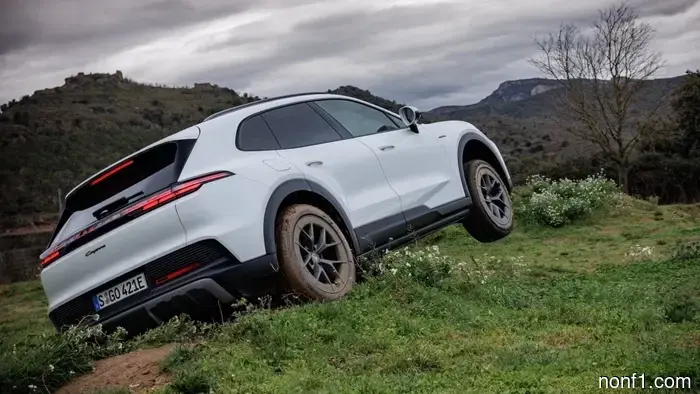 No one is likely to take a Porsche Cayenne Electric off-road, but it sure is entertaining.
Porsche led us to a muddy and chaotic off-road track and let us experience the new Cayenne Electric. Following that, we took a ride on a rallycross circuit.
No one is likely to take a Porsche Cayenne Electric off-road, but it sure is entertaining.
Porsche led us to a muddy and chaotic off-road track and let us experience the new Cayenne Electric. Following that, we took a ride on a rallycross circuit.
 ‘Terrifyingly Quick’: Fearless Individual Launches a V8 Jeep Wrangler 392 on a Snow Rally Course
Navigating a four-door Jeep Wrangler through a snow-blanketed rally course requires considerable skill, yet it surprisingly performs quite well given its design.
‘Terrifyingly Quick’: Fearless Individual Launches a V8 Jeep Wrangler 392 on a Snow Rally Course
Navigating a four-door Jeep Wrangler through a snow-blanketed rally course requires considerable skill, yet it surprisingly performs quite well given its design.
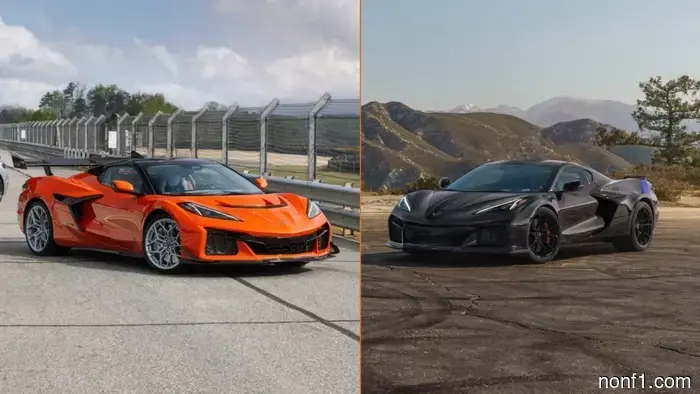 Chevy's All-Wheel Drive Performance Corvettes Rely Entirely on the Hybrid E-Ray
The Corvette E-Ray paved the way for the ZR1X and Grand Sport X to thrive.
Chevy's All-Wheel Drive Performance Corvettes Rely Entirely on the Hybrid E-Ray
The Corvette E-Ray paved the way for the ZR1X and Grand Sport X to thrive.
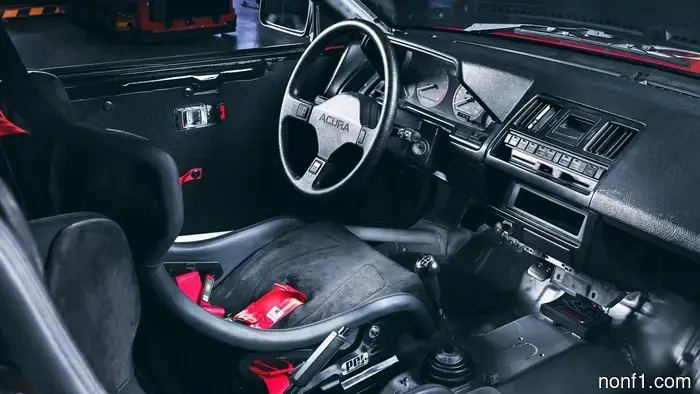 Acura Created a 1986 Integra Race Car for Its 40th Anniversary, and It’s Truly Magnificent.
Featuring manual steering, manual brakes, and a manual transmission, this build is a tantalizing tribute to one of the most successful Integra racing vehicles.
Acura Created a 1986 Integra Race Car for Its 40th Anniversary, and It’s Truly Magnificent.
Featuring manual steering, manual brakes, and a manual transmission, this build is a tantalizing tribute to one of the most successful Integra racing vehicles.
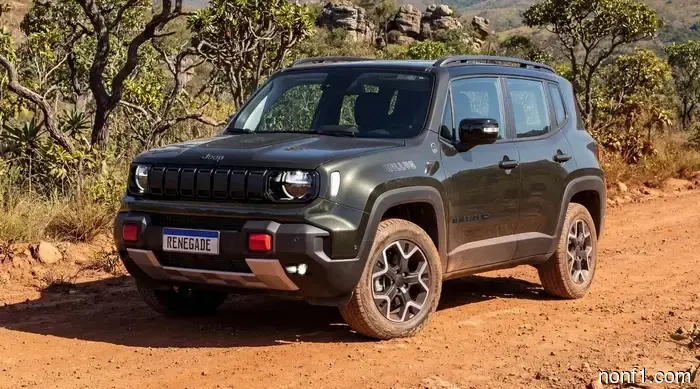 The Jeep That America Overlooked Continues to Improve in Other Markets
Beyond the United States, the Jeep Renegade isn't just holding its ground—it's flourishing, featuring a revamped interior.
The Jeep That America Overlooked Continues to Improve in Other Markets
Beyond the United States, the Jeep Renegade isn't just holding its ground—it's flourishing, featuring a revamped interior.
 Acura Created a 1986 Integra Race Car for Its 40th Anniversary, and It’s Absolutely Stunning.
Featuring manual steering, manual brakes, and a manual transmission, the build is a tantalizing tribute to one of the most successful Integra race cars.
Acura Created a 1986 Integra Race Car for Its 40th Anniversary, and It’s Absolutely Stunning.
Featuring manual steering, manual brakes, and a manual transmission, the build is a tantalizing tribute to one of the most successful Integra race cars.
The Federal Government's Intention to Begin Diluting Gasoline This May: An Explanation
Here’s what the "E15 Fuel Waiver" entails and all the essential information you need regarding ethanol in gasoline to choose the appropriate fuel for your equipment.