
Imitation Gear, Genuine Enjoyment: A Professional Driver Advocates for Electric Vehicle Novelties
The latest in car news and reviews, no nonsense
Our free daily newsletter delivers the important stories right to your inbox every weekday.
With the mainstream electric vehicle (EV) market now somewhat established, car manufacturers are starting to explore ways to engage with enthusiasts. While it’s relatively simple to create a fast EV, speed doesn't always equate to enjoyment.
The engineers behind EVs face significant challenges. Although aerodynamics are critical for both performance and efficiency, achieving these two goals necessitates different engineering strategies. Performance vehicles require aerodynamic features that create downforce for better traction, which also leads to increased drag—the enemy of efficiency.
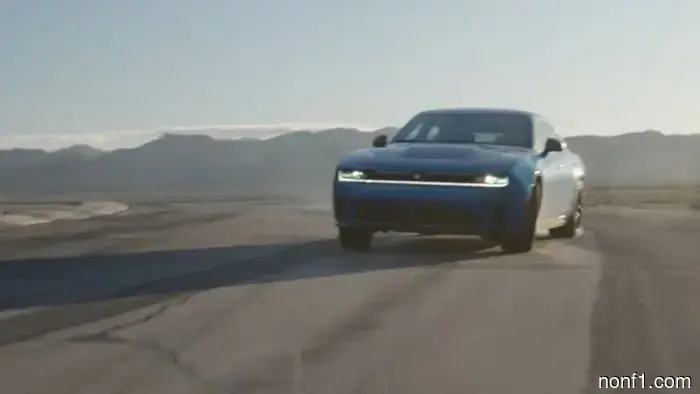
Moreover, there’s the issue of weight. For instance, the Dodge Charger Daytona Scat Pack featured in this video weighs in at 5,800 pounds—300 pounds more than the already hefty Hyundai Ioniq 5 N. While both vehicles utilize similar approaches to appeal to driving enthusiasts, they take divergent paths to do so.
Many enthusiasts are not fond of artificial engine sounds; feedback we've received varies from indifference to intense dislike. Nevertheless, Kyle Cheromcha, Editor-in-Chief of The Drive, and resident race car driver Nik Romano chose to assess this topic with more objectivity.
Hyundai adopted a digital approach, giving the 5 N an upbeat sound reminiscent of a small, high-revving racing engine. In contrast, Dodge employs a physical resonator system that uses speakers and motors to create sound and vibration for a more robust sensation.
Regardless of the method used, the artificial powertrain noise in an EV adds a tangible element to the driving experience, particularly when pushing the vehicle to its limits.
“Sound is feedback; sound is information,” Romano explains.
Engine noise alongside artificial shift “blips” offers drivers mental shortcuts instead of leaving them dependent on guesswork. Without audible feedback, it can be challenging to gauge the car's performance at any moment. While synthesized noise may not be genuine, it is still aligned with the car’s performance systems, capturing both electronic and mechanical actions of the vehicle.
“As humans, we excel at recognizing patterns,” Romano notes. “So, as I approach a corner, when I release the gas and downshift, the engine sound gives me a clear indication of the speed with which I’m entering that turn.”
This is a notable advantage for the Hyundai, which also features a simulated “transmission” with equally simulated “gears” controlled by traditional paddles on the steering wheel. While it may be seen as a gimmick, Romano appreciates how it integrates with the car’s other performance features.
Cheromcha shared Romano’s enthusiasm for the Hyundai after a spirited drive on winding roads.
“It behaves like any sports car should in its element,” he remarked. “It feels as though the 5 N is crafted specifically for the driver’s experience.”
Without the feedback these noises provide, finding a driving rhythm becomes significantly harder. This point resurfaces when Romano takes the Charger onto the track. Unlike the Hyundai, the Charger lacks distinct “gears,” and its tricky throttle mapping does not sync well with the car’s synthesized feedback, diminishing its intended utility.
It’s a subtle difference, but enough to disrupt Romano's driving flow, emphasizing the critical role sound feedback plays in the driving experience. But you don’t need to just take our word for it; you can test it for yourself.
“If you play on simulators or games like Forza or Gran Turismo, try turning off the engine sound and see how you perform,” Romano challenges.
Some of the Charger’s less performance-oriented features redeem it somewhat. Romano describes its donut mode as “objectively fun,” even if it reduces the car's power by half. But consider this: with one motor deactivated, tire longevity is effectively doubled.
Interestingly, one of Romano’s main complaints about the Ioniq 5 N doesn't relate to its driving performance. Instead, it’s the cumbersome process of adjusting performance features through the touchscreen—keep in mind, this is Hyundai, known for its emphasis on physical buttons.
“I’ll tell you what’s not fun: navigating through menus.”
Well said.
Have a news tip? Reach out to us at tips@thedrive.com!
Other articles
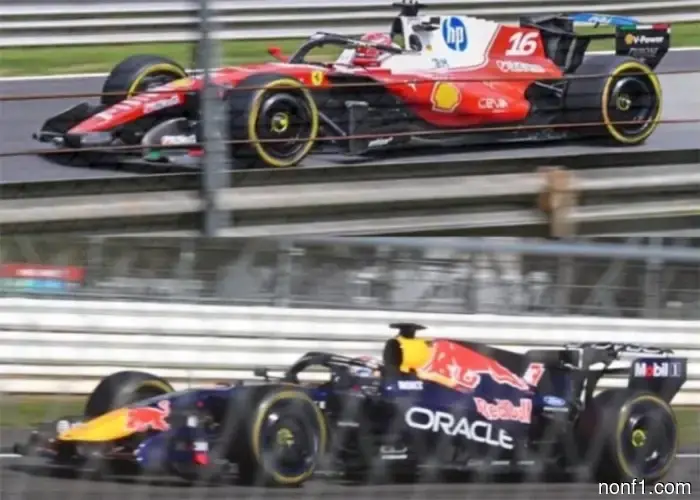 Red Bull tested a rear wing in the style of Ferrari.
This week, the Red Bull Racing team held a filming day at Silverstone, during which Max Verstappen tested the new features prepared for the Miami Grand Prix. Among them was a new rear wing, the idea for which was borrowed from Ferrari.
Red Bull tested a rear wing in the style of Ferrari.
This week, the Red Bull Racing team held a filming day at Silverstone, during which Max Verstappen tested the new features prepared for the Miami Grand Prix. Among them was a new rear wing, the idea for which was borrowed from Ferrari.
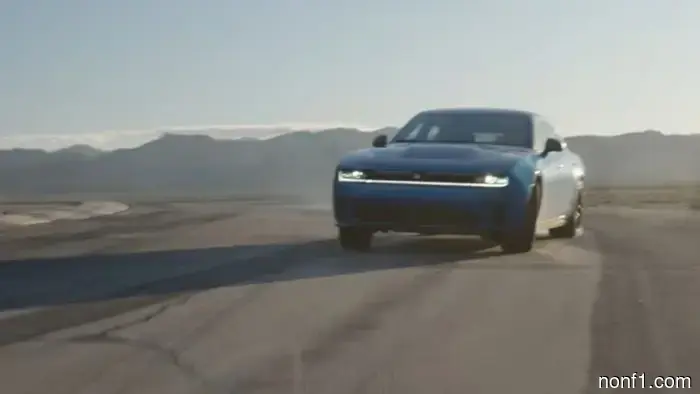 Imitation Gears, Genuine Enjoyment: A Professional Racer Advocates for EV Features
Can fun be integrated into electric cars?
Imitation Gears, Genuine Enjoyment: A Professional Racer Advocates for EV Features
Can fun be integrated into electric cars?
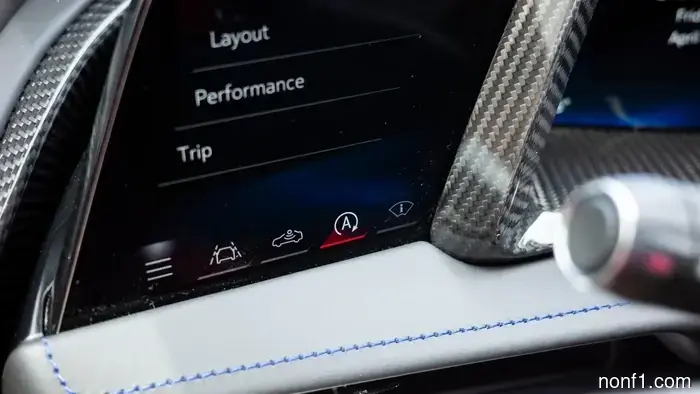 The Corvette E-Ray is among the final vehicles that ought to feature Auto-Stop/Start, and yet it does.
Having a small-block behind you is fantastic, but I really don't need to hear it revving up repeatedly at stoplights. And neither does anyone else.
The Corvette E-Ray is among the final vehicles that ought to feature Auto-Stop/Start, and yet it does.
Having a small-block behind you is fantastic, but I really don't need to hear it revving up repeatedly at stoplights. And neither does anyone else.
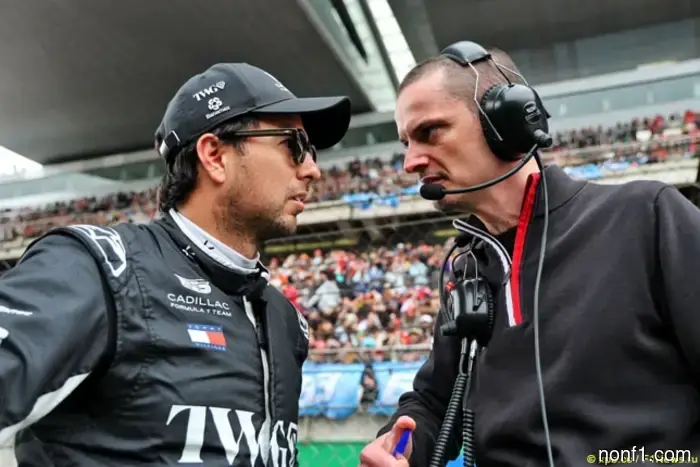 Peres: Neither engineers nor drivers understand the new F1.
Formula 1 President Stefano Domenicali responded to criticism of the new technical regulations and hinted to the drivers that they should not focus on the aspects of the 2026 cars that they do not like. However, Sergio Perez disagrees with the championship leader's position.
Peres: Neither engineers nor drivers understand the new F1.
Formula 1 President Stefano Domenicali responded to criticism of the new technical regulations and hinted to the drivers that they should not focus on the aspects of the 2026 cars that they do not like. However, Sergio Perez disagrees with the championship leader's position.
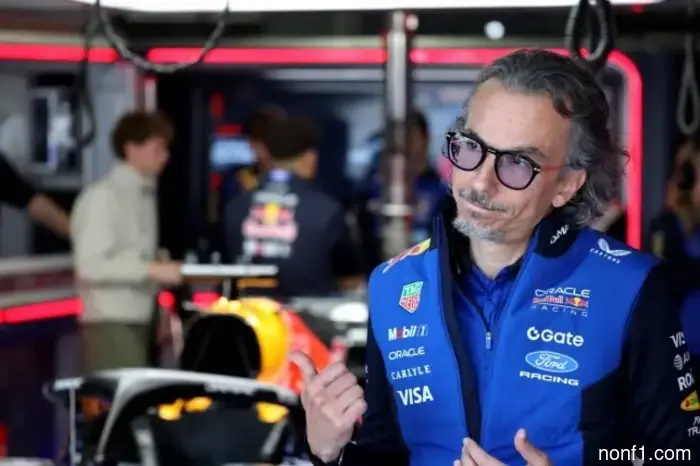 Laurent Mekis: Games are being played around the ADUO program.
Red Bull Racing disagrees with the assumptions that their power unit DM01 is one of the most efficient in Formula 1 in 2026...
Laurent Mekis: Games are being played around the ADUO program.
Red Bull Racing disagrees with the assumptions that their power unit DM01 is one of the most efficient in Formula 1 in 2026...
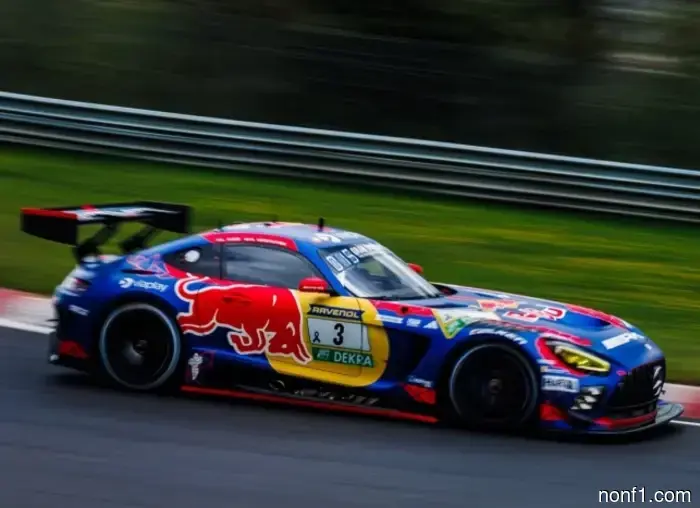 Mika Salo understands Max Verstappen.
Max Verstappen understands Max Verstappen's desire to race in GT during his free time, even if it causes family disagreements...
Mika Salo understands Max Verstappen.
Max Verstappen understands Max Verstappen's desire to race in GT during his free time, even if it causes family disagreements...
Imitation Gear, Genuine Enjoyment: A Professional Driver Advocates for Electric Vehicle Novelties
Can fun be integrated into electric cars through engineering?