
An Explanation of California's Proposal for 140-MPH Buses
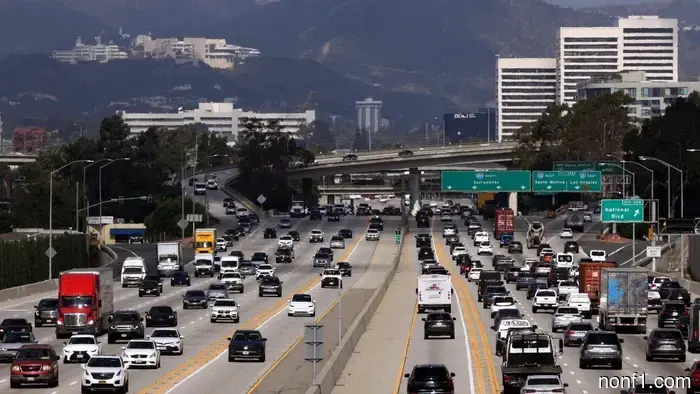
LOS ANGELES, CA - OCTOBER 1, 2025 -- The Getty Center overlooks traffic flowing north and south on I-405 as a new chapter in commuting starts for clean-air vehicles with new regulations that will remove solo drivers from California's carpool lanes, raising questions about the effects on commute durations and traffic patterns in Los Angeles effective October 1, 2025.
Genaro Molina/Los Angeles Times via Getty Images
The latest in car news and reviews, no fluff
Our complimentary daily newsletter delivers the essential stories right to your inbox every weekday.
High-speed rail ignites considerable debate, yet California continues its efforts to enhance its next-generation transit system. If you thought marketing fast trains was challenging, consider the reception for the concept of 140-mile-per-hour bus services. Nevertheless, this idea is now being proposed, although it's unlikely that high-speed buses will share lanes with regular drivers.
Understanding California’s High-Speed Bus Initiative
Key elements of California’s high-speed bus proposal include:
What constitutes a “high-speed” bus? A "high-speed" bus is designed to maintain speeds of 80 to 140 mph over long express routes. These buses require greater stability than standard buses or coaches to handle curved paths while ensuring a comfortable ride.
Where can high-speed buses operate? Theoretically, anywhere a regular bus can operate. However, to travel at speeds above approximately 80 mph, both the road and the bus must be purpose-built.
Where does California envision these buses operating? California aims to establish high-speed bus routes to connect more isolated towns and tourist attractions that cannot realistically be integrated into future rail expansion plans, although they could operate anywhere with sufficient road infrastructure.
The timeline: There is no specific timeline for this initiative. Caltrans is proposing it as a complementary project alongside its high-speed rail program.
The proposal: More affordable than rail and more adaptable, high-speed bus routes could link residents and tourists to regions that are primarily accessible by car while alleviating congestion on current roadways.
The drawback: High-speed buses aren't readily available vehicles and necessitate specialized engineering. Similarly, the roads suited for sustained high-speed bus operations have specific requirements beyond those of regular highways.
In summary: Don’t expect to see 140-mph buses next to you in the carpool lane anytime soon. Current highways can't support those speeds, especially with the daily gridlock. The plan faces numerous challenges before it can come to fruition, but it could provide a more economical solution to access remote areas of California through public transit.
140 MPH
That's the peak speed, according to the California Department of Transportation (Caltrans), which is the goal for a new network of high-speed buses designed to link locations not directly served by California's growing passenger rail system. This bus rapid transit (BRT)-style network would employ new dedicated high-speed bus lanes running parallel to existing passenger vehicle lanes. Envision an HOV lane, but with additional requirements.
As reported by KQED, Interstates 80 and 5, along with U.S. Route 101, could be leveraged to establish high-speed links between San Diego, Los Angeles, and San Francisco. Even at 100 mph, the journey by bus between Los Angeles and San Francisco could take less than four hours, as stated by Ryan Snyder, a feasibility studies manager at Caltrans, to the NPR affiliate.
While that sounds impressive on paper, it falls short compared to the 2:40 travel time achieved by high-speed trains. The advantage? Buses are more economical, and the required lanes would afford considerably greater flexibility than fixed rail options. This means the network will be less costly per mile than rail while presenting fewer constraints as well.
So, what advantages does this offer over trains? In essence, it demands significantly less initial investment in both the infrastructure and the specialized equipment (including the buses) for operation. As of now, such resources do not exist. Buses can operate on current freeways, but not at the speeds necessary to make the concept viable.
As previously mentioned, the most significant challenge in launching a high-speed bus system lies in our current infrastructure. As per a report from Caltrans last year, U.S. highways typically have a design speed range of 75 to 85 mph. These figures are influenced by various factors like curve radius, camber, and surface quality/maintenance levels. A well-maintained concrete surface can achieve very high speeds; however, after exposure to extreme weather conditions over time, that may no longer be true.
Additional Challenges
Beyond that, there are other considerations, including maximum gradient limits and visibility factors, such as allowable distances for tree planting (or sign placement) from the road edge. Additionally, broader shoulders and run-off zones are necessary, along with improved separation between opposing traffic lanes to mitigate the risk of head-on collisions. In summary, Caltrans is not going to have 140-mph buses cruising down the 405 carpool lane anytime soon.

Other articles
 Indy 500 Qualifying Is Both Thrilling and Enchanting
There’s no other venue on the planet where you can see a race car plunge into a corner at 240 mph. This can only be experienced at the Indianapolis Motor Speedway. Only at the Indy 500.
Indy 500 Qualifying Is Both Thrilling and Enchanting
There’s no other venue on the planet where you can see a race car plunge into a corner at 240 mph. This can only be experienced at the Indianapolis Motor Speedway. Only at the Indy 500.
 CEO of Mercedes-Benz Aims for the Company to be ‘Ready’ to Support Europe: TDS
The interest of various automakers in the military-industrial sector doesn't appear to bode well for civilization as a whole.
CEO of Mercedes-Benz Aims for the Company to be ‘Ready’ to Support Europe: TDS
The interest of various automakers in the military-industrial sector doesn't appear to bode well for civilization as a whole.
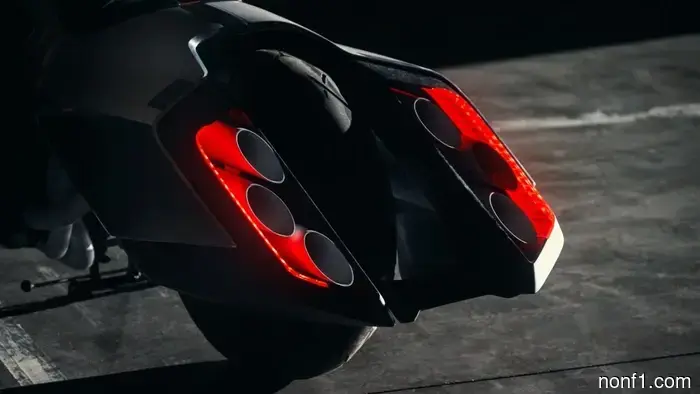 The radical exhaust pipes on BMW's Vision K18 concept resemble thrusters from a starship.
BMW’s Vision K18 Concept serves as a tribute to combustion. The design merges the boundaries between the powertrain and the body.
The radical exhaust pipes on BMW's Vision K18 concept resemble thrusters from a starship.
BMW’s Vision K18 Concept serves as a tribute to combustion. The design merges the boundaries between the powertrain and the body.
 2027 Nissan Z Nismo Manual First Drive Review: For All Those Who Claimed They Would Purchase One If It Came With a Manual Transmission
The Z Nismo finally receives the manual transmission it has always needed — and Nissan has done much more than simply install it.
2027 Nissan Z Nismo Manual First Drive Review: For All Those Who Claimed They Would Purchase One If It Came With a Manual Transmission
The Z Nismo finally receives the manual transmission it has always needed — and Nissan has done much more than simply install it.
 Marko discloses that Horner was against Verstappen's swift elevation.
Formula 1 | Dr. Helmut Marko has disclosed that former Red Bull leader Christian Horner was against the choice to elevate Max Verstappen to the main team in (...)
Marko discloses that Horner was against Verstappen's swift elevation.
Formula 1 | Dr. Helmut Marko has disclosed that former Red Bull leader Christian Horner was against the choice to elevate Max Verstappen to the main team in (...)
 Marko discloses that Horner was against Verstappen's early advancement.
Formula 1 | Dr. Helmut Marko disclosed that Christian Horner, the former head of Red Bull, was against the choice to advance Max Verstappen to the main team back in (…)
Marko discloses that Horner was against Verstappen's early advancement.
Formula 1 | Dr. Helmut Marko disclosed that Christian Horner, the former head of Red Bull, was against the choice to advance Max Verstappen to the main team back in (…)
An Explanation of California's Proposal for 140-MPH Buses
California aims to establish a network of high-speed buses to connect regions where rail infrastructure is too expensive to implement.