
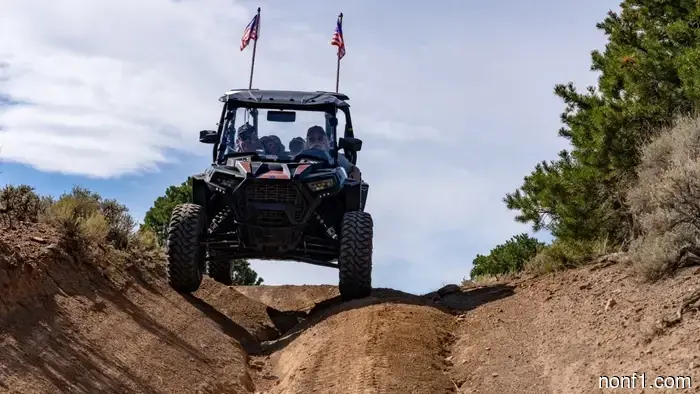
The Federal Government's Intention to Allow Off-Roading on Public Lands: A Breakdown
Jon G. Fuller/VWPics/Universal Images Group via Getty Images
The most important car news and reviews, no nonsense
Our free daily newsletter delivers the stories that truly matter to you, every weekday.
At the end of May, the president revoked two executive orders that previously regulated where and how you can drive in America's National Parks. Now, we’ve learned that the U.S. Forest Service is set to open millions of acres of public land to off-road vehicles (ORVs). Here’s what this means for drivers.
Is this a victory for 4×4 fans? A setback for conservationists? Or simply a much-needed removal of outdated regulations? It’s a mix of all three, and it will have noticeable impacts on users of our National Parks.
Often, these changes have been paired with the loosening of certain hunting restrictions, but we won't explore that here. This is The Drive, not The Blind.
A Brief Overview of Trump’s Off-Road Vehicle Order
What did Trump’s executive order accomplish? This order solely rescinds two earlier executive orders from the 1970s: Executive Order 11644 and Executive Order 11989.
What is Executive Order 11644? Signed in 1972 by then-President Richard Nixon, this order acknowledged the growing popularity of ATVs, dirt bikes, and other motorized recreational vehicles, aiming to establish a "unified Federal policy" for their use on public lands. It provided a framework for defining off-road vehicles (ORVs) and designated areas where they could operate.
What is Executive Order 11989? Signed later in the same decade by President Jimmy Carter, this order granted federal agency heads greater authority to designate areas off-limits to 4x4s "when it is determined that the use of ORVs will cause or is causing significant adverse effects on soils, vegetation, wildlife, wildlife habitats, or cultural or historic resources in specific areas or trails of public lands."
Why were these orders revoked? The administration argues that the orders are redundant to federal law and hinder both recreational and industrial activities on public land.
What Will Actually Change Immediately?
Not a great deal. While ORVs will get access to more roads and designated recreation areas on public land, this does not mean unrestricted access. The use of ORVs on public land will still be limited to specified trails and recreation areas; there will simply be more options available. Although this order expands the legal use of ORVs on public land, it does not alter two crucial aspects of the current policy framework:
The definition of “off-road vehicle” (ORV) remains unchanged by this executive order.
It is still illegal to drive any vehicle off-road on public land.
There isn’t a singular federal law stating that taking those appealing muddy shortcuts is illegal. Instead, multiple separate codes clarify this depending on your location. Title 43 Part 420 governs areas regulated by the U.S. Bureau of Land Management, while Title 36 applies to National Parks. Both stipulate that ORVs are confined to officially designated routes; veering off marked roads or trails or using highway-only vehicles on designated ORV trails could lead to fines and imprisonment.
What Is an Off-Road Vehicle?
When people think of "off-road vehicle," they often picture ATVs and similar specialized equipment, but the term is also used informally to describe on-road vehicles equipped for off-road capabilities. The government defines an off-road vehicle as follows, summarized by our colleague Wes Siler:
“The National Highway Traffic Safety Administration defines an ‘off-road vehicle’ as any that has four-wheel drive,” he noted, “or has a gross vehicle weight rating of at least 6,000 pounds. In addition to meeting one of those criteria, a vehicle must also possess at least four out of these five additional features: an approach angle of at least 28 degrees, a breakover angle of at least 14 degrees, a departure angle of at least 20 degrees, and either 7.8 inches of total ground clearance or 7.1 inches of axle clearance.”
If you follow brands known for producing off-road vehicles, some of these specifications may sound familiar. That’s because automakers have been refining their SUVs and crossovers for decades to take advantage of this definition, which also leads to relaxed safety and emissions (i.e., fuel efficiency) standards.
Without These Executive Orders, What Federal Laws Protect Public Land?
The administration specifically mentioned four laws that were deemed redundant to the executive orders it chose to rescind:
The National Historic Preservation Act (1966)
The National Environmental Policy Act (1970)
The Endangered Species Act (1973), and
The Federal Land Policy and Management Act (1976)
Not mentioned was the Wilderness Act of 1964, which prohibits motor vehicle operation (among other activities) in designated wilderness areas (emphasis added by the author):
(c) Except as specifically provided for in this Act, and subject to existing private rights, there
Other articles
 Leo Turini: I just have no words...
A famous Italian journalist, after Kimi Antonelli's fifth consecutive victory, admitted that he no longer knows what epithets to choose to express his admiration for the 19-year-old Mercedes driver...
Leo Turini: I just have no words...
A famous Italian journalist, after Kimi Antonelli's fifth consecutive victory, admitted that he no longer knows what epithets to choose to express his admiration for the 19-year-old Mercedes driver...
 Fernando Alonso: This period just needs to be endured.
In Monaco, the shortcomings of the AMR26 chassis were fully revealed, but there is still a certain optimism in Fernando Alonso's comments...
Fernando Alonso: This period just needs to be endured.
In Monaco, the shortcomings of the AMR26 chassis were fully revealed, but there is still a certain optimism in Fernando Alonso's comments...
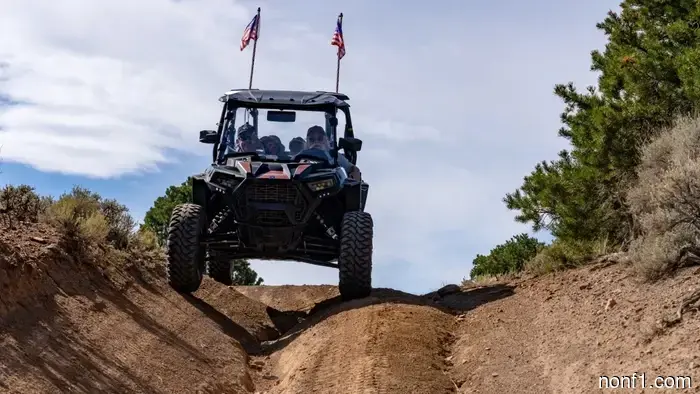 The Federal Government's Proposal to Allow Off-Roading on Public Lands: A Breakdown
Here’s what the confidential memo truly states and what you need to know about the potential opening of millions of acres to off-road vehicles.
The Federal Government's Proposal to Allow Off-Roading on Public Lands: A Breakdown
Here’s what the confidential memo truly states and what you need to know about the potential opening of millions of acres to off-road vehicles.
 Fernando Alonso: This period just needs to be endured.
In Monaco, the shortcomings of the AMR26 chassis were fully revealed, but there is still a certain optimism in Fernando Alonso's comments...
Fernando Alonso: This period just needs to be endured.
In Monaco, the shortcomings of the AMR26 chassis were fully revealed, but there is still a certain optimism in Fernando Alonso's comments...
 Wolff: It was a great day for Formula 1 overall.
The head of Williams summarized the Monaco Grand Prix, in which Alex Albon finished in 8th place, while Carlos Sainz did not reach the finish line after colliding with rival cars...
Wolff: It was a great day for Formula 1 overall.
The head of Williams summarized the Monaco Grand Prix, in which Alex Albon finished in 8th place, while Carlos Sainz did not reach the finish line after colliding with rival cars...
 Marco Antonelli: I want my son to be an example for others.
One of the first to congratulate Kimi on his victory in Monaco was his father, Marco Antonelli, who simply couldn't hold back tears of joy after the finish of yesterday's race...
Marco Antonelli: I want my son to be an example for others.
One of the first to congratulate Kimi on his victory in Monaco was his father, Marco Antonelli, who simply couldn't hold back tears of joy after the finish of yesterday's race...
The Federal Government's Intention to Allow Off-Roading on Public Lands: A Breakdown
Here’s what the confidential memo actually reveals, along with all the details you need to understand how vast areas could become accessible to off-road vehicles.