
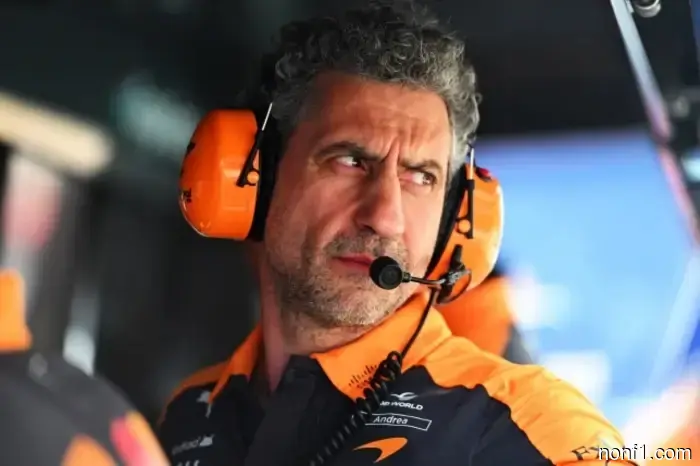
Stella: In difficult times, the strength of the team is manifested in unity.
Lando Norris won the Hungarian Grand Prix, marking McLaren's first victory in 2026. It was an important achievement that allowed the team to head into the summer break in good spirits. Andrea Stella, the team principal from Woking, summarized the results of the first half of a challenging season in an interview with the McLaren press service...
Question: When we arrived in Melbourne, you mentioned that 2026 would primarily be a learning season, during which much would depend on how quickly we could understand the nuances of the new regulations, as well as the team's ability to upgrade the car. With half of the championship behind us, what can be considered the most important lesson learned by McLaren?
Andrea Stella: I believe the most important lesson from the past seven months of hard work is that in difficult times, the strength of the team is manifested in its unity. We demonstrated this primarily to ourselves, and now we are gradually returning to our previous high level.
At the beginning of the season, we had to undergo a complete reset—not only because Formula 1 experienced the most radical regulatory changes in its history. Most importantly, we realized how high a price we paid for the efforts we made during 2025 to win in both championship standings.
We could have fallen apart, started looking for excuses for not being able to start the new season at the level we finished the previous one, but that did not happen. We tried to understand the reasons for our lag, both technical and strategic, and gathered our strength. Therefore, I am truly proud of our team.
Question: Was there a specific weekend, a particular set of technical innovations, or perhaps a meeting with engineers that you now consider a turning point in the season?
Andrea Stella: There wasn't a specific event that changed everything, but gradually, we grew to understand the complexity of the tasks ahead of us and the scale of the work that needed to be done. Paradoxically, the forced break in April allowed us to fully focus on analyzing the performance of the MCL40 and understand how to adjust our work with the car.
Moreover, over the past few months, we had the opportunity to better understand the power unit supplied to us by Mercedes and, together with our partners, figure out how to best utilize it. It was quite a lengthy process, with both successes and failures, but now we are starting to see its fruits. Nevertheless, I expect that the challenging tasks of optimizing the power unit will need to be addressed until the end of this season.
When it comes to the car's performance, the most important weekend was, of course, the Hungarian one: we managed to finish the first half of the season on a high note. Not only because we achieved such a result: primarily, the updated aerodynamic package introduced at the Hungaroring was the result of a shift in our approach to car upgrades. This allowed us to make significant progress in terms of competitiveness.
Question: The duo of Lando Norris and Oscar Piastri can be considered one of the team's key strengths. How important was the contribution of the drivers to the car's upgrades and the process of understanding the new regulations?
Andrea Stella: I am very pleased with how they worked at the beginning of the season. The transition to the new regulations was a kind of shock for them and for the other twenty drivers in the championship. The new generation of cars requires not only adjustments in driving style—more importantly, it was about understanding how to fully utilize the potential of the new power units.
At times, the learning process was fraught with difficulties and progressed slowly, especially in the early stages of the season when we faced various reliability issues. But both drivers reacted appropriately to all of this and continued to work purposefully with the team.
We need to achieve further improvements, primarily in the area of power unit performance, and we are working productively with our partners at Mercedes, including refining everything related to the driver's interaction with the power unit.
But I also appreciate another important aspect—the way the drivers collaborate with each other. Last year, they were rivals, both fighting for the title, so it couldn't be guaranteed that harmony would remain between them. However, the atmosphere in the team not only did not change—the relationships between them and the team have actually become even stronger.
Question: In the second half of the season, it is inevitable to start preparing for 2027. How difficult is it to find the right balance between continuing to refine the MCL40 and redirecting resources to the project aimed at the next season?
Andrea Stella: In this regard, we have a simpler task than in 2025. The transition from one project to the next is going much more smoothly now, as the regulatory changes are relatively minor. We must remember that this generation of cars is still in its early stages of development—this applies to both the chassis and the power unit. Accordingly, almost everything that 2026 teaches us will be useful in the new season.
Of course, we need to find the right balance in terms of using financial resources within a limited budget. This also involves the time allocated for research in the wind tunnel, for work on the computer simulator, and for resource allocation in design and manufacturing. But I believe we are successfully addressing all these tasks.
Question: What tasks does the team face in the second half of the championship? Do you still believe that McLaren can return to being title contenders?
Andrea Stella: That’s a tough question, but there is a clear answer. If we continue the season as we performed in Hungary, then I believe we can achieve a lot. But for that, we need to continue the intensive modernization of the MCL40 and strive to outpace our competitors in terms of pace. And they, of course, are also not standing still.
The outcome will depend on how effective the technical solutions we plan to implement turn out to be. In the first part of the season, we faced more challenges in this regard than we could have anticipated. But experience from previous years shows that when we gain momentum and reach a certain level, we manage to maintain it.
There are still 12 races ahead, so we will have plenty of opportunities, as 546 points are up for grabs. Of course, the gap in both championship standings remains significant, but we remember the lessons from last season.
As I always tell the team, since we are organizing a new showcase in the McLaren Technology Centre to display the trophies won by the team, it is our duty to make every effort to continue filling it...
Other articles
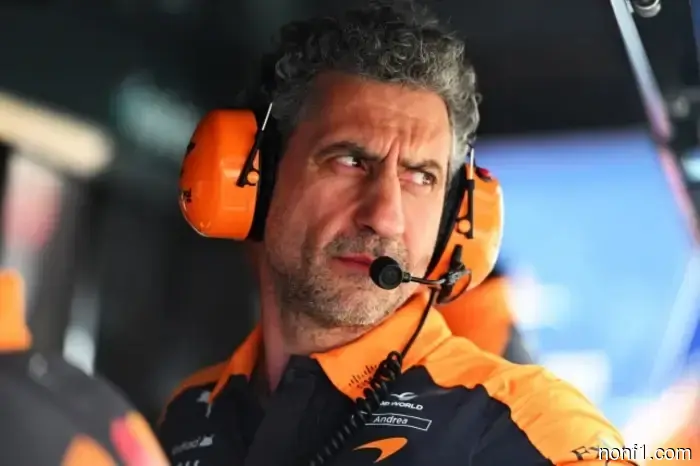 Stella: In difficult times, the strength of the team is manifested in unity.
The head of the McLaren team summarized the first half of the season in an interview with his press service...
Stella: In difficult times, the strength of the team is manifested in unity.
The head of the McLaren team summarized the first half of the season in an interview with his press service...
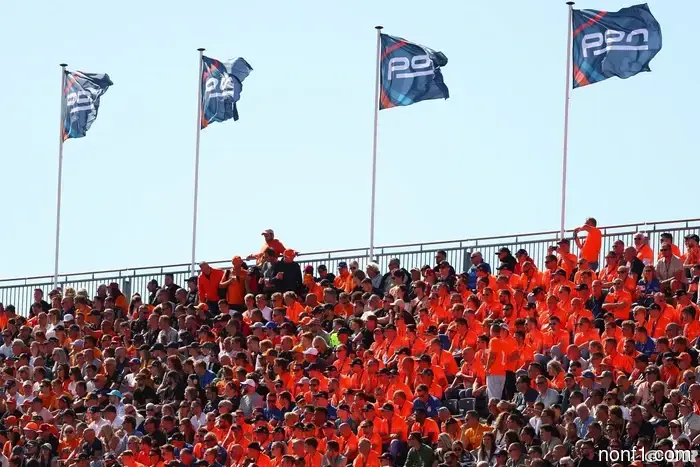 Ecclestone claims that Verstappen is the reason the Dutch GP could take place.
Formula 1 | Bernie Ecclestone stated that Formula 1 would not have returned to Zandvoort without Max Verstappen. The Dutch Grand Prix made its comeback to the calendar in 2021 (...)
Ecclestone claims that Verstappen is the reason the Dutch GP could take place.
Formula 1 | Bernie Ecclestone stated that Formula 1 would not have returned to Zandvoort without Max Verstappen. The Dutch Grand Prix made its comeback to the calendar in 2021 (...)
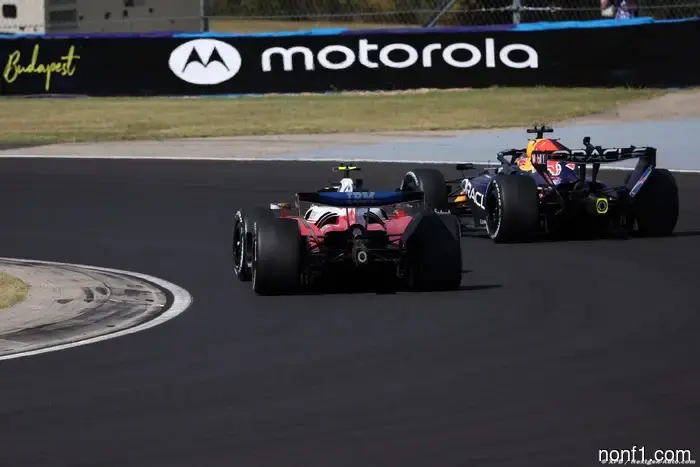 Kristensen supports the 2026 regulations despite the perception of 'artificial' racing.
Formula 1 | Tom Kristensen, a nine-time Le Mans champion and Audi ambassador, has stood up for the contentious 2026 regulations in Formula 1, even though he acknowledges that the racing (...)
Kristensen supports the 2026 regulations despite the perception of 'artificial' racing.
Formula 1 | Tom Kristensen, a nine-time Le Mans champion and Audi ambassador, has stood up for the contentious 2026 regulations in Formula 1, even though he acknowledges that the racing (...)
Stella: In difficult times, the strength of the team is manifested in unity.
The head of the McLaren team summarized the first half of the season in an interview with his press service...