
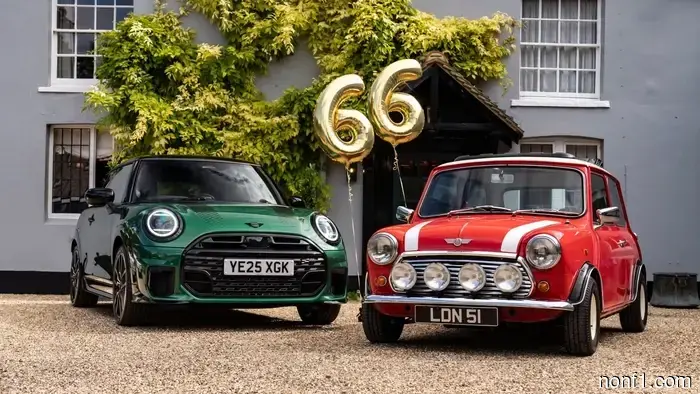
The Iconic Front-Wheel-Drive Mini Cooper Could Change Soon
BMW Group
The latest automotive news and reviews, straight to the point
Subscribe to our free daily newsletter for the most important stories delivered directly to you every weekday.
Since reviving the Mini brand in 2000, BMW has taken it in some surprising directions, expanding the classic hatchback into wagons and SUVs, and even transforming it into a “coupe” adorned with a backwards baseball cap. However, recent insights from the development team suggest that the next evolution could veer even more from Mini’s historical roots: it might feature rear-wheel drive.
Indeed, the well-known front-wheel-drive Mini—a car that has been closely associated with that drivetrain and its space-saving advantages, especially with a transversely mounted engine—could switch to rear-wheel drive in the next iteration, according to statements made by BMW officials to Autocar.
This shift seems to be influenced by the existing hardware at BMW’s disposal. As per the publication, BMW's Gen 6 platform, which supports the Neue Klasse models, is designed with a rear-axle drive unit and gearbox. Although there are dual-motor versions of the i3 and iX3 that provide front-wheel propulsion, these motors are supplementary.
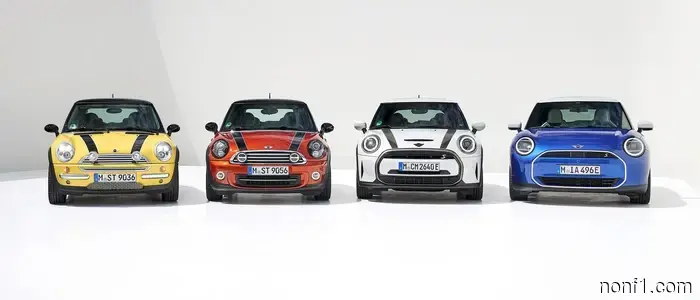
BMW has produced four generations of Mini Coopers, with the EV made in China on the far right. Design chief Holger Hampf suggested that the upcoming model might take inspiration from the original "R50" generation, which is shown first on the left.
According to Autocar, BMW engineers stated that an equivalent primary drive motor for the front axle is not in development, making it likely that the next Mini EV will reverse the traditional layout. Interestingly, the forthcoming electric BMW 1 Series—previously a front-wheel-drive vehicle—is also rumored to undergo a similar change.
None of this, however, addresses Mini's future regarding internal combustion engines. Fans will note that the current Cooper EV, which is unavailable in the United States, is fundamentally different from the gas-powered version that looks similar. The electric variant is produced by Great Wall Motor in China, while the contemporary gas Mini is a complete redesign of the previous generation.
Will BMW maintain this strategy in the future, offering a front-wheel-drive, gasoline-powered Mini alongside a rear-drive, electric version? Or could the company choose to provide a hybrid based on the EV? Theoretically, that would need to be all-wheel drive, but it would at least be a bit closer to tradition.
It’s important to emphasize that these scenarios are purely speculative, based on what Autocar has learned from BMW executives. However, after years of seeing well-known models switch from rear- to front-wheel drive—much to the displeasure of enthusiasts—it’s unusual to consider a scenario where the opposite occurs. It’s even more surprising to think it could happen to the Mini Cooper specifically.
Have a tip? Contact tips@thedrive.com.
Other articles
 Toyota States That the Allocation of GR GT Supercar for the US Is Already Sold Out ‘Intentionally’
Toyota is solely focused on selling its latest supercar to "individuals who will actually drive it," rather than those looking to resell it.
Toyota States That the Allocation of GR GT Supercar for the US Is Already Sold Out ‘Intentionally’
Toyota is solely focused on selling its latest supercar to "individuals who will actually drive it," rather than those looking to resell it.
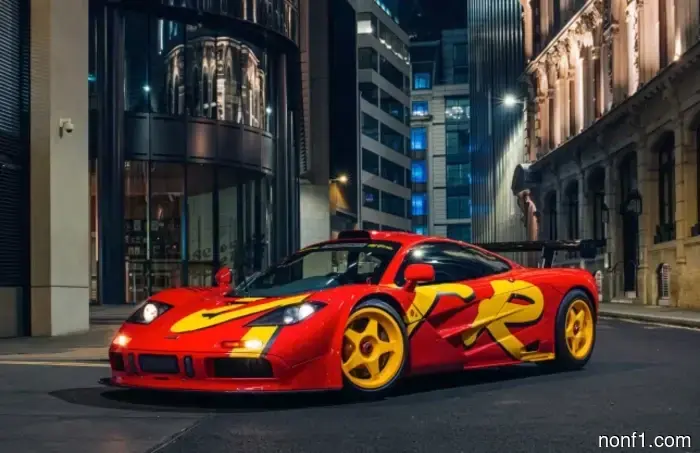 Unique McLaren F1 GTR sold for a record amount
At an auction held at the traditional car festival in Monterey, a unique McLaren F1 GTR sports car was sold for $34,655,000...
This is a record amount, as the car became the most expensive sports car in the history of this brand.
Unique McLaren F1 GTR sold for a record amount
At an auction held at the traditional car festival in Monterey, a unique McLaren F1 GTR sports car was sold for $34,655,000...
This is a record amount, as the car became the most expensive sports car in the history of this brand.
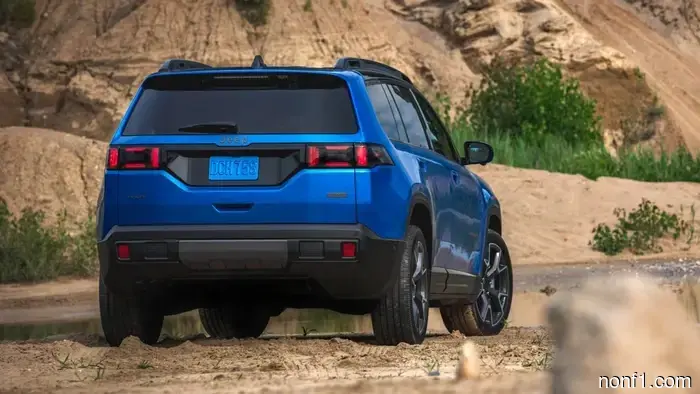 The Jeep Cherokee has just made a comeback, only to be substituted in three years: TDS.
Stellantis intends to launch a next-generation Jeep Cherokee in a surprisingly brief period, manufactured in the U.S. with a new architecture.
The Jeep Cherokee has just made a comeback, only to be substituted in three years: TDS.
Stellantis intends to launch a next-generation Jeep Cherokee in a surprisingly brief period, manufactured in the U.S. with a new architecture.
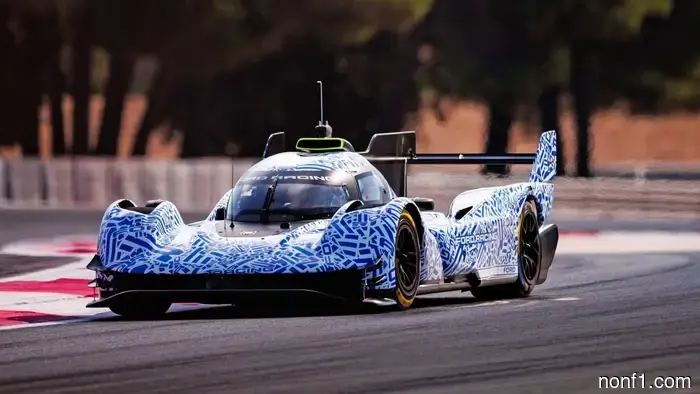 Witness and listen to Ford's first Le Mans prototype in six decades as it finally makes its debut on the track.
Ford's new V8-equipped race car will take inspiration from the GT40 and aim for overall triumph at Le Mans next year.
Witness and listen to Ford's first Le Mans prototype in six decades as it finally makes its debut on the track.
Ford's new V8-equipped race car will take inspiration from the GT40 and aim for overall triumph at Le Mans next year.
 Orihara: Honda did not raise any claims against Aston Martin.
Despite a difficult start to the season and a large number of issues with the Honda power unit, Aston Martin did not make any complaints to the Japanese manufacturer. This was stated by the chief engineer and head of the Honda Racing team, Shintaro Orihara.
Orihara: Honda did not raise any claims against Aston Martin.
Despite a difficult start to the season and a large number of issues with the Honda power unit, Aston Martin did not make any complaints to the Japanese manufacturer. This was stated by the chief engineer and head of the Honda Racing team, Shintaro Orihara.
 Oscar Piastri about his working day at the McLaren base
On the McLaren website, publications periodically appear under the heading "A Day in the Life...", and today in such a text, Oscar Piastri talks about his daily life at the base in Woking...
Oscar Piastri about his working day at the McLaren base
On the McLaren website, publications periodically appear under the heading "A Day in the Life...", and today in such a text, Oscar Piastri talks about his daily life at the base in Woking...
The Iconic Front-Wheel-Drive Mini Cooper Could Change Soon
BMW's upcoming electric vehicle platform could necessitate that the next Mini adopts rear-wheel drive for the first time in the storied hatchback's history.