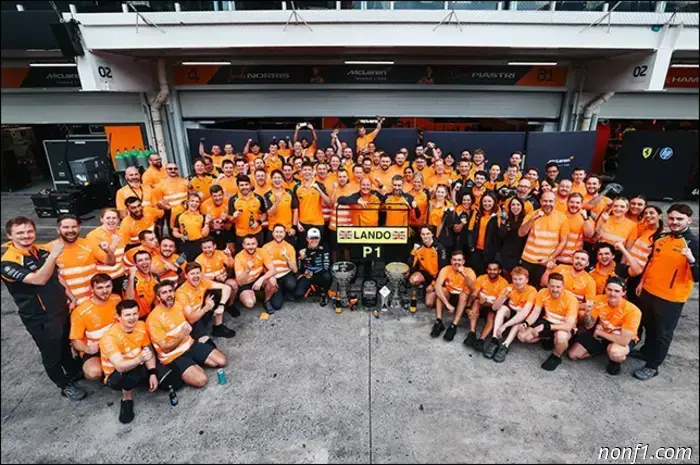
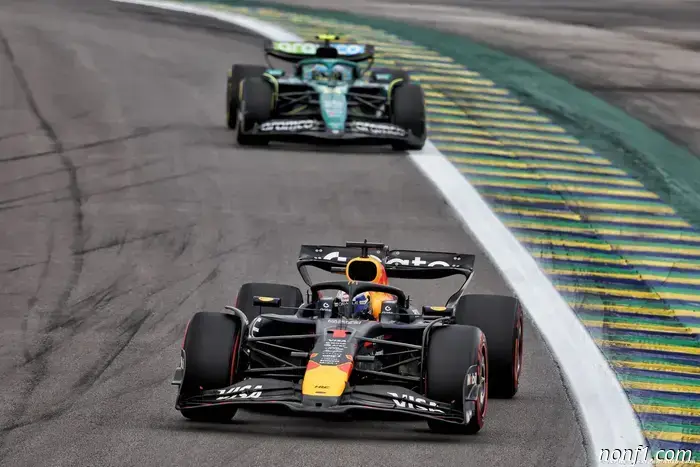
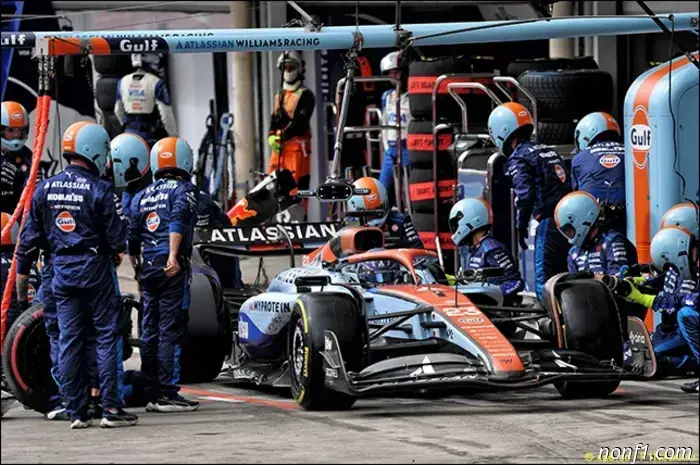
Гран-при Сан-Паулу: Процедура смены шин во время гонки.

      После завершения Гран-при Сан-Паулу Pirelli опубликовали данные о стратегии смены шин во время гонки:

      Гонщик

       Старт

       1 пит-стоп

       2 пит-стоп

       3 пит-стоп


      Л. Норрис

       C3N

       C4U(30)

       C3U(50)


      К. Антонелли

       C4U

       C3N(21)

       C3U(47)


      М. Ферстаппен

       C2N

       C3N(07)

       C3N(34)

       C4N(54)


      Д. Расселл

       C3U

       C4U(34)

       C3U(48)


      О. Пиастри

       C3N

       C4U(38)

       C3U(51)


      О. Берман

       C4U

       C3N(17)

       C3U(42)


      Л. Лоусон

       C4U

       C3N(19)


      А. Хаджар

       C4U

       C3U(18)

       C3N(37)


      Н. Хюлкенберг

       C3N

       C4U(36)


      П. Гасли

       C4U

       C3N(18)

       C3U(39)


      А. Элбон

       C3U

       C4U(35)

       C3N(55)


      Э. Окон

       C2N

       C3N(08)

       C3N(47)


      К. Сайнс

       C4N

       C3N(17)

       C3N(38)


      Ф. Alonso

       C2N

       C3U(28)

       C3N(46)


      Ф. Колапинто

       C3N

       C4N(29)

       C3N(43)


      Л. Стролл

       C2N

       C3U(29)

       C3U(54)


      Ю. Цунода

       C2N

       C3N(02)

       C3N(24)

       C3N(47)


      Л. Хэмилтон

       C4N

       C2N(02)

       C3N(14)

       C3U(32)


      Ш. Леклер

       C3N


      Г. Бортолето

       C4N


      Сокращения: C2 - Hard, C3 - Medium, C4 - Soft. N - новые шины. U - прикатанные шины. В скобках указано количество кругов до пит-стопа.

Другие статьи

Двойной финиш Ferrari в Сан-Паулу Двойной финиш Ferrari в Сан-Паулу Гонка в Сан-Паулу стала второй в сезоне после Гран При Нидерландов, где оба гонщика Ferrari не закончили гонку. В результате этого этапа Ferrari опустилась с второго на четвертое место в Кубке конструкторов. Марко сокрушается, что Red Bull «на вечность» отстаёт от McLaren Марко сокрушается, что Red Bull «на вечность» отстаёт от McLaren Formula 1 | Red Bull признала, что была застигнута врасплох отсутствием сцепления в Бразилии, из-за чего Макс Ферстаппен занял всего лишь 6-е место в спринтовой квалификации на одной из его (...) Alpine признает финансовую выгоду от повторного подписания контракта с Колапинто. Alpine признает финансовую выгоду от повторного подписания контракта с Колапинто. Формула-1 | Команда Alpine подтвердила, что Франко Колапинто останется в её составе в 2026 году, положив конец спекуляциям о его будущем. 22-летний (…) Масса возвращается в паддок Формулы-1 на фоне борьбы вокруг Crashgate Масса возвращается в паддок Формулы-1 на фоне борьбы вокруг Crashgate Формула-1 | Фелипе Масса сделал редкое появление в паддоке Формулы-1 на домашнем Гран-при в Бразилии в эти выходные, в то время как он ожидает исхода своего нашумевшего (…) Макс Ферстаппен: Необходимо трезво оценивать возможности. Макс Ферстаппен: Необходимо трезво оценивать возможности. Макс Ферстаппен отметил, что ему понадобится удача, чтобы обойти Ландо Норриса и Оскара Пиастри в конкурентной борьбе за титул. In 2025, as the popularity of short videos and digital art continues to soar, a Chinese AI tool called Kling AI is transforming the landscape of content creation. Developed by Kuaishou’s internal team, this AI video generation platform is revolutionizing the work of creators with its technological innovations and diverse applications. The screenshots included in this article showcase the covers of award-winning videos produced with this platform for Kling AI’s own video creation competition.

3D Spatiotemporal Modeling with Physical Realism
Kling AI's primary strength lies in its proprietary 3D spatiotemporal attention mechanism and diffusion transformer architecture. Unlike conventional AI video generation tools that depend on stitching together static images, Kling AI utilizes a 3D VAE (Variational Autoencoder) framework to create visuals that can mimic realistic motion paths and physical dynamics. For example, during the 2025 Asian Winter Games opening ceremony, the tool was employed to create effects such as the crystallization of athletes and intricate representations of reindeer fur, achieving high visual precision and dynamic lighting effects. These technical features facilitate the creation of continuous and physically authentic motion in intricate scenarios, ranging from falling petals to human activity.

Feature Matrix Encompassing the Entire Process from Creative Concept to Final Production
Kling AI’s features are tailored to meet the needs of creators, forming a complete cycle of generation, editing, and optimization. The platform supports multi-modal generation in three formats: text-to-video, image-to-video, and video continuation. For instance, a user can generate a 1080P video in five seconds by entering “a cyberpunk-style mechanical cat walking in neon rain.” When a static image is uploaded, the AI automatically animates the background and character expressions to create a five-second dynamic clip. For advanced control, the platform includes features like locking the first and last frames, providing camera movement instructions, and enabling character lip-syncing. Directors can modify lighting intensity, motion amplitude, and camera focus changes using text commands. The AI editing toolbox encompasses post-production functions, such as image enhancement, localized repainting, and style transfer. Users can, for example, transform a standard video into an ink-wash painting style with a single click or correct noise issues in older footage.

Technological Upgrades Foster the Evolution of the Creative Engine
In late September, Kling AI released its newest 2.5 Turbo model, which incorporates significant enhancements to its text-to-video and image-to-video functionalities. The new model has demonstrated improvements across multiple areas, such as prompt compliance, motion rendering, style consistency, and aesthetic quality. Its multi-element editor notably allows users to add or substitute elements in key video frames, creating an interactive experience of “altering the story with one sentence.”

Future Outlook: Making AI-Powered Creation More Accessible
As of November, Kling AI has reportedly surpassed 45 million users globally. With declining technology costs and enhanced usability, Kling AI is facilitating the shift of AI-powered creation from professional domains to the general public. Independent directors, marketing professionals, and casual short-video creators can now unleash their creativity with fewer barriers. In this AI-driven transformation of content production, AI video generation platforms are more than mere tools; they are bridges connecting imagination with reality. As technological advancements and ecosystem development converge, we may be witnessing the dawn of a new era in digital content creation.

Jessie Wu is a technology journalist based in Shanghai, covering consumer electronics, semiconductors, and the gaming industry for TechNode. You can reach her via e-mail at [email protected]. In 2025, as the popularity of short videos and digital art continues to soar, a Chinese AI tool called Kling AI is transforming the landscape of content creation. Developed by Kuaishou’s internal team, this AI video generation platform is revolutionizing the work of creators with its technological innovations and diverse applications. The screenshots included in this article showcase the covers of award-winning videos produced with this platform for Kling AI’s own video creation competition. 3D Spatiotemporal Modeling with Physical Realism Kling AI's primary strength lies in its proprietary 3D spatiotemporal attention mechanism and diffusion transformer architecture. Unlike conventional AI video generation tools that depend on stitching together static images, Kling AI utilizes a 3D VAE (Variational Autoencoder) framework to create visuals that can mimic realistic motion paths and physical dynamics. For example, during the 2025 Asian Winter Games opening ceremony, the tool was employed to create effects such as the crystallization of athletes and intricate representations of reindeer fur, achieving high visual precision and dynamic lighting effects. These technical features facilitate the creation of continuous and physically authentic motion in intricate scenarios, ranging from falling petals to human activity. Feature Matrix Encompassing the Entire Process from Creative Concept to Final Production Kling AI’s features are tailored to meet the needs of creators, forming a complete cycle of generation, editing, and optimization. The platform supports multi-modal generation in three formats: text-to-video, image-to-video, and video continuation. For instance, a user can generate a 1080P video in five seconds by entering “a cyberpunk-style mechanical cat walking in neon rain.” When a static image is uploaded, the AI automatically animates the background and character expressions to create a five-second dynamic clip. For advanced control, the platform includes features like locking the first and last frames, providing camera movement instructions, and enabling character lip-syncing. Directors can modify lighting intensity, motion amplitude, and camera focus changes using text commands. The AI editing toolbox encompasses post-production functions, such as image enhancement, localized repainting, and style transfer. Users can, for example, transform a standard video into an ink-wash painting style with a single click or correct noise issues in older footage. Technological Upgrades Foster the Evolution of the Creative Engine In late September, Kling AI released its newest 2.5 Turbo model, which incorporates significant enhancements to its text-to-video and image-to-video functionalities. The new model has demonstrated improvements across multiple areas, such as prompt compliance, motion rendering, style consistency, and aesthetic quality. Its multi-element editor notably allows users to add or substitute elements in key video frames, creating an interactive experience of “altering the story with one sentence.” Future Outlook: Making AI-Powered Creation More Accessible As of November, Kling AI has reportedly surpassed 45 million users globally. With declining technology costs and enhanced usability, Kling AI is facilitating the shift of AI-powered creation from professional domains to the general public. Independent directors, marketing professionals, and casual short-video creators can now unleash their creativity with fewer barriers. In this AI-driven transformation of content production, AI video generation platforms are more than mere tools; they are bridges connecting imagination with reality. As technological advancements and ecosystem development converge, we may be witnessing the dawn of a new era in digital content creation. Jessie Wu is a technology journalist based in Shanghai, covering consumer electronics, semiconductors, and the gaming industry for TechNode. You can reach her via e-mail at [email protected]. В Сан-Паулу Оливер Берман продолжил свою серию успешных выступлений и завоевал 6-е место в главной гонке уикенда. Эстебан Окон снова выступил хуже своего напарника, завершив гонку на 12-й позиции.

Гран-при Сан-Паулу: Процедура смены шин во время гонки.

По завершении Гран-при Сан-Паулу Pirelli представила данные о том, как командами осуществлялась замена шин в ходе гонки...