
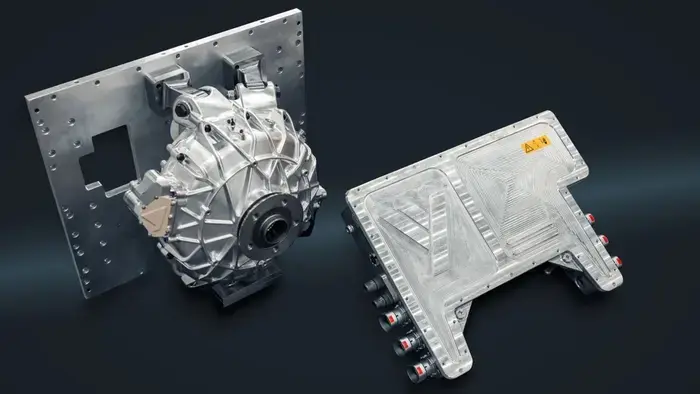
These 1,000-HP electric vehicle motors serve the dual purpose of functioning as rear brakes.
YASA
The latest automotive news and reviews, no nonsense
Subscribe to our free daily newsletter to receive the most important stories every weekday.
The British company YASA asserts that its axial flux motors will deliver substantial power while reducing the need for large rear brakes—at least for the back of the vehicle.
Thanks to regenerative braking, electric vehicles (EVs) depend less on their mechanical brakes compared to internal combustion engine vehicles. Moreover, braking force is predominantly applied to the front wheels regardless of the powertrain, allowing for smaller rear brakes. This is how the Volkswagen ID.4 can utilize rear drum brakes, for instance. However, YASA is pushing this concept further.
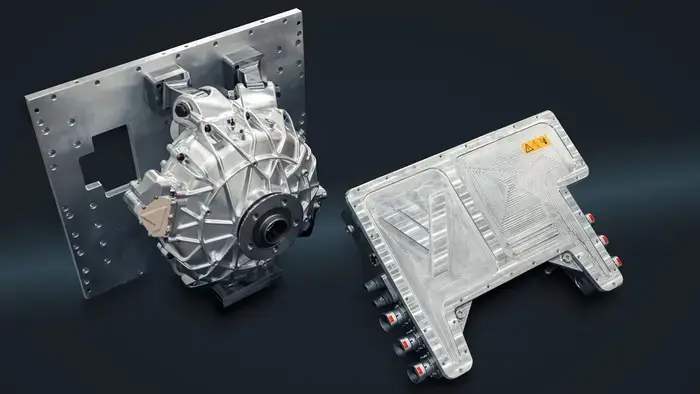
In a recent post on LinkedIn, the company revealed a prototype of an in-wheel motor that combines its current axial flux design with a compact inverter. This combination can produce up to 750 kilowatts (986 horsepower) per wheel, according to YASA, which is a fully owned subsidiary of Mercedes-Benz, and it could significantly reduce the size of the rear brake components.
YASA's Chief Technical Officer, Tim Woolmer, expanded on this in the comments, stating that “the motor is engineered to fulfill all thermal requirements of a rear brake” and mentioned that potential safety measures could include a minimal emergency brake or disconnecting power from the motor, allowing it to function as a brake even if the electronic systems fail.
YASA
The proposed benefits include decreased weight and a more compact design. The motor itself weighs only 27.9 pounds without its inverter and boasts a high power density. In a dynamometer test, it produced 26.7 kW per pound, a figure YASA claims would set a world record if officially confirmed. Considering the lighter weight from scaled-down brake components and other reductions, YASA claims the in-wheel configuration could result in a savings of 440 pounds.
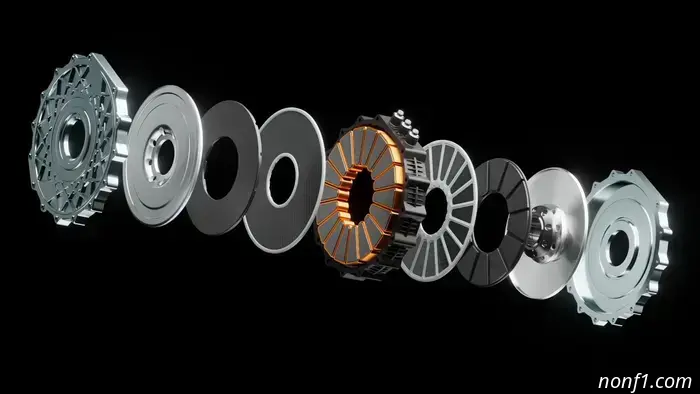
Many companies have attempted to promote in-wheel motors for electric vehicles, and YASA’s technology is particularly well-suited for this idea. Axial flux motors are significantly slimmer than traditional radial flux motors since the magnetic force driving them—the flux—travels parallel to the rotation axis as opposed to radially outward. This allows for a more compact structure that can fit better within wheel hubs.
The weight reduction YASA claims is crucial for an in-wheel motor, as unsprung weight is a significant challenge to commercialization. While the design is still in the prototype stage, there are obstacles that may need to be addressed. The company has not provided specific timelines for production, but parent company Mercedes has featured YASA motors in its Vision One-Eleven and AMG GT XX concept vehicles.
Have a tip? Send it to: [email protected]

Other articles
 Newey is adamant that he can manage the team leader position.
Formula 1 | Adrian Newey's growing visibility at Aston Martin - first in Qatar and now in Abu Dhabi - is being interpreted as the strongest indication yet that he (...)
Newey is adamant that he can manage the team leader position.
Formula 1 | Adrian Newey's growing visibility at Aston Martin - first in Qatar and now in Abu Dhabi - is being interpreted as the strongest indication yet that he (...)
 McLaren executed the strategy effectively to overcome Max.
McLaren executed the strategy effectively to overcome Max.
McLaren executed the strategy effectively to overcome Max.
 Hamilton: Right now, I don't have a mentality focused on next year.
Formula 1 | As Lewis Hamilton approaches the winter break, the rumors surrounding a possible early exit from Ferrari are more pronounced than ever, especially following his comments in Abu Dhabi (...)
Hamilton: Right now, I don't have a mentality focused on next year.
Formula 1 | As Lewis Hamilton approaches the winter break, the rumors surrounding a possible early exit from Ferrari are more pronounced than ever, especially following his comments in Abu Dhabi (...)
 Alonso suggests the presence of 'favourites' while Max seeks out supporters.
Formula 1 | Fernando Alonso has openly acknowledged that he has preferred drivers on the track, adding an extra layer of excitement to a title showdown in which Max Verstappen may require supportive cars (…)
Alonso suggests the presence of 'favourites' while Max seeks out supporters.
Formula 1 | Fernando Alonso has openly acknowledged that he has preferred drivers on the track, adding an extra layer of excitement to a title showdown in which Max Verstappen may require supportive cars (…)
 Hamilton nearly raced for Sauber, according to its founder.
Formula 1 | Peter Sauber and his spouse Christiane - the 'C' that has been part of every Sauber chassis name for thirty years - have made their way to Abu Dhabi for one last (…)
Hamilton nearly raced for Sauber, according to its founder.
Formula 1 | Peter Sauber and his spouse Christiane - the 'C' that has been part of every Sauber chassis name for thirty years - have made their way to Abu Dhabi for one last (…)
 Hamilton dismisses the latest retirement rumors.
Formula 1 | Lewis Hamilton's disastrous season reached a new low point in Abu Dhabi, yet the seven-time world champion is adamant that he won't be quitting anytime soon.
Hamilton dismisses the latest retirement rumors.
Formula 1 | Lewis Hamilton's disastrous season reached a new low point in Abu Dhabi, yet the seven-time world champion is adamant that he won't be quitting anytime soon.
These 1,000-HP electric vehicle motors serve the dual purpose of functioning as rear brakes.
YASA is experimenting with in-wheel axial flux motors that generate significant power, decrease overall weight, and remove the necessity for large rear brakes.