
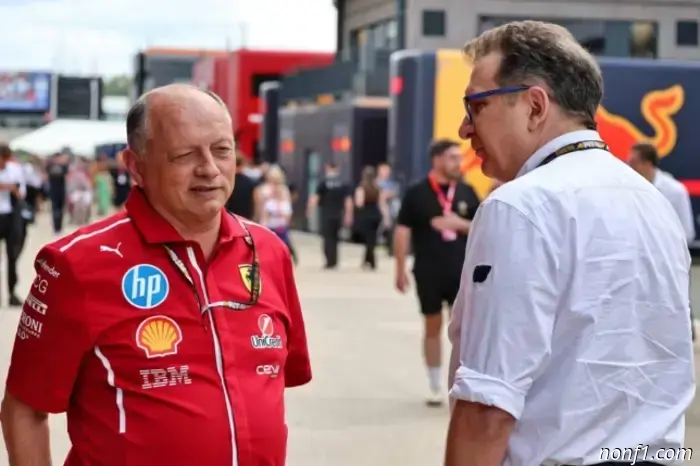
The FIA is ready to intervene in the overtaking situation.
The FIA will be ready to intervene if it turns out that the overtaking situation in Formula 1 in 2026 is excessively complicated and does not meet the championship organisers’ expectations. The same will happen if there are too many overtakes.
A new technical regulation has come into force for the new season, there are many changes and they are very far‑reaching, so it is difficult to predict how all this will affect the nature of the on-track battles. On the one hand, the FIA and Formula 1 hope that the combination of active aerodynamics and a special overtaking mode, when the power unit delivers maximum power for a short time, should have an effect; on the other hand, we will only see the whole truth once the real races begin.
Nicholas Tombazis, the FIA’s director for single-seater racing, spoke about the measures the federation is prepared to take to influence overtaking statistics if necessary.
“In that regard we are still looking for fine tuning,” The Race quotes Tombazis as saying. “We are analysing the latest results obtained through computer modelling technologies, and we have ways to influence the situation by adjusting the rules.
“For example, if we see that overtaking is too difficult, we have the ability to make it a bit easier. Or if it turns out that everything is too simple, we can add a bit more complexity.”
According to Tombazis, the FIA’s task is to find a balanced approach: “The range of conditions for overtaking should be fairly narrow. Overtaking should not be too easy. We don’t want cars to simply pass one another without drivers having to engage in a fight. We want there to always be a battle on track.
“But we also definitely don’t want overtaking to be impossible. It should not be the case that after the first lap it is already clear in what order the drivers will finish. We have ways to influence the situation in both directions.
“When on-track work begins and we get the final calculations related to the cars, etc., it may be necessary to apply some of these measures and make a number of small adjustments.”
Teams and drivers will need time to study the new power units, understand their various operating modes and master their proper use. It is also important to understand how and when it is important to save energy and when to deploy it, without becoming an easy target for rivals.
“A difference in energy reserves can create a situation where one car cannot defend its position from attacks by others,” Tombazis added. “But we believe that teams and drivers will gradually get used to it, find the right approaches and be able to avoid such situations.
“If we were to put all 22 cars out on track right now and tell everyone to start racing, it would, of course, become apparent that not everyone is fully ready for it — I’m sure of that. But once people understand how to use all this, they will learn how to act so as not to become easy prey for rivals on the straights.”

Other articles
 Formula 1, 2026 season: Championship calendar
The Formula 1 calendar for the 2026 season...
Formula 1, 2026 season: Championship calendar
The Formula 1 calendar for the 2026 season...
 Piastri: My self-confidence will stay with me forever.
Oscar Piastri knows for sure, he knows for sure that although in 2025 he couldn't fulfill his dream, it was a year in which he learned a lot...
Piastri: My self-confidence will stay with me forever.
Oscar Piastri knows for sure, he knows for sure that although in 2025 he couldn't fulfill his dream, it was a year in which he learned a lot...
 James Vaulz fondly remembers 2025.
James Vaulz, congratulating everyone on the arrival of 2026, noted that he gladly recalls the past year while looking through photographs that captured its brightest moments...
James Vaulz fondly remembers 2025.
James Vaulz, congratulating everyone on the arrival of 2026, noted that he gladly recalls the past year while looking through photographs that captured its brightest moments...
 Season 2026: Team Rosters
Formula 1 team lineups for the 2026 season...
Season 2026: Team Rosters
Formula 1 team lineups for the 2026 season...
The FIA is ready to intervene in the overtaking situation.
The FIA will be ready to intervene if it turns out that the situation with overtaking in Formula 1 in 2026 is overly complicated and does not meet the expectations of the championship organisers. The same will happen if there are too many overtakes...