
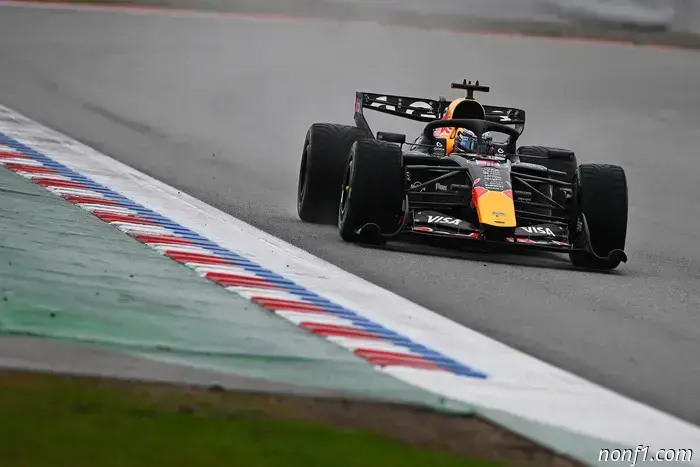
Red Bull cautions that regulations might secure an engine advantage.
"Certain components require 12 weeks for production."
Ben Hodgkinson has cautioned that the 2026 power unit regulations in Formula 1 may inadvertently entrench an early competitive advantage, as there is an increasing sense in the paddock that Mercedes could already be establishing a clear standard. As 'shakedown week' in Barcelona nears its conclusion, the head of the Red Bull-Ford engine division stated that the FIA's homologation rules might unintentionally favor manufacturers that start off strong, offering limited chances for others to catch up.
"I would personally prefer to eliminate the homologation system and compete at full capacity without any restrictions," Hodgkinson remarked. "That is my genuine wish. With existing cost caps and limits on dyno time, I believe there are sufficient constraints already in place." The former Mercedes engineer emphasized that the timeline for developing a power unit differs significantly from that of chassis upgrades, something he feels regulators don’t fully appreciate.
"What I believe the rule makers don’t fully grasp is that the timeline for advancing a power unit concept is considerably longer than that for a chassis," he elaborated. "When a change is needed, it affects not just two cars, but potentially the entire engine pool—all 12 engines. This process is time-consuming."
Hodgkinson pointed out that the homologation regulations also prevent manufacturers from taking risks. "We cannot simply gamble on something that hasn’t been thoroughly tested, as that would place us in a challenging situation," he noted. "Some components take 12 weeks to produce, followed by a similar duration for validation, and then additional time to integrate them into the race pool."
Consequently, he indicated that it might require over six months—up to 36 weeks—for a new power unit design to be ready for a competitive grand prix vehicle. "For these reasons, if one team possesses an advantage in power units at the first race, it will take a significant amount of time for others to catch up," Hodgkinson cautioned.
These remarks come as Mercedes is largely regarded as the standout performer so far in Barcelona, drawing parallels with its dominance at the outset of the 2014 hybrid era. Meanwhile, Red Bull-Ford’s new power unit has quietly made a positive impression, despite the team publicly downplaying expectations.
James Vowles has referred to Red Bull’s efforts to date as "a brilliant job," while rumors regarding potential overheating issues have been mitigated by the drivers testing the engine on the track. Following tests with Racing Bulls, Liam Lawson expressed optimism. "The reliability is good, so we can mark that off our list," Lawson stated in Barcelona.

Other articles
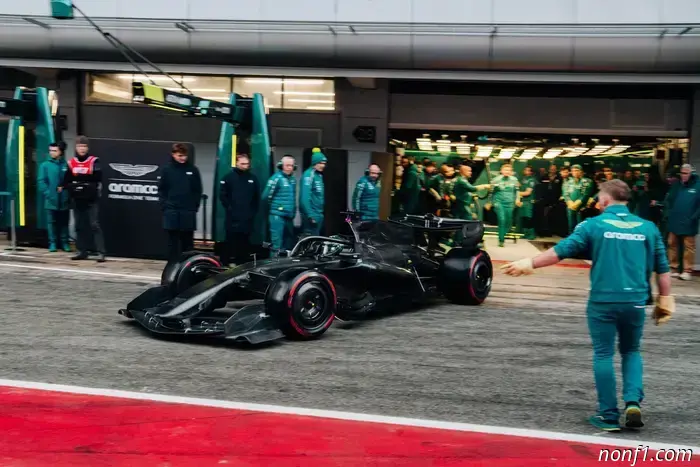 Aston unveils revolutionary car designed by Newey, while Mercedes delivers a 'surprise'.
Formula 1 | Aston Martin made its entry into Formula 1's Barcelona shakedown late Thursday, presenting a remarkably innovative 2026 car that stands in stark contrast to (…)
Aston unveils revolutionary car designed by Newey, while Mercedes delivers a 'surprise'.
Formula 1 | Aston Martin made its entry into Formula 1's Barcelona shakedown late Thursday, presenting a remarkably innovative 2026 car that stands in stark contrast to (…)
 Horner - I still have goals to achieve in Formula 1.
Formula 1 | Christian Horner has publicly addressed his removal from Red Bull for the first time, reiterating that he is still strongly interested in returning to Formula 1.
Horner - I still have goals to achieve in Formula 1.
Formula 1 | Christian Horner has publicly addressed his removal from Red Bull for the first time, reiterating that he is still strongly interested in returning to Formula 1.
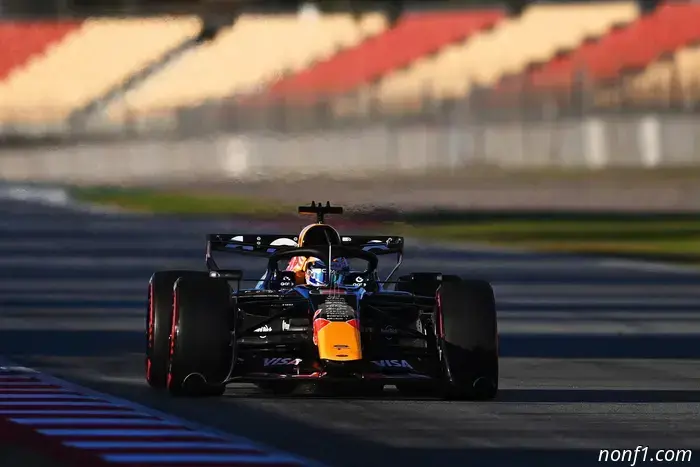 Verstappen feeling 'a little unwell' as Hamilton leads the timings.
Formula 1 | Max Verstappen disclosed that he was unwell during the closed-door shakedown week in Barcelona, providing significant context for his limited (…)
Verstappen feeling 'a little unwell' as Hamilton leads the timings.
Formula 1 | Max Verstappen disclosed that he was unwell during the closed-door shakedown week in Barcelona, providing significant context for his limited (…)
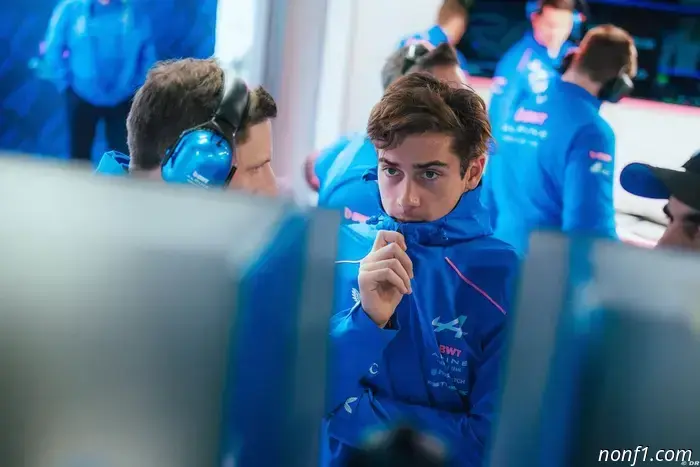 Colapinto's sponsor disappears from Alpine's branding.
Formula 1 | Onlookers in Barcelona have observed that Mercado Libre, the most notable Argentine supporter of Franco Colapinto, has subtly vanished from the (…)
Colapinto's sponsor disappears from Alpine's branding.
Formula 1 | Onlookers in Barcelona have observed that Mercado Libre, the most notable Argentine supporter of Franco Colapinto, has subtly vanished from the (…)
 Schumacher is 'in his own world', explains psychologist regarding the secrecy.
Formula 1 | Ex-Formula 1 driver Riccardo Patrese has offered his thoughts on Michael Schumacher's condition, in light of recent reports that the (…)
Schumacher is 'in his own world', explains psychologist regarding the secrecy.
Formula 1 | Ex-Formula 1 driver Riccardo Patrese has offered his thoughts on Michael Schumacher's condition, in light of recent reports that the (…)
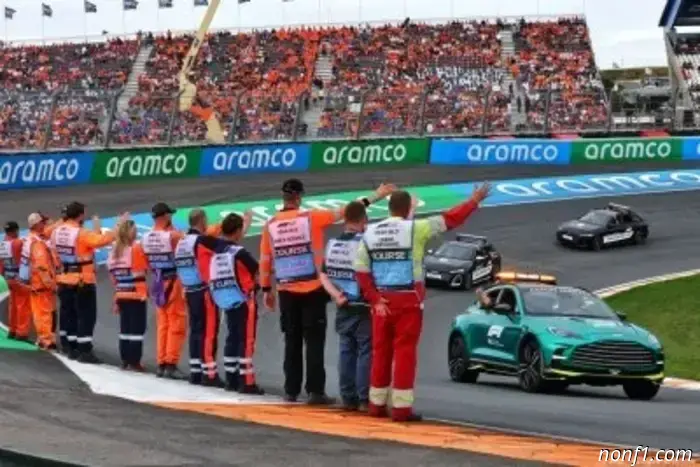 Shareholders contributed EUR 20 million as the Dutch general partner departs.
Formula 1 | The choice to conclude the Dutch Grand Prix following the 2026 season is undergoing fresh examination after it was revealed that the investors supporting the Zandvoort initiative (…)
Shareholders contributed EUR 20 million as the Dutch general partner departs.
Formula 1 | The choice to conclude the Dutch Grand Prix following the 2026 season is undergoing fresh examination after it was revealed that the investors supporting the Zandvoort initiative (…)
Red Bull cautions that regulations might secure an engine advantage.
Formula 1 | Ben Hodgkinson has cautioned that the 2026 power unit regulations may solidify an early competitive edge, amidst increasing concern in the paddock (…)