
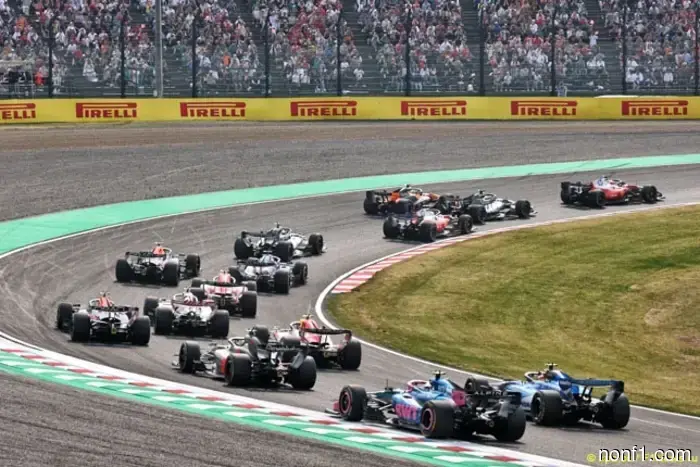
Options for changing the regulations of power plants
During the break between the races in Japan and Miami, the FIA will hold a series of meetings with teams, power unit manufacturers, drivers, and FOM representatives to discuss changes to the 2026 regulations. Technical analyst Paolo Filizetti reflects on what changes might be made to power units following a wave of criticism at the start of the season.
"In the weeks leading up to the Miami Grand Prix, the Formula 1 Commission, together with power unit manufacturers and the FIA, has scheduled a series of meetings to discuss the current state of affairs and issues that have emerged in the first three races related to the charging of the electric component of power units," writes Filizetti. "Essentially, it is necessary to assess how exactly the difficulties with energy management have affected the competition on the track. In particular, many drivers and external observers believe that qualifying has suffered the most due to the so-called superclipping mode.
This refers to a system controlled by the algorithms of the power unit software – in this mode, the power output is effectively reduced in favor of energy accumulation. However, the course of the race is also seriously influenced by this process, as vividly demonstrated by the incident involving Oliver Berman and Franco Colapinto, where the difference in operating modes of the power units led to a sudden closing at high speed and an obviously dangerous situation.
There are many ways to make what happens on the track less artificial while simultaneously reducing the risks posed by significant speed differences between cars. For example, when one power unit operates in battery charging mode while another operates in energy usage mode.
In the short term, one could simply reduce the amount of energy allowed for recovery per lap. For instance, reducing the maximum recovery size to 5 MJ would achieve two goals at once.
Firstly, on the straights, it would be possible to avoid superclipping if the system is set up so that power is reduced minimally and with almost no impact on maximum speed. Additionally, it might be possible to partially increase the power of the internal combustion engine without fundamentally changing the design of the power unit – either through fuel with a higher energy yield or more flexible ignition tuning in the combustion chamber.
A slight increase in boost pressure could also provide an increase in maximum power at high RPMs. However, all these measures cannot be implemented simultaneously, especially not in a compressed timeframe.
Therefore, in the near future, it will be necessary to choose one of the possible approaches – the most effective or the least radical. For example, revising the energy yield of the fuel in combination with reducing the volume of recovery could be a reasonable compromise during this season. A much more complex task appears to be changing ignition phases and increasing turbocharger pressure due to obvious reliability risks.
If we look at the medium-term perspective, it may be possible to change the distribution of power between the electric part of the power unit and the internal combustion engine. For example, in a ratio of 60:40 in favor of the engine instead of the current 50:50. In this case, the role of the battery would still remain significant, which would align with the sustainability principles underlying the current regulations.
At the same time, such a solution would help preserve the very nature of the competition on the track regarding both technology and driver skill. Currently, this aspect is not perceived as obviously as it was in the 2025 season."
Other articles
Options for changing the regulations of power plants
During the break between the stages in Japan and Miami, the FIA will hold a series of meetings to discuss changes to the 2026 regulations. Technical analyst Paolo Filizetti reflects on what changes may be made to the power units following a wave of criticism at the beginning of the season.