
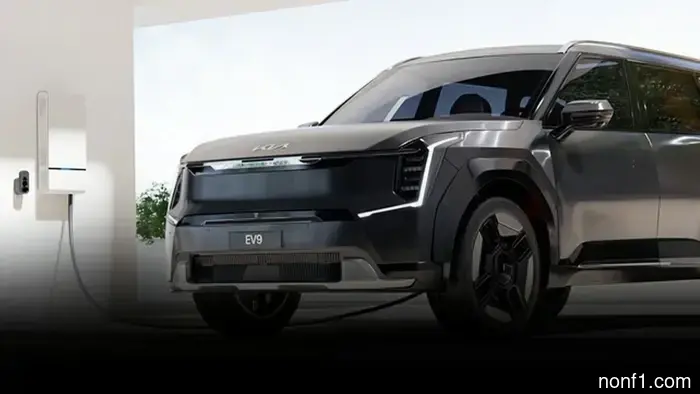
Purchasing a pre-owned electric vehicle as an alternative home generator is more logical than you might assume.
The latest car news and reviews, no nonsense
Our complimentary daily newsletter delivers the important stories directly to your inbox every weekday.
If someone proposed a service that would refill your fuel tank overnight (at a reduced price), allowing you to avoid gas stations altogether, wouldn’t you be intrigued? You’d likely question the catch, and there is one: If you find yourself in need of gas during a trip, you’ll have to go out of your way to locate a station, and once you do, it might take five to ten times longer to refill—possibly more if complications arise (and they eventually will; mark my words). Would you accept that offer?
That’s the core idea behind an EV. Critics would argue that the benefit mainly applies to homeowners, leaving renters and those without private parking unable to take advantage of it. While this is less true than it once was, it's still a valid point. On the other hand, proponents will argue that the U.S. charging infrastructure is rapidly advancing, and that the anxiety over range is exaggerated to near mythical levels. There’s some validity to that as well.
In reality, the most significant obstacle to widespread interest in EVs has been something quite straightforward: New EVs are extremely pricey. Since last September, this problem has become even more pronounced. But what about the market for used EVs?
We are on the cusp of an extraordinary and somewhat extended (lasting two to three years) increase in affordable, off-lease electric vehicles. Coincidentally, we are also facing the possibility of sustained increases in fuel prices. This means a large number of buyers may now be seriously considering electric cars for the first time, and although depreciation may dramatically lower their resale values, we are still talking about vehicles that are just a few model years old—expensive vehicles, in fact. Even with a 50% depreciation over three years, a car that originally cost $60,000 would still be valued at $30,000 used. More affordable, yes, but still not cheap compared to the $15,000 economy cars found alongside them.
However, can a used Honda Civic power your entire home? No. But many used EVs can. And not just a few lights and the refrigerator—they can power everything. For instance, a Chevy Silverado EV provides vehicle-to-home charging right from the start, along with a 205-kilowatt-hour battery pack—sufficient to keep a typical home running for several days, especially when power is conserved.
Similar stationary battery backup systems typically cost tens of thousands of dollars for the equipment alone. Some commercial 200-kWh solutions can easily exceed $75,000. Does this make a low-mileage Chevy more appealing at $50,000? Keep in mind, it can not only power your home—it might also be able to tow it to safety.
Of course, not every used EV is an exceptional half-ton pickup. There are various segment breakdowns available, and some sources have even tried to consolidate information about the bidirectional charging options on the market. While not all information is up-to-date, the positive news is that although the EV market may have contracted somewhat over the past year, the newer models still on the market are more likely to support vehicle-to-load or vehicle-to-home charging right from the factory.
If that’s what you seek, the past five or six model years hold the best options. However, if you’re open to collaborating with a third-party or even DIYing a solution (don’t feel discouraged if you aren’t; handling electricity requires a certain level of courage), the pool of potential options expands significantly. Even the battery from a first-gen Nissan Leaf can be repurposed for comprehensive home energy storage if you’re feeling particularly resourceful.
So, if recent events have you rethinking your everyday fuel approach, remember: An EV can offer more than just transportation.
Have a news tip? Reach out to us at tips@thedrive.com!
Other articles
Purchasing a pre-owned electric vehicle as an alternative home generator is more logical than you might assume.
A wave of off-lease electric vehicles is on the horizon. Interested in capitalizing on this? Consider converting one into a power bank.