
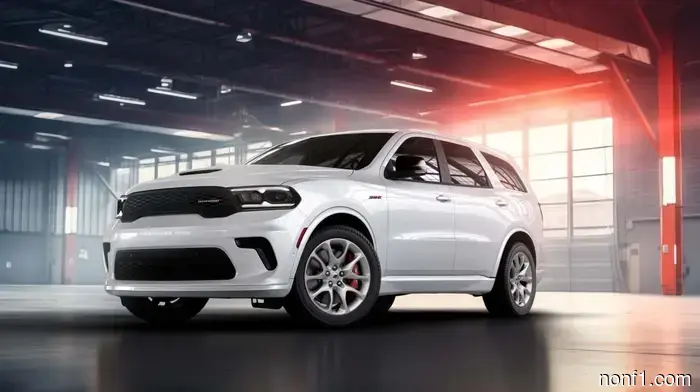
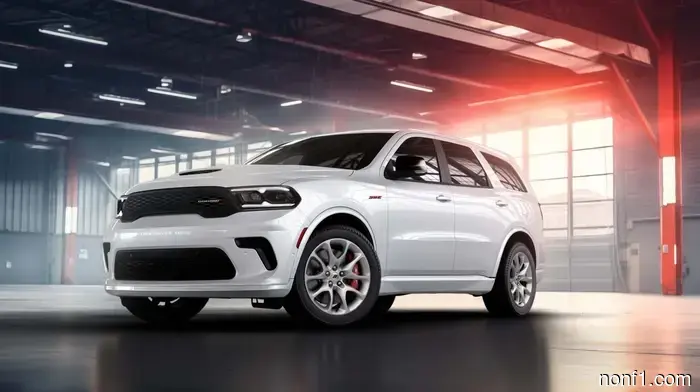
Dodge dealers primarily focus on selling Durangos now.
Stellantis
The most significant car news and reviews, no nonsense
Our free daily newsletter delivers the important stories straight to you every weekday.
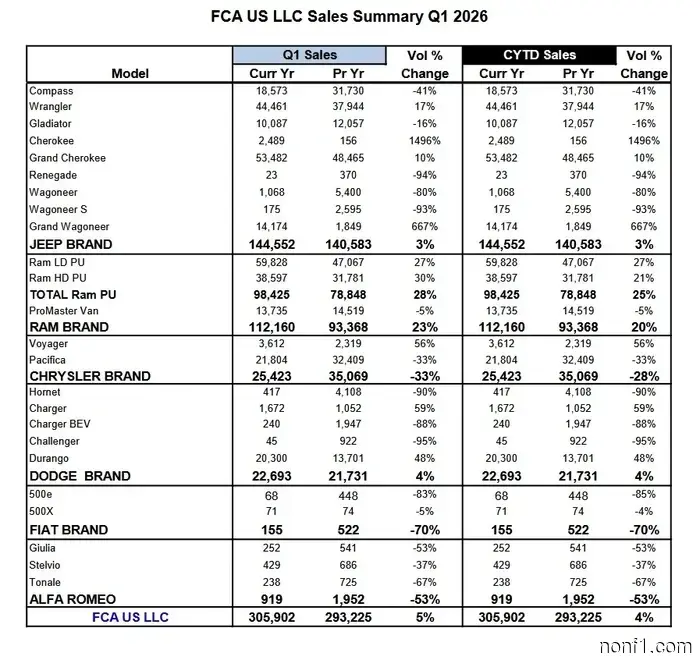
Don’t blink, but Stellantis is making a comeback. Following a couple of years of struggle, the company has just announced a notable increase in Q1, selling over 305,000 cars in the first quarter of 2026. This marks a modest 4% rise from Q1 2025, and while the company still has a long path ahead to regain its former momentum, it’s certainly an improvement over the past. This is the same manufacturer that sold more than 330,000 units during the same timeframe in 2024; if we look back even further to 2022, that figure was 405,000.
However, let’s not dwell on the negatives. Instead, let’s highlight the unusual and intriguing. Stellantis often brings us interesting “zombie car” stories—instances where vehicles long since discontinued are rediscovered in a dealer's storage—and indeed, there are some last-generation Dodge Challengers and Jeep Renegades on the Q1 sales report. But what caught our attention this time wasn’t so much the resurrected models but rather the near-dead Dodge Durango.
Seriously, Dodge has hinted at discontinuing this seemingly unstoppable SUV multiple times (perhaps fewer than six, but it feels like it), and here we are in 2026, with the now 15-year-old SUV still available for purchase as new. Moreover, Dodge is actively enhancing the three-row lineup. The 6.4-liter engine is back, the Hemi has (almost) become standard, and the Hellcat is roaring once more. Since the Durango is long paid for and produced right here in America (in Michigan, which makes it essentially tariff-free), Dodge can afford to price it attractively low. And it’s paying off. Check out the chart below.
If we look solely at the percentages, the Durango's Q1 numbers aren’t particularly remarkable. The Charger experienced a larger increase in Q1 in terms of volume (up 59%), but with just under 1,700 sold, it’s not a story of significant numbers. The Durango saw a 48% rise, equating to an increase of 6,600 units. But putting aside the fluctuations momentarily, let’s examine Dodge’s total volume for Q1: 22,693 vehicles. On paper, this indicates that nine out of every ten Dodge buyers drove away with a Durango in the past quarter.
The showroom distribution likely isn’t as extreme as it seems; we expect a considerable portion of those Durango sales went to fleets, which initially led Dodge to retain the Pentastar V6. They’ve since reversed that decision and made the more affordable V6 available to the general public. And the public seems interested. The Durango hasn’t had such a strong Q1 since 2021, when Dodge sold 20,560 of them. During those same three months, the Charger and Challenger together surpassed 34,000 units.
We’re not dismissing the Durango’s advantages. Like the Grand Cherokee, it serves as an excellent towing vehicle, especially when paired with a powerful engine (typically accompanied by larger brakes). However, Dodge urgently needs a proper high-volume SUV; the aging midsize model cannot sustain the brand alone for much longer.
Have a news tip? Reach out to us at tips@thedrive.com!
Other articles
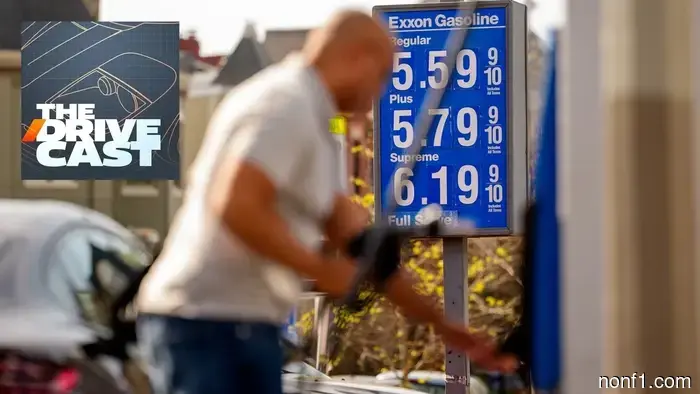 The Federal Reserve Claims That Mixing Ethanol With Fuel Will Lower Gas Prices. We're Skeptical.
As gas prices surpass $4 per gallon, the EPA suggests that more affordable, ethanol-rich fuel will alleviate the burden. However, the calculations don't seem to align, yet the potential dangers are quite clear.
The Federal Reserve Claims That Mixing Ethanol With Fuel Will Lower Gas Prices. We're Skeptical.
As gas prices surpass $4 per gallon, the EPA suggests that more affordable, ethanol-rich fuel will alleviate the burden. However, the calculations don't seem to align, yet the potential dangers are quite clear.
 The Federal Reserve Claims That Adding Ethanol to Fuel Will Reduce Gas Prices. We’re Not Convinced.
As gas prices exceed $4 per gallon, the EPA indicates that less expensive, higher ethanol fuel will help alleviate the burden. However, the calculations don’t quite align—but the potential risks are evident.
The Federal Reserve Claims That Adding Ethanol to Fuel Will Reduce Gas Prices. We’re Not Convinced.
As gas prices exceed $4 per gallon, the EPA indicates that less expensive, higher ethanol fuel will help alleviate the burden. However, the calculations don’t quite align—but the potential risks are evident.
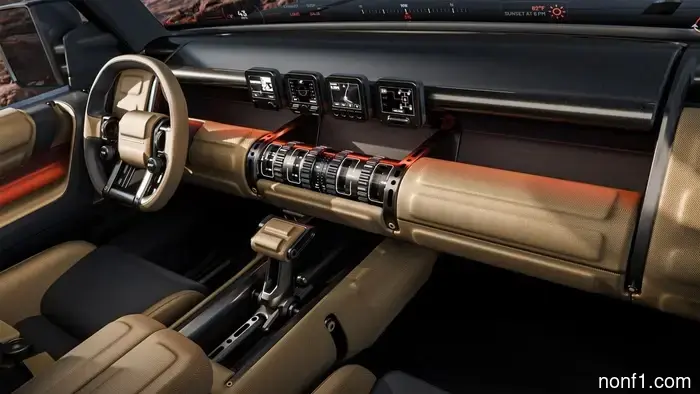 The Hyundai Boulder Indicates That the Age of Cyberpunk-Inspired Car Interiors Is Approaching Rapidly.
Hyundai's body-on-frame design suggests that we're ready to advance past the annoyance of oversized screens in vehicles, and we couldn't be more excited.
The Hyundai Boulder Indicates That the Age of Cyberpunk-Inspired Car Interiors Is Approaching Rapidly.
Hyundai's body-on-frame design suggests that we're ready to advance past the annoyance of oversized screens in vehicles, and we couldn't be more excited.
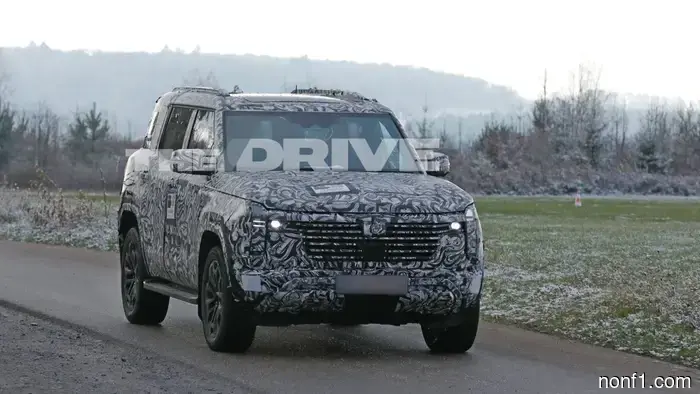 The New Mitsubishi Montero Will Be Launched Later This Year: TDS
A legendary nameplate is about to make its comeback in Mitsubishi dealerships.
The New Mitsubishi Montero Will Be Launched Later This Year: TDS
A legendary nameplate is about to make its comeback in Mitsubishi dealerships.
-to-Do-Real-Work.jpg) These One-Cylinder Diesel Farm Trucks Require Just 18 HP (or Less) to Perform Actual Tasks
The engines are positioned horizontally and operate at impressively low RPM.
These One-Cylinder Diesel Farm Trucks Require Just 18 HP (or Less) to Perform Actual Tasks
The engines are positioned horizontally and operate at impressively low RPM.
 The New Mitsubishi Montero is set to launch later this year: TDS
An iconic model is finally poised to make its comeback in Mitsubishi dealerships.
The New Mitsubishi Montero is set to launch later this year: TDS
An iconic model is finally poised to make its comeback in Mitsubishi dealerships.
Dodge dealers primarily focus on selling Durangos now.
Looking for a new V8 SUV? Head over to your nearby Durango dealer—oops, I meant *Dodge* dealer.