
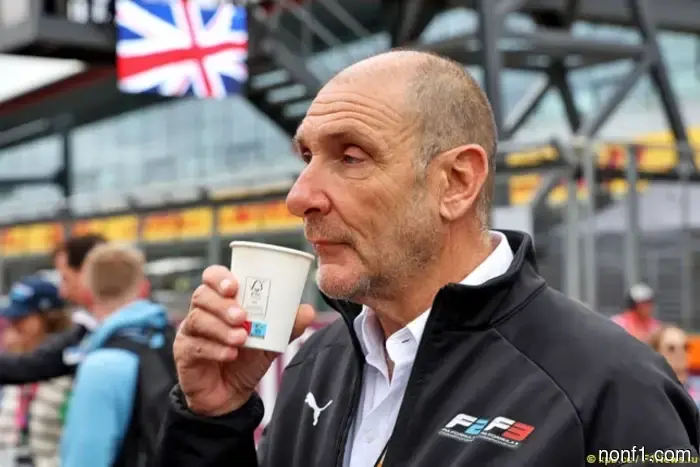
How Formula 2 managed to organize stages in the USA and Canada
The cancellation of the Bahrain Grand Prix and the Saudi Arabian Grand Prix affected not only Formula 1 but also the junior racing series – Formula 2 and Formula 3. A replacement could not be found for Formula 3, while Formula 2 will come to North America for the first time and will hold two rounds – in Miami and Montreal.
Formula 2 promoter Bruno Michel explained how the races in the USA and Canada were organized and how challenging it was to do so.
Bruno Michel: “I was thinking about two things: first, we needed to find two replacement rounds if possible, not just one. Secondly, from a logistics and cost perspective, it makes sense to fly to North America only if we have two rounds, not just one. That’s how we started discussions with Miami.
It took quite a while before we were finally convinced that the two races in the Middle East would not take place, and the response from Miami turned out to be positive. When I say ‘positive,’ that’s when the details of how difficult it was to organize all this begin! But their response became the starting point for negotiations.
We started quite early. Understanding the situation, I informed the teams about the plans while still in Melbourne. We had a meeting with team leaders, and I explained that I would do everything possible to replace these two rounds.
With two replacement rounds, the situation was different. In Montreal, there was a slot in the schedule for us – the F1 Academy was already planned, but there was a window for a support race where we could quite easily fit another racing series. So, with Canada, the question was more about cost and similar issues. From a logistics perspective, it wasn’t that complicated.
With Miami, it was completely different, as two support racing series – Porsche and McLaren Trophy – were already scheduled there. There was no free space, we weren’t expected, and we literally had to build the paddock from scratch, and not in the originally planned location. But the local organizers turned out to be extremely responsive and quickly found a solution.
The next task was minimizing costs. I’m not just talking about transportation, but also about on-site expenses because we needed to build a paddock that wouldn’t be too close to the Formula 1 paddock, so the task was indeed quite challenging.
We had to put in a lot of effort to ensure that the plan was feasible at all and that we could operate normally. After all, it’s not just about the paddock itself. We also need to understand the logistics, ensure access for cars to the track, access for teams arriving with carts, tires, spare parts – everything necessary for operation during practice sessions, qualifying, and races. And at the same time, we had to fit into a schedule that already had two support series planned.
It was a very complicated process that required tremendous effort from my team, from Formula 1, and from the promoters. And I find it hard to express enough gratitude to all these people who worked on something that was incredibly difficult for all of us.
In the end, we put together an option that seemed reliable enough for me to tell the teams: ‘Okay, this is not official yet because we need to finalize a few points, but it looks like we’re going to Miami and Montreal.’
It took a little more time to finalize everything, and only after that could we announce it last week. But I must say, it was very difficult to organize. Very difficult from a logistics perspective, very difficult from a communications perspective, very difficult from an approvals perspective, but everyone played their part, starting with Stefano Domenicali, who provided tremendous help and support. Without him, we wouldn’t have managed.
We also need to thank the FIA. As you understand, when doing something like this, they need to be involved at the earliest stages because they hadn’t planned to send technical delegates [for Formula 2], hadn’t planned to place their infrastructure there, so they also had to work through all of this.
Additionally, we needed to get approval from the World Council to change the calendar. You can’t even imagine the number of questions we had to face. The FIA President also provided enormous support.
In the end, everything came together into a single plan. Let’s see how it works out when we get there!”
Other articles
 Will Hannah Schmitz also leave Red Bull?
Kenny Handkammer believes that the next person to leave the Milton Keynes team will be chief strategist Hannah Schmitz…
Will Hannah Schmitz also leave Red Bull?
Kenny Handkammer believes that the next person to leave the Milton Keynes team will be chief strategist Hannah Schmitz…
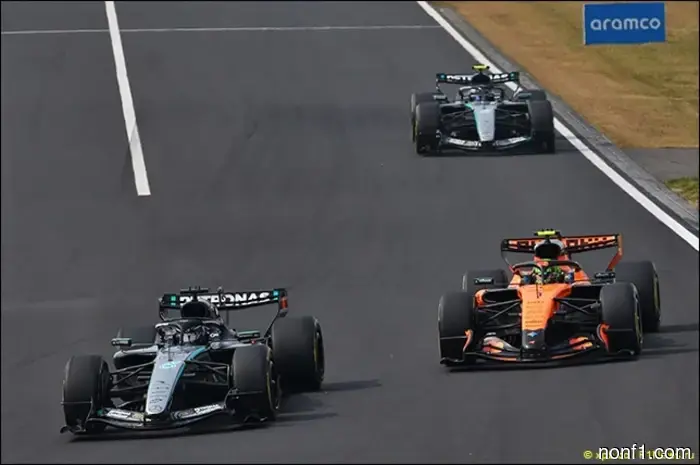 Mark Temple: Mercedes can be defeated
McLaren's Technical Director for chassis performance, Mark Temple, does not consider Mercedes an unbeatable team...
Mark Temple: Mercedes can be defeated
McLaren's Technical Director for chassis performance, Mark Temple, does not consider Mercedes an unbeatable team...
 Bottas: Surviving a season without races was not easy
Competing this year for Cadillac, the experienced Finn acknowledged that getting through the season without racing was not easy...
Bottas: Surviving a season without races was not easy
Competing this year for Cadillac, the experienced Finn acknowledged that getting through the season without racing was not easy...
 Bottas: Surviving a season without racing was not easy
Competing this year for Cadillac, the experienced Finn acknowledged that getting through the season without racing was not easy...
Bottas: Surviving a season without racing was not easy
Competing this year for Cadillac, the experienced Finn acknowledged that getting through the season without racing was not easy...
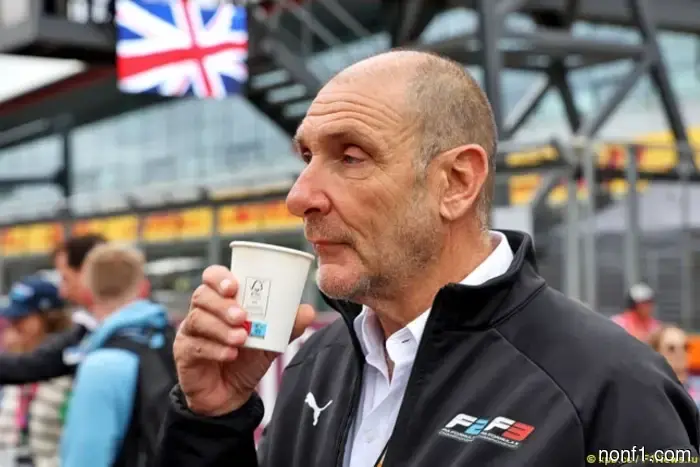 How Formula 2 managed to organize stages in the USA and Canada
Formula 2 promoter Bruno Michel talked about how he managed to organize the races in the USA and Canada instead of the canceled races in Bahrain and Saudi Arabia, and how difficult it was to do so.
How Formula 2 managed to organize stages in the USA and Canada
Formula 2 promoter Bruno Michel talked about how he managed to organize the races in the USA and Canada instead of the canceled races in Bahrain and Saudi Arabia, and how difficult it was to do so.
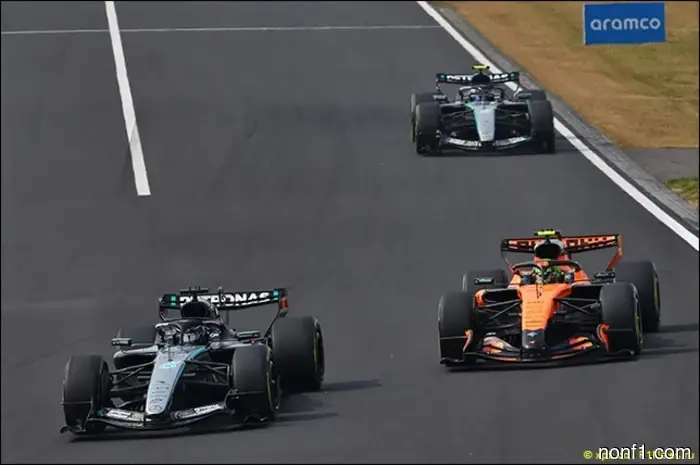 Mark Temple: Mercedes can be defeated
McLaren's Technical Director for chassis performance, Mark Temple, does not consider Mercedes an unbeatable team...
Mark Temple: Mercedes can be defeated
McLaren's Technical Director for chassis performance, Mark Temple, does not consider Mercedes an unbeatable team...
How Formula 2 managed to organize stages in the USA and Canada
Formula 2 promoter Bruno Michel talked about how he managed to organize the stages in the USA and Canada instead of the canceled races in Bahrain and Saudi Arabia, and how difficult it was to do so.