
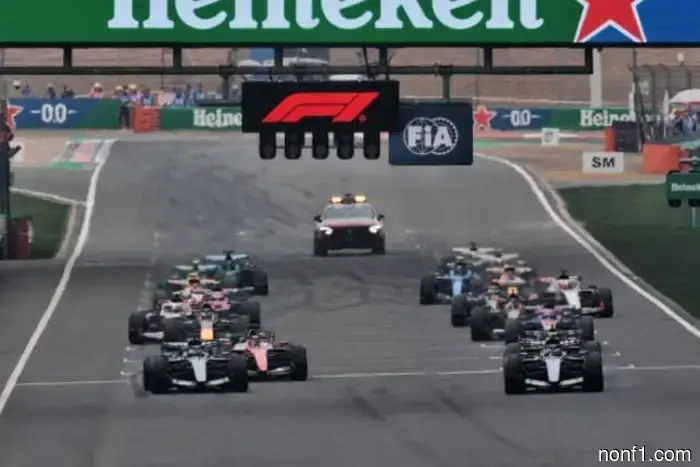
The teams agreed to shorten the distance of several races.
In the context of further adjustments to the technical regulations for power units, which must be completed by 2027, the teams are ready to support the idea of reducing the distance of several races and the number of laps preceding the start of the Grand Prix.
After the Miami stage, the FIA and Formula 1 have set a course to change the power ratio generated by the internal combustion engine (ICE) and electric systems, so that in the next season this proportion approaches 60/40.
However, this decision has inevitable consequences, as its implementation will require an increase in the fuel mass flow limit, which will necessitate changes to the design of the power units. But it will also lead to the need to increase the volume of fuel tanks, which will be a problem for those teams that planned to use existing chassis in 2027 for resource-saving reasons without significant modifications.
The fact is that at some tracks, fuel consumption will increase so much that the volume of existing tanks will simply not be enough to reach the finish line at a normal racing pace, and the 2026 chassis will not allow for larger capacity tanks to be installed.
One possible scenario is to increase the budget limits for the teams, allowing them to build new chassis; however, the championship participants have decided that this is too costly a path. An alternative option is to reduce the race distances at those tracks where fuel consumption is highest.
The FIA has already gathered the opinions of the teams, and Alan Permane, head of Racing Bulls, confirmed that this idea has received support:
“Definitely, at the level of team leaders, we have come to an agreement that if someone wants to continue using an existing chassis, and its size is not large enough (to install a larger capacity fuel tank) for races with a distance of 310 km, then we will choose specific stages where the distance – if absolutely necessary – can be reduced by one or two laps. We will also reduce the number of laps before heading to the starting grid to one.”
While an agreement has been reached on this issue, there remain several other aspects where there is no consensus, particularly regarding the additional financial expenses required for changes to the car designs.
Preliminary estimates suggest that budgets need to be increased by $10 million; however, some automakers do not support this idea, notably Audi is against it.
As reported by The Race, there is also no agreement on the mechanism for implementing the ADUO program (“Additional Development and Modernization Opportunities” – it allows engine manufacturers to refine previously homologated power units). There are opinions that if the course is set to make changes to the ICE design to achieve a 60/40 power ratio, then ADUO should be abandoned.
However, Ferrari hopes that this program provides a chance to catch up with Mercedes relatively quickly, so the Italian team is categorically against the cancellation of the ADUO system.
Thus, while plans to make changes to the power unit designs aimed at 2027 have not been finalized, attempts are being made during the Canadian race weekend to reach a compromise that will satisfy the automakers.
In particular, a scenario is possible where the mass fuel flow will be increased, but just enough so that there is no need for serious modifications to the ICE design, while the power ratio can still be sufficiently adjusted.
As Laurent Mekies, head of Red Bull Racing, explained, in this situation, the most important factor to consider is time: “I think, if we talk about chassis, the situation is not so tense. The difficulties are related to the power units, as deadlines are pressing, and therefore we are trying to reach an agreement as quickly as possible.”
Other articles
 Andrea Stella: We are focused on stability
In Montreal, the head of the McLaren team spoke about the prepared innovations and plans for the season...
Andrea Stella: We are focused on stability
In Montreal, the head of the McLaren team spoke about the prepared innovations and plans for the season...
 Stella: I want to build the strongest team.
According to Laurent Mekies, Gianpiero Lambiasse is moving to McLaren with the prospect of leading the team in the future. Andrea Stella does not confirm this, but also does not deny it...
Stella: I want to build the strongest team.
According to Laurent Mekies, Gianpiero Lambiasse is moving to McLaren with the prospect of leading the team in the future. Andrea Stella does not confirm this, but also does not deny it...
 Charles Leclerc: I paid the price for the starting position
The best result for Ferrari in the sprint of the Canadian Grand Prix was Charles Leclerc's fifth place. After the finish, the Monegasque lamented that he couldn't overtake Oscar Piastri due to a lack of speed on the straights.
Charles Leclerc: I paid the price for the starting position
The best result for Ferrari in the sprint of the Canadian Grand Prix was Charles Leclerc's fifth place. After the finish, the Monegasque lamented that he couldn't overtake Oscar Piastri due to a lack of speed on the straights.
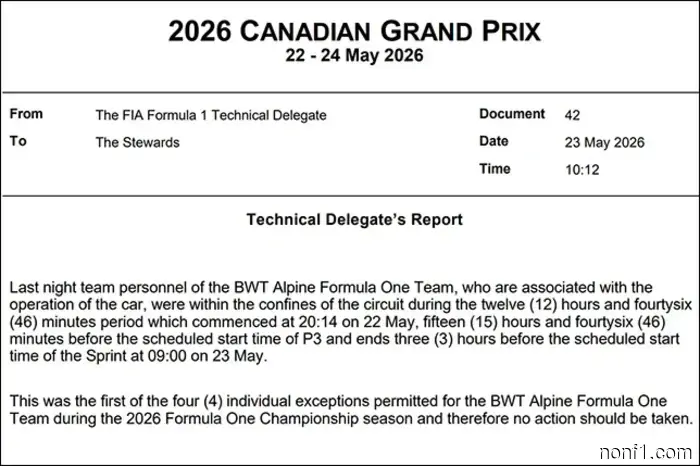 In Alpine, the curfew rule was violated.
On the night of Saturday, the Alpine team violated the curfew rules.
In Alpine, the curfew rule was violated.
On the night of Saturday, the Alpine team violated the curfew rules.
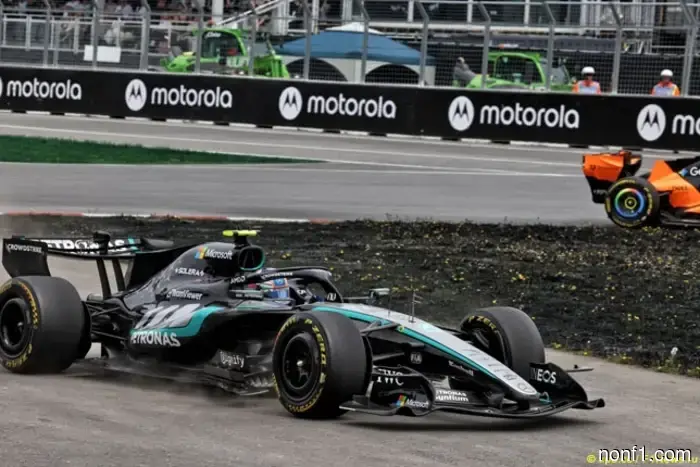 Kimi Antonelli: I was pushed off the track.
After the sprint in Canada, where he finished third, Kimi Antonelli briefly commented on the battle with George Russell.
Kimi Antonelli: I was pushed off the track.
After the sprint in Canada, where he finished third, Kimi Antonelli briefly commented on the battle with George Russell.
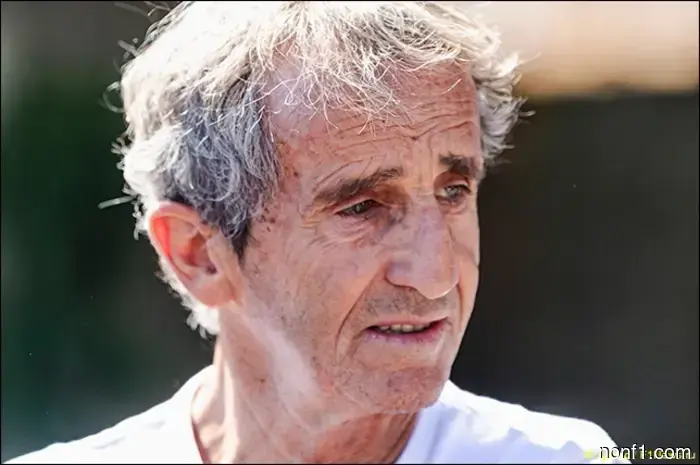 Alain Prost was injured during a robbery at his home.
According to Swiss media reports, four-time Formula 1 champion Alain Prost was injured during a robbery at his home earlier this week.
Alain Prost was injured during a robbery at his home.
According to Swiss media reports, four-time Formula 1 champion Alain Prost was injured during a robbery at his home earlier this week.
The teams agreed to shorten the distance of several races.
In the context of further adjustments to the technical regulations for power units, which must be carried out by 2027, the teams are ready to support the idea of shortening the distance of a number of races...