

Audi's New Q7 Takes Almost All of Its Features from Its Larger, Costlier Flagship Model.
Joel Feder
The most significant automotive news and reviews, no nonsense.
Our complimentary daily newsletter delivers the most important stories directly to your inbox every weekday.
A striking new design with technological enhancements. The 2027 Audi Q7 showcases a revamped exterior influenced by the Q3 and the upcoming Q9, featuring sophisticated Matrix LED headlights and digital OLED taillights.
Upscale interior improvements. The Q7 features a cabin inspired by the Q9, utilizing matte plastics, genuine wood, and an array of screens beneath a curved glass interface.
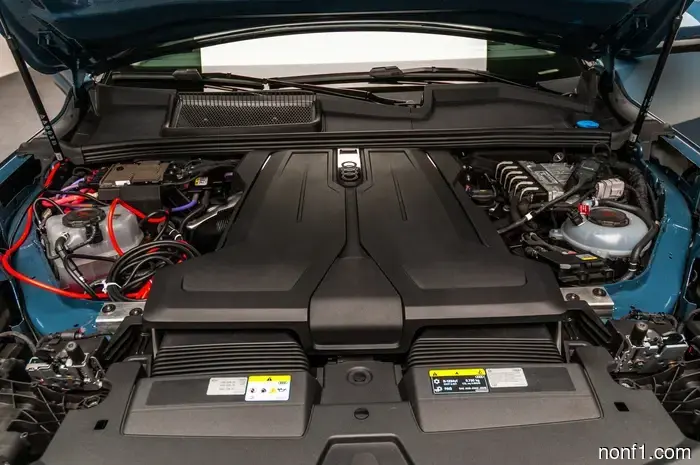
Enhanced performance capability. Equipped with a standard twin-turbocharged 2.9-liter V6 offering 429 hp, while the SQ7’s V8 produces 591 hp, providing better speed and towing capabilities.
Expanded capacity and flexibility. The Q7 presents added cargo space and motorized seating for up to seven passengers, with easier access to the third row.
In summary: The 2027 Audi Q7 merges innovative design, increased luxury, and robust performance, likely establishing a new standard in its segment.
AI-assisted, editor-reviewed.
The third-generation Audi Q7 has just been revealed, using the smaller Q3 as a foundation for the German automaker's upcoming direction.
On Tuesday, the 2027 Audi Q7 was introduced, featuring a new design approach, updated technology, more interior space, and increased power, although pricing is yet to be confirmed, making it hard to believe it will be cheaper than the current model.
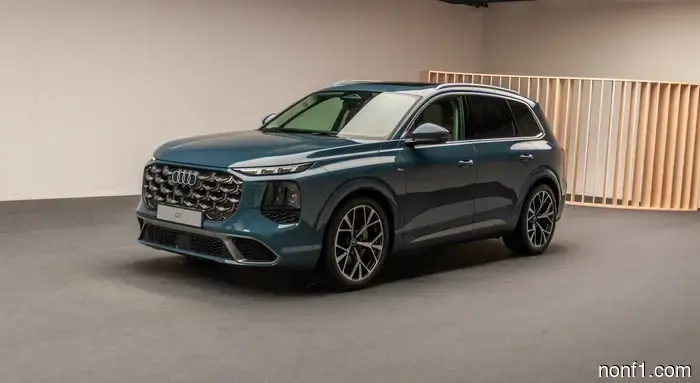
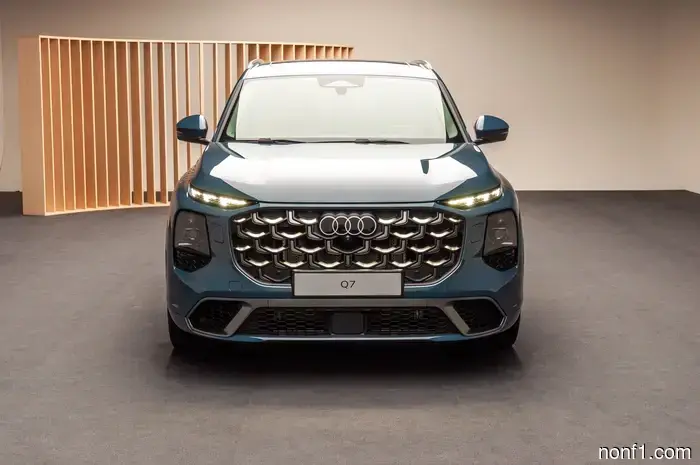
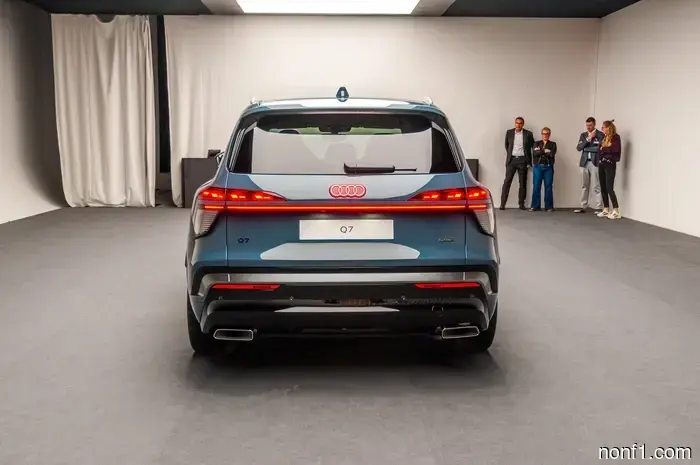
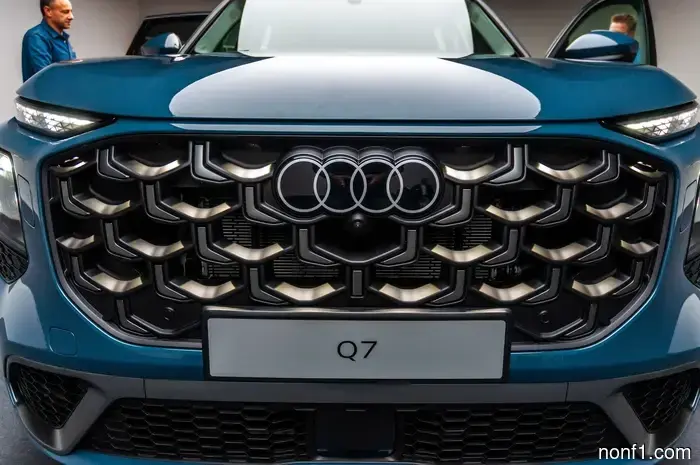
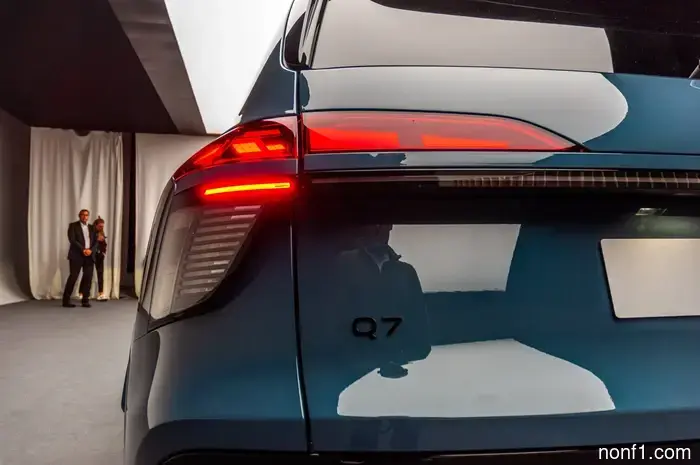
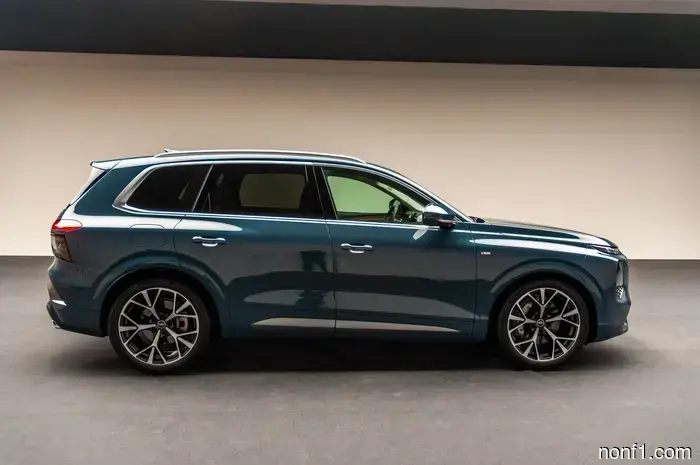
Take a close look at the new Q7. It seems both recognizable and new. This is due to its design drawing inspiration from the smaller Q3 but expanding on it. The greenhouse is more erect than the current Q7, particularly at the rear where there is a flatter roof and vertical D-pillars. The front separates the horizontal LED daytime running lights from the headlights, which will feature the automaker's new Matrix LED technology. The lights flank a sizable egg crate grille. The rear dispenses with the signature clamshell hatch from previous generations, visually making the Q7 appear slightly narrower due to its design lines, which is merely an optical illusion. It sports digital OLED taillights with 3D effects and selectable lighting signatures. These lights have a somewhat boomerang shape with the turn signals forming the lower part. It remains unclear how costly it will be to repair if they are damaged, but the assumption is that it won't be inexpensive. Audi takes pride in the fact that the tow receiver and seven-pin connector for trailers are now concealed behind a removable panel for an uncluttered appearance.
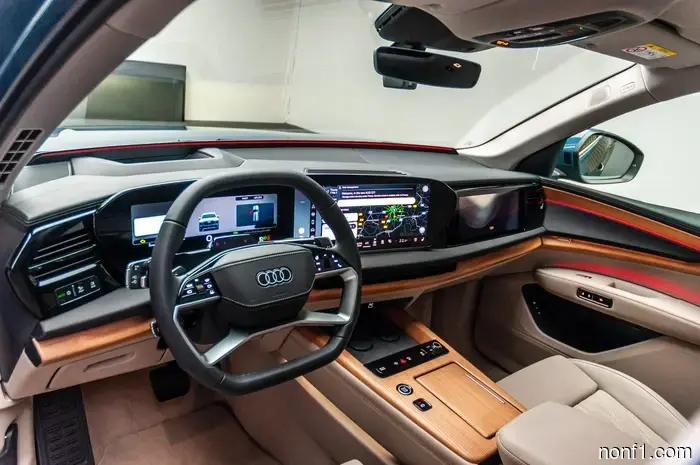
Inside, the dashboard will seem familiar to anyone who has been in a recent Audi or seen the forthcoming Q9’s interior. Spoiler alert: This resembles the Q9’s interior scaled down by about a third. True to its larger counterpart, shiny piano black plastic is nearly absent (thank goodness!), substituted with real wood (optional based on specifications), and most plastics have a matte finish rather than a glossy one. An LED strip along the base of the windshield can indicate to the driver when a turn signal is activated by flashing the corresponding side in green or turning red in an emergency braking scenario. Yes, it can sync to music beats.
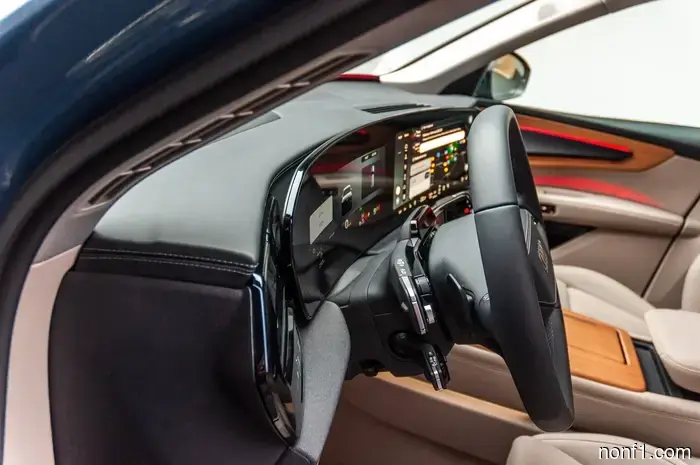
A series of screens combines a digital gauge cluster and touchscreen, angled toward the driver beneath a single stretch of curved glass. A screen is also located in front of the passenger for entertainment purposes. Audi has included a real volume knob on the center console, though most vehicle functions are controlled via the touchscreen, including electronically operated air vent controls. The intricately designed, user-friendly one-piece stalk setup remains.
Cooled wireless smartphone chargers provide 25 watts each, while USB-C ports across the three rows deliver between 45 and 100 watts depending on the outlet.
The panoramic sunroof features a function akin to electrochromatic technology using Polymer Dispersed Liquid Crystal (PDLC), allowing for optional control over the entire glass surface or select areas. This glass roof can also be enhanced with 78 LEDs for ambient lighting.
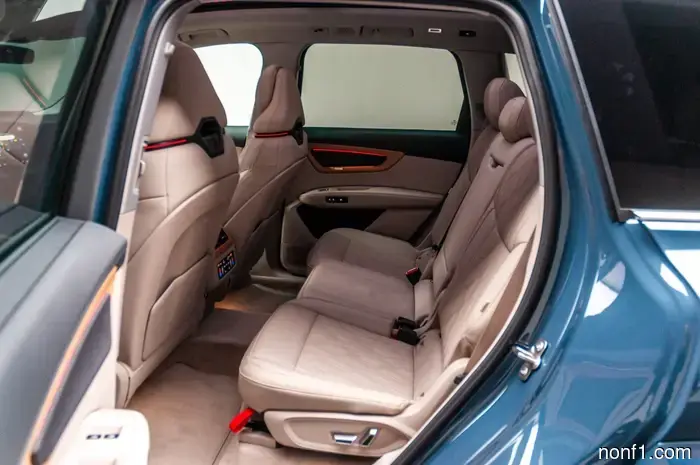
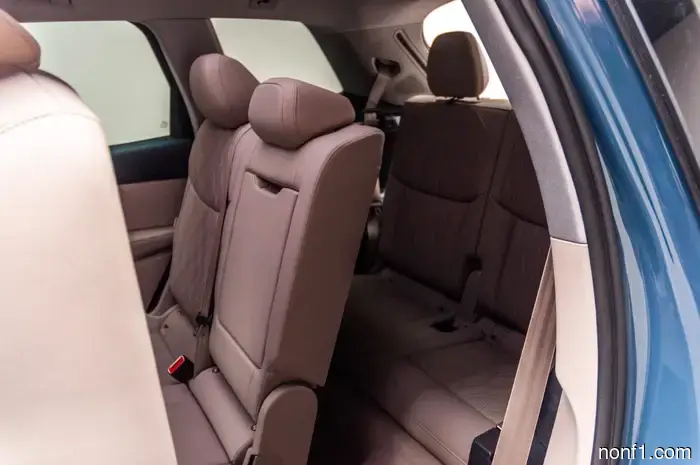
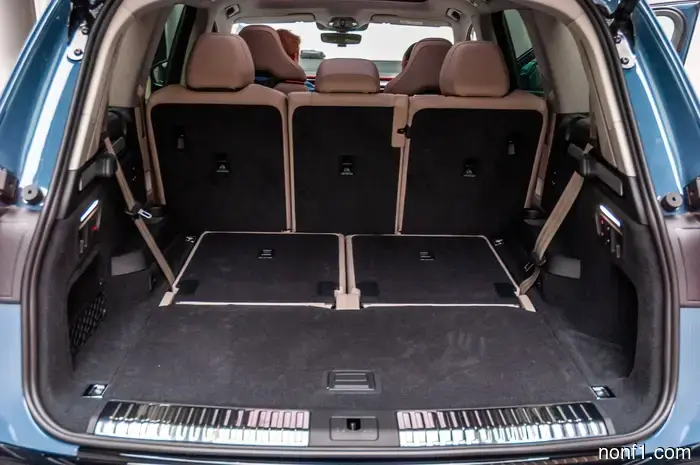
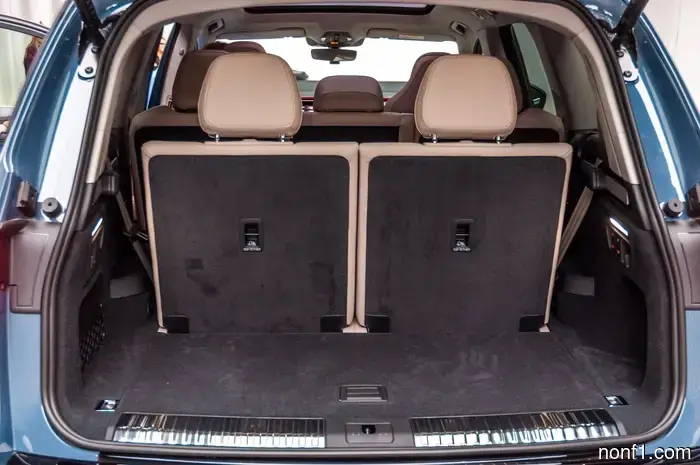
Audi has introduced an optional second-row of captain’s chairs, enabling the Q7 to configure as either a six or seven-seater. All three rows of seats now have power operation as standard. The second row can slide and tilt to allow access to the third, enabling a child's car seat to remain securely in place while accessing the back row. The second and third rows provide slightly more space than the existing Q7, but the third row is not suitable for adults on long trips. Passengers may prefer to wait for the Q9, which offers additional space. The cargo area has also increased, with 15.1 cubic feet behind the third row, up to 43.9 cubic feet behind the second row, and 78.1 cubic feet with the first row folded down.
Potentially the most critical update for those like my daughter is that the cup holders are no longer tiny; they can accommodate a Stanley mug. My 12
Other articles
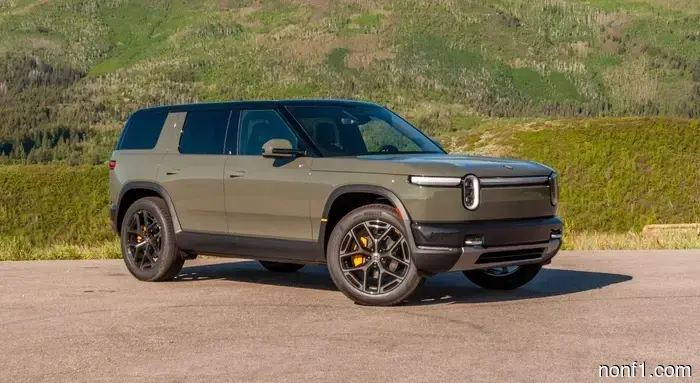 In some way, Rivian's more affordable R2 is its most polished vehicle.
The R2 originated as a scaled-down version of the R1. However, Rivian's chief design officer explained to The Drive that the process of removing elements—such as window molding and 2.3 miles of wiring—resulted in a more refined vehicle rather than an inferior one.
In some way, Rivian's more affordable R2 is its most polished vehicle.
The R2 originated as a scaled-down version of the R1. However, Rivian's chief design officer explained to The Drive that the process of removing elements—such as window molding and 2.3 miles of wiring—resulted in a more refined vehicle rather than an inferior one.
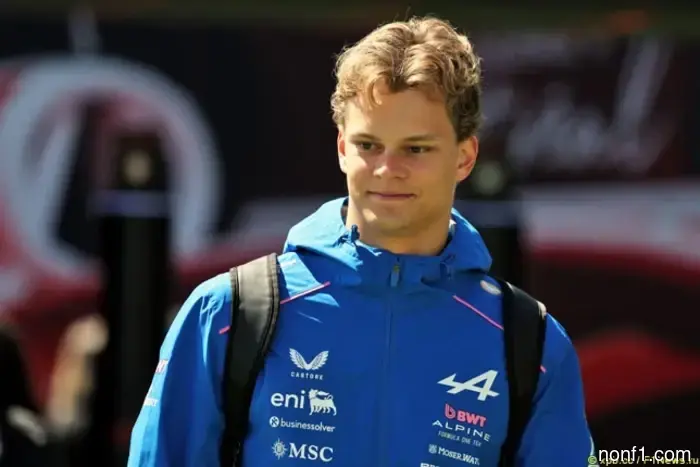 Paul Aron will conduct two training sessions behind the wheel of an Audi.
Audi announced that Alpine reserve driver Paul Aron will participate in two practice sessions with the Hinwil team.
Paul Aron will conduct two training sessions behind the wheel of an Audi.
Audi announced that Alpine reserve driver Paul Aron will participate in two practice sessions with the Hinwil team.
 Alex Albon will break Mansell's record in Barcelona.
At the Barcelona-Catalonia Grand Prix, Alex Albon will break the record of world champion Nigel Mansell and move into first place for the most starts for Williams.
Alex Albon will break Mansell's record in Barcelona.
At the Barcelona-Catalonia Grand Prix, Alex Albon will break the record of world champion Nigel Mansell and move into first place for the most starts for Williams.
 Rivian R2 Will Feature a Pet Camera — and It Won't Permit You to Monitor Humans.
The new in-cabin camera allows you to view your pet from your phone while the vehicle is parked. If it senses a person rather than an animal, it will not turn on—this is a purposeful precaution against domestic abuse, according to Rivian's Chief Software Officer in an interview with The Drive.
Rivian R2 Will Feature a Pet Camera — and It Won't Permit You to Monitor Humans.
The new in-cabin camera allows you to view your pet from your phone while the vehicle is parked. If it senses a person rather than an animal, it will not turn on—this is a purposeful precaution against domestic abuse, according to Rivian's Chief Software Officer in an interview with The Drive.
 Alex Albon will break Mansell's record in Barcelona.
At the Barcelona-Catalonia Grand Prix, Alex Albon will break the record of world champion Nigel Mansell and move into first place for the most starts for Williams.
Alex Albon will break Mansell's record in Barcelona.
At the Barcelona-Catalonia Grand Prix, Alex Albon will break the record of world champion Nigel Mansell and move into first place for the most starts for Williams.
 The Rivian R2 will feature a pet camera, but it won't let you monitor humans.
The updated in-cabin camera allows you to monitor your pet through your phone while the car is parked. It is designed to remain inactive if it senses a person rather than an animal, serving as a conscious precaution against domestic violence, as explained by Rivian's Chief Software Officer to The Drive.
The Rivian R2 will feature a pet camera, but it won't let you monitor humans.
The updated in-cabin camera allows you to monitor your pet through your phone while the car is parked. It is designed to remain inactive if it senses a person rather than an animal, serving as a conscious precaution against domestic violence, as explained by Rivian's Chief Software Officer to The Drive.
Audi's New Q7 Takes Almost All of Its Features from Its Larger, Costlier Flagship Model.
The 2027 Q7 is introduced with a fresh design, a base engine that delivers 429 horsepower, and an interior that Audi has largely taken from the forthcoming Q9 — likely at a more affordable price.