
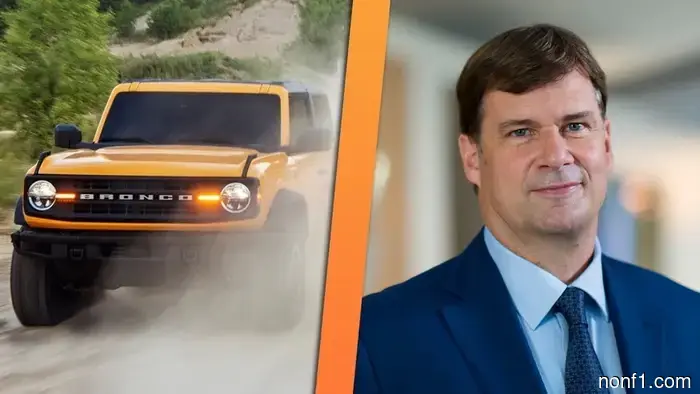
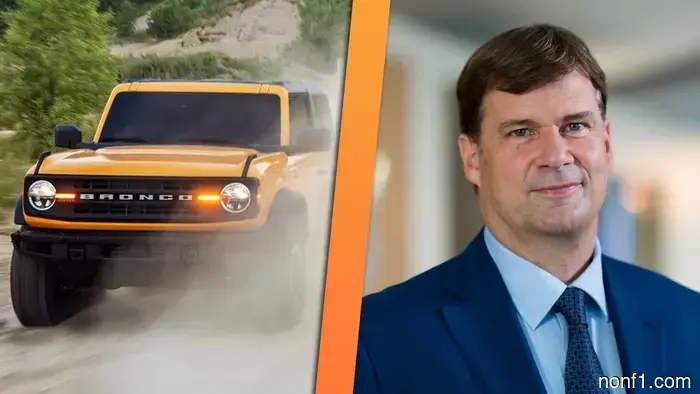
Ford CEO Jim Farley’s statement on the Right to Repair should cause concern for every car owner.
Ford’s position on the Right to Repair raises alarms. CEO Jim Farley indicates that repairs should be conducted at a “reasonable cost,” yet he discourages do-it-yourself repairs due to the complexity involved.
This stance could have significant repercussions for independent mechanics. Limiting repairs to dealerships might eliminate options for independent services, subsequently increasing repair costs.
Legislation might be required. In the absence of legal protection, consumers could find their repair choices restricted and face higher expenses.
Farley’s comments have ignited discussion. His statements imply that Ford prefers to maintain control over repair processes, raising concerns regarding consumer rights.
Just recently, President Trump met with executives from Ford and GM to discuss the “Right to Repair,” an essential issue that will ultimately impact every car owner in the U.S. The specific outcome of that brief conference remains unclear. However, a subsequent remark from Ford CEO Jim Farley should raise some eyebrows.
Essentially, the Right to Repair means consumers ought to be free to choose their own mechanics. There has been an ongoing governmental debate regarding the introduction of legislation to support this. Large corporations often aim to retain exclusive servicing rights for ongoing revenue, while small business owners and consumers resist being subjugated to monopolistic practices.
It's crucial to recognize that the Right to Repair is about more than just hobbyists tinkering with old trucks in their yards. If automakers are permitted to restrict auto repairs to corporate entities, independent mechanics could be rendered obsolete. Should this occur, dealerships would be the only service option available. And if you think their hourly labor rates are steep now, imagine the increase when there are no alternatives.
Following the White House meeting, the Detroit Free Press interviewed Farley at an event announcing a “$5 million joint investment from Ford Motor Co. and Bloomberg Philanthropies” to enhance the Detroit Public Schools Community District Foundation’s auto technician program.
During the conversation regarding Right to Repair, Farley made a remark that seemed entirely superficial:
“I think Ford’s position is very reasonable. We’re truly supportive of the ability to repair a vehicle, but it must be done at a reasonable cost, and—”
The journalist promptly interjected with the same question I would have posed: “But you don’t want people repairing their own vehicles?”
Farley responded: “No, that’s, that’s fine, just not for warranty work. These cars are very complicated, and we don’t consider it safe for many repairs on our vehicles to be done by someone at home like myself. I can manage working on a ’73 Bronco, but tackling a brand-new Bronco? I would need various specialized tools. That’s something that, um, could put people’s lives at risk.”
Road & Track interpreted this as “Ford CEO Jim Farley clarifies automaker’s position on ‘Right to Repair’ rules,” but my interpretation is quite the opposite. What “position” was he referring to? What did he mean by “reasonable cost”?
In terms of “specialty tools,” the 2026 Bronco features certain elements that DIYers might be hesitant to handle—such as ADAS calibration. However, even this kind of technology is now relatively standard and should be manageable by independent shops. The Bronco is a rather peculiar example to cite since, overall, the new Bronco is among the simplest modern cars available. (For the record, I genuinely love it.) Real barriers to non-factory service for a ladder-frame gas-engine vehicle would have to be imposed by the automaker deliberately incorporating proprietary elements.
Farley’s remarks make me uneasy because I am already experiencing the frustration of a “factory fixes only” corporate mentality with my Cub Cadet lawn mower. Last summer, I sought to purchase new grass-cutting blades for my ZT1 42E, and dealing with the company’s customer service line felt like a hostage negotiation. They were reluctant to provide me the torque specification for a part I had obtained directly from the manufacturer. Finding anything beyond a basic user manual online was equally challenging.
I contacted Ford’s PR team for clarification and have been informed that an official statement is forthcoming, though it has not arrived yet. I will update this part when it is received.
I also reached out to Jeep about this issue. Stellantis notably wasn’t represented at the Trump meeting, and I hoped someone at Jeep would seize the opportunity to say something like “Absolutely, you can always fix a Wrangler with zip ties, duct tape, and WD-40.” To their credit, Jeep provided a carefully crafted statement, although it was less thrilling: “Jeep vehicles are created, shaped, and continuously reimagined by their owners. This authentic customization culture is what differentiates the Jeep brand,” a spokesperson stated. It was more of a marketing message than a political position, but it at least acknowledges the importance of the connection between vehicles designed for enthusiasts and hands-on owners.
Currently, my interpretation of Farley’s words and body language in
Other articles
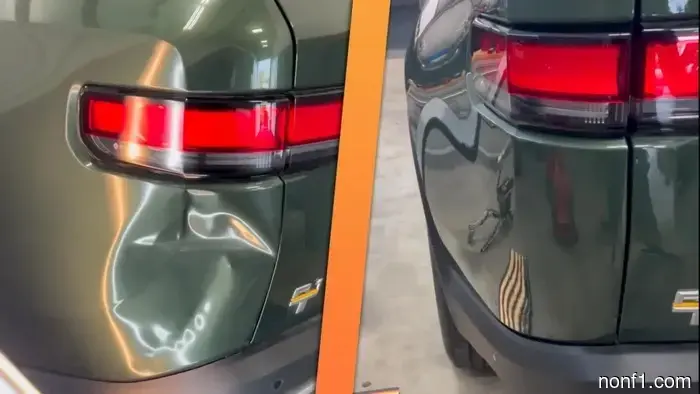 A minor accident involving a Rivian vehicle resulted in a cost of $42,000. The CEO has stated that such an incident should never occur.
Rivian CEO RJ Scaringe revealed exclusively to The Drive that collision repair costs should not reach tens of thousands of dollars, and he elaborated on the reasons for this issue.
A minor accident involving a Rivian vehicle resulted in a cost of $42,000. The CEO has stated that such an incident should never occur.
Rivian CEO RJ Scaringe revealed exclusively to The Drive that collision repair costs should not reach tens of thousands of dollars, and he elaborated on the reasons for this issue.
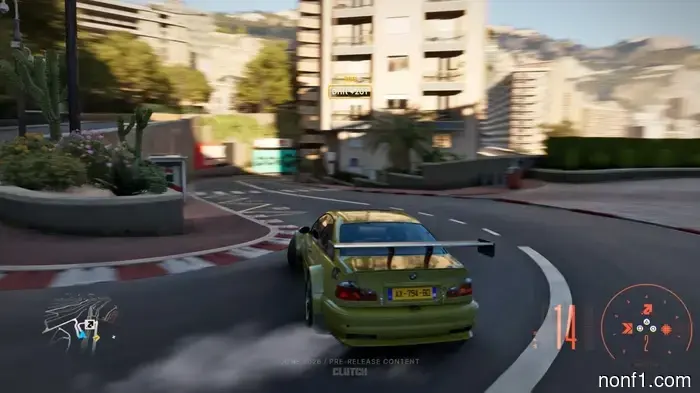 The Open-World Monaco in ‘Clutch’ Appears Stunning
Our initial glimpse of gameplay in 'Clutch,' the upcoming game from former Forza Horizon developers, offers us a lot to anticipate.
The Open-World Monaco in ‘Clutch’ Appears Stunning
Our initial glimpse of gameplay in 'Clutch,' the upcoming game from former Forza Horizon developers, offers us a lot to anticipate.
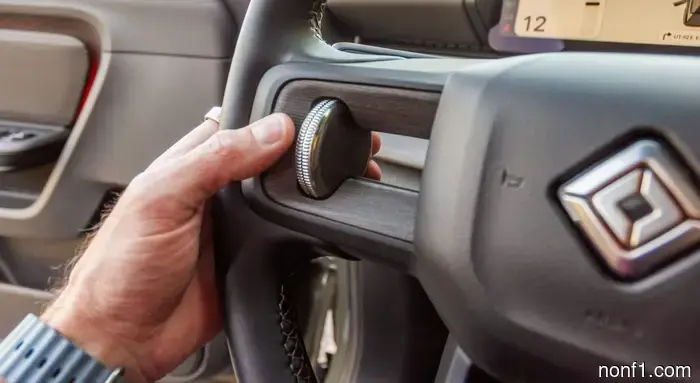 Rivian Noticed Your Complaints About Touchscreens, So They Went Above and Beyond with Scroll Wheels.
Rivian CEO RJ Scaringe revealed to The Drive the functionality of the R2's software-defined Halo wheels, explaining that the clicks you experience are not mechanical in nature.
Rivian Noticed Your Complaints About Touchscreens, So They Went Above and Beyond with Scroll Wheels.
Rivian CEO RJ Scaringe revealed to The Drive the functionality of the R2's software-defined Halo wheels, explaining that the clicks you experience are not mechanical in nature.
Ford CEO Jim Farley’s statement on the Right to Repair should cause concern for every car owner.
Farley claims that contemporary cars are excessively complicated for do-it-yourself enthusiasts. The greater concern is the potential repercussions for independent mechanics if automotive manufacturers succeed in this battle.