
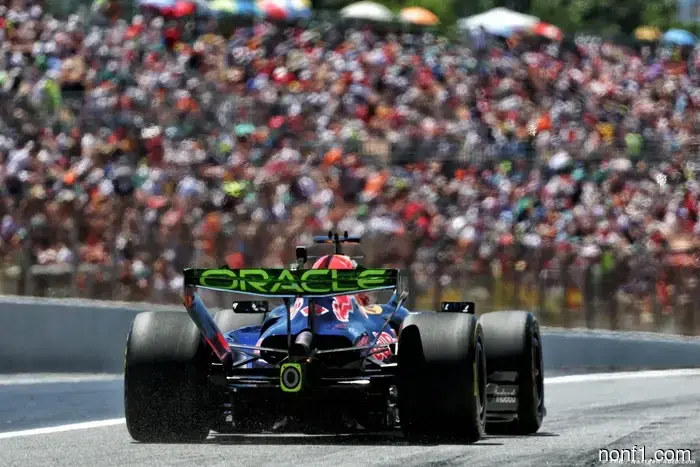
Red Bull continues to contest the FIA's contentious engine decision.
"It's still a bit premature for congratulations."
Red Bull is actively contesting the FIA’s contentious ADUO engine evaluation, as there are apprehensions regarding its potential significant impact on the next three seasons of Formula 1. The initial analysis from the governing body designated Red Bull-Ford as the leading combustion engine supplier for 2026. Ironically, this status means Red Bull is currently the only manufacturer without access to the performance upgrade concessions available under the ADUO framework, while Mercedes, Ferrari, Audi, and Honda stand to gain advantages.
When Viaplay jokingly congratulated Red Bull team principal Laurent Mekies on having the top engine in Formula 1, the Frenchman did not join in the celebration. "It’s still a bit early for congratulations," Mekies smiled, adding, "We have received some information that is subject to change from the FIA." He confirmed that Red Bull has officially requested clarification and a review of the calculations. "As you can imagine, we are having very detailed discussions with them to ensure their analysis is accurate," Mekies stated. "It wouldn’t be right for me to comment further before the FIA releases its conclusions."
The implications are significant because the ADUO concessions will extend beyond the current season. "This pertains not only to 2026, but also to 2027 and, in certain respects, to 2028," the Frenchman noted. Mekies emphasized, "I think it’s crucial for the sport that the depicted scenario is accurate." The FIA has consistently emphasized that its system relies on objective measurements obtained from standardized torque sensors installed in every car.
Mercedes chief Toto Wolff defended the assessment process. "In my view, when you speak to Nikolas, it’s data that they have measured and compiled," he said, referring to FIA single-seater director Nikolas Tombazis. "There’s no political motivation, no favoritism; it’s based on their analysis of the torque sensors and the methodology employed."
Audi leader Mattia Binotto also supported the FIA’s approach, although he suggested that the regulations themselves might require adjustments. "There’s no doubt about the assessment," Binotto remarked. "We have proper sensors on the car to gauge the delta power." However, he questioned whether pure power output should be the sole foundation for future ADUO calculations. "Perhaps we should implement a system akin to the chassis evaluation, basing it on standings from previous seasons," Binotto proposed. "If convergence is the goal, that might be the simplest solution."
Tombazis clarified that the system was specifically designed to prevent manufacturers from falling into a state of permanent uncompetitiveness. "There was a concern that if you started at a disadvantage, you could find yourself permanently impoverished," he told Soy Motor. "Such a situation could result in these manufacturers exiting the sport." He noted that the ADUO intentionally concentrates solely on the combustion engine aspect of the power unit. "The rationale is that there was a belief the electric component would be the main battleground," Tombazis explained. "It was thought that the thermal side wouldn’t be as significant a battle, so if you were lagging, you should have the time, funds, and resources to catch up."
However, he acknowledged that the FIA is open to reconsidering the regulations. "We want to determine the best approach for the sport," Tombazis remarked. "Whether it will remain precisely the same or not is a matter that requires discussion."
Other articles
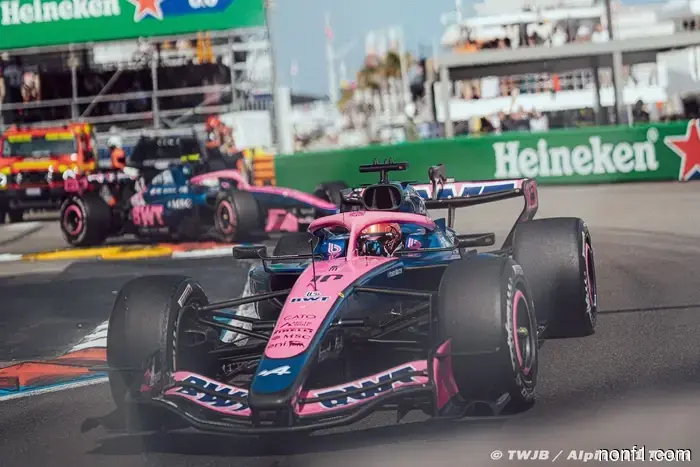 FIA Monaco mistake ignites renewed criticism from competitors.
Formula 1 | The controversy surrounding speeding in the Monaco pitlane has intensified once more, with numerous competing teams expressing anger following Pierre Gasly's missed podium finish.
FIA Monaco mistake ignites renewed criticism from competitors.
Formula 1 | The controversy surrounding speeding in the Monaco pitlane has intensified once more, with numerous competing teams expressing anger following Pierre Gasly's missed podium finish.
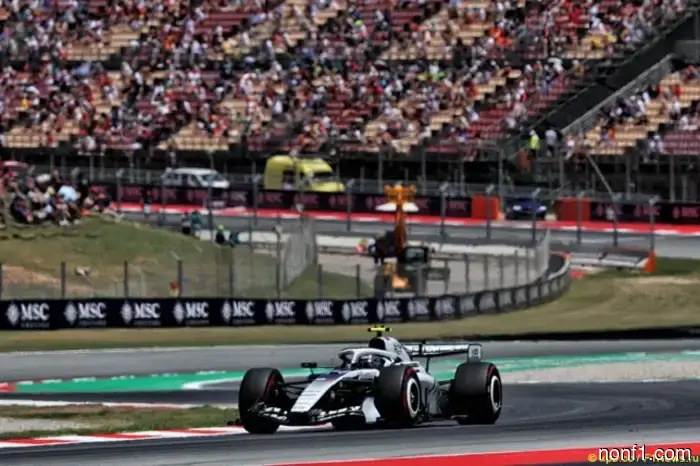 Bottas: For the first time this season, I am satisfied with the car's behavior.
On Friday in Barcelona, Colton Herta made his Formula 1 debut during the race weekend. In the first practice session, the American Cadillac driver replaced Sergio Perez. Valtteri Bottas completed both sessions, but in the second one, he lost a lot of time due to issues with the engine control unit.
Bottas: For the first time this season, I am satisfied with the car's behavior.
On Friday in Barcelona, Colton Herta made his Formula 1 debut during the race weekend. In the first practice session, the American Cadillac driver replaced Sergio Perez. Valtteri Bottas completed both sessions, but in the second one, he lost a lot of time due to issues with the engine control unit.
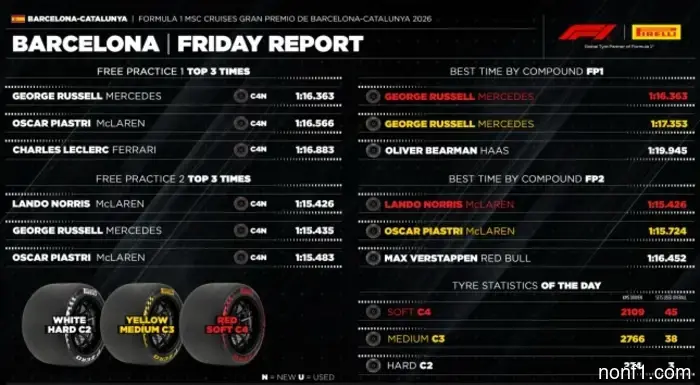 Berra: We expect there to be at least two pit stops in the race.
In Pirelli Motorsport, summarizing Friday, they predict that in the Sunday race, teams will have to make at least two pit stops each – this is due to the high degree of tire degradation...
Berra: We expect there to be at least two pit stops in the race.
In Pirelli Motorsport, summarizing Friday, they predict that in the Sunday race, teams will have to make at least two pit stops each – this is due to the high degree of tire degradation...
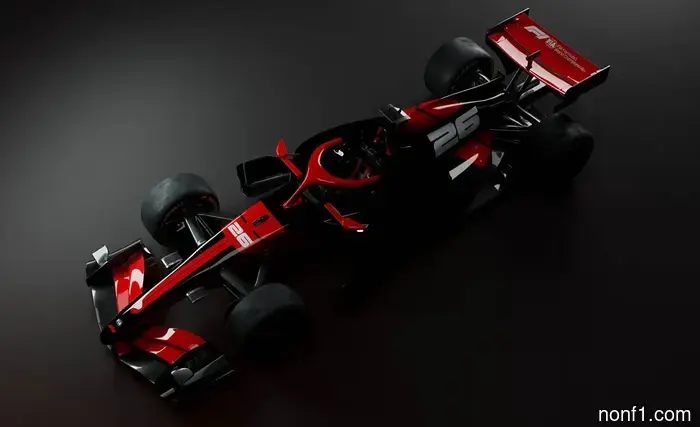 Ben Sulayem continues to advocate for a future in Formula 1 that features lighter V8 engines.
Formula 1 | FIA president Mohammed Ben Sulayem is persisting in advocating for a shift back to lighter, noisier, and more affordable Formula 1 cars that utilize V8 engines. (…)
Ben Sulayem continues to advocate for a future in Formula 1 that features lighter V8 engines.
Formula 1 | FIA president Mohammed Ben Sulayem is persisting in advocating for a shift back to lighter, noisier, and more affordable Formula 1 cars that utilize V8 engines. (…)
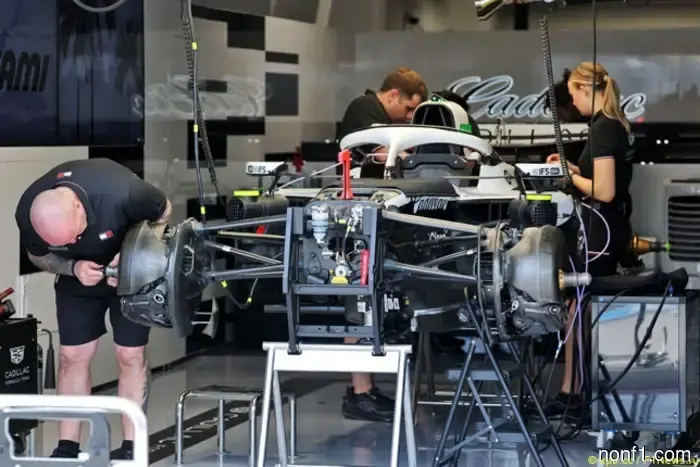 Three teams violated the curfew rule.
On the night of Saturday in Barcelona, the teams McLaren, Alpine, and Cadillac violated the curfew rules.
Three teams violated the curfew rule.
On the night of Saturday in Barcelona, the teams McLaren, Alpine, and Cadillac violated the curfew rules.
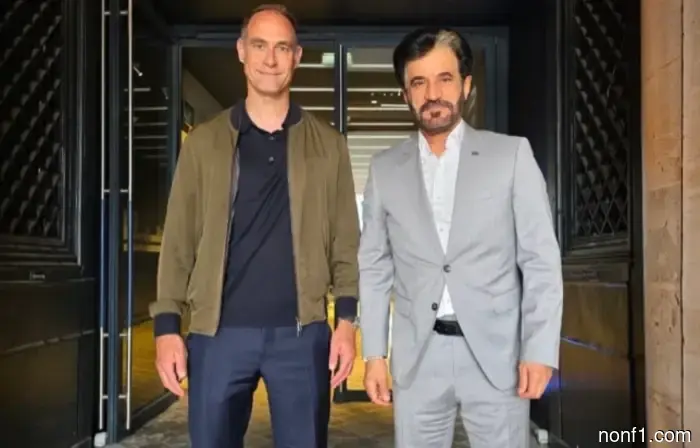 A meeting took place in Paris between the FIA president and the head of Red Bull.
This week in Paris, negotiations took place between Mohammed ben Sulayem and Oliver Mintzlaff, the head of Red Bull, who wants to understand how the FIA concluded that the engines produced by Red Bull Powertrains are the best in Formula 1...
A meeting took place in Paris between the FIA president and the head of Red Bull.
This week in Paris, negotiations took place between Mohammed ben Sulayem and Oliver Mintzlaff, the head of Red Bull, who wants to understand how the FIA concluded that the engines produced by Red Bull Powertrains are the best in Formula 1...
Red Bull continues to contest the FIA's contentious engine decision.
Formula 1 | Red Bull persists in contesting the FIA's contentious ADUO engine evaluation, as worries arise that the ruling could lead to significant implications for the (…)