
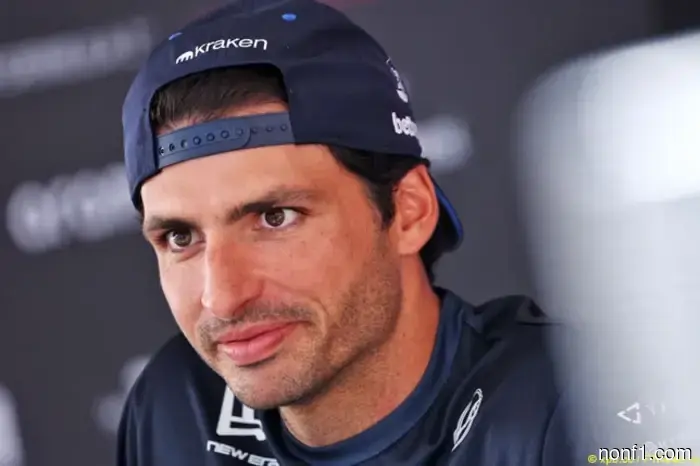
Carlos Sainz: You can't judge drivers by the number of wins.
Carlos Sainz gave a lengthy interview in which he discussed the specifics of the technical regulations, the prospects for Williams to fight for victories in 2028, shared a bold proposal for changing the Formula 1 format, and explained why drivers should not be evaluated solely based on the number of wins and titles.
Question: How well is the Williams car adapted to your driving style? Is there anything you lack to fully unlock its potential?
Carlos Sainz: To be honest, even when I first got behind the wheel of the Williams almost two years ago, I was able to quickly find a good pace during the tests in Bahrain. Then there was indeed a period of about six months for adaptation. Although I was driving fast, I needed to understand how to change my driving style throughout qualifying from the first session to the final.
It was important to figure out in which corners I could extract more from the car and where it was pointless to attack because the car simply wouldn’t allow it. It is in such details that the secrets of each Formula 1 car lie.
I would say that the 2026 car is very similar to last year's in this regard. The driving style remains similar, but due to the new regulations, the grip on the track has decreased. Therefore, it is crucial to understand exactly where time can be found on the lap because in many corners, that time simply doesn’t exist.
Question: How much time was spent working on the simulator to understand the features of the 2026 car?
Carlos Sainz: This year I decided to act differently than usual. It’s easy to fall into the trap of constantly looking for ways to save or conserve energy. In the end, you can just go crazy from all of this!
So I told myself that I would drive as naturally as possible, and then I would see what really needed to be changed. If I need to adjust how I take a corner or change my driving style, then I will do that.
Instead of thinking about how much I need to change, I chose a different approach. I don’t want to go crazy over all these nuances. First, I will act as naturally as possible, then I will look at my lap time and only then decide what needs to be changed.
I think many drivers think too much about this. The more I work with the current regulations, the more I am convinced that I need to continue doing the usual things and look for one or two specifics at each particular track that will help there.
Question: And yet, has the work on the simulator increased?
Carlos Sainz: Primarily in January and February when there was a lot of uncertainty due to the new engine and the change in regulations. Additionally, now for each simulator session, there is an extra one to two hours of work dedicated to the electrical part of the power unit. Previously, that time was spent on car setup.
If before, the conditional eight hours on the simulator were fully dedicated to the car, now six hours go to setup, and two to energy work.
Question: There is a lot of talk about the new regulations now. What do you see as the ideal Formula 1?
Carlos Sainz: I have one rather crazy idea. I’m not sure I’ve ever spoken about it publicly. I don’t even know if it’s worth voicing.
Question: Since you’ve started, you’ll have to share it now.
Carlos Sainz: I’ve always imagined a Formula 1 where drivers would be separated from teams. It’s clear that this will never happen, but I like the idea.
Imagine a season of 20 races where each driver races two races in each car. That is, the driver is part of Formula 1, not a specific team. Formula 1 signs a contract with the driver and provides them with different cars.
Then I would have two races for Williams, two for Mercedes, two for Ferrari, and so on. All drivers would have absolutely equal chances for the title. That would determine the world champion among drivers. Meanwhile, the points that a driver earns for a specific team would count towards the Constructors' Cup.
This way, the championship for drivers and the championship for teams could be completely separated. It would create a true individual ranking and a real Constructors' Cup.
Question: In the times of Senna and Prost, Formula 1 drivers participated in a karting race in France. You have a karting track in Madrid; could you organize something similar?
Carlos Sainz: I think in today’s Formula 1, that’s impossible. With a calendar of 24 races, marketing events, and endless interviews, none of the drivers could prepare for it.
Although there is one exception – Max Verstappen. He is the only one who hardly participates in marketing activities and interviews because he can afford to write that into his contract, and Red Bull agrees with it. The rest simply don’t have the free time and resources to invest in such a race.
Question: Well, if we imagine that such a race is possible, who would win among the current Formula 1 drivers?
Carlos Sainz: Me.
Question: When do you estimate Williams will reach the level of Alpine, which is currently the best team in the midfield?
Carlos Sainz: Honestly, right now we are about halfway there. If we talk about our goal of reducing weight and where we are now, we can say that we have already covered half the distance.
In the first six races of the season, the team did a tremendous job to shed half of the excess weight from the FW48. Now we need to solve the second half of the task.
But it’s not just about working on weight. We also need to bring aerodynamic updates. We know that the current level of the car is explained not only by its weight. From an aerodynamic standpoint, we are also not where we want to be. There is very serious work being done in this direction at the team base right now.
Question: You have been competing in Formula 1 for 12 years. Do you consider this sport unfair? It often happens that a talented driver never gets a car capable of fighting for the title, while, for example, Kimi Antonelli already got a championship car in his second year.
Carlos Sainz: No, I don’t think so. I believe anyone who follows Formula 1 understands that this sport is structured this way.
It all depends on whether you find yourself in the right place at the right time. After that, you just try to make the most of the car you have at your disposal in a given season.
That’s why Formula 1 is a relative sport. Ultimately, the number of titles and wins is largely determined by what your car was capable of. Therefore, I believe that drivers should be evaluated primarily through the lens of the cars they had at their disposal throughout their careers, not just by the number of wins or titles.
Question: Toto Wolff mentioned that you were one of the candidates for a seat at Mercedes. Don’t you think you could be fighting for wins now?
Carlos Sainz: No, because I never saw that option as a real opportunity for myself. I think Mercedes has always clearly understood that they wanted to bet on Antonelli, so I never seriously considered that option.
Question: Max Verstappen also said that many evaluate drivers solely based on the number of titles, while in reality, it’s necessary to look at what results a driver can show behind the wheel of a specific car. Is it necessary to explain this to fans?
Carlos Sainz: I think the job of journalists includes explaining to people how Formula 1 works. In reality, there is no special mystery here. Some will want to understand this, while others will still believe that only numbers and statistics matter, even after all the explanations.
That is also a perfectly acceptable point of view. But I think that drivers and team principals, that is, the people who understand this sport best, know that a driver should be evaluated considering the tool they have at their disposal.
Question: Last year, James Vowles mentioned that Williams plans to continue developing until 2028 and then start competing with the leading teams. How much does this process align with expectations? Or is it too optimistic a forecast?
Carlos Sainz: Right now, that goal seems quite realistic, but we must not forget that the step back we took this year may have pushed the achievement of that goal back by several months or even a year.
It’s hard for me to say exactly how the timelines have changed compared to what I envisioned for the project’s development when I joined the team. Last year, we were closer to the leaders than we expected. This season, on the contrary, we are further away than we anticipated. Perhaps one somewhat compensates for the other.
I constantly think about how long I am willing to wait before I get the chance to fight for wins in Formula 1 again. And I want that timeframe to be as short as possible. Therefore, even if James talks about 2028, I will push the team to achieve it sooner.
Question: You are very demanding of yourself and change something in your preparation every year, both physically and psychologically. Over the years, you have added boxing and cycling to your training process. What’s new for you lately to continue progressing and not standing still?
Carlos Sainz: Right now, most of my energy is focused on managing my time and resources as efficiently as possible, as well as spending as much time at home as possible, training and recovering.
Our schedule is incredibly busy. It’s not just about 24 races in a season. Before and after each event, I work on the simulator. Marketing events and interviews take place before and after races. Additionally, there are my personal sponsors who also need my time.
So now all
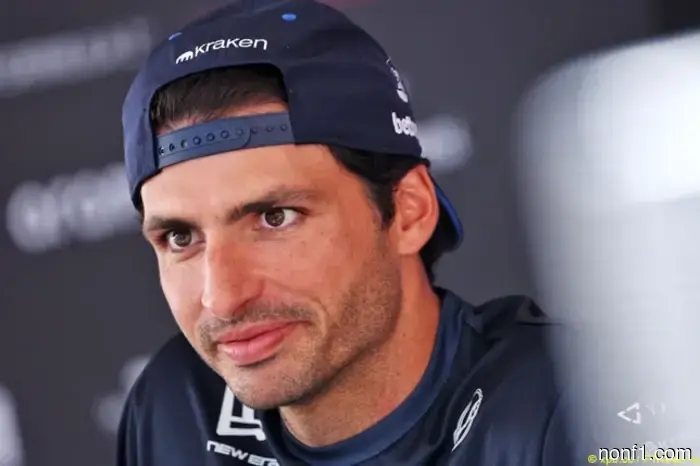
Carlos Sainz: You can't judge drivers by the number of wins.
Carlos Sainz gave a lengthy interview in which he discussed the specifics of the technical regulations, the prospects for Williams to compete for victories in 2028, shared a bold proposal for changing the Formula 1 format, and explained why drivers should not be evaluated solely based on the number of wins and titles.