
At last, an Objective Assessment to Evaluate the Distraction Levels Caused by Car Touchscreens
Mazda
The most significant car news and reviews, no fluff.
Our free daily newsletter delivers the essential stories directly to you every weekday.
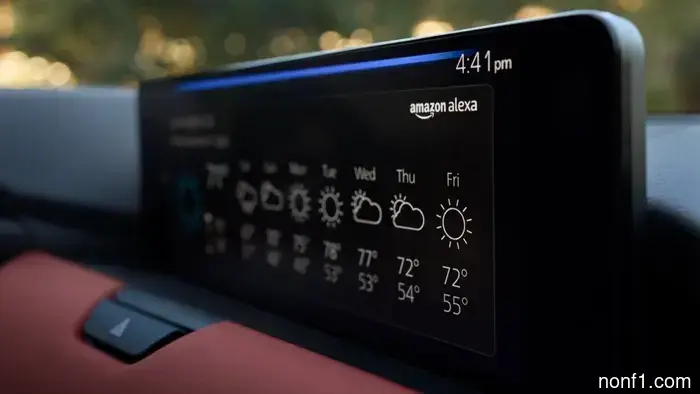
Benjamin Franklin stated that the two certainties in life are death and taxes, but regarding contemporary car interiors, we should add touchscreens to that list. Whether one appreciates them or not, touchscreens have dominated dashboards, a trend that contradicts safety considerations. A recent test conducted by the Swedish car magazine Vi Bilägare found that touchscreens in new vehicles are now more distracting than in previous years.
The magazine tested 10 new cars alongside a 2016 Volvo V60. Drivers were asked to perform standard tasks—like adjusting climate controls, switching radio stations, and changing screen brightness—while driving at highway speeds on a closed airfield. They measured the time taken and distance covered during these tasks, comparing the results to a 2022 test that used the same methodology.
The average distance traveled while interacting with the touchscreen—thereby splitting attention between the screen and the road—increased from 756 meters (2,480 feet) in the 2022 test to 813 meters (2,667 feet) in the new test. This translates to an additional two seconds required to complete a task with the 2026 infotainment systems when compared to the 2022 versions. Note that at 60 mph, you are moving at 88 feet per second.
The expanded distance covered while manipulating touchscreens also suggests that car manufacturers' attempts to enhance these interfaces over the last four years have not been successful. As Vi Bilägare highlights, screens have become larger and are often better positioned than they were four years ago. Additionally, many manufacturers have introduced new hardware and software for the screens with sharper graphics and layouts intended to be more user-friendly. However, based on this test, this improvement hasn’t materialized.
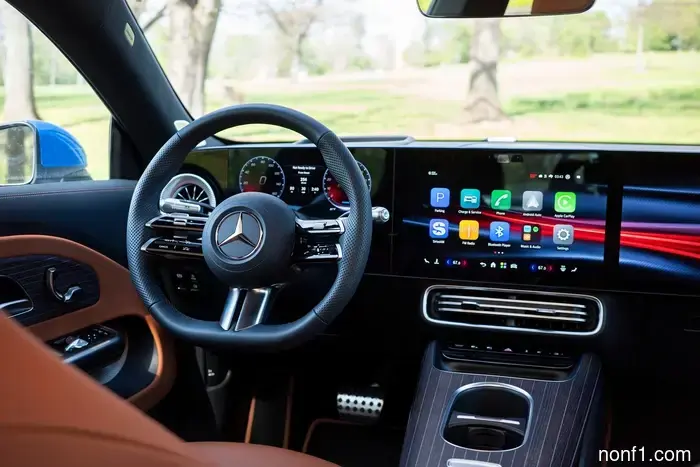
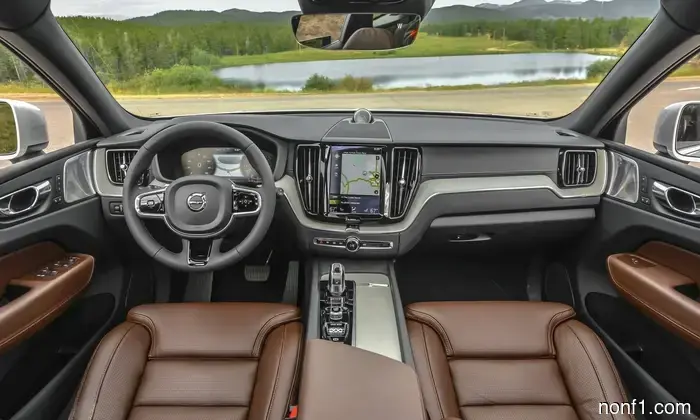
A clear example is the Mercedes-Benz CLA-Class, featuring the automaker’s most up-to-date operating system. Drivers averaged 35 seconds of screen interaction to complete tasks—15 seconds longer than what was seen in the 2022 GLB-Class test—and the screen took 19 seconds to respond to inputs after unlocking. The CLA covered an average distance of 1,116 meters (3,661 feet), ranking second for distance in the test behind the Mazda CX-60’s 1,137 meters (3,730 feet), a result that aligns with our observations. The Volvo XC60 was the top performer in the 2026 test, yet its average distance of 485 meters (1,591 feet) per task was still 68 meters (223 feet) longer than the Volvo C40 Recharge’s average in the 2022 test.
However, not every finding was negative. The Tesla Model Y outperformed the Model 3 in the 2022 test. While it's easy to criticize the absence of buttons and knobs in newer models, the 2026 XC60 did better than the 2016 V60, which has more analog controls. Additionally, a 2005 Volvo V70 (tested in 2022) also surpassed the 2016 wagon.
Other articles
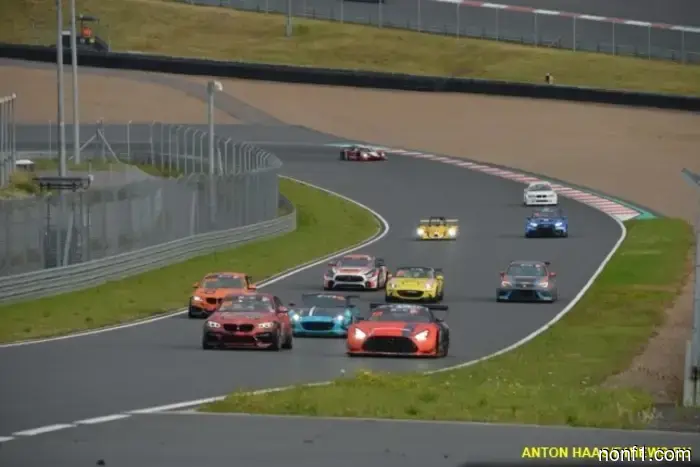 Photo gallery: The third stage of the REC 2026 season at Igora Drive
© F1News.Ru Editorial 1997-2026. Media registration certificate El No. FS77-29173. Registered with the Federal Service for Supervision of Communications, Information Technology and Mass Communications.
Photo gallery: The third stage of the REC 2026 season at Igora Drive
© F1News.Ru Editorial 1997-2026. Media registration certificate El No. FS77-29173. Registered with the Federal Service for Supervision of Communications, Information Technology and Mass Communications.
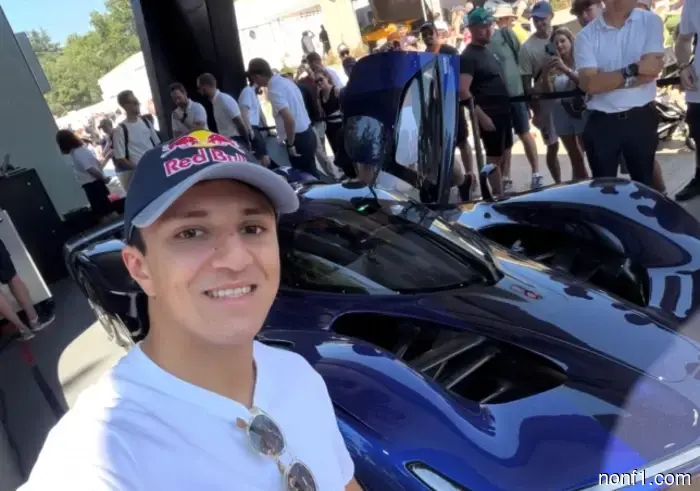 Khajar: I wish the track were a little longer!
Isaac Hajar became a Red Bull Racing driver in 2026 and, in this capacity, participated for the first time in the Goodwood Festival of Speed, where he had the opportunity to drive the RB17 hypercar created by Adrian Newey...
Khajar: I wish the track were a little longer!
Isaac Hajar became a Red Bull Racing driver in 2026 and, in this capacity, participated for the first time in the Goodwood Festival of Speed, where he had the opportunity to drive the RB17 hypercar created by Adrian Newey...
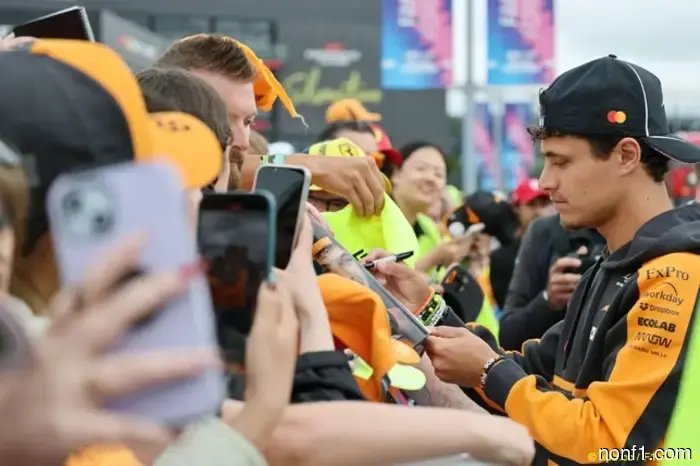 Belgian Grand Prix: Stage of the prediction contest
The acceptance of predictions for the results of the Belgian Grand Prix in our Contest continues.
Belgian Grand Prix: Stage of the prediction contest
The acceptance of predictions for the results of the Belgian Grand Prix in our Contest continues.
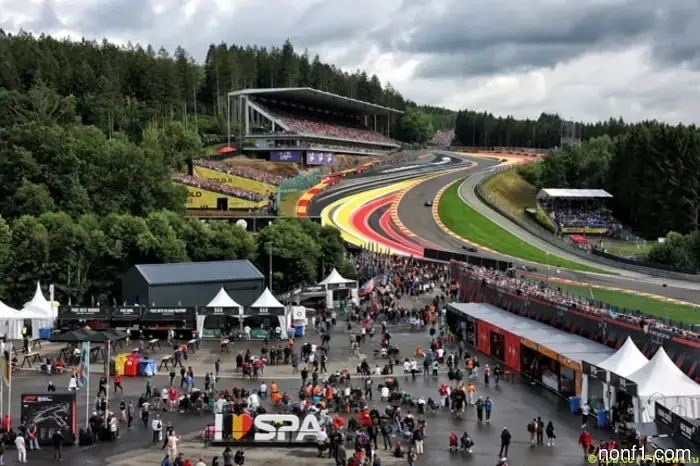 Belgian Grand Prix: Preliminary Weather Forecast
The preliminary forecast promises changeable weather during the race weekend in Spa.
Belgian Grand Prix: Preliminary Weather Forecast
The preliminary forecast promises changeable weather during the race weekend in Spa.
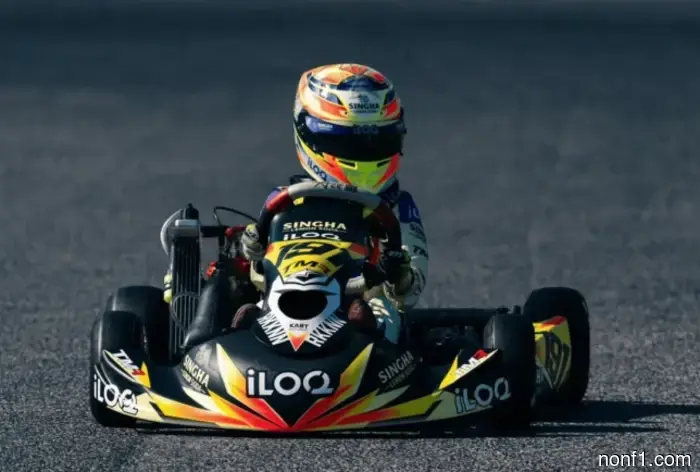 Raikkonen is doing the right thing by personally being involved in his son's career.
The Finnish press is following the career of Robin Raikkonen, and an interview with Jussi Kohtala, an experienced karting specialist, has appeared in the pages of Ilta-Sanomat, who believes that Kimi is doing the right thing by personally managing his son's career...
Raikkonen is doing the right thing by personally being involved in his son's career.
The Finnish press is following the career of Robin Raikkonen, and an interview with Jussi Kohtala, an experienced karting specialist, has appeared in the pages of Ilta-Sanomat, who believes that Kimi is doing the right thing by personally managing his son's career...
 In their youth, Hülkenberg and Max played for the same team.
Nico Hülkenberg has never collaborated with either Red Bull Racing or Toro Rosso, but that doesn't mean he and Max Verstappen have never raced for the same team...
In their youth, Hülkenberg and Max played for the same team.
Nico Hülkenberg has never collaborated with either Red Bull Racing or Toro Rosso, but that doesn't mean he and Max Verstappen have never raced for the same team...
At last, an Objective Assessment to Evaluate the Distraction Levels Caused by Car Touchscreens
In this test, the average duration for completing a task with a touchscreen was greater than that of a similar test conducted four years ago. This outcome is not how it should function.