

Japan Aims to Standardize Automotive Components to Safeguard Its Automobile Industry
Toyota
The latest updates and evaluations from the automotive world, no nonsense.
Subscribe to our free daily newsletter to receive the stories that truly matter directly in your inbox every weekday.
Automakers have long relied on parts-sharing to minimize expenses—not only within their own model lines but also across different brands and market segments. The Volkswagen Group's MQB platform emerged as a leading example of modern parts-sharing frameworks during the 2010s, and since then, many manufacturers have streamlined their offerings to a minimal number of core platforms to lower production costs and ensure consistency.
However, there are drawbacks. VW Group has faced criticism for essentially providing the same product under different variations, as the saying goes, and similarities across brands often lead to accusations of cost-cutting measures and even badge engineering—sometimes justifiably, but not always.
Now, envision this level of commonality extending beyond several brands under a single corporate umbrella to include various manufacturing entities. According to a report from Automotive News, this is what the Japanese auto industry is reportedly contemplating.
Indeed, we've previously witnessed cross-brand platform collaborations. For instance, BMW and Toyota jointly developed the Z4 and Supra, and Mazda partnered with Fiat to create the modern 124 Spider (basically a rebranded MX-5). However, the proposal from the Japanese automotive sector aims for a considerably larger scale.
Who is advocating this? Toyota CEO Koji Sato, who also serves as the current chairman of JAMA, the Japanese Automobile Manufacturers Association, representing Toyota, Honda, Nissan, Mazda, Subaru, Mitsubishi, and Suzuki.
Sato expressed, “We have a strong sense of crisis that the Japanese auto industry is in a massive period of transition. Now is exactly the time to further develop and evolve with the challenges and reform initiatives that the auto industry as a whole must face.”
In collaboration with Nissan CEO Ivan Espinosa, Sato shared that standardizing parts would enable Japanese manufacturers to focus their development efforts on new technologies that consumers truly want, including innovative software interfaces, advanced driver-assistance systems, and quicker-charging EVs.
In addition to his roles as JAMA chairman and Toyota CEO, Sato is also Toyota's Chief Industry Officer, responsible for advocating for policy changes that will benefit the automotive industry.
“We are really discussing what we can achieve together, as we recognize that other industries in different countries or regions are better organized than we are,” Espinosa explained. “We will witness increased collaboration among Japanese OEMs.”
What form will this collaboration take? In the immediate future, the aim is to standardize parts that customers won't see, similar to how automakers currently operate within their own product lines. This primarily pertains to components like wiring harnesses and fluid hoses rather than visible exterior or structural elements. Sato did not imply that these commonalities would involve platforms or body components, and such topics were not mentioned.
While hybridized platforms have existed before, they usually arise from formal joint ventures and mergers. For example, Chrysler created the LX platform to integrate components from Daimler’s Mercedes-Benz and Sprinter lines, despite being based on Chrysler's own LH architecture.
Such an arrangement could have both advantages and disadvantages. As evidenced by situations at Ford and GM, collaboration doesn’t always equate to duplication. Their respective 10-speed automatic transmissions were developed together but engineered independently, leading to notably different results for their customers.
Ultimately, uniformity is not something we, as enthusiasts, desire. While it may facilitate the production of cars more cheaply and easily, it does little to enhance their character. Simultaneously, having interchangeable parts across manufacturers can benefit DIY enthusiasts, making it simpler to find replacements when inevitable failures occur. Overall, this arrangement appears to be a mixed bag—at best, it feels neutral, and at worst, it could favor financial optimization over true innovation.
Got a news tip? Reach out to us at tips@thedrive.com!
Other articles
 Japan Aims to Standardize Automobile Components to Safeguard Its Automotive Industry
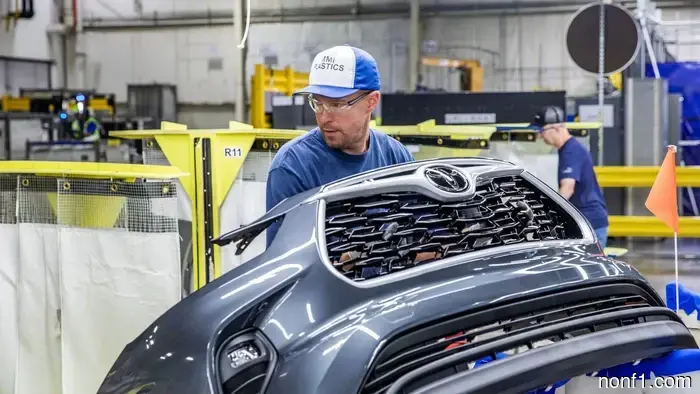
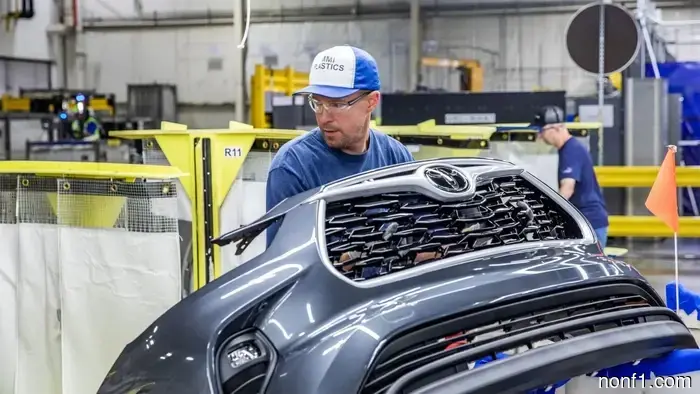
The Japanese automobile sector is contemplating extensive standardization of car parts.
Japan Aims to Standardize Automobile Components to Safeguard Its Automotive Industry
The Japanese automobile sector is contemplating extensive standardization of car parts.
 Ford CEO Jim Farley states that U.S. plants are becoming more competitive with those in China and Mexico: TDS
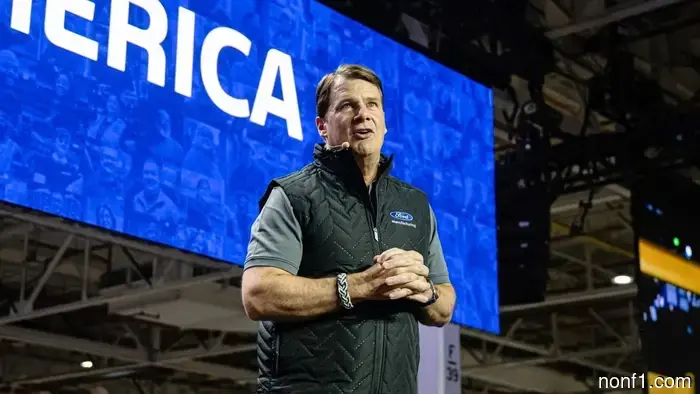
The CEO of Ford stated that the facilities in China and Mexico are "the most compliant with the process," whereas the plants in the U.S. "have caught up the quickest."
Ford CEO Jim Farley states that U.S. plants are becoming more competitive with those in China and Mexico: TDS
The CEO of Ford stated that the facilities in China and Mexico are "the most compliant with the process," whereas the plants in the U.S. "have caught up the quickest."
 Ford CEO Jim Farley states that U.S. plants are closing the gap with those in China and Mexico: TDS
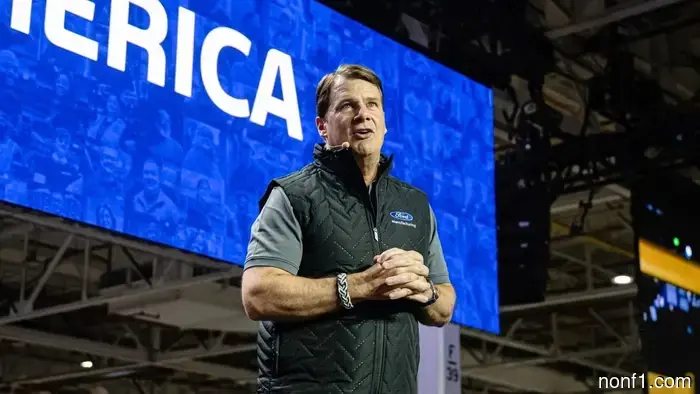
The CEO of Ford remarked that the facilities in China and Mexico are "the most compliant with their processes," whereas the plants in the U.S. "have made the quickest progress."
Ford CEO Jim Farley states that U.S. plants are closing the gap with those in China and Mexico: TDS
The CEO of Ford remarked that the facilities in China and Mexico are "the most compliant with their processes," whereas the plants in the U.S. "have made the quickest progress."
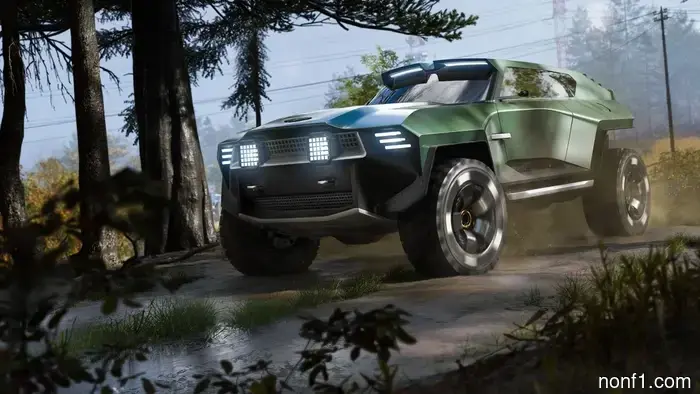 Aston Martin Essentially Created a Halo Warthog for Call of Duty.
Aston Martin has envisioned concept cars in the past, but it has never conceived anything as militaristic as this.
Aston Martin Essentially Created a Halo Warthog for Call of Duty.
Aston Martin has envisioned concept cars in the past, but it has never conceived anything as militaristic as this.
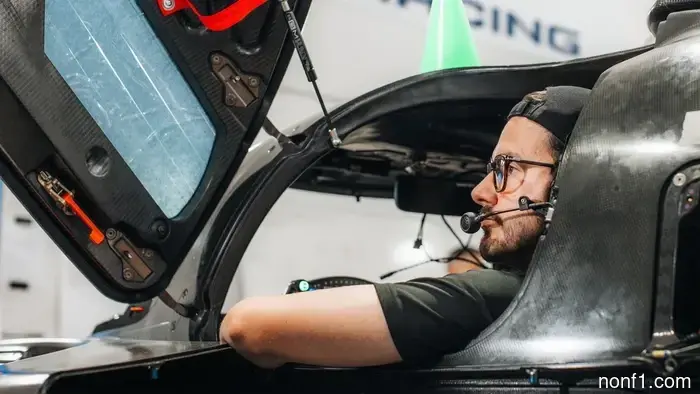 Listen to the Ford Coyote V8 Hypercar Start Up for Its Initial Run
Ford decided against installing a twin-turbo EcoBoost V6 in its premium WEC race car, opting for a different choice instead.
Listen to the Ford Coyote V8 Hypercar Start Up for Its Initial Run
Ford decided against installing a twin-turbo EcoBoost V6 in its premium WEC race car, opting for a different choice instead.
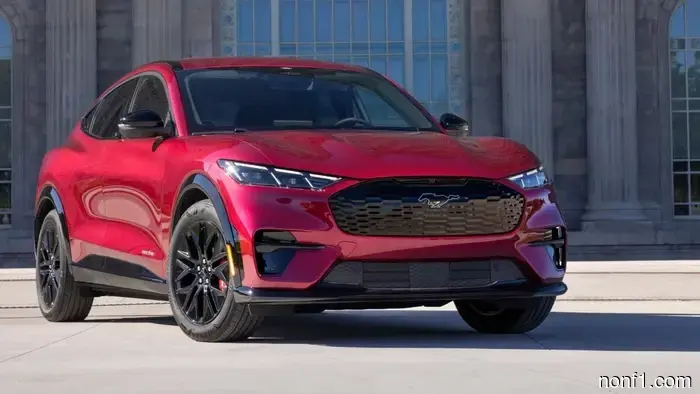 This class-action lawsuit could determine whether a car manufacturer is obligated to give you a tariff refund.
Automakers may be in a position to receive government refunds while customers have already paid more for their vehicles.
This class-action lawsuit could determine whether a car manufacturer is obligated to give you a tariff refund.
Automakers may be in a position to receive government refunds while customers have already paid more for their vehicles.
Japan Aims to Standardize Automotive Components to Safeguard Its Automobile Industry
The Japanese automotive sector is contemplating the standardization of car components on a large scale.