
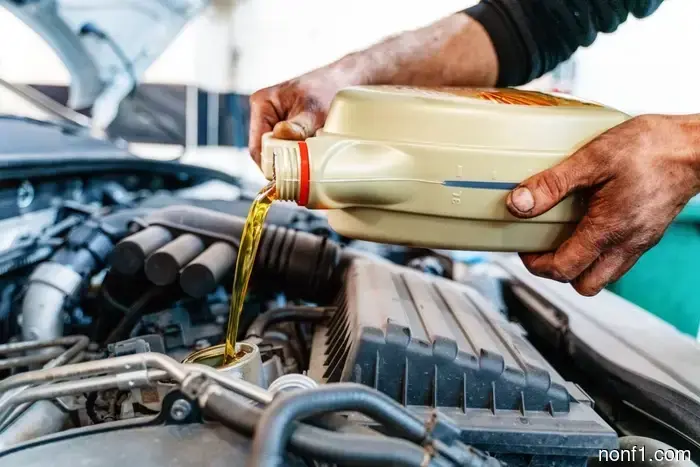
Oil viscosity is crucial for the longevity of your engine. A researcher has recently discovered its 'absolute cosmic limit.'
Getty Images
The most significant automotive news and reviews, straight to the point
Subscribe to our free daily newsletter for the stories that truly matter, delivered to you every weekday.
Automobiles depend on various lubricants to prevent their moving components from turning into costly debris, with everything hinging on viscosity—the ability of a substance to flow without changing shape (known as shear). Lubricants must maintain their ability to flow at various temperatures without becoming too thin to effectively reduce friction between surfaces. Interestingly, there exists an upper limit to viscosity that surpasses the figures shown on bottles of motor oil.
In practical terms, the upper limit of viscosity can be considered infinite. This is because as the viscosity values increase, the conversation shifts from familiar fluids to rock-forming minerals that move beneath the Earth's surface at extremely high temperatures. Masaki Yoshida, a professor at Ritsumeikan University in Japan, set out to determine the physical upper limit of viscosity and recently published his findings on this "absolute cosmic limit" in the journal Physics of Fluids.
Professor Yoshida determined this limit to be 10^30±2 pascal-seconds (Pa s), a measurement of dynamic viscosity that indicates a material's capacity to flow a specific volume per second under a certain amount of pressure. To understand this immense figure, consider that water has a viscosity of around 10^-3 Pa s, while honey measures about 10^1 Pa s. A substance with such extreme viscosity flows at such a gradual rate that any detectable movement would take longer than the age of the Earth. Essentially, this makes the material rigid, which is why it typically isn’t the focus of fluid-dynamics research.
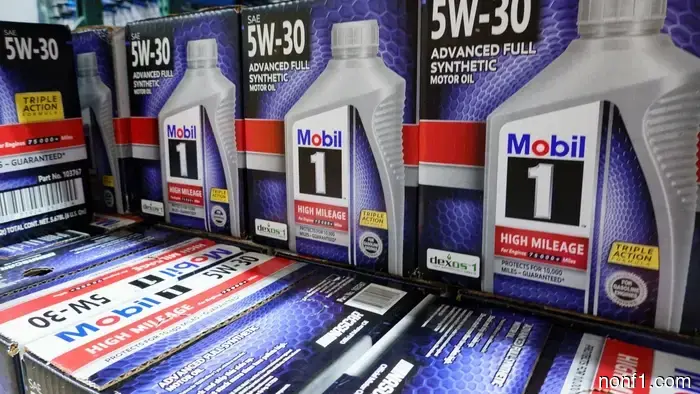
I would find it concerning to think of an engine generating internal temperatures high enough to require oil with such viscosity. Motor oil's dynamic viscosity is generally measured in millipascal-seconds (MPa s, or the equivalent), which is one-thousandth of a Pa s. For non-winter oil grades, this value is adjusted by the oil’s density (known as kinematic viscosity). The weight number indicated on oil bottles results from measuring viscosity at various temperatures and creating an index from those measurements.
To establish this "cosmic limit," the research incorporated decades of geodetic data (focused on the Earth's shape), laboratory experiments on rock deformation, and simulations based on geological processes that occur beneath the Earth's surface over millions of years. The materials that reveal the highest viscosities are not lubricants; they are the fundamental components of rocks that deform as tectonic plates shift.
What was the purpose of this research? For scientists, it removes the vague concept of "infinite viscosity" commonly used in fluid-dynamics studies, providing a definitive upper limit. Although this limit is so high that it doesn't impact more conventional research, it explains why scientists had previously labeled viscosity as "infinite." Additionally, Ritsumeikan University suggests that these findings may be beneficial for investigating both present and historical geological activity, as well as high-viscosity non-Newtonian fluids—those whose viscosity alters under force (like ketchup, which becomes thinner when the bottle is shaken). It also serves as a fascinating reminder that the same principles that sustain your engine also support the Earth itself.

Other articles
 Oil viscosity is crucial for maintaining your engine's health. A scientist has recently discovered its "absolute cosmic limit."
The maximum theoretical viscosity of motor oil might be beyond human understanding.
Oil viscosity is crucial for maintaining your engine's health. A scientist has recently discovered its "absolute cosmic limit."
The maximum theoretical viscosity of motor oil might be beyond human understanding.
 Sainz suggests that he may remain with Williams despite speculation about Audi.
Formula 1 | Carlos Sainz has provided his strongest hint so far that he plans to stay with Williams in 2027, despite facing months of criticism regarding the (…)
Sainz suggests that he may remain with Williams despite speculation about Audi.
Formula 1 | Carlos Sainz has provided his strongest hint so far that he plans to stay with Williams in 2027, despite facing months of criticism regarding the (…)
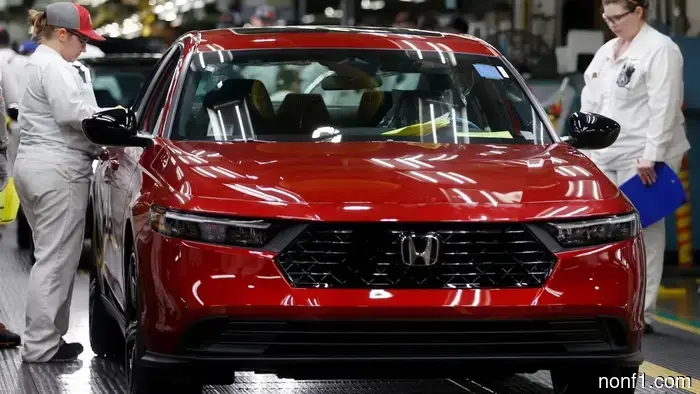 Honda Aims to Exploit North American Demand by Opening Another Factory: TDS
Last year, North America was a significant contributor for Honda, accounting for 40% of its worldwide sales. This might lead to the establishment of an eighth factory in the area.
Honda Aims to Exploit North American Demand by Opening Another Factory: TDS
Last year, North America was a significant contributor for Honda, accounting for 40% of its worldwide sales. This might lead to the establishment of an eighth factory in the area.
 Red Bull makes a move for Mercedes' junior team leader Lagrue.
Formula 1 | Red Bull is allegedly attempting to recruit the individual responsible for Mercedes' very effective young driver program as it seeks to restructure the framework that was once in its control.
Red Bull makes a move for Mercedes' junior team leader Lagrue.
Formula 1 | Red Bull is allegedly attempting to recruit the individual responsible for Mercedes' very effective young driver program as it seeks to restructure the framework that was once in its control.
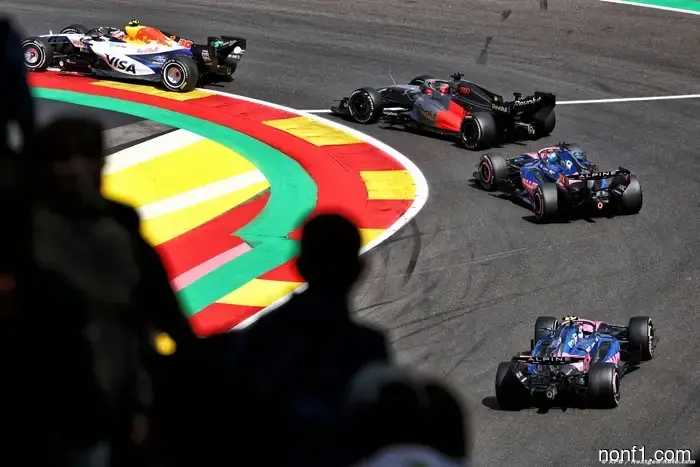 Ben Sulayem acknowledges FIA's 'errors' regarding the 2026 regulations.
Formula 1 | FIA president Mohammed Ben Sulayem has admitted that errors occurred regarding Formula 1's contentious 2026 regulations after significant (…)
Ben Sulayem acknowledges FIA's 'errors' regarding the 2026 regulations.
Formula 1 | FIA president Mohammed Ben Sulayem has admitted that errors occurred regarding Formula 1's contentious 2026 regulations after significant (…)
 Alonso states that his decision for 2027 depends on the rules, not on Aston's decline.
Formula 1 | Fernando Alonso states that Aston Martin's poor beginning to 2026 will not determine his continuation in Formula 1 next year, emphasizing that the regulations (…)
Alonso states that his decision for 2027 depends on the rules, not on Aston's decline.
Formula 1 | Fernando Alonso states that Aston Martin's poor beginning to 2026 will not determine his continuation in Formula 1 next year, emphasizing that the regulations (…)
Oil viscosity is crucial for the longevity of your engine. A researcher has recently discovered its 'absolute cosmic limit.'
The theoretical maximum viscosity of motor oil might be beyond what humans can fully understand.