
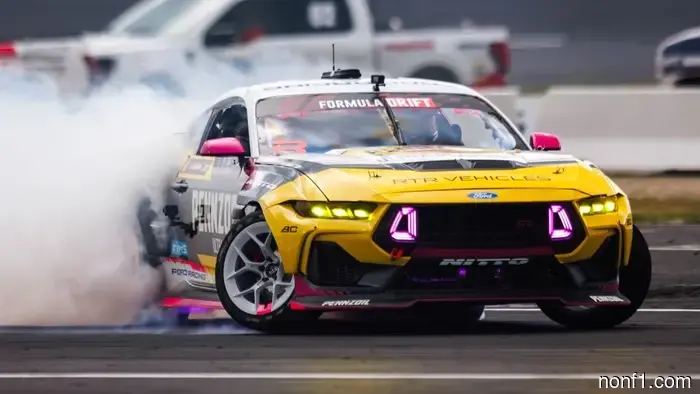
RTR Demonstrates How Professionals Tune a Mustang for Formula Drift
The most significant car news and reviews, no nonsense
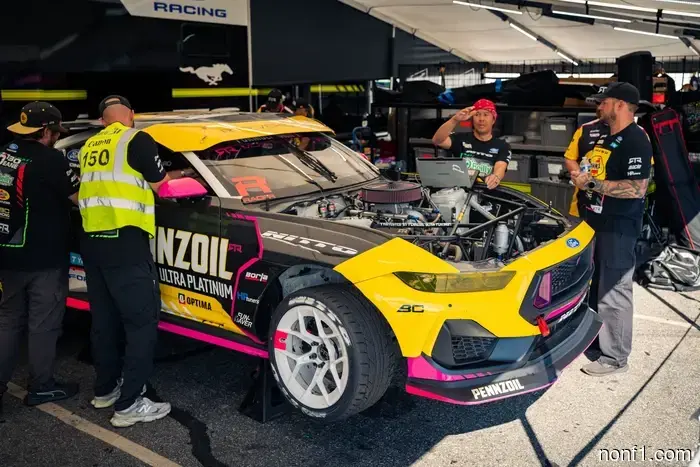
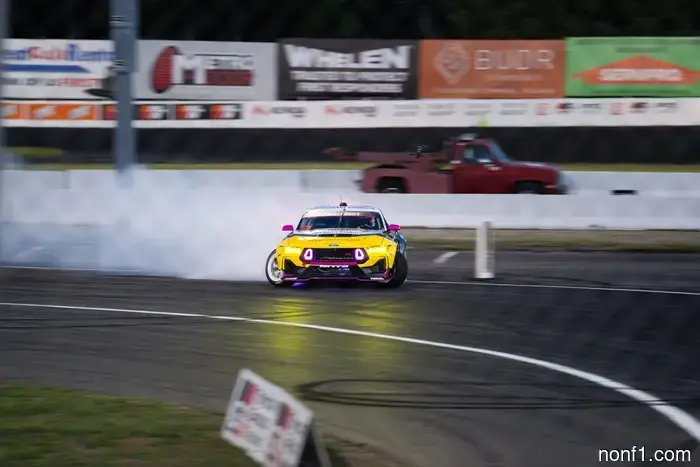
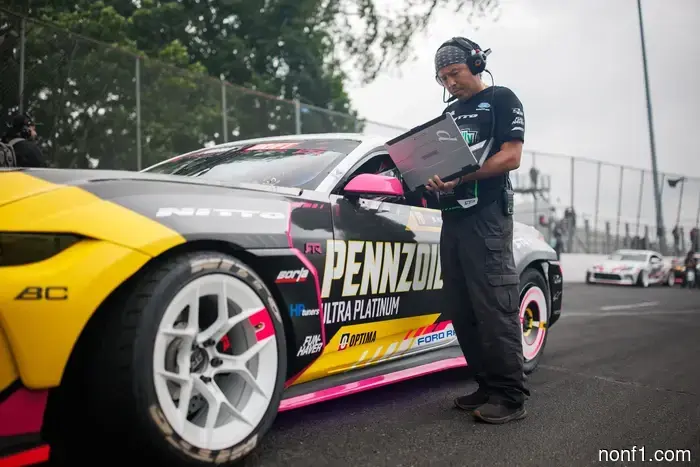
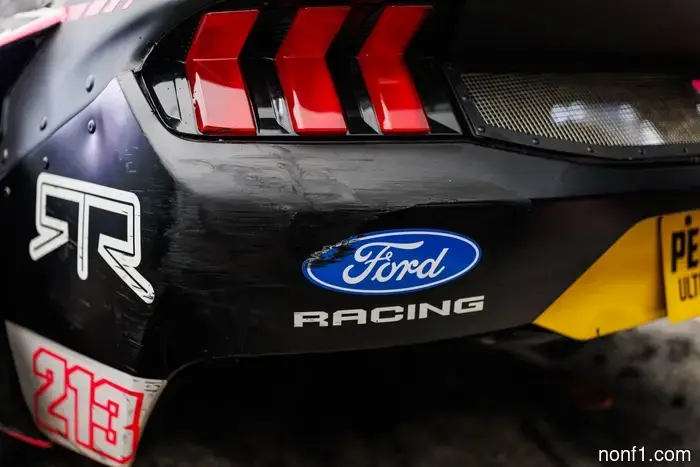
“The biggest challenge these cars face is maintaining a slow pace,” stated Josh Stroud, Formula DRIFT crew Chief for RTR Mustang #213, while showing me around Ben Hobson’s Pennzoil Ford Mustang RTR Spec 5-FD. There’s much more to a true drift car setup than just negative camber and hydraulic handbrakes.
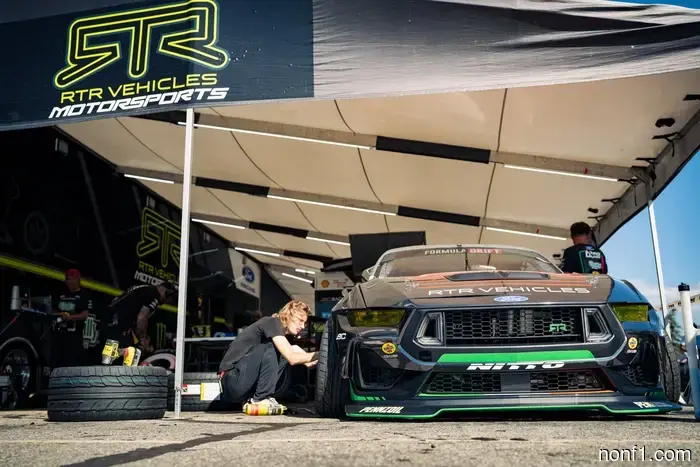
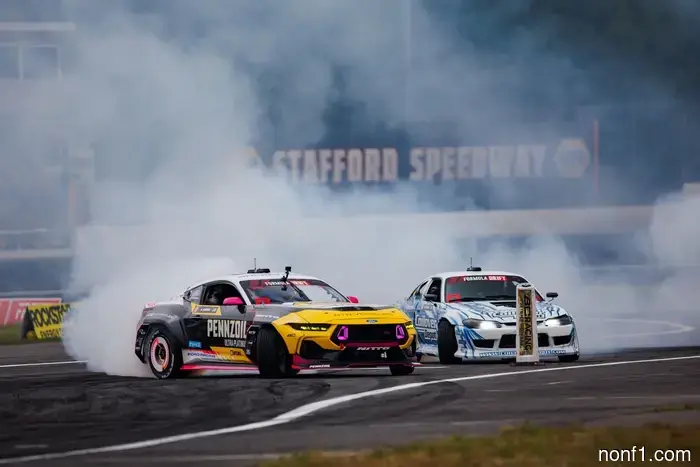
Drifting began as a grassroots motorsport, but for the past twenty years, Formula DRIFT (FD) has been pushing its boundaries, showcasing a motorsport driven by style and technique rather than simply speed. The RTR (short for “Ready To Rock”) team has played a crucial role in the growth of drifting in the USA, introducing roaring V8s into a scene previously dominated by imports.
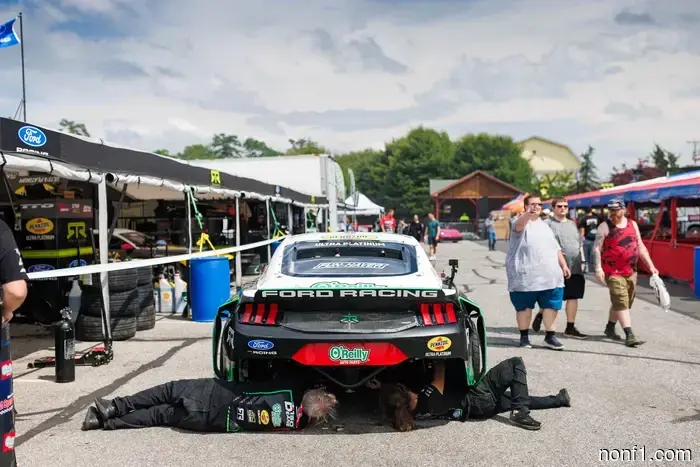
During the “Battle at the Springs” Formula Drift weekend, I followed the RTR Team to discover what goes into constructing a top-tier professional drift car, drawing on my own experience of building and drifting my grassroots car over the past three years.
A professional drift car has several key distinctions from regular racing vehicles, categorized into three main areas:
1. Suspension and Steering
2. Engine and Drivetrain
3. Body and Styling
**Suspension and Steering**
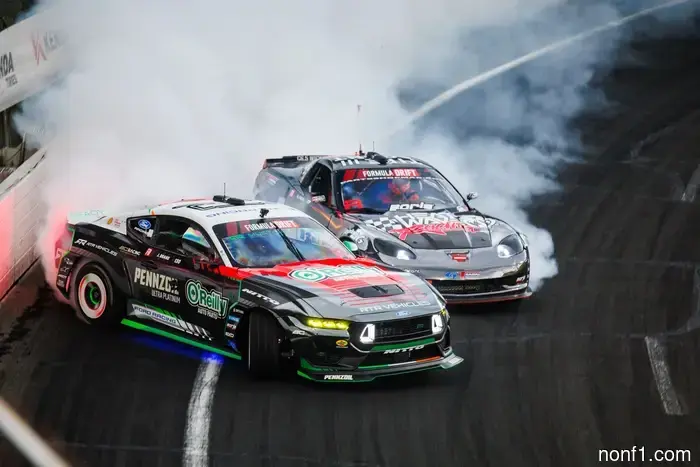
It’s clear that any drift car is designed to operate sideways, but this professional sport assesses how sideways a car can go while still achieving incredible forward speeds. This is facilitated through steering, suspension flexibility, and rear grip. The RTR Spec-5 FD Mustang features a bottom ball joint positioned further from the body compared to stock and extended tie rod ends for balance. This adjustment shifts the front knuckle, giving any drift car its trademark “bulldog stance.”
By pushing the bottom of the steering knuckle outward, the wheel is able to turn further without hitting the body, which is essential for maximizing angle. Importantly, while the front wheel can achieve a greater angle lock-to-lock, it doesn’t necessarily increase the turns that the steering wheel can make. Therefore, each steering wheel adjustment corresponds to a more significant turn from the front wheel. This can make a drift car extremely responsive, where smaller inputs result in larger movements, making it enjoyable for skilled drivers but potentially unsettling for novices. Along with this custom steering setup, there’s a comprehensive list of custom alignment modifications.
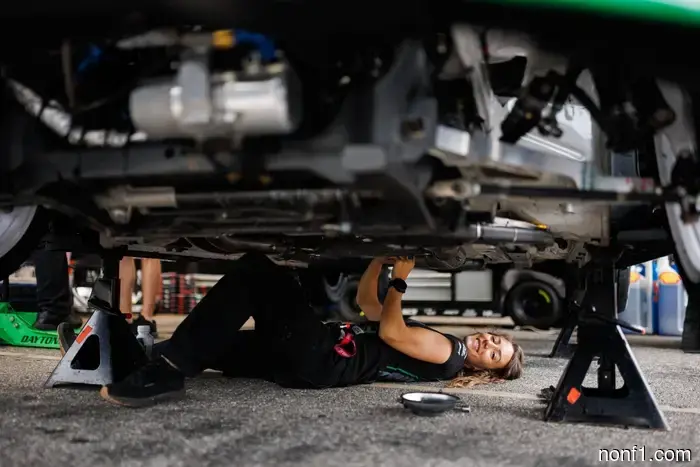
“I can’t disclose my changes, but I’m aiming to enhance grip,” mentioned Shelby Crackston, crew chief for RTR driver James Deane. This likely indicates she was adjusting the rear toe arms inward, positioning the rear tires to angle towards each other, which increases traction when accelerating. Such a setup isn't ideal for street driving, but when these drift cars go through 315-width Nitto tires every two runs, it’s not a concern. That was about all I could extract from her regarding her proprietary methods, and understandably so.
Suspension setups and tire pressure are significant ways drivers can gain an advantage. New drifters often start without these steering modifications, focusing solely on suspension tweaks. Introducing angle kits too soon can be challenging for those not accustomed to it.
**Engine and Drivetrain**
One of Formula DRIFT's goals is to make driving accessible, so cars must be based on their street-legal versions and typically include parts readily available for purchase online. So, yes, theoretically, you could buy one of these Mustangs. However, I’d suggest opting for one of the more street-conducive models.
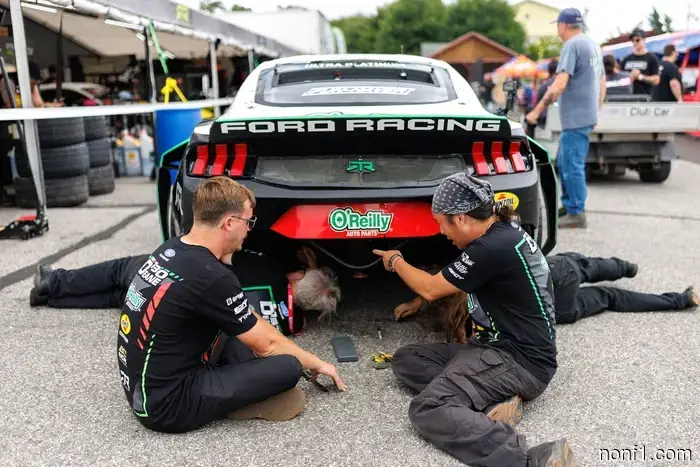
RTR began as a speedshop founded by Vaughn Gitten Jr., focused on enhancing Mustangs to extreme levels. It quickly evolved into a Ford-supported performance parts supplier so integrated into the company that the RTR Drift team often services their procar Mustangs at Ford dealers when they can’t reach HQ in time for the next event. Imagine seeing your Ford Escape on a lift right next to a 1,249-horsepower Mustang!
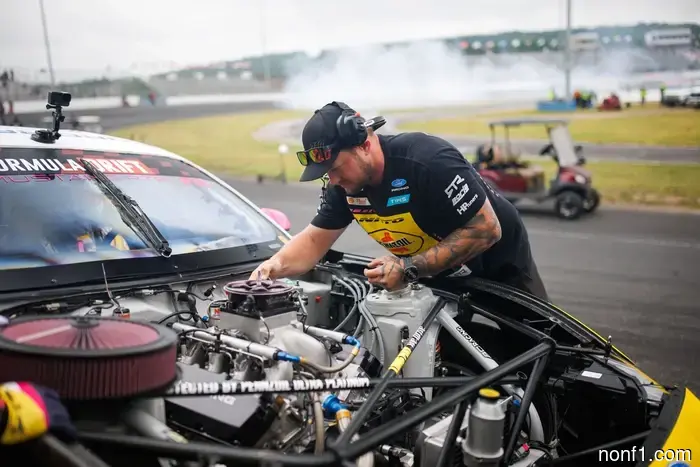
Ben Hobson’s vehicle boasts a 455 cubic-inch V8 and utilizes a 300-shot of nitrous for every run, adding to its high-strung performance. After the weekend at the track, I had the opportunity to sit down with Sean Nguyen, Pennzoil Technical Scientist and Automotive Lubricant Specialist, to understand how these engines can endure such considerable stress over time.
“They can rev from 0 to 9,000 RPM in an instant. Naturally, this puts significant strain on the oil, the transmission… thus the product must be shear stable to withstand that,” Sean explained after I was surprised to learn that these RTR Mustangs use readily available Pennzoil Ultra Platinum 10W-60. This aligns with their focus on accessible components and easy maintenance. Anything the RTR team can do to enhance simplicity and reliability contributes to their competitive performance.
Even a single run in amateur drifting includes full-throttle bursts followed by rapid off-throttle slides. This abrupt shift in speed and throttle can be challenging to control without a dry sump or a baffled oil pan.


Other articles
 Hot Rod designer Chip Foose transformed this John Deere tractor into a vehicle resembling a vintage race car.
At what can be considered the height of his popularity, Chip Foose explored a different kind of four-wheeled artistry: agricultural machinery.
Hot Rod designer Chip Foose transformed this John Deere tractor into a vehicle resembling a vintage race car.
At what can be considered the height of his popularity, Chip Foose explored a different kind of four-wheeled artistry: agricultural machinery.
 Short-Sighted Profit Motives Are Threatening Enthusiast Cars—and the Next Generation of Fans
The distinctive sales approach of a family-run tree nursery changed my perspective on the affordability crisis.
Short-Sighted Profit Motives Are Threatening Enthusiast Cars—and the Next Generation of Fans
The distinctive sales approach of a family-run tree nursery changed my perspective on the affordability crisis.
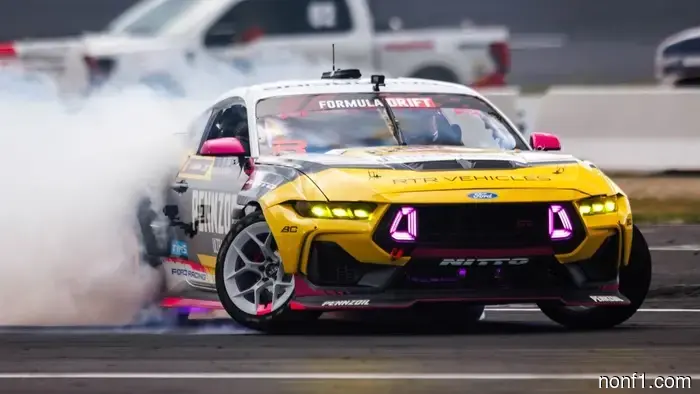 RTR Demonstrates How Professionals Tune a Mustang for Formula Drift.
We received advice on drift car configurations from the experts. It involves much more than just negative camber and hydraulic handbrakes.
RTR Demonstrates How Professionals Tune a Mustang for Formula Drift.
We received advice on drift car configurations from the experts. It involves much more than just negative camber and hydraulic handbrakes.
RTR Demonstrates How Professionals Tune a Mustang for Formula Drift
We received some advice on drift car setups from the experts. There's much more involved than just negative camber and hydraulic handbrakes.