
Short-Sighted Profit Motives Are Threatening Enthusiast Cars—and the Next Generation of Fans
The most significant news and reviews in the automotive world, straight to the point.
Our daily newsletter delivers the essential stories to your inbox every weekday, free of charge.
When I purchased my house in the Detroit suburbs at the beginning of 2022, it was, like many homes in the area that are about a century old, somewhat poorly maintained. The interior was livable, with the families who owned it from its construction in 1928 until the early 1990s caring for it diligently. However, that was a turning point. Back then, the neighborhood was struggling, making it challenging to convince people to invest heavily in homes whose values were barely keeping up with inflation.
Three and a half years is a tight timeframe to rectify 30 years of neglect, and it was made more complex by the condition of the property when I bought it. My time for automotive hobbies has dwindled almost to nothing because of this, but working in this field daily keeps me connected to both worlds, making me more aware of how they intersect.
This isn’t one of those “everything I learned about the industry came from gardening” type of posts, but the thought did occur to me while planting a tree, and it might take a moment before I relate it back to anything involving cars. If that doesn't interest you, I completely understand; feel free to move on.
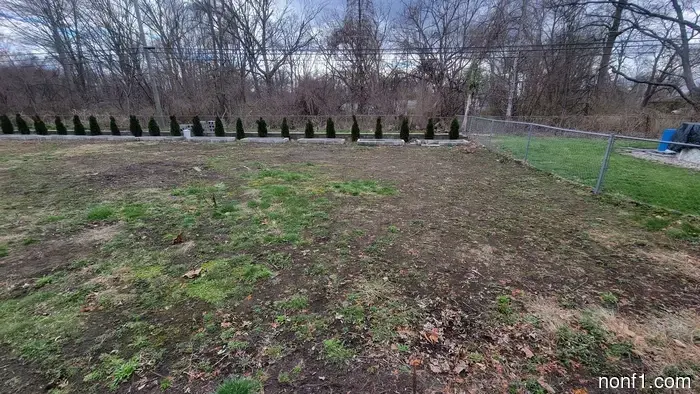
In 2020, a young GM employee purchased the home and began making significant updates. One of the projects included revamping the 80-year-old landscaping, and by “revamping,” I mean he hired someone with a mini-skid loader to scrape the backyard into a pile against the fence in preparation for paving the entire area. The house is set on half an acre; that's a lot of bricks.
However, during the process of clearing the aged yard and ordering concrete blocks, he and his wife discovered they were expecting another child and concluded that, while the lot was ample, the house itself wasn’t sufficient for their expanding family. In a seller's market, he listed it for what he had paid plus his renovations, and I happily offered him an additional $20,000.
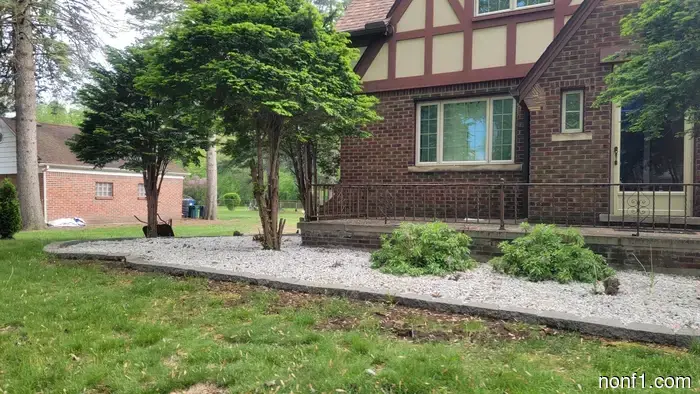
Thus, I acquired a habitable house with a muddy backyard. Out front, there were some gravel, tree stumps, and aggressively trimmed Japanese Yews that had clearly outlived their prime decades ago. The barren area in the back became my top priority; I moved in during March and already spotted thistle leaves emerging by April. I covered the white gravel in front with mulch and planted a few arborvitaes and junipers along the retaining walls, but my focus was primarily elsewhere.
At that time, my knowledge about lawns was limited to how to mow them. It took a solid two years to convert all the brown patches into green and get the chaotic backyard under control. By spring 2024, I felt ready to tackle the visible areas. I had never planted a flower before, aside from helping my parents with yard work in my youth. I knew nothing about garden design, but I desired more than the typical sea of evergreens that surround these old Tudor-style homes. I wanted something that stood out.
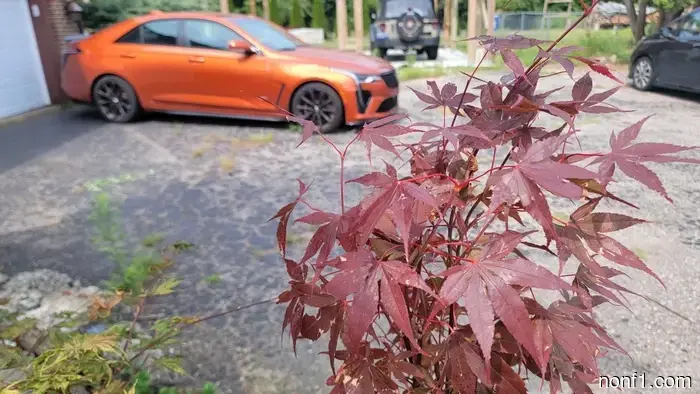
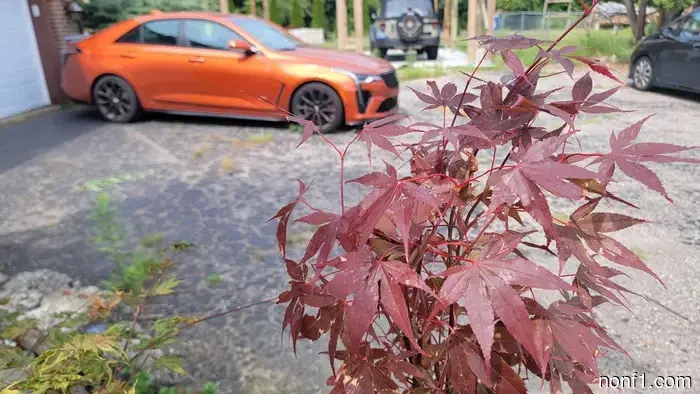
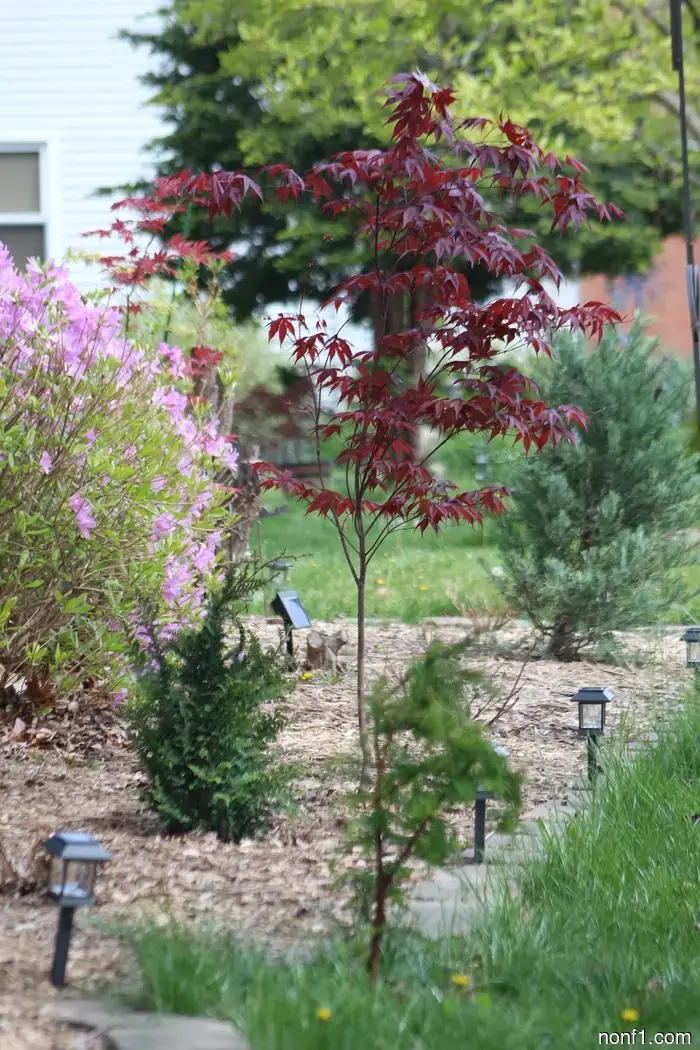
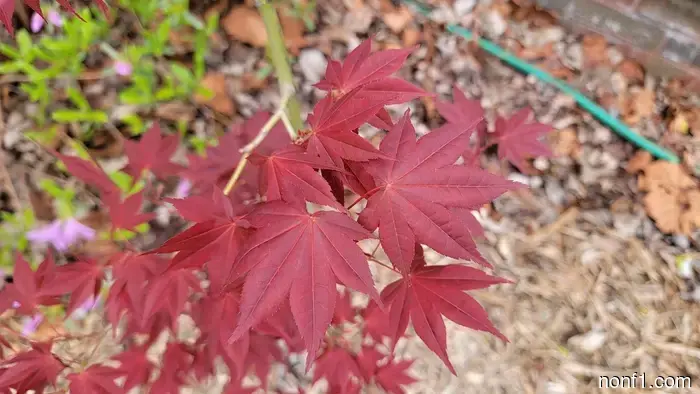
My search was straightforward: “Trees that have fall color in summer.” My exploration led me to discover what I now recognize as a classic gateway plant: a red Japanese maple (specifically a Bloodgood variety). I ordered it from a large online nursery, and upon arrival, it looked much more vibrant than in the photos, but I took The Internet™‘s word for it that it would flourish even more the following year.
And boy, did it. From the moment it sprouted bright crimson leaves last spring, I was fascinated. I needed another one. From my previous research, I knew there were other varieties, and I recalled stunning (perhaps too good to be true?) photos from a North Carolina nursery simply named “MrMaple.”
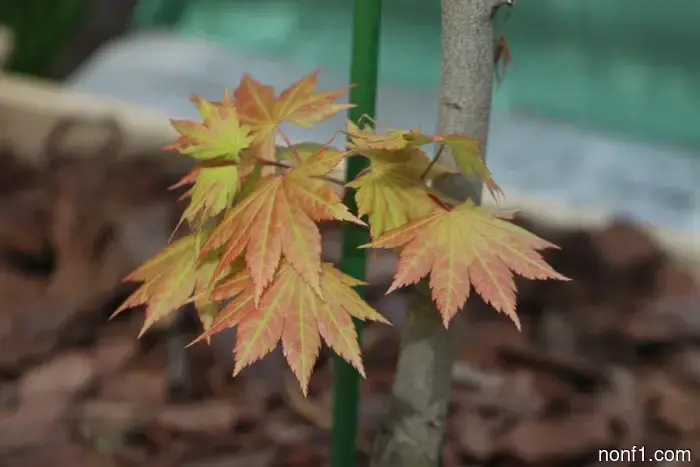
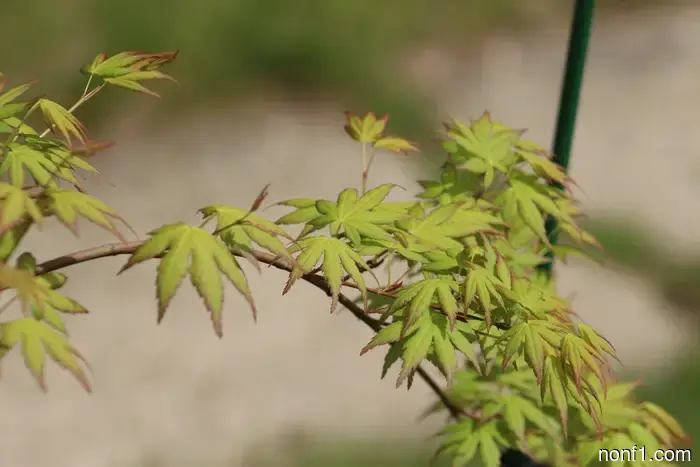
Being in this industry, I get pitched a lot of nonsense. It's not just cars—though several companies selling vaporware have attempted to entice me with fantastical supercar concepts. Mostly, it’s just junk. Each week brings another “must-have,” “epic,” or “legendary” road trip accessory or some vibe-themed gadget produced by someone who confidently (yet inaccurately) assumed their idea was entirely original. Here I was, looking at a site for a business claiming to offer nearly 1,500 varieties of Japanese maple, some with leaves that could make ornamental flowers look plain. My skepticism matched the vibrancy of their photos.
If you’ve browsed a tree selection at a local nursery, you likely see Japanese maples as somewhat pricey. And they can be. Mature Japanese maples are smaller than their larger American red or sugar maple relatives, meaning they grow more slowly. The coveted dwarf varieties prized by collectors take even longer to reach just a few feet high. The smallest trees typically found at a nursery are usually in three-to-five-gallon

Other articles
 RTR Demonstrates How Professionals Tune a Mustang for Formula Drift.
We received advice on drift car configurations from the experts. It involves much more than just negative camber and hydraulic handbrakes.
RTR Demonstrates How Professionals Tune a Mustang for Formula Drift.
We received advice on drift car configurations from the experts. It involves much more than just negative camber and hydraulic handbrakes.
 RTR Demonstrates How Professionals Tune a Mustang for Formula Drift
We received some advice on drift car setups from the experts. There's much more involved than just negative camber and hydraulic handbrakes.
RTR Demonstrates How Professionals Tune a Mustang for Formula Drift
We received some advice on drift car setups from the experts. There's much more involved than just negative camber and hydraulic handbrakes.
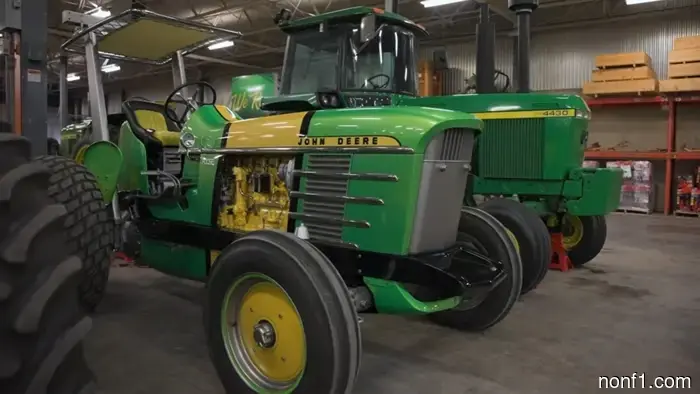 Hot Rod designer Chip Foose transformed this John Deere tractor into a vehicle resembling a vintage race car.
At what can be considered the height of his popularity, Chip Foose explored a different kind of four-wheeled artistry: agricultural machinery.
Hot Rod designer Chip Foose transformed this John Deere tractor into a vehicle resembling a vintage race car.
At what can be considered the height of his popularity, Chip Foose explored a different kind of four-wheeled artistry: agricultural machinery.
Short-Sighted Profit Motives Are Threatening Enthusiast Cars—and the Next Generation of Fans
The distinctive sales approach of a family-run tree nursery changed my perspective on the affordability crisis.