
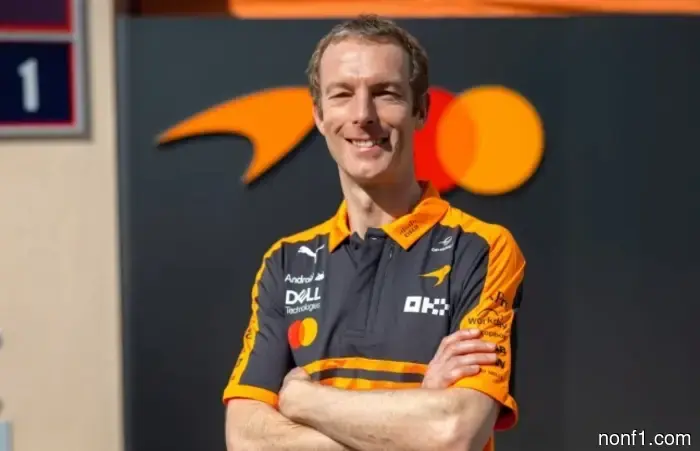
Mark Temple: There are more difficulties than we expected.
Mark Temple, McLaren's Technical Director for Chassis Efficiency, spoke to the team's press service about the complex challenges he and his colleagues face during the 2026 season.
Temple has been with the Woking team for a long time, starting his collaboration back when Formula 1 used powerful 3-liter V10 engines. In the early stages of his career, he worked on developing gearbox components, then, after the switch to 2.4-liter V8 engines in 2006, he worked in the vehicle dynamics department. When energy recovery systems (KERS) were introduced in Formula 1, he became one of Lewis Hamilton's engineers.
He also has experience as a race engineer for Fernando Alonso during the period when the "hybrid era" began, but gradually he was entrusted with more responsible positions, and he is now among the leading technical directors at McLaren.
"The new cars behave differently on the track, and our task is to understand what this difference is," Temple said. "And this applies to most areas of the car. But truly large-scale changes have occurred with the power units.
In preparing for this season, we understood that we would face much more complex tasks than usual, as there are many changes. Of course, there has been the most discussion about the power units. We knew that finding the right approach to them would not be easy, but there are also many opportunities to achieve speed gains, and this will significantly affect how we operate during races.
It turned out that some aspects were more complicated than we expected, which required more time to fine-tune our processes – everything related to race preparation. In fact, there is still quite a bit of work to do in this area.
New positions have emerged within the team. We now have a team of specialists responsible for power unit efficiency, which did not exist before. Their main task is to understand how to act to fully unlock the potential of the power unit. They analyze telemetry data collected during track work and collaborate with race engineers.
They also use our simulator and other tools – they require new skills, practicing new approaches because we previously had no need to address such issues. These specialists work closely with Mercedes engine engineers – typically, they are the ones who usually propose optimal engine settings for specific stages of the season and present various scenarios to use energy as efficiently as possible throughout the lap.
We check what they proposed using our tools, taking into account the specific requirements of the MCL40, as well as various variables – wind direction, grip levels, fuel load, etc.
In general, we study all of this, conduct comparative analyses, and then provide recommendations to our race engineers working with Mercedes engine engineers. Thus, we combine two approaches – ours and that used by HPP (Mercedes High Performance Powertrains) specialists.
However, in the process of preparing for races, while receiving information from HPP, we do not participate in decision-making (regarding power unit settings). When it becomes clear what we have to deal with, we often have little time to react to it all. Therefore, one of the tasks we are trying to solve in 2026 is to improve our working processes so that such difficulties have as little impact as possible.
There are also very significant changes related to active aerodynamics systems – the mode of straight-line driving greatly influences our racing approaches. There are movable elements on the front and rear wings that change their position on each lap, although this does not happen on a wet track – all of this also needs to be taken into account.
This complicates the tasks in terms of finding optimal approaches to vehicle handling – it may be necessary to reduce the manifestation of understeer when the heavy car has already worn tires, or, as in Miami, to race with a car set up for reduced downforce. All of this has to be learned throughout the season, but the most challenges are with the power unit."
Since Lando Norris won the Hungarian Grand Prix, securing McLaren's first victory of the season, the team went into the summer break in great spirits. But everyone in the technical department's leadership in Woking understands that there is still much to learn to make up significant ground on the leaders, and McLaren faces new tasks requiring solutions in the second half of the year.
Other articles
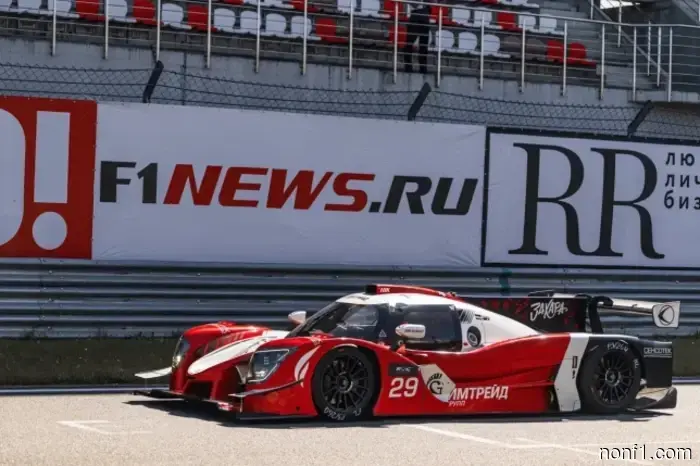 REC: YADRO Motorsport's success in the fourth stage of the series
The Russian endurance racing series returned to its "home" racetrack Moscow Raceway after the away stage near St. Petersburg on August 1...
REC: YADRO Motorsport's success in the fourth stage of the series
The Russian endurance racing series returned to its "home" racetrack Moscow Raceway after the away stage near St. Petersburg on August 1...
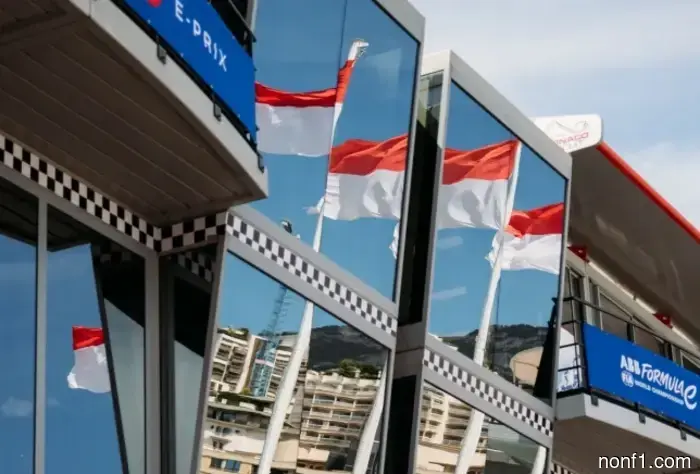 Formula E: The stage in Monaco in 2027 will take place on May 1 and 2.
Formula E and the FIA announced amendments to the calendar for the next season – specifically, that the stage in Monaco in 2027 will take place on May 1 and 2...
Formula E: The stage in Monaco in 2027 will take place on May 1 and 2.
Formula E and the FIA announced amendments to the calendar for the next season – specifically, that the stage in Monaco in 2027 will take place on May 1 and 2...
 Mark Temple: There are more difficulties than we expected.
The Technical Director of McLaren for chassis performance shared in an interview with the team's press service about the complex challenges he and his colleagues have to tackle throughout the 2026 season...
Mark Temple: There are more difficulties than we expected.
The Technical Director of McLaren for chassis performance shared in an interview with the team's press service about the complex challenges he and his colleagues have to tackle throughout the 2026 season...
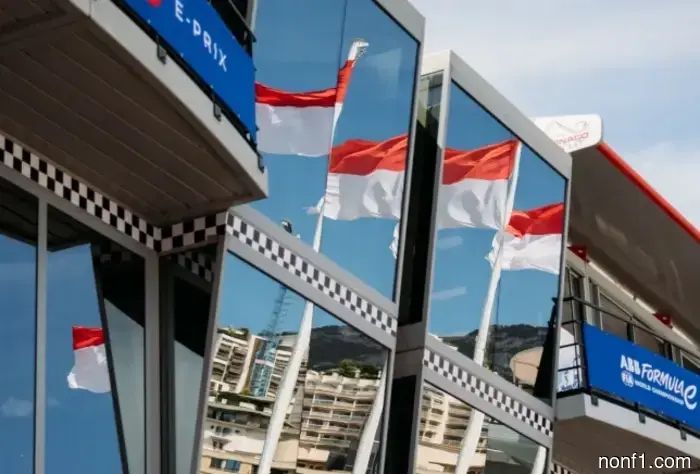 Formula E: The stage in Monaco in 2027 will take place on May 1 and 2.
Formula E and the FIA announced amendments to the calendar for the next season – specifically, that the stage in Monaco in 2027 will take place on May 1 and 2...
Formula E: The stage in Monaco in 2027 will take place on May 1 and 2.
Formula E and the FIA announced amendments to the calendar for the next season – specifically, that the stage in Monaco in 2027 will take place on May 1 and 2...
Mark Temple: There are more difficulties than we expected.
The Technical Director of McLaren for chassis performance shared in an interview with the team's press service about the challenging tasks that he and his colleagues have to tackle throughout the 2026 season...