

10 interesting facts about the very first Formula 1 race
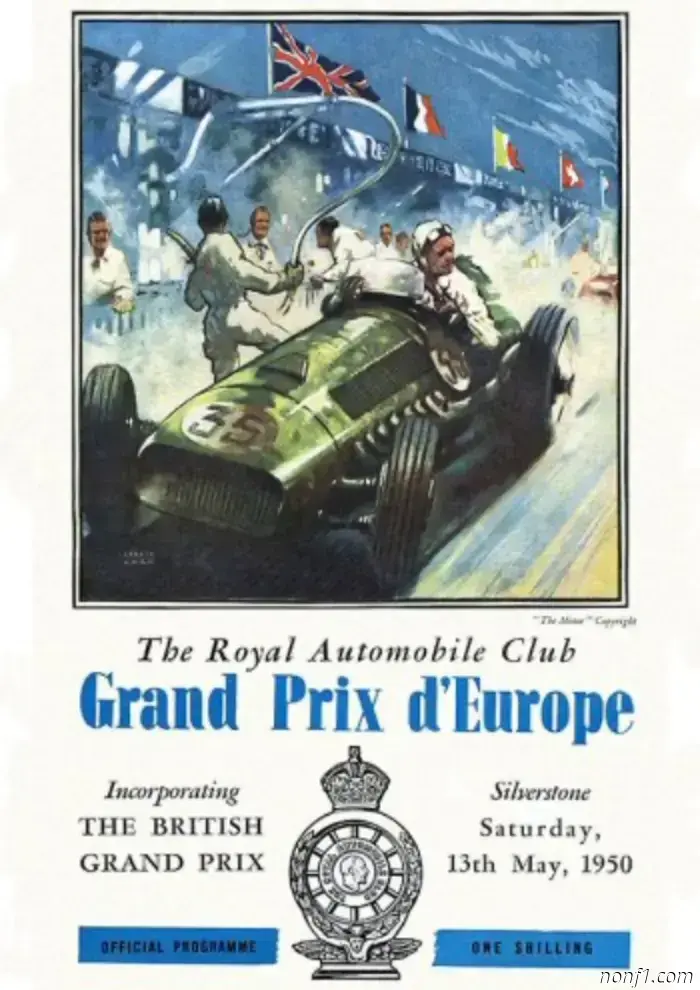
On this day in May, 75 years ago, Silverstone hosted the first Formula 1 race, which marks the beginning of the history of the World Championship. The official website of the championship has prepared a selection of ten interesting facts related to this event, which are not even known to all experts in the history of motorsport.
1. The race had two names
The very first Formula 1 race had two names: officially it was called the European Grand Prix. In the case of the race, which was not held in France or Italy, this was the first time this had happened. But since it was in England, it was also called the British Grand Prix.
Unlike today, when the season traditionally starts in March, that race was held on May 13th. On only seven occasions did the championship start later: May 27 in 1951, May 18 in 1952, May 14 in 1961, May 26 in 1963, May 22 in 1966, and July 5 in 2020.
2 The first turning point in those years was Woodcote
From 1952 to 2011, the Silverstone circuit ended with this right turn, but when the very first Formula 1 race took place there, the Woodcote speedway was the first turn of the 4.6 km long track. Consequently, it was he who became the first corner that the participants of that historic Grand Prix overcame.
Next, they fought in the turns of Copse, Maggots, Becketts, Chapel, Stowe and Club, and the Abbey circle crowned. The pit lane and the starting field were located between Abbey and Woodcote, and the cars lined up on it in this order: 4-3-4.
3. The race was attended by King George VI
It was estimated at the time that up to 120,000 spectators attended the race on race day, but the most important person among them was His Majesty King George VI. He arrived at Silverstone with Queen Elizabeth, Princess Margaret, and his guests were Lord and Lady Mountbatten.
This remained the only time when the reigning monarch honored the British motorsport competitions with his presence.
4. The Prince of Siam and the Swiss baron took part in the race.
The list of participants in the very first Formula 1 race was also distinguished by a clear touch of aristocracy, which corresponded to the presence of the royal family at it.
Among the 21 participants were such persons as Birabongze Banudey Banuband, aka Prince Bira, aka B.Bira. The Prince of Siam (now Thailand) was a famous racing driver of that era, as was Swiss Baron Emmanuel Tulo de Graffenried, winner of the 1949 British Grand Prix, the last race with this status, held in the days before Formula 1.
Prince Bira was the only Thai representative in the history of the World Cup, but only until 2019, when Alex Albon made his debut at the wheel of a Toro Rosso car. Bira scored 5th in qualifying 75 years ago, but withdrew from the race because the Maserati No. 21 tank ran out of gas.
De Graffenried, his teammate Enrico Platé, also did not make it to the finish line: the engine on his Maserati 4CLT/48 failed.
5. The names of the three favorites began with "Fa"
. The Alfa Romeo 158 car with an inline 8-cylinder turbo engine with a displacement of 1.5 liters, which is reflected in the model index, was created back in the pre-war years, i.e. at the time of that race it was a 13-year-old development.
Nevertheless, it remained quite competitive, so the factory team of the Italian company managed to sign contracts with three leading racers of that time – these were Giuseppe "Nino" Farina, Luigi Faggioli and Juan Manuel Fangio. They were even awarded the nickname "Three Ef".
As expected, at the end of qualifying, all three showed the top three results, and the fourth was Briton Reg Parnell, who also piloted an Alfa Romeo 158. It is not surprising that in the race "Three Ef" immediately broke away from rivals competing on Italian Maserati, French Talbot, as well as British ERA and Alta.
The race lasted almost two and a quarter hours, its distance was 70 laps, during which the order of the top three changed several times, but Farina won. Faggioli saw the checkered flag in 2.6 seconds, and Parnell crossed the finish line in third, losing almost a minute to the leader.
The fact is that Fangio dropped out of the race due to an oil leak. The lubrication system pipeline was probably damaged when the future five-time world champion clipped the guardrail in the Stowe turn. By the way, straw bales were used in this capacity at Silverstone at that time.
6. The wildlife of England interfered with the race
Not only did Alfa Romeo have a clear advantage in speed, but the Italian team was lucky that at least three cars were able to reach the finish line, because Parnell knocked down a rabbit that jumped onto the track during the race.
Newspapers of the time reported that after that collision, a noticeable dent formed on the British Alfa Romeo.
7. The average age of participants was 39 years
old. The average age of participants in the 1950 British Grand Prix was 39 years old. Compare with the same indicator of the race in Australia this season: 27 years.
Three riders were over 50: Luigi Faggioli had already turned 51, Louis Chiron celebrated his 51st birthday in less than three months, and Philippe Etancelin was 53. Four more were over 40, including the winner: Giuseppe Farina became the first world champion at the age of 43.
And the youngest was 29-year-old Briton Jeffrey Crossley, who played for the Privé team in an Alta.
8 car. The jazz musician took 11th place in the race.
This is not a joke at all: Johnny Kleise, a well-known trombonist in British jazz circles, actually participated in that historic Grand Prix. However, to be fair, it should be noted that he achieved much more notable success in music than in motorsport: at one time, his Johnny Claes and the Clay Pigeons line-up was quite popular.
He was born in London, but competed under a Belgian license, and then at Silverstone, Talbot showed the most recent time in qualifying, losing to Farina, the pole holder, by 18 seconds. However, he finished 11th in the race, but already six laps behind the leader.
9. BRM's debut was only partially completed
The British BRM (British Racing Motors) team, which won the Constructors' Cup 12 years later, was unable to start the first race in Formula 1 history, although its Type 15 car with an exotic V16 turbo engine made its debut. But there were so many technical problems in BRM. We had to limit ourselves to just a few demonstration laps on the track.
As a result, that car made its World Championship debut only a year later – and also at Silverstone.
10. Stirling Moss took 2nd place in the support race
Stirling Moss won the British Grand Prix in 1955 and 1957, and in 1950, when he was 20 years old, he competed only in support races in the class of cars with 500 cc engines
. He won the first race, then desperately fought for the lead in the final, but literally in the last corner on his Cooper had problems with the JAP engine, and he finished second. But he was invited to the reception of King George VI anyway.
Other articles
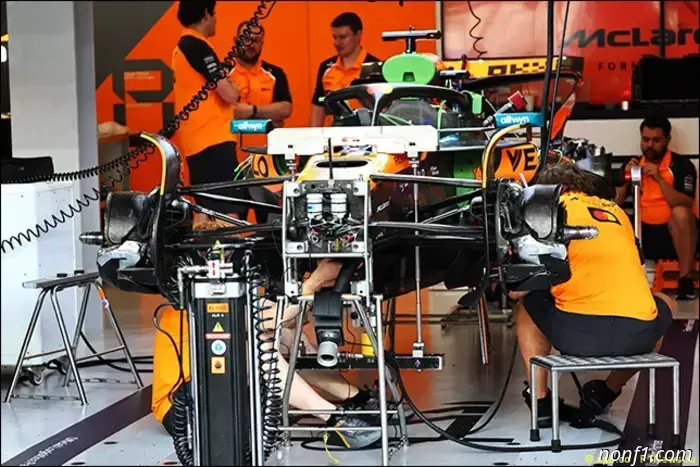 Has the secret of McLaren tire cooling been revealed?
The MCL39's ability to control tire temperature has attracted considerable interest from rivals...
Has the secret of McLaren tire cooling been revealed?
The MCL39's ability to control tire temperature has attracted considerable interest from rivals...
 Cadillac chassis passed unofficial crash tests
The team reported that the intermediate version of the chassis successfully passed the first preliminary crash tests...
Cadillac chassis passed unofficial crash tests
The team reported that the intermediate version of the chassis successfully passed the first preliminary crash tests...
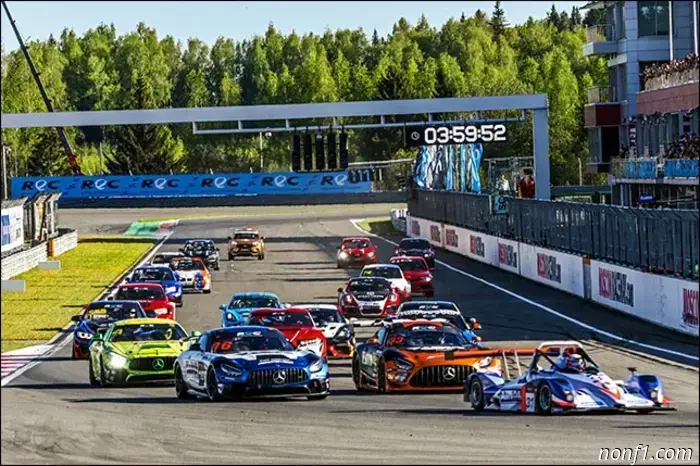 REC: "Battle of the Motors" and the return of the legend
On May 24, the first stage of the Russian REC 2025 Endurance Racing Series, the Auto Mail Grand Prix, will take place at the Moscow Raceway near Moscow.
REC: "Battle of the Motors" and the return of the legend
On May 24, the first stage of the Russian REC 2025 Endurance Racing Series, the Auto Mail Grand Prix, will take place at the Moscow Raceway near Moscow.
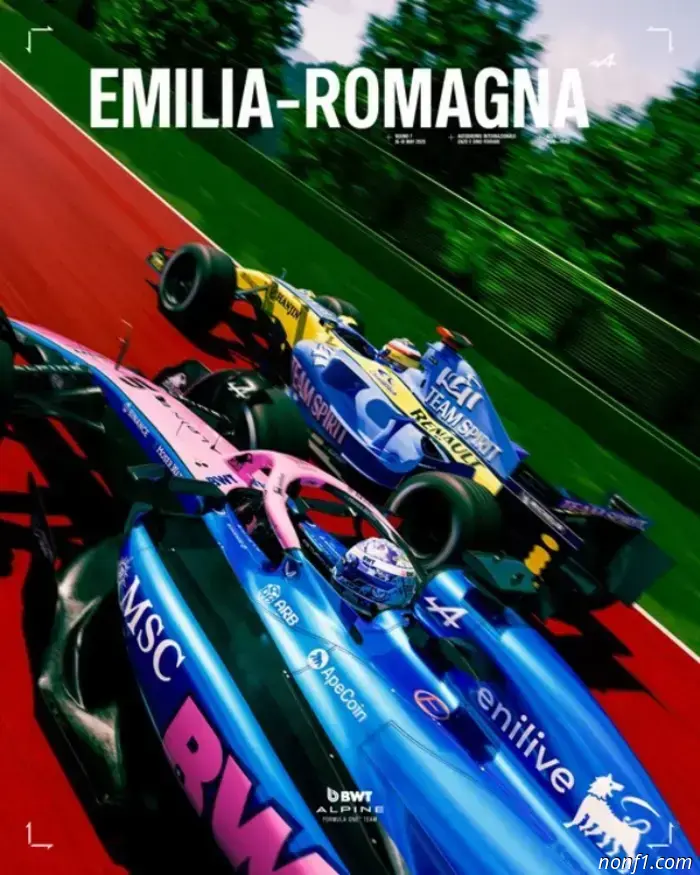 Colapinto: I'm definitely ready to make my debut race for Alpine
In Imola, Alpine F1 will start for the first time with an updated lineup: Jack Duane was replaced by Franco Colapinto. The Argentine racer assures that he is ready for the upcoming Emilia-Romagna Grand Prix...
Colapinto: I'm definitely ready to make my debut race for Alpine
In Imola, Alpine F1 will start for the first time with an updated lineup: Jack Duane was replaced by Franco Colapinto. The Argentine racer assures that he is ready for the upcoming Emilia-Romagna Grand Prix...
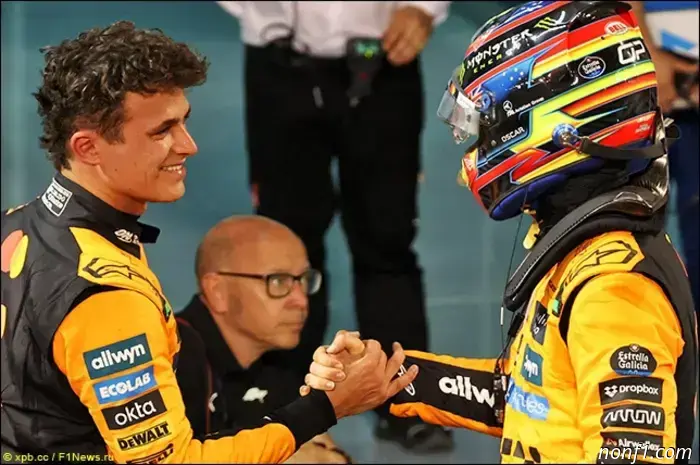 Piastri: I'm going to Imola with optimism and confidence.
After the winning double in Miami, the McLaren team is optimistic about the start of the weekend in Imola…
Piastri: I'm going to Imola with optimism and confidence.
After the winning double in Miami, the McLaren team is optimistic about the start of the weekend in Imola…
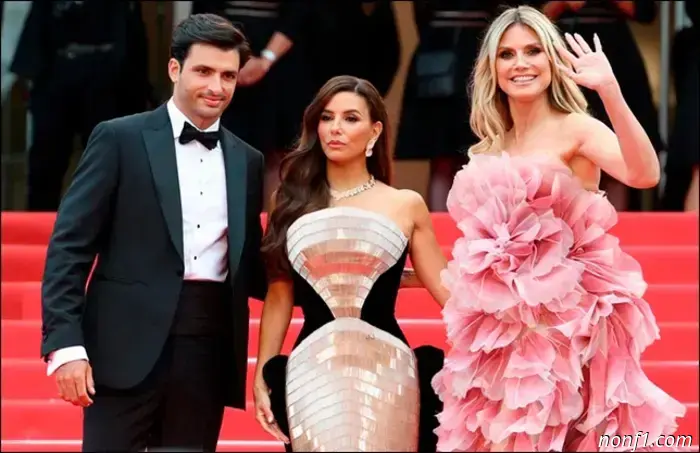 Carlos Sainz participated in the opening of the Cannes Film Festival
Williams racer Carlos Sainz participated in the opening ceremony of the 78th Cannes International Film Festival.
Carlos Sainz participated in the opening of the Cannes Film Festival
Williams racer Carlos Sainz participated in the opening ceremony of the 78th Cannes International Film Festival.
10 interesting facts about the very first Formula 1 race
The official website of the championship has prepared a selection of ten interesting facts related to the very first Formula 1 race, which took place exactly 75 years ago...