
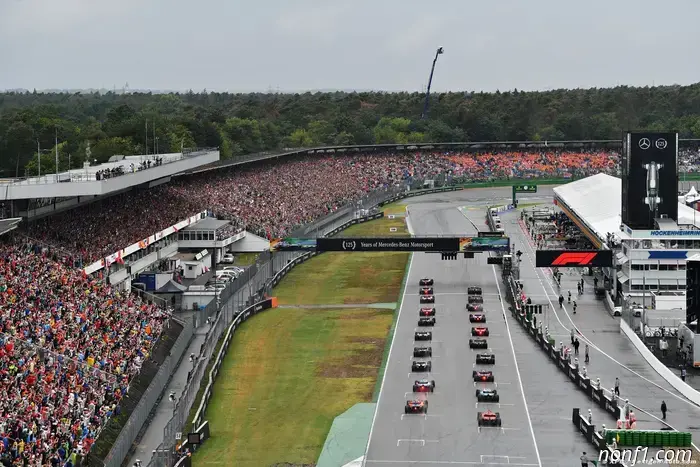
Germany remains in anticipation as Domenicali dampens hopes for a return.
"We are prepared and willing to engage in any form of discussion."
Formula 1 CEO Stefano Domenicali has tempered expectations regarding the swift return of the German Grand Prix, indicating that it won't be reinstated on the calendar unless the appropriate commercial conditions are met. The last race in Germany occurred during the pandemic at Nurburgring in 2020, while the most recent traditional German GP took place at Hockenheimring in 2019. In an interview with motorsport-magazin.com, Domenicali took a cautious stance. "The positive aspect is that we’re not in a desperate situation, as we receive numerous inquiries from around the world," the Italian noted. "If the German market does not prioritize the return of Formula 1, we must accept that and focus on the future."
This statement follows acknowledgment from German motorsport organizations, including the ADAC, that increasing hosting fees render the race financially unfeasible under current conditions. Nonetheless, Domenicali emphasized that discussions are still welcome. "We are prepared and open to any type of dialogue," he remarked. "I perceive a few indicators of hope. Hopefully, this will evolve positively in the upcoming months. We are interested in returning to Germany - but only with the right organizer and the right offer."
The broader context involves the surging global demand for Formula 1, with new and returning venues fiercely competing for limited slots on the calendar, placing traditional European races under growing financial strain. Domenicali also addressed speculation that free-to-air television could rekindle interest in Germany, especially given the ongoing changes in the country's broadcasting framework. "I don’t think that’s the answer," he commented, in reference to the calls for a stronger free-to-air presence. "We need to monitor the developments following RTL’s compliance process, as they will then control our rights, to determine the best platform."
While he acknowledged the significance of accessibility, Domenicali emphasized that Formula 1's future is primarily rooted in online platforms. "Not in the immediate future for the German market," he clarified, "but we definitely need to create the right package with RTL to attract interest."

Other articles
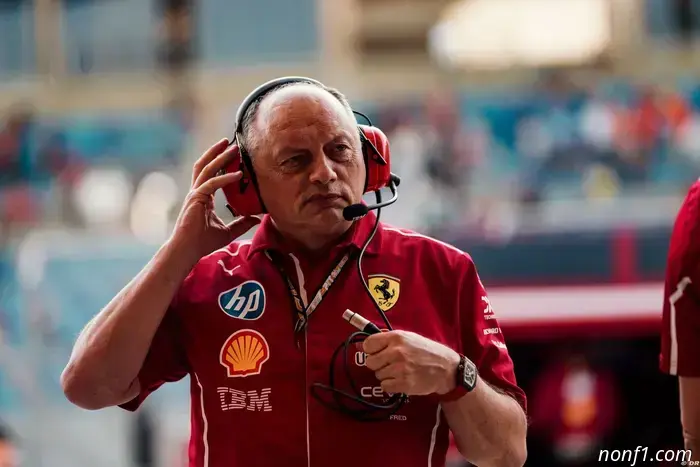 Vasseur contemplating engineer change for Hamilton.
Formula 1 | Ferrari chief Frederic Vasseur has candidly recognized that the Scuderia underestimated the extent of Lewis Hamilton's challenges during his difficult (…)
Vasseur contemplating engineer change for Hamilton.
Formula 1 | Ferrari chief Frederic Vasseur has candidly recognized that the Scuderia underestimated the extent of Lewis Hamilton's challenges during his difficult (…)
 Colletta downplays speculation regarding changes in Ferrari F1.
Formula 1 | Antonello Colletta, the head of Ferrari's World Endurance Championship, has categorically rejected rumors suggesting he might be in line to take over Frederic's position.
Colletta downplays speculation regarding changes in Ferrari F1.
Formula 1 | Antonello Colletta, the head of Ferrari's World Endurance Championship, has categorically rejected rumors suggesting he might be in line to take over Frederic's position.
 Verstappen: Red Bull made a mistake by letting Lawson go in '25.
Formula 1 | Max Verstappen believes that Red Bull Racing moved too hastily in letting go of Liam Lawson after only two races at the beginning of the 2025 season. Two (...)
Verstappen: Red Bull made a mistake by letting Lawson go in '25.
Formula 1 | Max Verstappen believes that Red Bull Racing moved too hastily in letting go of Liam Lawson after only two races at the beginning of the 2025 season. Two (...)
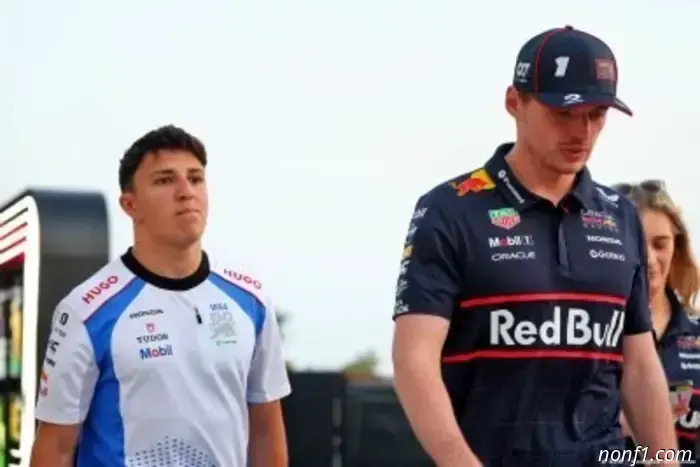 Verstappen clarifies the 'number 2' position within Red Bull's hierarchy.
Formula 1 | As Isack Hadjar prepares for his debut season with Max Verstappen at Red Bull, the four-time world champion has made it clear what he (...)
Verstappen clarifies the 'number 2' position within Red Bull's hierarchy.
Formula 1 | As Isack Hadjar prepares for his debut season with Max Verstappen at Red Bull, the four-time world champion has made it clear what he (...)
 It appears that car prices continue to increase, yet one legendary roadster has quietly become more affordable than ever when considering inflation.
According to reports, the prices of the NA and NB generations now exceed $39,000 when adjusted for inflation, while the ND generation remains the least expensive option when adjusted.
It's well-known that car prices typically don't decrease, and the Mazda MX-5 Miata has certainly followed this trend. When the Miata debuted in 1989 as a 1990 model, it had a starting price of $13,800. Today, purchasing a new model will set you back at least $29,830.
Upon closer examination, however, the data suggests a different narrative. A recent study indicates that when adjusted for inflation, the cost of owning a Miata has actually declined over time.
Analysis of historical pricing shows that during the NA generation's presence in the U.S. from 1989 to 1997, the price increased gradually from $13,800 to $19,125.
The second-generation NB was introduced in 1998 and carried the model into the early 2000s, ultimately reaching a price of $22,098 before transitioning to the NC. The NC started with a base price of $20,435 and concluded its production years at $25,595.
Similarly, the current fourth-generation ND began at $25,735 in 2015, with prices rising since then. Nevertheless, when Hagerty adjusted the base price for inflation, it became clear that Miata prices have varied significantly.
When adjusted for inflation, the costs of the NA and NB generations exceed $39,000 in today's currency. In contrast, the NC ranges between $32,000 and $36,000, depending on the model year and inflation rates.
The latest ND generation is significantly more affordable and has been cheaper than all preceding Miata models in real terms since 2022. This is quite surprising, especially considering that many enthusiasts regard the current ND as the best Miata ever produced.
To gain a clearer understanding beyond Hagerty's statistics, we created our own list of original Manufacturer's Suggested Retail Prices (MSRPs) and adjusted them using the official U.S. Bureau of Labor Statistics inflation calculator.
Using the introductory price from the actual debut production year of each generation (not the model year), we adjusted everything to reflect November 2025 dollars. The resulting table facilitates a more straightforward comparison of how the real-world cost of the base model has evolved.
What's on the horizon for the MX-5?
Mazda is reportedly developing a new generation of the Miata, expected to launch in 2027. Although official information is limited, early reports indicate it will be equipped with the company’s 2.5-liter SkyActiv Z engine, likely producing just over 200 horsepower.
Additionally, an interesting aspect is Mazda's target weight. The company aims to keep the next-generation vehicle under 2,205 pounds (1,000 kg), making it lighter than the current ND. It remains to be seen if they can achieve this goal while maintaining the price.
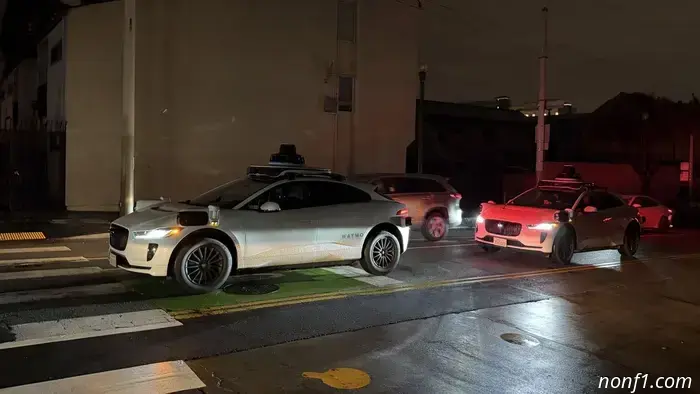
Waymo's self-driving taxis are engineered to handle unexpected situations, but the recent power outage in San Francisco proved to be overwhelming for them.
It appears that car prices continue to increase, yet one legendary roadster has quietly become more affordable than ever when considering inflation.
According to reports, the prices of the NA and NB generations now exceed $39,000 when adjusted for inflation, while the ND generation remains the least expensive option when adjusted.
It's well-known that car prices typically don't decrease, and the Mazda MX-5 Miata has certainly followed this trend. When the Miata debuted in 1989 as a 1990 model, it had a starting price of $13,800. Today, purchasing a new model will set you back at least $29,830.
Upon closer examination, however, the data suggests a different narrative. A recent study indicates that when adjusted for inflation, the cost of owning a Miata has actually declined over time.
Analysis of historical pricing shows that during the NA generation's presence in the U.S. from 1989 to 1997, the price increased gradually from $13,800 to $19,125.
The second-generation NB was introduced in 1998 and carried the model into the early 2000s, ultimately reaching a price of $22,098 before transitioning to the NC. The NC started with a base price of $20,435 and concluded its production years at $25,595.
Similarly, the current fourth-generation ND began at $25,735 in 2015, with prices rising since then. Nevertheless, when Hagerty adjusted the base price for inflation, it became clear that Miata prices have varied significantly.
When adjusted for inflation, the costs of the NA and NB generations exceed $39,000 in today's currency. In contrast, the NC ranges between $32,000 and $36,000, depending on the model year and inflation rates.
The latest ND generation is significantly more affordable and has been cheaper than all preceding Miata models in real terms since 2022. This is quite surprising, especially considering that many enthusiasts regard the current ND as the best Miata ever produced.
To gain a clearer understanding beyond Hagerty's statistics, we created our own list of original Manufacturer's Suggested Retail Prices (MSRPs) and adjusted them using the official U.S. Bureau of Labor Statistics inflation calculator.
Using the introductory price from the actual debut production year of each generation (not the model year), we adjusted everything to reflect November 2025 dollars. The resulting table facilitates a more straightforward comparison of how the real-world cost of the base model has evolved.
What's on the horizon for the MX-5?
Mazda is reportedly developing a new generation of the Miata, expected to launch in 2027. Although official information is limited, early reports indicate it will be equipped with the company’s 2.5-liter SkyActiv Z engine, likely producing just over 200 horsepower.
Additionally, an interesting aspect is Mazda's target weight. The company aims to keep the next-generation vehicle under 2,205 pounds (1,000 kg), making it lighter than the current ND. It remains to be seen if they can achieve this goal while maintaining the price.
Waymo's self-driving taxis are engineered to handle unexpected situations, but the recent power outage in San Francisco proved to be overwhelming for them.
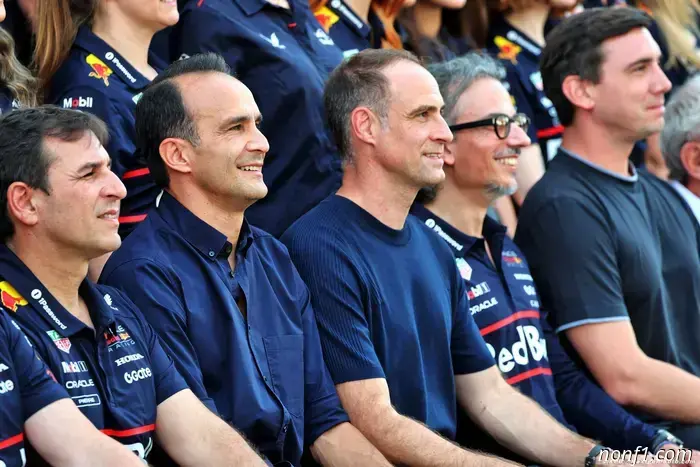 Mintzlaff backs Horner's departure, downplays Verstappen's contract clause.
Mintzlaff backs Horner's departure, downplays Verstappen's contract clause.
Mintzlaff backs Horner's departure, downplays Verstappen's contract clause.
Germany remains in anticipation as Domenicali dampens hopes for a return.
Formula 1 | The CEO of Formula 1, Stefano Domenicali, has tempered hopes for a quick return of the German Grand Prix, cautioning that the event will not be rushed back.