
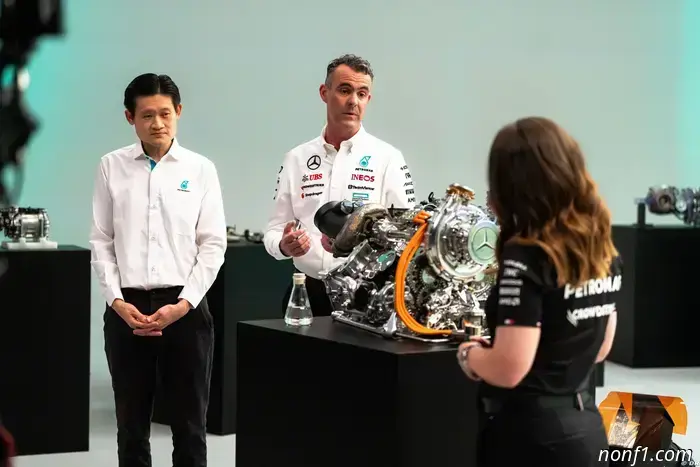
The controversy regarding F1 engines intensifies, with the FIA considering a one-year compromise.
"The teams aim to address these issues through weekly meetings."
The controversy surrounding the 2026 power unit has escalated with allegations that Mercedes is not the only one taking advantage of a potential loophole, although it may still be the primary beneficiary. According to Italy’s Corriere dello Sport, Red Bull Powertrains is also attempting to replicate the same system that purportedly enables Mercedes engines to achieve an effective compression ratio nearing 18:1 during operation, despite a 16:1 regulatory limit.
“Seven months ago, a Mercedes engineer who joined Red Bull Powertrains disclosed this secret. Since then, Red Bull has been working to reproduce this system,” the newspaper reports. However, it states that this endeavor has not been easy. Mercedes is believed to have been developing the concept for over a year and has established a considerable advantage, while Red Bull has not yet succeeded in achieving the same effect in practical conditions.
"Red Bull has not yet managed to get close to an 18:1 compression ratio during movement. Mercedes has accomplished this," claims Corriere dello Sport. Should this interpretation be validated, the advantage would not only benefit Mercedes works cars but also all customer teams utilizing the German manufacturer’s power unit in 2026, which includes McLaren, Williams, and the new customer Alpine.
A key issue noted by the Italian daily is enforcement of the rules. The regulations require that compression ratio checks are conducted at room temperature, creating ambiguity once engines attain their operating temperatures. "Manufacturers seeking clarification from the FIA imply that cars must always adhere to the rules. However, proving compliance is complex, even after a protest," the report states.
According to Corriere dello Sport, the rules themselves allow for "this trick." "It is explicitly stated in the regulations that checks occur at room temperature. This indirectly permits varied interpretations, which was not the case under the old regulations." With eight cars powered by Mercedes potentially having a power advantage, anxiety among competing manufacturers is on the rise.
"The teams seek to tackle these kinds of issues during weekly meetings. The current worry is that the eight Mercedes engine cars will possess enhanced power," the report continues. The FIA is now said to be facing a significant dilemma. Banning the system could greatly disadvantage Mercedes, which is presumed to have designed its 2026 power unit around this concept. Conversely, allowing it could lead to protests and political consequences once the season commences.
As per Corriere dello Sport, a compromise is being negotiated—permitting Mercedes to utilize the system in 2026 only, provided it officially agrees to forgo it for 2027. This compromise would likely enable Mercedes-powered teams to take advantage for one season, a possibility that has already met with strong resistance from competitors.


Other articles
 Verstappen: Red Bull made a mistake by letting Lawson go in '25.
Formula 1 | Max Verstappen believes that Red Bull Racing moved too hastily in letting go of Liam Lawson after only two races at the beginning of the 2025 season. Two (...)
Verstappen: Red Bull made a mistake by letting Lawson go in '25.
Formula 1 | Max Verstappen believes that Red Bull Racing moved too hastily in letting go of Liam Lawson after only two races at the beginning of the 2025 season. Two (...)
 Verstappen clarifies the 'number 2' position within Red Bull's hierarchy.
Formula 1 | As Isack Hadjar prepares for his debut season with Max Verstappen at Red Bull, the four-time world champion has made it clear what he (...)
Verstappen clarifies the 'number 2' position within Red Bull's hierarchy.
Formula 1 | As Isack Hadjar prepares for his debut season with Max Verstappen at Red Bull, the four-time world champion has made it clear what he (...)
 Vasseur contemplating engineer change for Hamilton.
Formula 1 | Ferrari chief Frederic Vasseur has candidly recognized that the Scuderia underestimated the extent of Lewis Hamilton's challenges during his difficult (…)
Vasseur contemplating engineer change for Hamilton.
Formula 1 | Ferrari chief Frederic Vasseur has candidly recognized that the Scuderia underestimated the extent of Lewis Hamilton's challenges during his difficult (…)
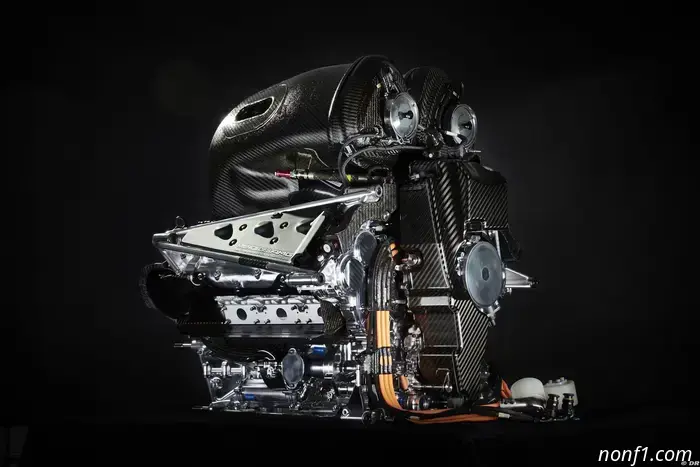 The engine industry is in an uproar over claims of a loophole in the 2026 compression regulations.
Formula 1 | The 2026 engine regulations for Formula 1 have come under early scrutiny following reports that Honda, Ferrari, and Audi are contesting Mercedes and Red (…)
The engine industry is in an uproar over claims of a loophole in the 2026 compression regulations.
Formula 1 | The 2026 engine regulations for Formula 1 have come under early scrutiny following reports that Honda, Ferrari, and Audi are contesting Mercedes and Red (…)
 Mintzlaff backs Horner's departure, downplays Verstappen's contract clause.
Mintzlaff backs Horner's departure, downplays Verstappen's contract clause.
Mintzlaff backs Horner's departure, downplays Verstappen's contract clause.
 It appears that car prices continue to increase, yet one legendary roadster has quietly become more affordable than ever when considering inflation.
According to reports, the prices of the NA and NB generations now exceed $39,000 when adjusted for inflation, while the ND generation remains the least expensive option when adjusted.
It's well-known that car prices typically don't decrease, and the Mazda MX-5 Miata has certainly followed this trend. When the Miata debuted in 1989 as a 1990 model, it had a starting price of $13,800. Today, purchasing a new model will set you back at least $29,830.
Upon closer examination, however, the data suggests a different narrative. A recent study indicates that when adjusted for inflation, the cost of owning a Miata has actually declined over time.
Analysis of historical pricing shows that during the NA generation's presence in the U.S. from 1989 to 1997, the price increased gradually from $13,800 to $19,125.
The second-generation NB was introduced in 1998 and carried the model into the early 2000s, ultimately reaching a price of $22,098 before transitioning to the NC. The NC started with a base price of $20,435 and concluded its production years at $25,595.
Similarly, the current fourth-generation ND began at $25,735 in 2015, with prices rising since then. Nevertheless, when Hagerty adjusted the base price for inflation, it became clear that Miata prices have varied significantly.
When adjusted for inflation, the costs of the NA and NB generations exceed $39,000 in today's currency. In contrast, the NC ranges between $32,000 and $36,000, depending on the model year and inflation rates.
The latest ND generation is significantly more affordable and has been cheaper than all preceding Miata models in real terms since 2022. This is quite surprising, especially considering that many enthusiasts regard the current ND as the best Miata ever produced.
To gain a clearer understanding beyond Hagerty's statistics, we created our own list of original Manufacturer's Suggested Retail Prices (MSRPs) and adjusted them using the official U.S. Bureau of Labor Statistics inflation calculator.
Using the introductory price from the actual debut production year of each generation (not the model year), we adjusted everything to reflect November 2025 dollars. The resulting table facilitates a more straightforward comparison of how the real-world cost of the base model has evolved.
What's on the horizon for the MX-5?
Mazda is reportedly developing a new generation of the Miata, expected to launch in 2027. Although official information is limited, early reports indicate it will be equipped with the company’s 2.5-liter SkyActiv Z engine, likely producing just over 200 horsepower.
Additionally, an interesting aspect is Mazda's target weight. The company aims to keep the next-generation vehicle under 2,205 pounds (1,000 kg), making it lighter than the current ND. It remains to be seen if they can achieve this goal while maintaining the price.
Waymo's self-driving taxis are engineered to handle unexpected situations, but the recent power outage in San Francisco proved to be overwhelming for them.
It appears that car prices continue to increase, yet one legendary roadster has quietly become more affordable than ever when considering inflation.
According to reports, the prices of the NA and NB generations now exceed $39,000 when adjusted for inflation, while the ND generation remains the least expensive option when adjusted.
It's well-known that car prices typically don't decrease, and the Mazda MX-5 Miata has certainly followed this trend. When the Miata debuted in 1989 as a 1990 model, it had a starting price of $13,800. Today, purchasing a new model will set you back at least $29,830.
Upon closer examination, however, the data suggests a different narrative. A recent study indicates that when adjusted for inflation, the cost of owning a Miata has actually declined over time.
Analysis of historical pricing shows that during the NA generation's presence in the U.S. from 1989 to 1997, the price increased gradually from $13,800 to $19,125.
The second-generation NB was introduced in 1998 and carried the model into the early 2000s, ultimately reaching a price of $22,098 before transitioning to the NC. The NC started with a base price of $20,435 and concluded its production years at $25,595.
Similarly, the current fourth-generation ND began at $25,735 in 2015, with prices rising since then. Nevertheless, when Hagerty adjusted the base price for inflation, it became clear that Miata prices have varied significantly.
When adjusted for inflation, the costs of the NA and NB generations exceed $39,000 in today's currency. In contrast, the NC ranges between $32,000 and $36,000, depending on the model year and inflation rates.
The latest ND generation is significantly more affordable and has been cheaper than all preceding Miata models in real terms since 2022. This is quite surprising, especially considering that many enthusiasts regard the current ND as the best Miata ever produced.
To gain a clearer understanding beyond Hagerty's statistics, we created our own list of original Manufacturer's Suggested Retail Prices (MSRPs) and adjusted them using the official U.S. Bureau of Labor Statistics inflation calculator.
Using the introductory price from the actual debut production year of each generation (not the model year), we adjusted everything to reflect November 2025 dollars. The resulting table facilitates a more straightforward comparison of how the real-world cost of the base model has evolved.
What's on the horizon for the MX-5?
Mazda is reportedly developing a new generation of the Miata, expected to launch in 2027. Although official information is limited, early reports indicate it will be equipped with the company’s 2.5-liter SkyActiv Z engine, likely producing just over 200 horsepower.
Additionally, an interesting aspect is Mazda's target weight. The company aims to keep the next-generation vehicle under 2,205 pounds (1,000 kg), making it lighter than the current ND. It remains to be seen if they can achieve this goal while maintaining the price.
Waymo's self-driving taxis are engineered to handle unexpected situations, but the recent power outage in San Francisco proved to be overwhelming for them.
The controversy regarding F1 engines intensifies, with the FIA considering a one-year compromise.
Formula 1 | The controversy surrounding the 2026 power unit has escalated as accusations suggest that Mercedes isn't the only one taking advantage of a possible loophole, though it may still come out as (…)