
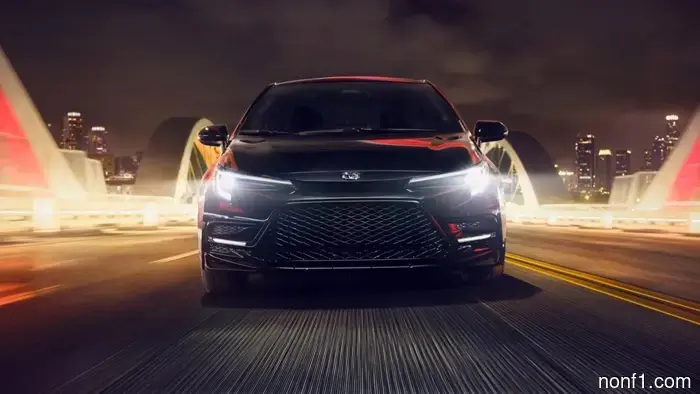
It’s Not Just You: Sixty percent of drivers report that headlight glare is an issue.
Toyota
The latest in car news and reviews, straight and to the point.
Subscribe to our free daily newsletter to receive the most important stories directly in your inbox every weekday.
If you’ve noticed that headlights seem brighter in recent years, you're not alone. A recent AAA survey indicated that six out of ten drivers experienced glare while driving at night, with nearly three-quarters (73%) stating that the issue has worsened over the last decade. This aligns with the rise of more powerful LED headlights among both manufacturers and aftermarket options.
“Headlight glare has increasingly become a significant source of irritation and worry for many drivers,” stated Greg Brannon, director of automotive engineering and research at AAA. He attributed the heightened concern over headlight glare to various factors, including new headlight technologies and taller vehicle designs.
AAA
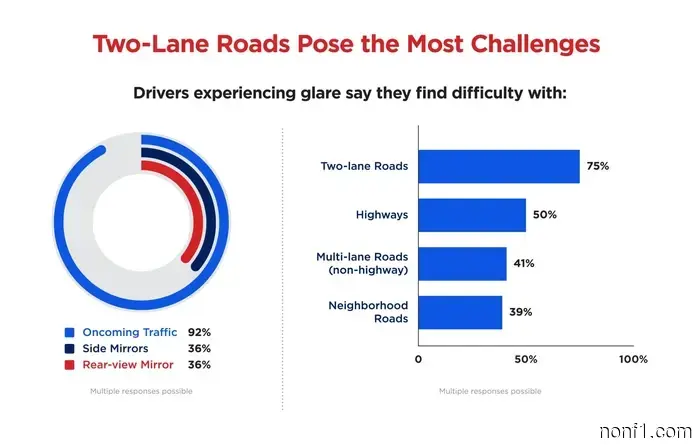
The survey included 1,092 interviews with U.S. drivers aged 18 and older, conducted between February 5-8, 2026. Participants were selected from a probability-based panel aimed at representing the U.S. driver population. Among those surveyed, 92% identified glare from oncoming headlights as their primary concern, while 36% noted glare from rearview or side mirrors as the major issue.
The survey revealed some differences in sensitivity to glare. Drivers who wear prescription glasses reported experiencing more glare (70%) compared to those who don’t (56%). Pickup truck drivers were less likely to report glare (41%) than drivers of other vehicle types (66%). Women reported experiencing glare more frequently (70%) than men (57%). However, age and driver height did not show statistical significance, according to AAA.
Audi
The organization advises drivers to avoid staring directly at oncoming headlights to reduce glare effects and to ensure their own headlights are functioning properly for optimal visibility. AAA also suggests using original equipment, as aftermarket lighting, often overly bright and poorly aimed due to lack of regulation, significantly contributes to the issue. Moreover, federal regulators are not taking action on this matter.
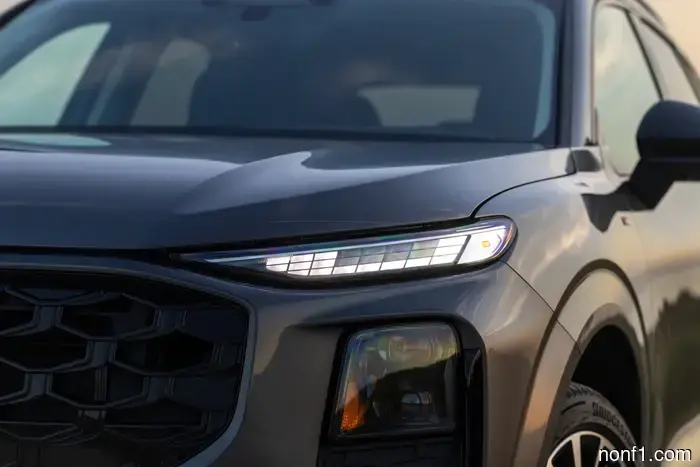
At the same time, current regulations hinder the adoption of adaptive lighting systems seen in Europe from being available in the U.S. Audi’s Digital Matrix LED headlights can direct light appropriately—away from oncoming traffic—but outdated regulations that predate LED technology prevent their use here. This situation applies to most automakers, except Rivian, which developed its adaptive lighting system specifically for the U.S. market. Meanwhile, regulators allow brightness levels that would make anyone empathize with Dracula.
Other articles
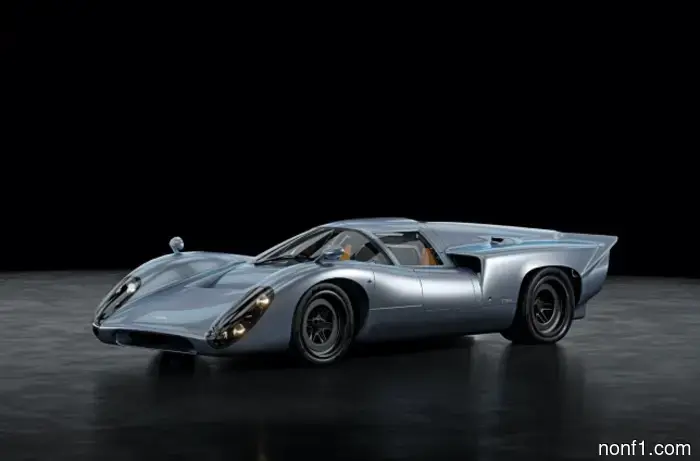 Lola Cars presented replicas of the T70 S sports prototypes.
Lola Cars has announced its new project, which is directly related to its history and past successes in motorsport...
Lola Cars presented replicas of the T70 S sports prototypes.
Lola Cars has announced its new project, which is directly related to its history and past successes in motorsport...
 Farm Asserts New $240,000 Kenworth Has Spent Nearly 50 Times in the Repair Shop
Issues began to arise (intended pun) almost immediately after the truck was dropped off at a Virginia farm.
Farm Asserts New $240,000 Kenworth Has Spent Nearly 50 Times in the Repair Shop
Issues began to arise (intended pun) almost immediately after the truck was dropped off at a Virginia farm.
 Farm alleges that their new $240,000 Kenworth has been in the repair shop nearly 50 times.
Issues began to arise (intended pun) almost immediately after the truck arrived at a Virginia farm.
Farm alleges that their new $240,000 Kenworth has been in the repair shop nearly 50 times.
Issues began to arise (intended pun) almost immediately after the truck arrived at a Virginia farm.
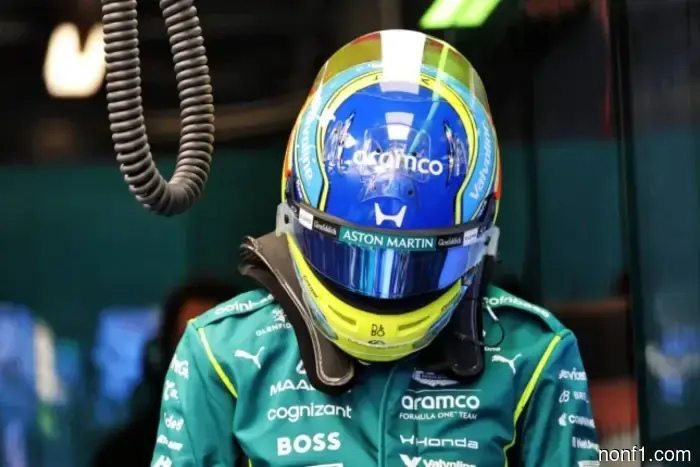 Fernando Alonso: In the art of patience, I am number one.
Fernando Alonso has seen literally everything in his long career in Formula 1, and he is not lacking in patience. In 2026, this quality will serve him very well...
Fernando Alonso: In the art of patience, I am number one.
Fernando Alonso has seen literally everything in his long career in Formula 1, and he is not lacking in patience. In 2026, this quality will serve him very well...
 Research Measures the Financial Impact of the Dealership Model on Customers—and the Findings Aren't Encouraging
The International Center for Law & Economics states that the expenses associated with working with franchised dealers equate to a significant "middleman tax."
Research Measures the Financial Impact of the Dealership Model on Customers—and the Findings Aren't Encouraging
The International Center for Law & Economics states that the expenses associated with working with franchised dealers equate to a significant "middleman tax."
 Ryan Tuerck Installed a 600-HP GR Corolla Engine in This AWD Celica Rally Car.
The finished car just placed on the podium at its inaugural race.
Ryan Tuerck Installed a 600-HP GR Corolla Engine in This AWD Celica Rally Car.
The finished car just placed on the podium at its inaugural race.
It’s Not Just You: Sixty percent of drivers report that headlight glare is an issue.
Almost 75% of individuals worried about headlight glare believe the issue has intensified in the last ten years.