
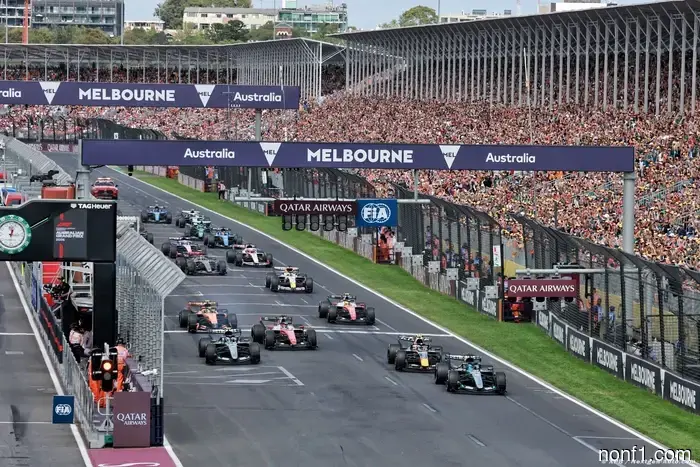
FIA intends to make 'adjustments' to the 2026 regulations, but Marko is doubtful.
Formula 1's initial crisis discussions regarding the contentious 2026 regulations have wrapped up, with the FIA indicating that only "tweaks" will be made for the time being—though there is an evident momentum for more significant changes.
"The FIA convened the first of a series of meetings today to address possible modifications to the 2026 Formula 1 regulations," read an FIA statement. "Today's session, which involved the FIA along with technical experts from Teams and Power Unit Manufacturers, touched on a variety of topics as part of the ongoing development of the 2026 F1 technical and sporting regulations.
It was generally accepted that, while recent events have provided thrilling racing, there is a commitment to adjusting certain elements of the regulations related to energy management. Constructive discussions took place on challenging issues, particularly given the competitive interests of the stakeholders involved.
Earlier this year, all parties agreed that these meetings would occur after the first three races of the 2026 Formula 1 season to ensure adequate technical data was available prior to discussions.
As part of these collaborative talks, additional meetings are scheduled over the next two weeks. A Sporting Regulations meeting will be held on April 15 to discuss any necessary changes in Section B to support the technical modifications. The following technical session is set for April 16, where today's discussions will be revisited and new topics introduced.
On April 20, a high-level meeting with representatives from all stakeholders is planned, where it is expected that favored options put forward by the technical teams will be evaluated, and a consensus will be sought for the next steps.
The 2026 regulations were established through close collaboration among teams, OEMs, Power Unit Manufacturers, the commercial rights holder, and the FIA. It is in this collaborative spirit that potential changes are being explored. Any regulatory adjustments must go through the FIA WMSC approval process.
Further meetings are already lined up, including technical discussions on April 15 and 16, leading to a crucial high-level meeting on April 20 to debate the "preferred options."
Central to the concerns is the significant emphasis on energy management—particularly during qualifying—forcing drivers to reduce speed on straights or through fast corners instead of running full throttle.
Former Red Bull advisor Dr. Helmut Marko stated that this change has fundamentally transformed the sport and has led Max Verstappen to hint at possibly taking a sabbatical or even leaving F1 altogether. "Max is a natural racer," he told motorsport-magazin.com. "The current regulations are heavily geared toward energy management—this requires close coordination with software engineers. The driver's traditional dominance has been diminished."
While some adjustments now seem unavoidable, Marko is skeptical that they will go far enough. "There will be modifications, but I cannot currently assess whether it will be possible to restore the driver as the key factor," he added.
Others maintain that meaningful changes are both feasible and relatively simple to implement. Former leading F1 engineer Toni Cuquerella suggested to Marca that the solution might involve rebalancing the hybrid system instead of completely redesigning it. "With minimal adjustments, you can significantly influence how races are conducted and how qualifying is approached," he remarked.
Former F1 driver Jean-Eric Vergne, in a conversation with AS newspaper, indicated that part of the backlash could be due to a lack of clarity regarding the rationale for the shift to 50 percent electric and the implications it entails. "Perhaps F1 hasn’t effectively communicated why they aimed for 50 percent electric and the changes that would ensue," said the Frenchman, now a Formula E competitor.
Other articles
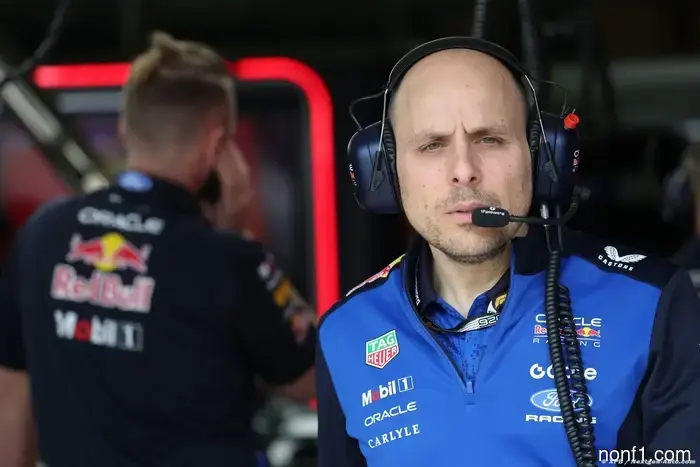 Lambiase's departure is a 'major loss' for Red Bull - Marko
Formula 1 | Dr. Helmut Marko acknowledges that Red Bull is experiencing a considerable setback after confirming that Max Verstappen's long-time race engineer Gianpiero Lambiase (...)
Lambiase's departure is a 'major loss' for Red Bull - Marko
Formula 1 | Dr. Helmut Marko acknowledges that Red Bull is experiencing a considerable setback after confirming that Max Verstappen's long-time race engineer Gianpiero Lambiase (...)
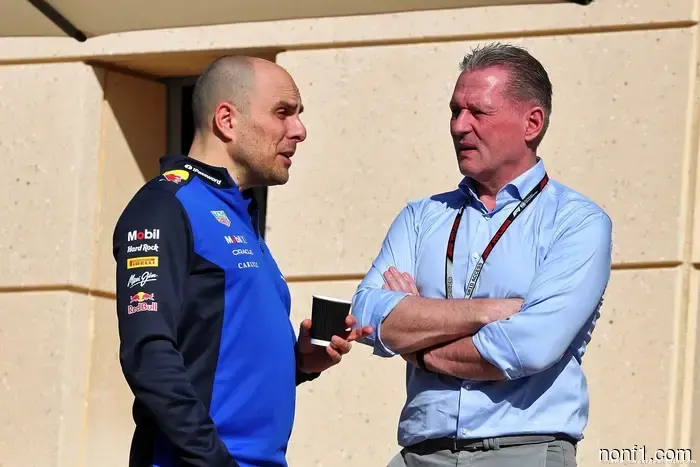 Lambiase's departure and the '26 regulations won't force Max out of F1 - Jos
Formula 1 | Jos Verstappen believes that Gianpiero Lambiase's upcoming departure will not lead to Max Verstappen leaving Formula 1 - and even anticipates (…)
Lambiase's departure and the '26 regulations won't force Max out of F1 - Jos
Formula 1 | Jos Verstappen believes that Gianpiero Lambiase's upcoming departure will not lead to Max Verstappen leaving Formula 1 - and even anticipates (…)
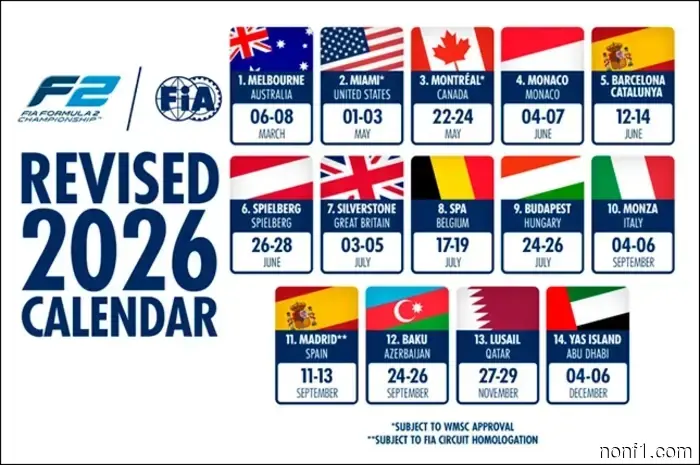 The FIA confirmed changes to the calendar.
The FIA confirmed changes to the competition calendar following the cancellation of events in Bahrain and Saudi Arabia...
The FIA confirmed changes to the calendar.
The FIA confirmed changes to the competition calendar following the cancellation of events in Bahrain and Saudi Arabia...
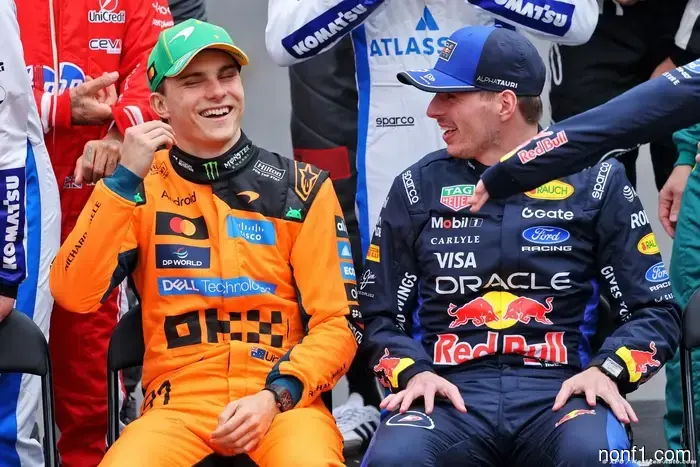 Piastri downplays the notion of a 'distance' from Webber following a challenging beginning.
Formula 1 | Oscar Piastri has downplayed claims that he has separated himself from his mentor and manager Mark Webber, emphasizing that their changing relationship is (…)
Piastri downplays the notion of a 'distance' from Webber following a challenging beginning.
Formula 1 | Oscar Piastri has downplayed claims that he has separated himself from his mentor and manager Mark Webber, emphasizing that their changing relationship is (…)
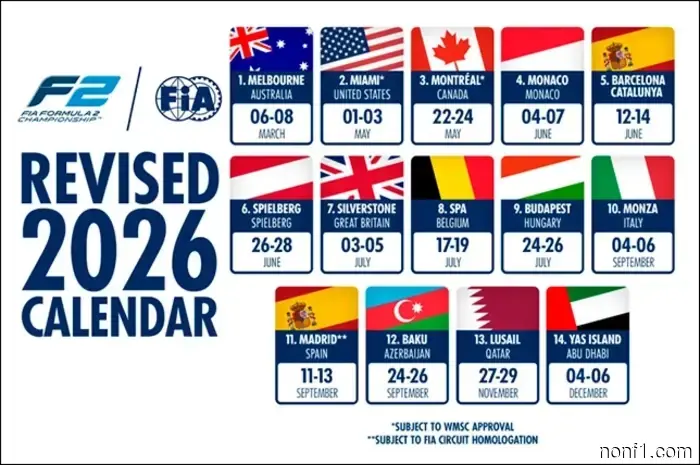 The FIA confirmed changes to the calendar.
The FIA confirmed changes to the competition calendar after the cancellation of events in Bahrain and Saudi Arabia...
The FIA confirmed changes to the calendar.
The FIA confirmed changes to the competition calendar after the cancellation of events in Bahrain and Saudi Arabia...
FIA intends to make 'adjustments' to the 2026 regulations, but Marko is doubtful.
Formula 1 | The initial crisis discussions in April regarding the contentious 2026 regulations have wrapped up, with the FIA committing to make only minor adjustments for the time being - but a (…)