
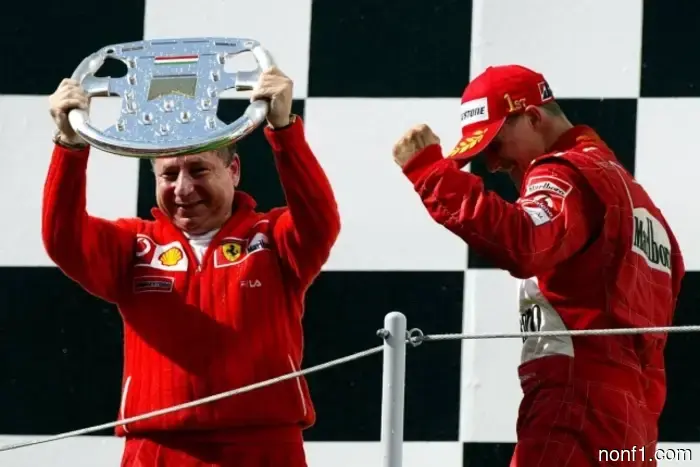
Jean Todt on Ferrari's success story during the Schumacher era
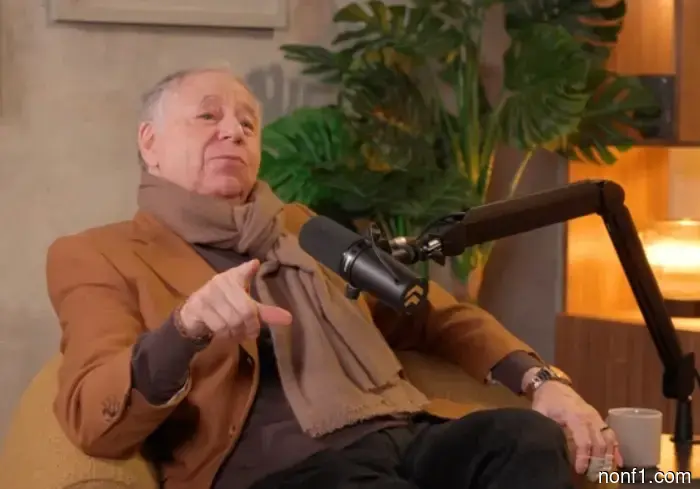
Jean Todt, former president of the FIA, who led the Ferrari team during Michael Schumacher's triumphant years, shared the story of the Scuderia's difficult rise to glory in the second half of the 90s while participating in the High Performance podcast.
It is worth noting that before heading the Italian team, Todt achieved outstanding success as the director of Peugeot's racing programs: these included victories in both categories of the World Rally Championship, four wins in the Paris-Dakar rally raid, and two wins at the 24 Hours of Le Mans. Naturally, a manager of such a level in the world of motorsport had an extremely convincing reputation...
Jean Todt: "In the early 90s, Ferrari had no successes at all, and they were very eager to find someone who could lead the team, and my candidacy was proposed. Moreover, this happened long before we reached an agreement. I understood that this was an extremely difficult task, and everyone told me, 'You shouldn't go to Ferrari!'
But Ferrari was also expecting big changes, as they wanted to invite someone who had no experience in Formula 1, and this person was not Italian. However, after long discussions that began in August 1992, we signed the contract in March 1993.
The first 'dream driver' I negotiated with was Ayrton Senna. It happened in Monza during the 1993 Italian Grand Prix. I remember he came to my room, as we were staying in the same hotel, and we talked for half the night about his possible move to Ferrari. He was ready to join our team, but he wanted it to happen in 1994.
But we had already signed contracts for 1994 with Gerhard Berger and Jean Alesi. I told him that it was impossible in 1994; we wouldn't be ready yet, as we had contracts with other drivers. He then replied that contracts in Formula 1 are not that important. But for me, a contract is important. So I wanted Senna to join us in 1995. And then he accepted Williams' offer...
Therefore, in 1994, Ferrari's lineup remained the same, but we were already in the process of reforming the team, which continued into 1995. And we understood that we would be ready to fight for victories in 1996...
You know, it often happens that the engineers responsible for the chassis say that we have a poor engine, while the engine builders assure that the problems are related to the chassis. And everyone insists that we don't have very good drivers. I said that we needed to ensure that no one had grounds for mutual accusations. And if we could invite Michael Schumacher, then no one could say that we didn't have a good driver.
Since he was the best driver in the championship at that time, we had to convince everyone to sign a contract with him. Negotiations with Michael took place in early 1995, after which we spent the day talking with him in Monte Carlo – I was present, along with our lawyer, Michael, and Willy Weber, his manager. By the end of that day, we signed the contract.
He agreed because he felt that driving for Ferrari was a new experience for him. He was interested in taking on this challenge. Of course, he wouldn't agree until certain guarantees were provided. At the same time, I was in contact with Ross Brawn, offering him the position of technical director, and Rory Byrne, whom we saw as the chief designer. They didn't know about the negotiations with Michael, but both had experience working with him at Benetton.
In general, by 1996, we achieved three victories, and in 1997, we lost the title in the last race when Schumacher attempted that controversial maneuver against Jacques Villeneuve. Unfortunately, Michael made a mistake... But after that, our team showed true solidarity, as the strength of the team is revealed when things are not going well. When everything is fine, everyone gets along anyway.
I want to say that Michael intentionally caused that collision, and by the way, every time he lost control, he always paid a very high price for it. Because of this, he lost the title in 1997, as well as in 2006, when he blocked Fernando Alonso in qualifying in Monte Carlo, intentionally causing his car to spin. As a result, he was pushed to the very back of the starting grid, and that story also cost him the title.
Due to those two mistakes, he missed the chance to win the championship twice, but there were other stories as well. In 1997, it happened in the last race of the season. In 1998, we also lost victory when Michael's car stalled at the start of the Japanese Grand Prix, and that was also the championship finale. But even before that, when Michael was lapping David Coulthard on a rain-soaked track in Spa, the McLaren car probably slowed down too much, and Schumacher didn't see it. As a result, his Ferrari was wrecked, but still, the title was lost in the last race of the season.
In 1999, the mistake was made by Ferrari's mechanics, and Michael's car lost brakes during the formation lap in Silverstone. By the way, he never complained that the mistake was made by the team. He returned to the grid at the Malaysian stage, and after that race, we took the lead in the championship – Eddie Irvine topped the personal standings.
Eddie had a chance to equal points with Mika Hakkinen, but he still had fewer wins. And yet, that season Ferrari finally won the Constructors' Cup. We knew that 2000 was our last year, and if we hadn't won then, the team would definitely have just 'exploded.' But we won.
However, it was not guaranteed, and I remember that in the middle of the season, we had a meeting where I said we had to win the last four races. If we hadn't succeeded, the team would have had big problems.
But we won those races, after which a period began that one could only dream of, as we won both championships for three consecutive years... And I remember that when Michael was already the world champion, before the start of the next season, he asked me to give him the opportunity to work at least half a day on tests in Fiorano to make sure he was still in good shape.
In my opinion, when a person is not sure that he is good enough – that is one of his strong qualities. None of us thought we were truly good. We always feared that we were not strong enough. In a sense, it is painful because of this we could not fully enjoy our successes.
In 2004, for the first time in history, a driver became world champion in the middle of the season – it was in Magny-Cours when Michael won the French Grand Prix. And at the next stage in Hungary, we secured victory in the Constructors' Cup. It so happened that then there was a race in Spa, which Michael could not win, after which there was Monza, and both our cars started from the front row. And I remember I was torturing myself with questions, could we perform well? But then I told myself, 'You're going crazy – what are these worries, we are already world champions?!'
But we quickly forgot our own successes because we constantly thought about how to act to become even better..."
Other articles
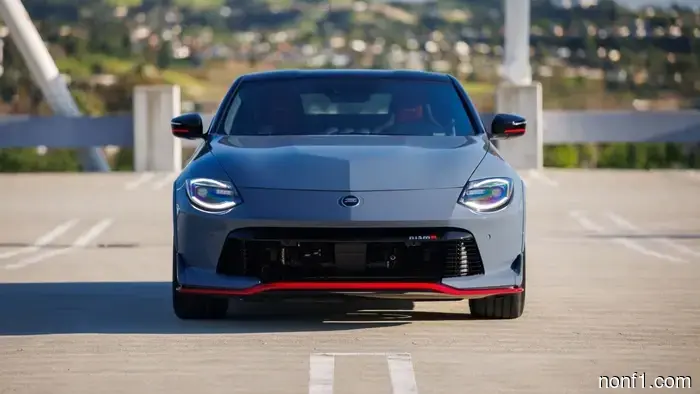 The new Nissan Z won't be released until after 2030.
Nissan has already outlined its plans for the next-generation Z sports car, but it will take some time, possibly a few years.
The new Nissan Z won't be released until after 2030.
Nissan has already outlined its plans for the next-generation Z sports car, but it will take some time, possibly a few years.
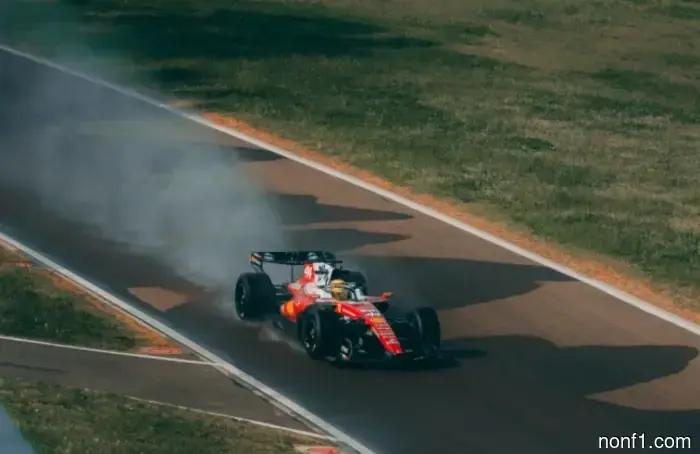 In two days of tire testing, Hamilton covered 884 km.
Ferrari is one of the teams that continues to actively work on the track during the April break. Yesterday, two days of tire testing concluded at the factory circuit in Fiorano, during which rain tires were tested...
In two days of tire testing, Hamilton covered 884 km.
Ferrari is one of the teams that continues to actively work on the track during the April break. Yesterday, two days of tire testing concluded at the factory circuit in Fiorano, during which rain tires were tested...
 Porsche's Disastrous 2025 Has Carried On into 2026: TDS
Porsche's sales faced a setback last year, and the initial quarter of 2026 does not show signs of a recovery just yet.
Porsche's Disastrous 2025 Has Carried On into 2026: TDS
Porsche's sales faced a setback last year, and the initial quarter of 2026 does not show signs of a recovery just yet.
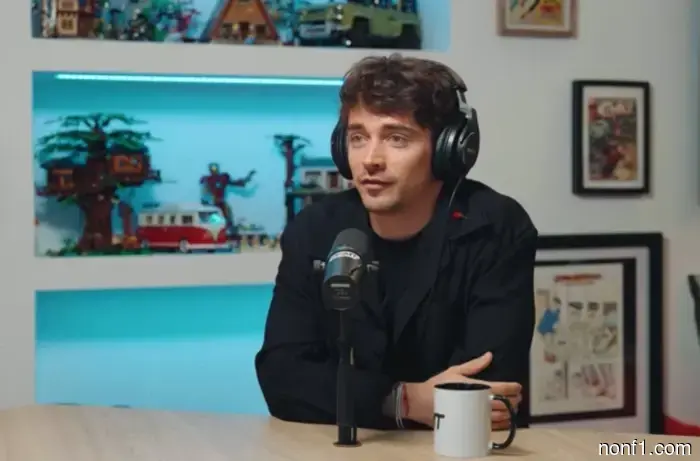 Leclerc decided to stay away from social media.
Charles Leclerc has tens of millions of followers on social media, but fans are likely feeling some disappointment lately because the Ferrari driver's activity there has significantly decreased...
Leclerc decided to stay away from social media.
Charles Leclerc has tens of millions of followers on social media, but fans are likely feeling some disappointment lately because the Ferrari driver's activity there has significantly decreased...
 Porsche's Terrible 2025 Has Carried On Into 2026: TDS
Porsche sales faced a decline last year, and the early months of 2026 have not shown any signs of improvement.
Porsche's Terrible 2025 Has Carried On Into 2026: TDS
Porsche sales faced a decline last year, and the early months of 2026 have not shown any signs of improvement.
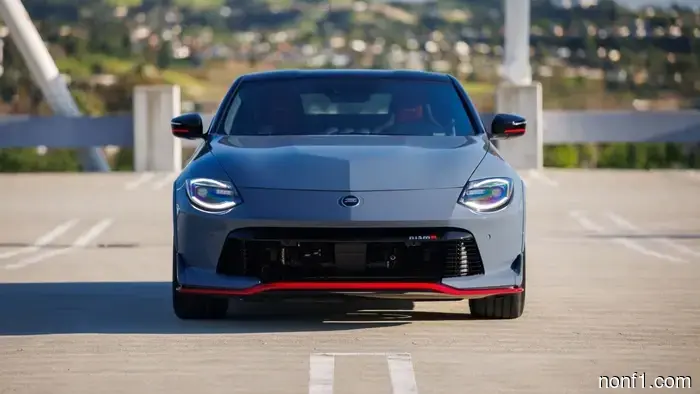 A new Nissan Z won't be released until post-2030.
Nissan has already outlined its plans for the next-generation Z sports car, but it will take some time—around three years.
A new Nissan Z won't be released until post-2030.
Nissan has already outlined its plans for the next-generation Z sports car, but it will take some time—around three years.
Jean Todt on Ferrari's success story during the Schumacher era
The former president of the FIA, who led the Ferrari team during Michael Schumacher's triumphant years, shared the story of Scuderia's difficult ascent to glory while participating in the High Performance podcast...