
Gas Price Trick: Use an Old Chevy Truck Powered by Wood
Jp Prat Projects on YouTube
The latest car news and reviews, no nonsense.
Our free daily newsletter delivers the most important stories right to your inbox every weekday.
If you don't own an electric vehicle (EV), you're likely in the same boat as the rest of us seeking relief from rising fuel costs. Although gas prices in my area are below the national average, they are still significantly higher than in the past, and I'm growing weary of it. If only I had an old squarebody Chevrolet pickup with a small-block V8 that could run on firewood.
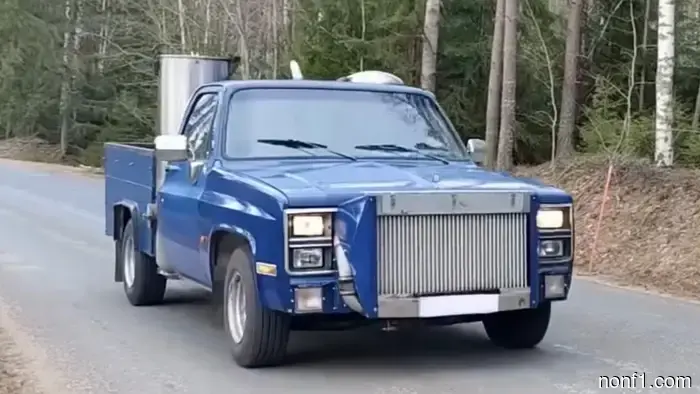
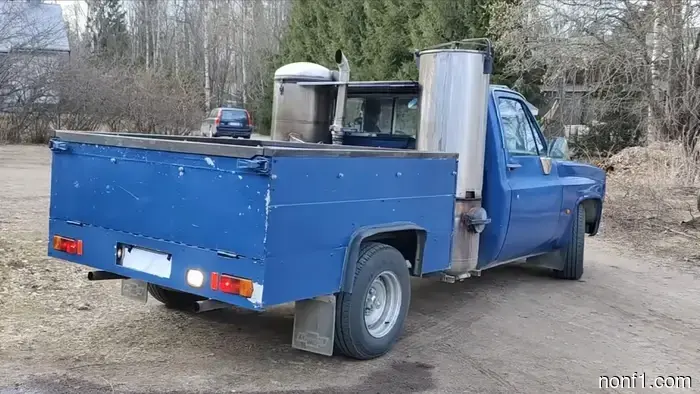
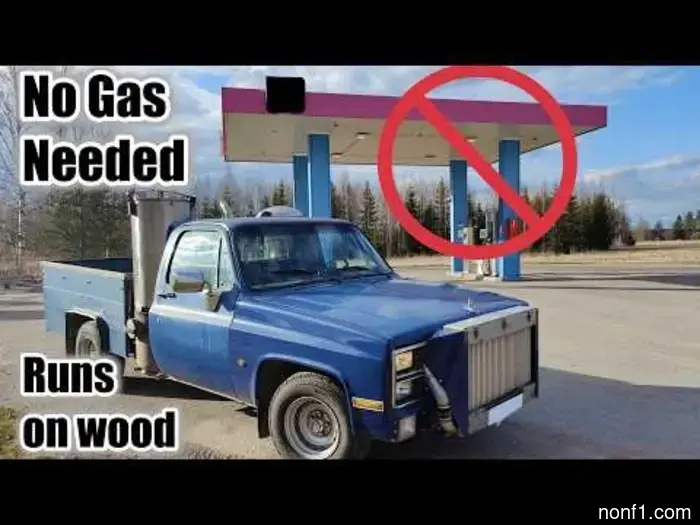
This seems to be a shared thought among others as well. Jp Prat Projects recently shared a video showcasing his father’s “wood gas car,” which is actually a 1983 Chevy fleetside. It features a 350-cubic-inch engine manufactured in 1972 and has not used any gasoline in over 100,000 kilometers (or 62,000 miles).
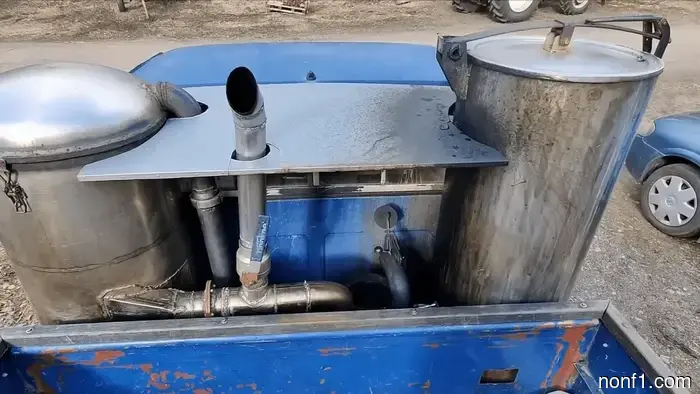
The truck doesn’t consume liquid fuel at all; instead, the burning wood generates carbon monoxide that combines with hydrogen to power the vintage pushrod V8. A gasifier is positioned behind the cab, requiring about five to 10 minutes to fully ignite, after which the engine can start, idle, and drive. A filter is located on the opposite side of the cab, connected by a torch with a ball valve to regulate flow. The setup has a notably industrial appearance.
Unlike a standard truck where you'd turn the key halfway to prime the fuel pump, the startup process here is quite different. It begins with a crumpled piece of newspaper placed at the base of the gasifier. An electric fan then draws the flame upward, allowing the charcoal and new wood to ignite. Once the engine is running, it draws in the gas automatically.
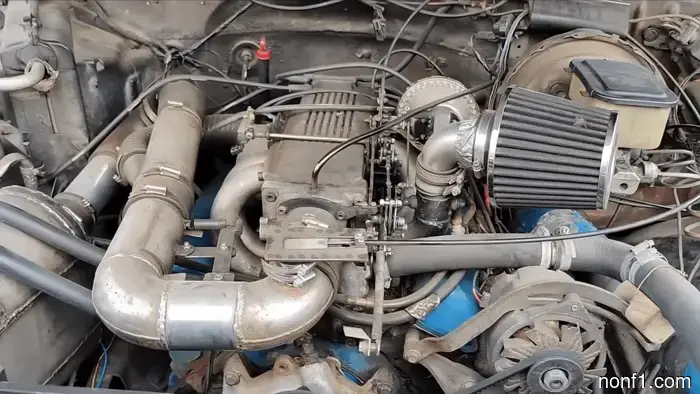
Regarding engine modifications, there aren’t many. The owner mentions that a different camshaft and an intake manifold from a 1986 Corvette with throttle body injection were installed. Naturally, there are some distinct plumbing arrangements, including a large cooler mounted at the front of the truck. This vehicle is easily distinguishable from stock models, with its oversized metal component surpassing most brush guards and the two barrels at the rear, but relatively little effort went into the modifications compared to what one might expect.
In terms of efficiency, they report burning 35 to 40 kilograms of wood per 100 km, which translates to 81 pounds for every 60 miles. A hydraulic log splitter certainly proves useful for them. They replenish the gasifier every 43 miles for precaution, and if the fire is already lit, there’s no need to relight the newspaper. The small-block Chevy does not require any additional fuel to start, unlike some alternative fuel systems.
While performance isn’t the main goal, the host notes that torque peaks around 2,000 rpm. A 3.42 final drive allows the vehicle to operate without excessively high RPMs, paired with a TH700 transmission with overdrive connecting it to the engine. Thus, it remains a fairly typical setup.
Running a vehicle like this in Los Angeles would undoubtedly present challenges. It's uncertain how a smog station worker would react to seeing a functioning gasifier. While wood is considered a renewable fuel, the particulate emissions are significantly higher than those from a gas engine, making it less “clean” in that respect. Additionally, the energy density doesn't compare favorably to gasoline.
Nonetheless, this serves as an intriguing example of a technology that's been around for a long time but is rarely seen today. Comparing it with modern internal combustion engines, it’s easy to understand its decline in popularity.
Do you have a tip or question for the author? Reach out directly: caleb@thedrive.com


Other articles
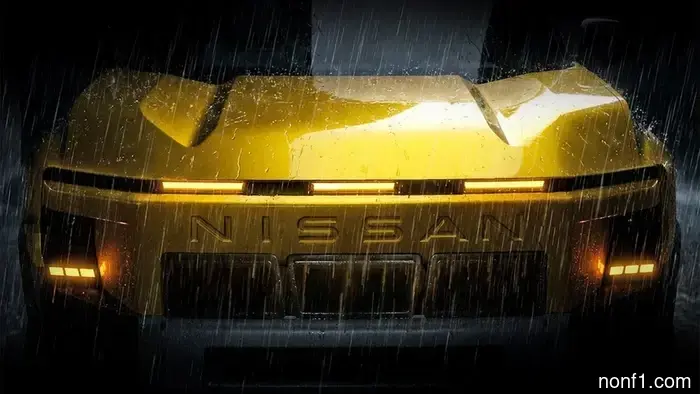 The Nissan Xterra is factory-designed to accommodate tires up to 35 inches, with the option for 37-inch tires available in the aftermarket.
"The car will serve as a canvas," the head of Nissan America mentioned to The Drive when talking about the forthcoming Xterra.
The Nissan Xterra is factory-designed to accommodate tires up to 35 inches, with the option for 37-inch tires available in the aftermarket.
"The car will serve as a canvas," the head of Nissan America mentioned to The Drive when talking about the forthcoming Xterra.
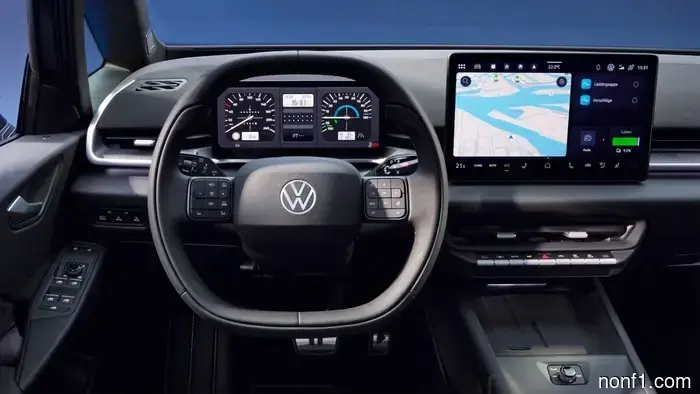 VW Finally Reintroduces Real Buttons in a Car That Isn’t Available for Purchase: TDS
The VW ID 3 Neo finally fulfills the company's commitment to reintroducing actual buttons. Unfortunately, it will not be available for sale in the United States.
VW Finally Reintroduces Real Buttons in a Car That Isn’t Available for Purchase: TDS
The VW ID 3 Neo finally fulfills the company's commitment to reintroducing actual buttons. Unfortunately, it will not be available for sale in the United States.
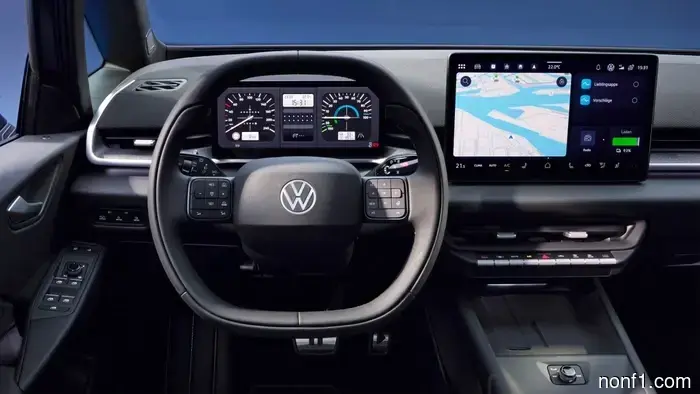 VW Finally Reintroduces Physical Buttons in a Car Not Available for Purchase: TDS
The VW ID 3 Neo ultimately fulfills the company's commitment to reintroducing genuine buttons. Unfortunately, it will not be available for sale in the United States.
VW Finally Reintroduces Physical Buttons in a Car Not Available for Purchase: TDS
The VW ID 3 Neo ultimately fulfills the company's commitment to reintroducing genuine buttons. Unfortunately, it will not be available for sale in the United States.
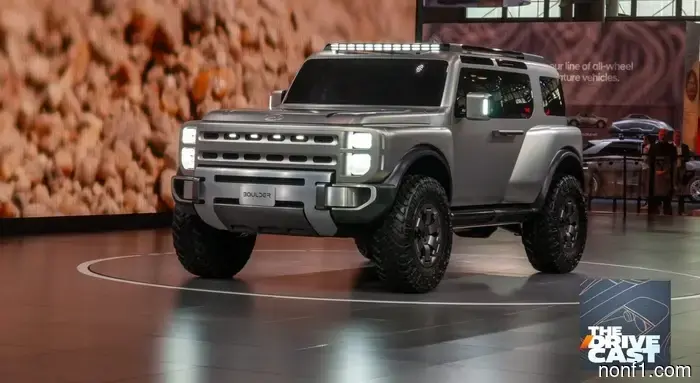 Hyundai and Kia aim to offer a pickup truck for sale by 2030.
Hyundai and Kia are getting ready to target the Toyota Tacoma.
Hyundai and Kia aim to offer a pickup truck for sale by 2030.
Hyundai and Kia are getting ready to target the Toyota Tacoma.
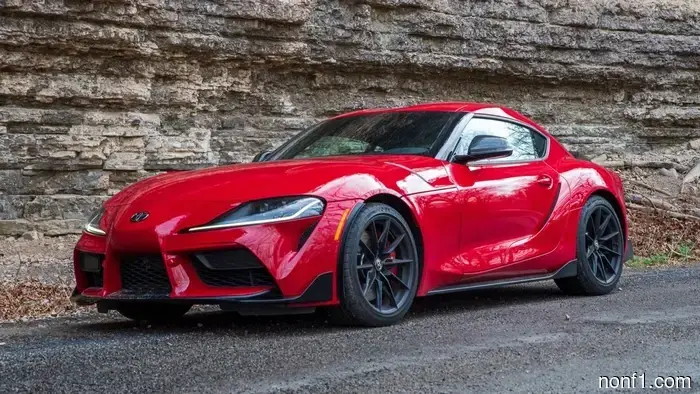 2026 Toyota Supra MkV Final Edition Review: This Deserved More Attention
After seven years, it's time for Toyota to say goodbye to the current-generation Supra, and it oddly seems as though the car was hardly present during that period.
2026 Toyota Supra MkV Final Edition Review: This Deserved More Attention
After seven years, it's time for Toyota to say goodbye to the current-generation Supra, and it oddly seems as though the car was hardly present during that period.
 Car Show Prohibits VQ-Powered Nissans to 'Ensure a Safe and Enjoyable Atmosphere'
Numerous 350Z owners acted out at the Supercar Saturday event, resulting in an outright prohibition of the VQ engine platform.
Car Show Prohibits VQ-Powered Nissans to 'Ensure a Safe and Enjoyable Atmosphere'
Numerous 350Z owners acted out at the Supercar Saturday event, resulting in an outright prohibition of the VQ engine platform.
Gas Price Trick: Use an Old Chevy Truck Powered by Wood
You can bypass all gas stations when your daily vehicle is one of these. Just make sure to get in touch with the nearby sawmill.