
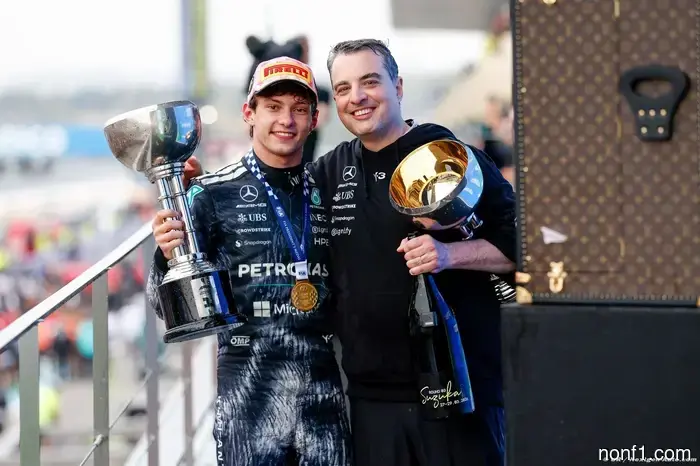
The established team leader faced a new challenge twice as Antonelli goes head-to-head with Russell.
Imagine the podium at Suzuka. It’s the third race of the 2026 season, and on the top step — soaking in champagne and sporting a carefree smile — is Kimi Antonelli. At just nineteen, he’s achieved two wins in his last two races, making him the youngest leader in Formula 1 championship history.
George Russell stands one step below him.
Antonelli Challenges Russell
Russell arrived in Melbourne for the 2026 season opener as the favorite to win the title according to pre-season betting. He claimed victory at the Albert Park event, demonstrating the confidence of someone driving a car crafted specifically for them. He was expected to be the focal point of the season. However, after Antonelli's victories in China and Japan, Russell found himself looking up at the Suzuka podium after finishing fourth and losing his lead in the championship. Online betting sites have also adjusted their views.
Initially, Canadian sports betting sites had Russell as a 1/3 favorite to win the title following Australia. Now, although he is still favored, his odds have shifted to even money, with Antonelli closely trailing at 11/10. However, history does provide some reassurance for him.
Many established team leaders have gone through similar shocks and nevertheless emerged victorious. The key term here is absorbed. None made it look easy. Here are two notable instances.
McLaren’s Internal Struggles
Lando Norris kicked off the 2025 season as the closest thing to a coronation in Formula 1. After a minor championship challenge in 2024 that he couldn't convert due to errors that Max Verstappen and Red Bull would never make, McLaren had crafted a nearly unbeatable car in 2025, with Norris positioned as the main driver.
His younger teammate, Oscar Piastri, was certainly impressive — even brilliant — but at only 24 years old and in just his third season, the team hierarchy seemed secure, especially with Norris having four more years of experience. That perception, however, proved incorrect.
Piastri secured five wins in the first half of the year, prompting questions within the paddock that McLaren had hoped to avoid. As often happens in uncomfortable political situations, the team resorted to radio communications. At one point in Austria, they were trading positions throughout the race, each driver's engineer providing pace targets — two teammates on the same tire strategy ultimately serving competing priorities while pretending not to notice the growing tension. Their relationship began to strain beyond the surface smiles at press conferences.
Then came Montreal.
On lap 67 of 70, Norris used a slipstream to gain on his teammate but ended up crashing into the back of Piastri’s McLaren, damaging his own car and forcing himself to retire. In an instant, 22 points were lost due to a moment of misjudgment. "McLaren is my family," Norris reflected afterward, his voice genuinely raw. "When I embarrass myself like I did today, I feel a lot of regret."
Another collision in Singapore led to another points loss and a serious discussion with McLaren’s management. Yet when the season peaked, Norris managed to rally. He secured consecutive wins in Mexico and Brazil, reclaiming the championship lead. Piastri, on the other hand, was struggling, retiring in Azerbaijan and then going five races without a podium, marking his poorest performance of the season.
Ultimately, Norris clinched his first title in Abu Dhabi, finishing third to secure the championship and fend off challenges from Piastri and the relentless Max Verstappen. Can he achieve a similar success in a slower car in 2026? Only time will tell.
The Harsh Reality of Red Bull
The situation within the Red Bull garage over the past decade paints a different, harsher picture. Daniel Ricciardo came closest to competing with the star Max Verstappen. As the established driver when Verstappen was promoted from Toro Rosso in 2016, Ricciardo performed admirably for three seasons, outqualifying Verstappen 11-6 during his initial year, amassing five wins and 22 podiums throughout their partnership — the only teammate Verstappen has faced over multiple seasons who could contest him.
Their spectacular collision in Azerbaijan in 2018 was costly and resolved nothing. But Ricciardo sensed the shift before it became obvious; Red Bull was restructuring around Verstappen. Choosing to leave instead of being a supporting player to someone younger by six years highlighted how entrenched the hierarchy had become.
What followed was a series of changes. Pierre Gasly was promoted but demoted back to Toro Rosso within 12 races. Alexander Albon performed slightly better but was quietly dropped at the end of the year. Sergio Pérez was respected throughout the paddock, a proven winner with four years of dedicated service, five wins, and 24 podiums but still faced a decline.
When Red Bull let him go, it was devoid of drama — just the quiet closure of
Other articles
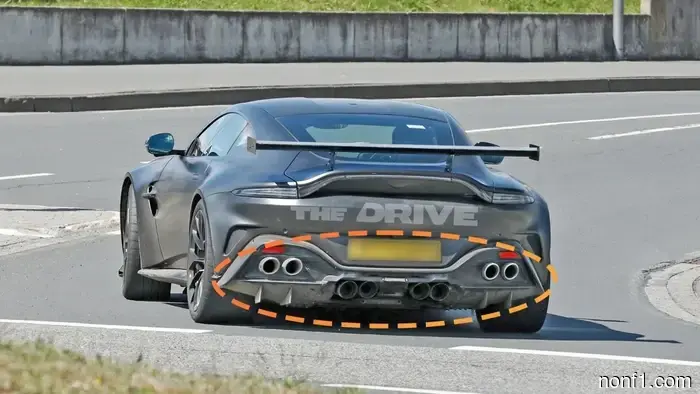 Count Them: Aston Martin Vantage Caught Testing with Eight Exhaust Pipes
No, you’re not imagining things. A high-performance variant of the Aston Martin Vantage could indeed feature eight exhaust pipes.
Count Them: Aston Martin Vantage Caught Testing with Eight Exhaust Pipes
No, you’re not imagining things. A high-performance variant of the Aston Martin Vantage could indeed feature eight exhaust pipes.
 For the second time, the appointed team leader faced a new challenge as Antonelli confronts Russell.
Formula 1 | Envision the Suzuka podium. It's the third race of the 2026 season, and there on the highest step — soaked in champagne, smiling broadly like a person who hasn't (…)
For the second time, the appointed team leader faced a new challenge as Antonelli confronts Russell.
Formula 1 | Envision the Suzuka podium. It's the third race of the 2026 season, and there on the highest step — soaked in champagne, smiling broadly like a person who hasn't (…)
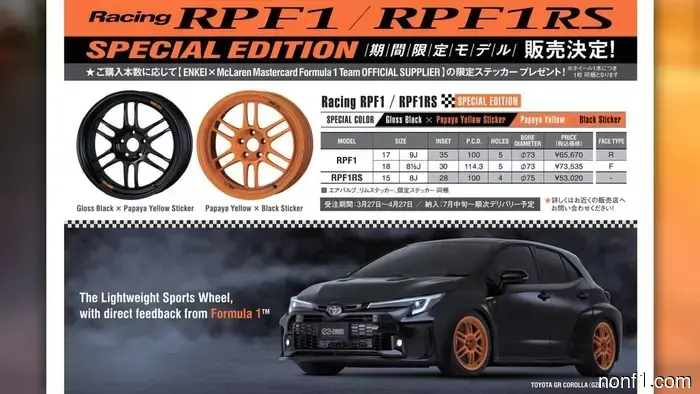 Enkei's Latest Papaya RPF1 Wheels Allow You to Add a Touch of McLaren to Your Civic
Every budget-friendly sporty car deserves a set of RPF1s, and McLaren enthusiasts shouldn't miss out on Enkei's newest special edition.
Enkei's Latest Papaya RPF1 Wheels Allow You to Add a Touch of McLaren to Your Civic
Every budget-friendly sporty car deserves a set of RPF1s, and McLaren enthusiasts shouldn't miss out on Enkei's newest special edition.
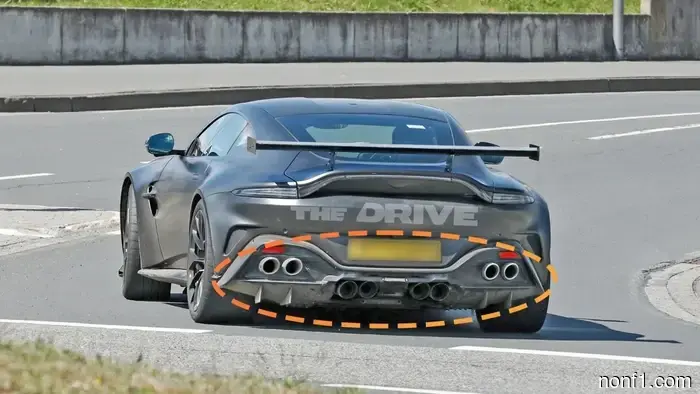 Count Them: Aston Martin Vantage Caught Testing with Eight Exhaust Outlets
No, you're not imagining things. A high-performance variant of the Aston Martin Vantage could indeed feature eight exhaust pipes.
Count Them: Aston Martin Vantage Caught Testing with Eight Exhaust Outlets
No, you're not imagining things. A high-performance variant of the Aston Martin Vantage could indeed feature eight exhaust pipes.
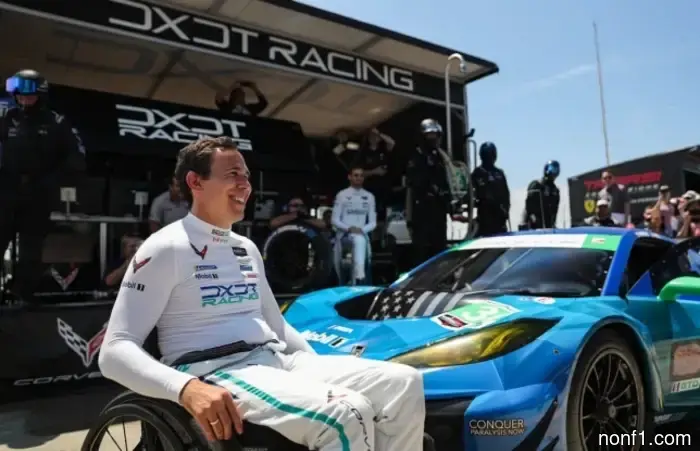 Robert Wickens will participate in five IMSA races in 2026.
Robert Wickens continues to demonstrate incredible willpower and determination, despite the consequences of the injuries he sustained in 2018, and this season he will once again compete in the American IMSA series...
Robert Wickens will participate in five IMSA races in 2026.
Robert Wickens continues to demonstrate incredible willpower and determination, despite the consequences of the injuries he sustained in 2018, and this season he will once again compete in the American IMSA series...
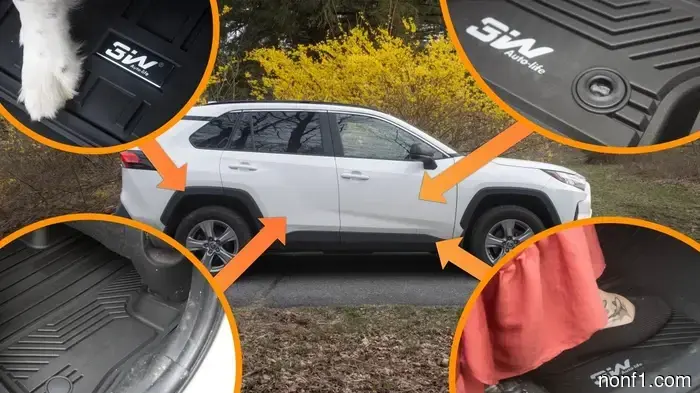 Custom-Fitted Floor Mats Are More Affordable Than You Realize: Enjoy 30% Off on 3W Liners
Here’s a practical review of custom-fitted floor mats from 3W Liners.
Custom-Fitted Floor Mats Are More Affordable Than You Realize: Enjoy 30% Off on 3W Liners
Here’s a practical review of custom-fitted floor mats from 3W Liners.
The established team leader faced a new challenge twice as Antonelli goes head-to-head with Russell.
Formula 1 | Imagine the Suzuka podium. It's the third race of the 2026 season, and there he is, on the top step — soaked in champagne, wearing the smile of someone who hasn't (…)