
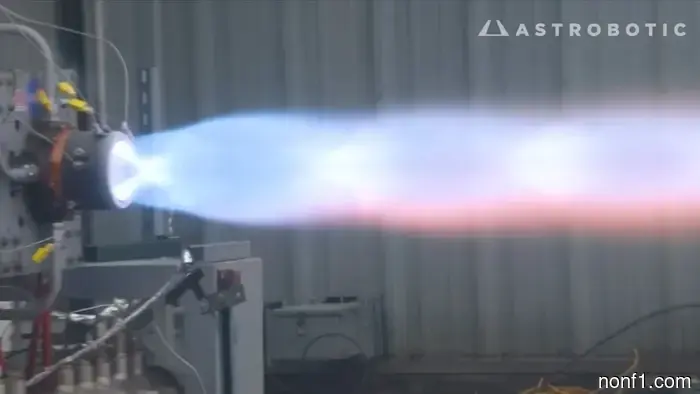
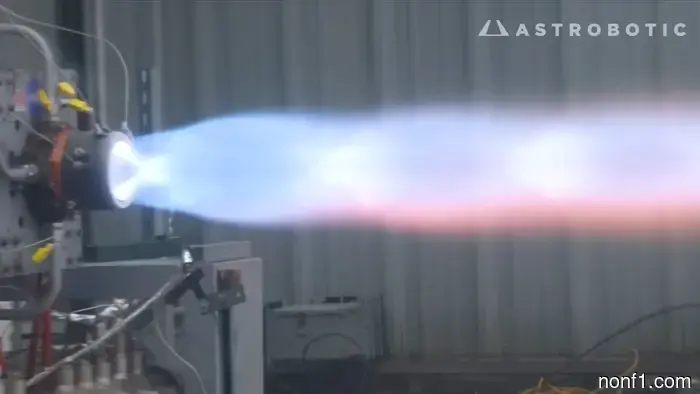
Take a look at the spiral exhaust flame emitted by this rotating detonation rocket engine.
Astrobotic on YouTube
The latest automotive news and reviews, with no fluff.
Subscribe to our free daily newsletter to receive the most significant stories straight to your inbox, every weekday.
I’ll openly confess that I’m not a rocket scientist. However, I believe you don't need to be one to marvel at the rotating detonation rocket engine from aerospace company Astrobotic. It boasts some incredible specifications, which we will discuss shortly, but first, we need to address the twisting exhaust flame it produces. What exactly is happening there?
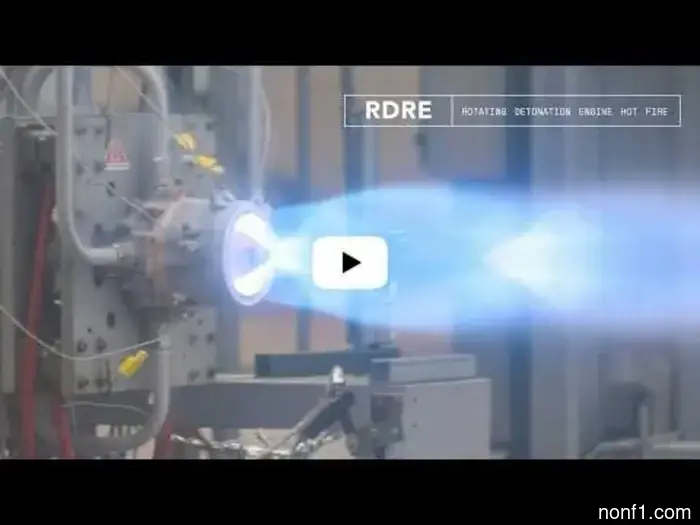
It has everything to do with the engine's design. An Astrobotic representative in the video below describes it this way:
“There are supersonic detonation waves that circulate around the outer part of this rocket engine. In fact, we didn't just include one of these supersonic waves; we created three detonation waves that chase each other around the outside. This arrangement allows for very efficient and rapid combustion, enabling these high-thrust applications.”
The engine ran for 470 seconds without any noticeable damage. Among that was a single 300-second test run, thought to be a new record for RDRE technology. Astrobotic via YouTube
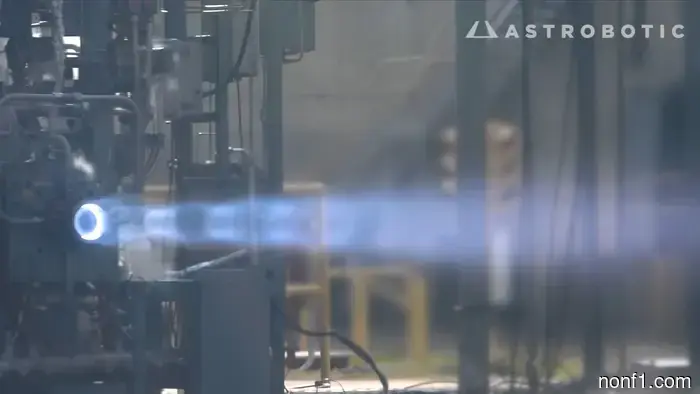
The end result is some exceptionally tight shock diamonds, which those who appreciate military aircraft and space exploration will recognize. (Greetings to regulars of The War Zone!) Essentially, these diamonds are formed when supersonic exhaust pressure doesn’t align with the surrounding atmospheric pressure. As the exhaust is compressed, expands, and recompressed, shockwaves form. If you're more familiar with 2JZ engines than F-22 fighters, this is truly fascinating.
According to the Astrobotic representative, its RDRE—dubbed Chakram, after the ancient throwing weapon—produced over 4,000 pounds of thrust in multiple tests at NASA’s Marshall Space Flight Center. This is impressive considering the compactness of the engine. The tests primarily concentrated on duration to evaluate its performance over extended periods.
“Chakram far exceeded our expectations,” stated Bryant Avalos, Astrobotic’s principal investigator for the Chakram program. “With any innovative technology like an RDRE, there’s always concern about unknown factors impacting performance when transitioning from design to testing. However, the engine performed even better than we anticipated. The 300-second burn was the icing on the cake. Demonstrations like this illustrate how RDRE technology could enhance various Astrobotic missions, from propulsion systems for upcoming lunar landers to in-space orbital transfer vehicles, as well as other capabilities that will aid in expanding operations throughout cislunar space.”
Astrobotic has announced that the Chakram could be integrated into its current product offerings, which include the Xogdor VTOL reusable rocket and two lunar landers. The company believes that the more efficient combustion could facilitate carrying larger payloads to greater heights or speeds. I’ll leave that discussion to them, but from my perspective here on Earth, this certainly appears to be a significant advancement.
If you have a tip or a question for the author, reach out directly at: caleb@thedrive.com
Other articles
 Esteban Ocon: Let's see how these amendments will work.
On Thursday in Miami, Esteban Ocon spoke about the amendments to the regulations coming into effect this weekend…
Esteban Ocon: Let's see how these amendments will work.
On Thursday in Miami, Esteban Ocon spoke about the amendments to the regulations coming into effect this weekend…
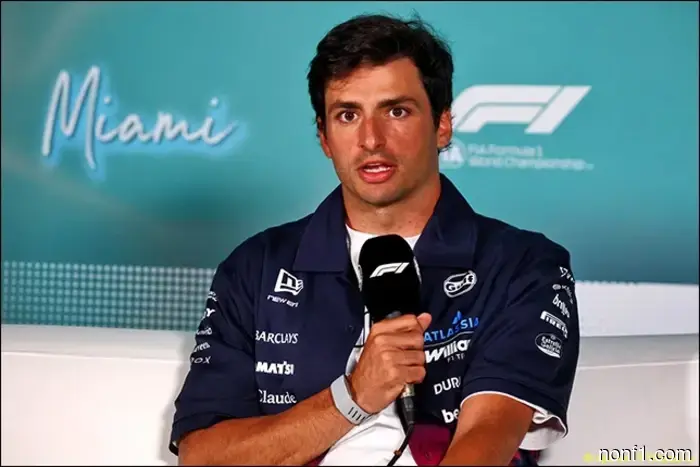 Science: I don't think our positions will change immediately.
Carlos Sainz does not expect immediate progress from the prepared Williams innovations, but hopes that this will be an important first step...
Science: I don't think our positions will change immediately.
Carlos Sainz does not expect immediate progress from the prepared Williams innovations, but hopes that this will be an important first step...
 Liam Lawson: It's nice that the drivers' comments were heard.
On Thursday in Miami, Liam Lawson shared his opinion on the adjustments to the technical regulations made during the April break in the championship.
Liam Lawson: It's nice that the drivers' comments were heard.
On Thursday in Miami, Liam Lawson shared his opinion on the adjustments to the technical regulations made during the April break in the championship.
 Bottas: We put the car on a diet, the chassis weight is already less.
Valtteri Bottas said before the Miami Grand Prix that both the Cadillac team and he himself made good use of the April break in the championship...
Bottas: We put the car on a diet, the chassis weight is already less.
Valtteri Bottas said before the Miami Grand Prix that both the Cadillac team and he himself made good use of the April break in the championship...
 Compete on the Fiat Factory Roof Test Track in this delightful indie game.
The latest DLC for Parking Garage Rally Circuit increases the number of tracks and features one of the most impressive fictional circuits we've encountered in a racing game.
Compete on the Fiat Factory Roof Test Track in this delightful indie game.
The latest DLC for Parking Garage Rally Circuit increases the number of tracks and features one of the most impressive fictional circuits we've encountered in a racing game.
 Alex Albon: Serious updates will come later.
Like his teammate, Alex Albon does not expect quick progress from Williams, but believes that the team is moving in the right direction...
Alex Albon: Serious updates will come later.
Like his teammate, Alex Albon does not expect quick progress from Williams, but believes that the team is moving in the right direction...
Take a look at the spiral exhaust flame emitted by this rotating detonation rocket engine.
The science behind the rocket technology is relatively straightforward, yet the visual outcome is remarkable.