
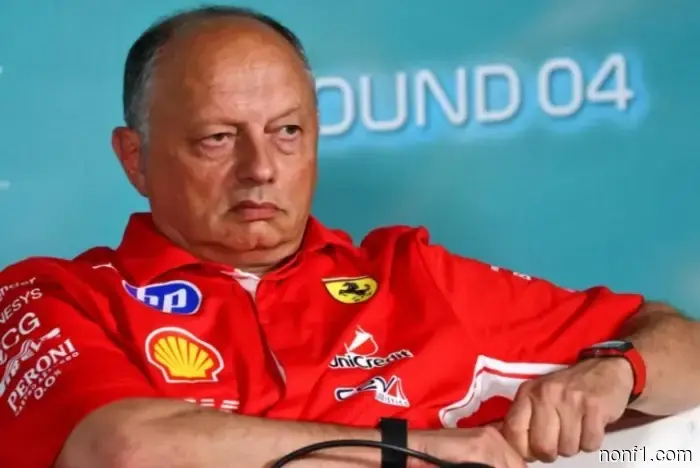
Vasseur: This is one of those races that is hard to interpret.
The Miami Grand Prix was yet another race for Ferrari that left the fans of the Italian team feeling disappointed. In the final standings, Lewis Hamilton and Charles Leclerc found themselves in the second half of the prize top ten, with the 8th place of the Monegasque linked to a 20-second penalty he received after the finish.
It all started off well, with Charles leading in the early laps, then holding onto 4th place for a long time, and then 3rd, and it seemed he would make it to the podium, but on the last lap, he made a frustrating mistake and damaged the car.
"From the very beginning, everything revolved around tire behavior and their temperatures," commented Frederic Vasseur, the head of Scuderia, after the race. "When we are in a normal position, we have the pace. But this applies not only to us – to everyone else as well, and there were significant changes in terms of pace throughout the race. It was very easy to overheat the tires, and this affected speed.
This was one of those races that are hard to interpret. In the first part, we were leading, we could hold our position, although it was not easy, and everything was under control. But then the safety car came out. And when it left the track, the competitors used the overtaking mode, Charles lost his position, and after that, difficulties began. When he was in traffic, the problems related to tire overheating, especially the rear ones, became too pronounced.
The difference in pace between the first 17 laps and the rest of the race was very noticeable. We had similar impressions after Saturday's sprint: we started very confidently, but as we approached the finish, the difficulties increased. We need to learn from what happened and address this issue.
When our car is on a clear track, the pace is decent, and we can fend off those behind us. But when we found ourselves in a tight group of cars, the difficulties increased. We have no speed advantage on the straights, and this becomes a problem when you are fighting for position. When others use the overtaking mode, you can easily lose your position. But it's not just about the engine; it's about the car as a whole.
There is still work to be done on all this, but right now we need to focus on preparing for Canada and try to get the next technical updates ready as soon as possible to change the situation. The most important thing is to ensure that the pace of the SF-26 allows us to fight for victories. We have problems that need solving, but we know what to do.
Speaking of Lewis Hamilton, he had many difficulties, including those related to engine temperature, and he had to manage the pace, often lifting off the throttle and coasting to save the power unit. The task was more about just getting to the finish.
Nevertheless, there were also a number of positive moments: we had good starts, and the updates worked as we expected. But we know we need to continue working on improving stability, on the car's behavior in traffic, and to try to fully unlock the potential of the SF-26."
Other articles
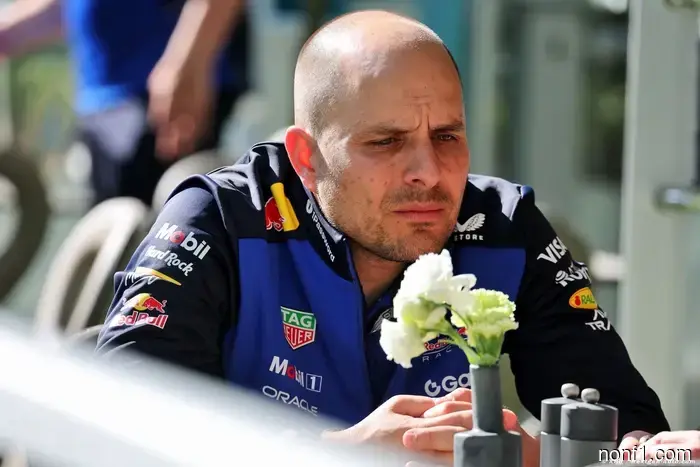 Brown and Mekies convene to resolve the dispute involving Lambiase.
Formula 1 | Zak Brown and Laurent Mekies engaged in discussions in Miami to ease tensions concerning Gianpiero Lambiase's future. The conflict had escalated following Red Bull (...)
Brown and Mekies convene to resolve the dispute involving Lambiase.
Formula 1 | Zak Brown and Laurent Mekies engaged in discussions in Miami to ease tensions concerning Gianpiero Lambiase's future. The conflict had escalated following Red Bull (...)
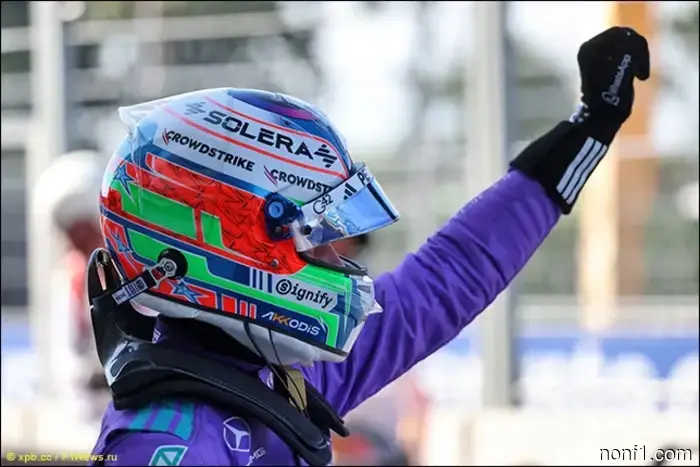 Statistics of past Grands Prix: Races and drivers
Statistics of drivers' performances in the past Grand Prix...
Statistics of past Grands Prix: Races and drivers
Statistics of drivers' performances in the past Grand Prix...
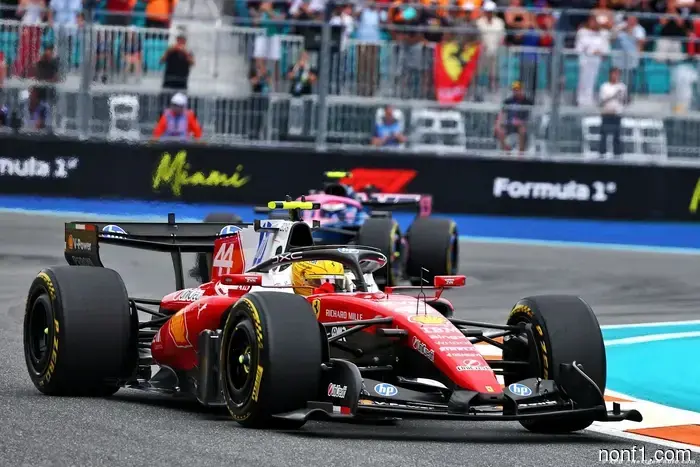 Hamilton seeks assistance with the engine, while Ferrari boasts the 'best car.'
Formula 1 | Lewis Hamilton has publicly urged that Ferrari should gain from the upcoming ADUO engine balancing decision, emphasizing the team's shortcomings (…)
Hamilton seeks assistance with the engine, while Ferrari boasts the 'best car.'
Formula 1 | Lewis Hamilton has publicly urged that Ferrari should gain from the upcoming ADUO engine balancing decision, emphasizing the team's shortcomings (…)
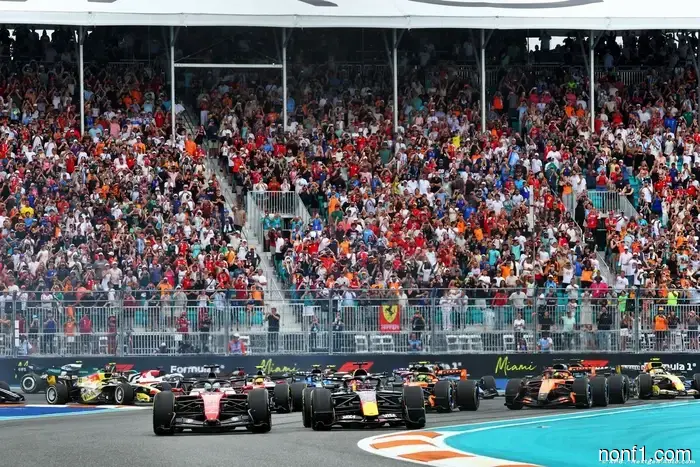 V8 states 'will occur', Sainz responds with 'stop the criticism'.
Formula 1 | FIA president Mohammed Ben Sulayem has stated that a comeback to V8 engines in Formula 1 is unavoidable due to the backlash against the new regulations set for 2026 (…)
V8 states 'will occur', Sainz responds with 'stop the criticism'.
Formula 1 | FIA president Mohammed Ben Sulayem has stated that a comeback to V8 engines in Formula 1 is unavoidable due to the backlash against the new regulations set for 2026 (…)
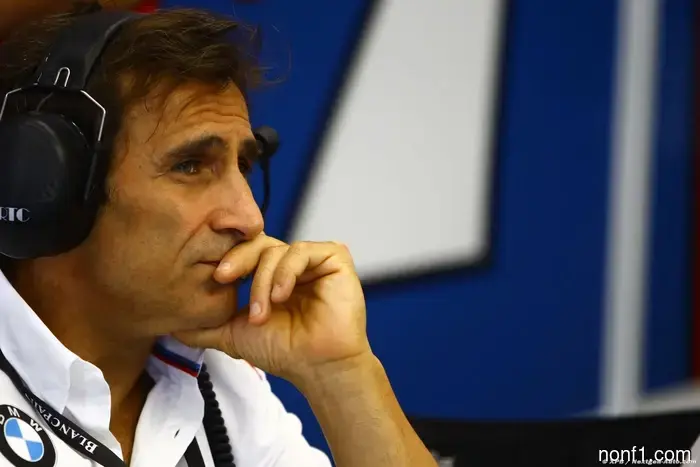 Zanardi to be laid to rest, with mother Anna sharing details about his unexpected final moments.
Formula 1 | Alessandro 'Alex' Zanardi will be interred in Padua on Tuesday after a public memorial service, as his family starts to cope with (…)
Zanardi to be laid to rest, with mother Anna sharing details about his unexpected final moments.
Formula 1 | Alessandro 'Alex' Zanardi will be interred in Padua on Tuesday after a public memorial service, as his family starts to cope with (…)
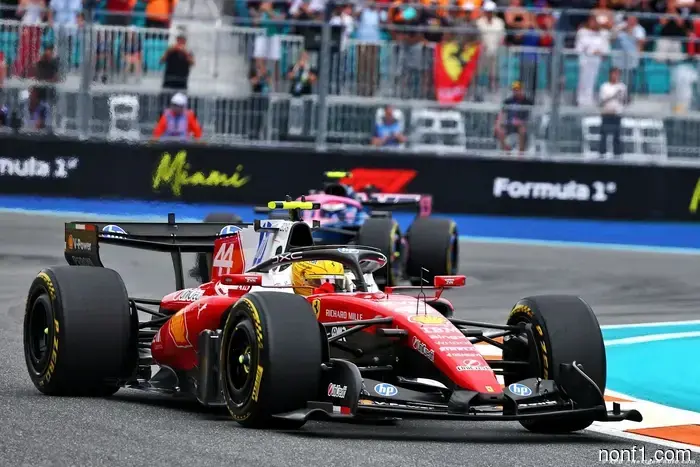 Hamilton advocates for support with the engine, while Ferrari boasts having the 'top vehicle.'
Formula 1 | Lewis Hamilton has publicly advocated for Ferrari to gain from the impending ADUO engine balancing decision in Formula 1, emphasizing that the team's shortcomings (...)
Hamilton advocates for support with the engine, while Ferrari boasts having the 'top vehicle.'
Formula 1 | Lewis Hamilton has publicly advocated for Ferrari to gain from the impending ADUO engine balancing decision in Formula 1, emphasizing that the team's shortcomings (...)
Vasseur: This is one of those races that is hard to interpret.
The Miami Grand Prix became yet another race for Ferrari, after which the fans of the Italian team were left with a sense of disappointment...