
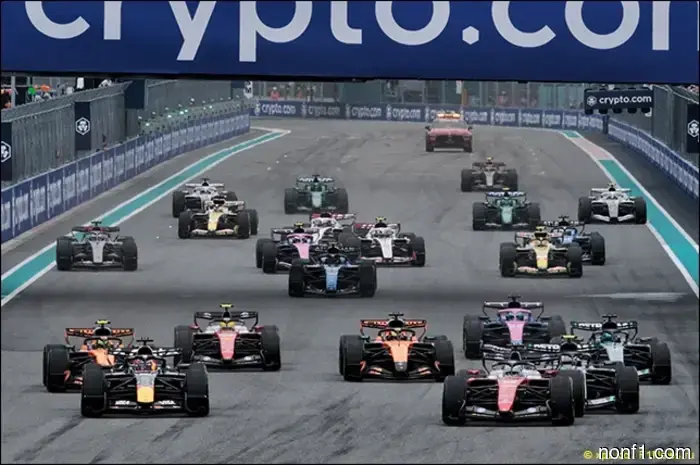
Martin Brundle on the results of the Miami Grand Prix
Former Formula 1 driver and Sky Sport F1 commentator Martin Brundle summarized the Miami Grand Prix...
The 2026 Miami Grand Prix was an extremely important event for Formula 1. The first three races in Australia, China, and Japan were interesting on one hand, but controversial on the other, as the radically changed cars struggled to fit into the familiar picture.
The forced break due to the conflict in the Middle East came at the most inconvenient time, but sport takes a backseat when it comes to human casualties.
Teams used this pause to fine-tune the complex energy distribution system, mainly for a more even distribution of engine and battery power on each lap, as well as to reduce the speed difference between cars.
In terms of recovery, Miami has always been easier than other tracks, but the adjustment of the regulations was a step in the right direction. Drivers were satisfied, the cars were fast, and the spectators were spared the issues related to cars coasting at the end of straights to charge the battery. I really enjoyed being at the track during the only practice session, which was extended to 90 minutes this time.
McLaren and Ferrari brought many innovations that will appear frequently this year. After the sprint, it seemed that Mercedes' dominance had come to an end, as George Russell finished only fourth, while Kimi Antonelli ended up sixth after a penalty.
However, due to the large number of innovations, the upcoming qualifying for the main race, and the expectation of rain on Sunday, drivers acted very cautiously in the sprint, following strict team instructions due to the limited number of spare parts. Fortunately, the main race went completely differently.
Kimi Antonelli once again showcased his magic in Miami, confidently securing pole position – he likes this track configuration as much as his teammate George Russell dislikes it. Strangely enough, when the asphalt was covered with used rubber and the wind direction changed, the McLaren drivers had a tough time, finishing only fourth and seventh in qualifying, despite having dominated just a few hours earlier.
Verstappen shared the front row of the starting grid with Antonelli and looked much happier, saying phrases like "I think we've halved the gap" and "We see light at the end of the tunnel."
The race was postponed by three hours due to possible rain and thunderstorms. In America, by law, all sporting events are immediately halted in the event of lightning, and spectators and participants must take shelter. With such a large crowd, this would not have been easy.
When I arrived at the venue on race day at 7:30 AM – lightning was flashing, thunder was rumbling, and despite my umbrella, I got soaked to the skin by the time I reached the television complex. Then the rain stopped and did not start again.
On an absolutely dry track, a well-starting Charles Leclerc in a Ferrari matched Max Verstappen at the exit of the first corner. Pinched by Leclerc, Verstappen pressed the gas too hard and spun out, making an uncharacteristic mistake for which he apologized to the team over the radio.
Max skillfully used the gas, brakes, and steering to execute a full 360-degree spin, clearly orienting himself on the racetrack and somehow maintaining some forward speed. I can't express how difficult this is to do in large modern Formula 1 cars that are full of fuel at the start. This significantly reduced the likelihood of a collision and allowed him to remain ninth at the end of the lap.
On the seventh lap, Max made a pit stop under the safety car, which came out due to two unrelated incidents, and he drove to the finish on one set of Hard tires.
Isaac Hadjar hit the barrier in turn 14, crashed into the wall, and was out of the race – in frustration, he pounded on the steering wheel. Elsewhere, Pierre Gasly in the Alpine attacked Liam Lawson on the Racing Bull on the outside line. Pierre did everything right and left enough space, but Lawson had gearbox issues, hit Gasly's car, causing it to fly into the air, flip over, and land on the tire barrier.
The leaders did not pit under the safety car – it was still too early, and we witnessed a powerful battle between Leclerc, Antonelli, and Norris. The Italian youngster was very fast in his Mercedes, and when he pulled ahead on lap 4, I was confident, and said so in my commentary, that he would quickly pull away.
But that would have been the case in the old Formula 1, and in today's race, he was already in third place on lap six, and to be honest, I don't quite understand why. Obviously, it has to do with energy management. Once you find yourself in front, you turn off the "overtaking mode," which provides greater battery recharge and longer maximum speed, and if you can't pull away from your pursuers by more than a second, they are likely to catch up with you.
I was explained that an overtaking maneuver never truly ends until the end of the lap. You can expend energy to take a position, but pay for it later. I prefer wheel-to-wheel battles and the skill required to maintain a higher speed than your competitors and outsmart them.
These relatively easy overtakes in subsequent laps require a better understanding and improvement of the graphics. We'll figure that out.
After the safety car left, the battle for victory involved two – championship leader Antonelli and reigning champion Norris. At the end of lap 26, Mercedes played their trump card, calling Antonelli in for his only pit stop. Everything was done clearly, and he overtook Norris. A classic undercut.
The battle continued until the checkered flag, but Antonelli held a critically important position on the track, maintaining control and speed, securing his third consecutive and well-deserved victory.
After the finish, Norris was rightly disappointed, believing he had missed out on victory.
It was interesting to watch them both catch up to and overtake Max Verstappen, who did not give an inch, even though he should have been conserving his tires.
This counter-strategy, aimed at helping Max recover after his spin on the first lap, made him vulnerable to the rapidly approaching Leclerc, Piastri, and Russell.
Piastri overtook Leclerc on the penultimate lap and secured the last spot on the podium. Charles conceded, believing that his Ferrari had enough power to counter-overtake the young Australian on the final lap.
Unfortunately for Leclerc, he spun out, crashed into the barrier, damaged his car, and was penalized with a twenty-second time penalty for cutting the chicanes on the last lap in a desperate and ultimately unsuccessful attempt to overtake Russell and Verstappen.
Russell held onto fourth place, although he was 43 seconds behind his teammate and championship leader Antonelli, while Verstappen finished fifth despite a five-second penalty for crossing the pit exit line too early.
Lewis Hamilton finished in a disappointing sixth place, leaving Franco Colapinto seventh in his most productive race, which he executed very timely.
Both Williams cars scored points, which will be somewhat of a relief for the team.
We saw five different leaders with a lot of attacks and two key overtakes in the last two corners of the race. It was a magnificent show with a large audience, and I have no doubt that the results will become even tighter as teams progress and better understand these rules. Let's see what happens in Montreal.
Other articles
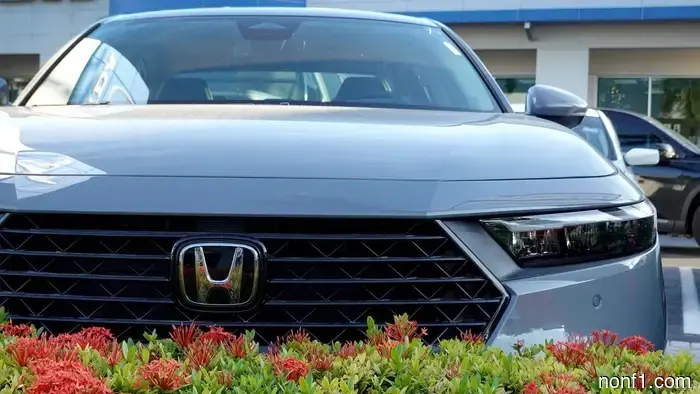 Honda has reportedly postponed the launch of several new models, according to TDS.
Following its decision to phase out electric vehicles, Honda has allegedly chosen to postpone the next-generation replacements for several models, including the outdated Odyssey.
Honda has reportedly postponed the launch of several new models, according to TDS.
Following its decision to phase out electric vehicles, Honda has allegedly chosen to postpone the next-generation replacements for several models, including the outdated Odyssey.
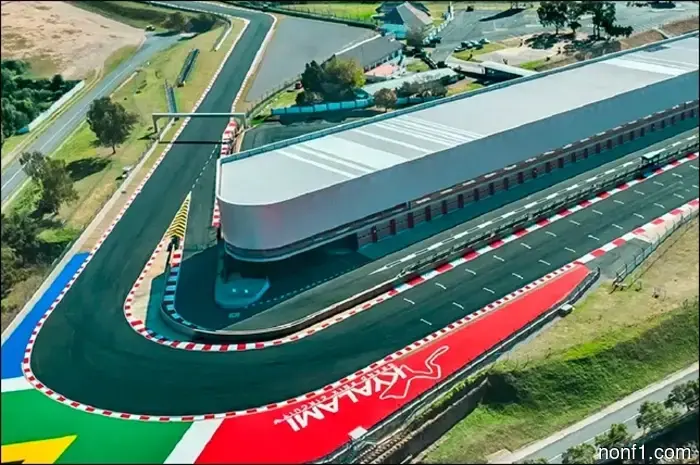 In South Africa, work continues on the return of the Grand Prix.
The President of South Africa, Cyril Ramaphosa, will attend one of the Grand Prix to conduct negotiations...
In South Africa, work continues on the return of the Grand Prix.
The President of South Africa, Cyril Ramaphosa, will attend one of the Grand Prix to conduct negotiations...
 Ford Bronco Sales Are Closing in on the Jeep Wrangler. Will This Be the Year?
The Bronco achieved its highest performance ever in 2025 and is on an even more promising path through April.
Ford Bronco Sales Are Closing in on the Jeep Wrangler. Will This Be the Year?
The Bronco achieved its highest performance ever in 2025 and is on an even more promising path through April.
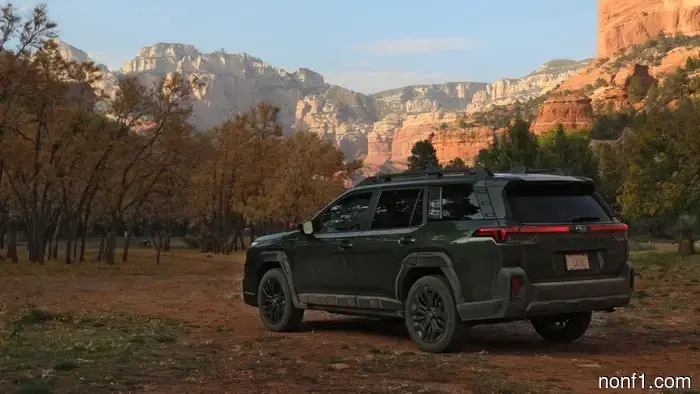 Subaru sales continue to fall short, yet the figures don't capture the complete picture.
In April, the WRX marked Subaru's most significant sales recovery, yet it narrowly surpassed the Solterra EV in sales. What’s the explanation for this?
Subaru sales continue to fall short, yet the figures don't capture the complete picture.
In April, the WRX marked Subaru's most significant sales recovery, yet it narrowly surpassed the Solterra EV in sales. What’s the explanation for this?
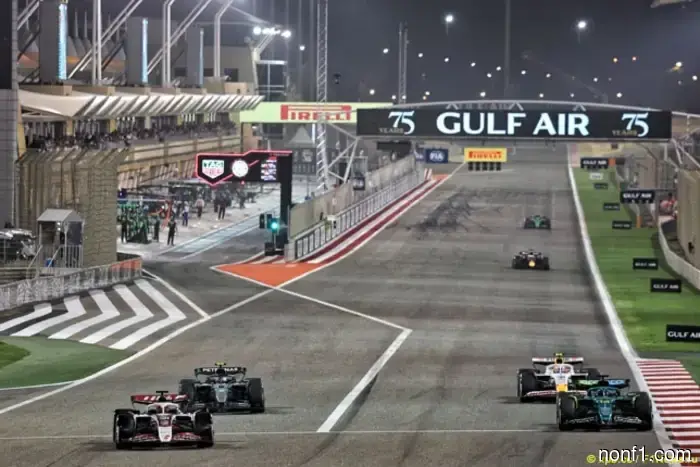 The Bahrain Grand Prix may be moved to October.
Information has appeared in the press about the possible holding of the Bahrain Grand Prix in the fall of 2026.
The Bahrain Grand Prix may be moved to October.
Information has appeared in the press about the possible holding of the Bahrain Grand Prix in the fall of 2026.
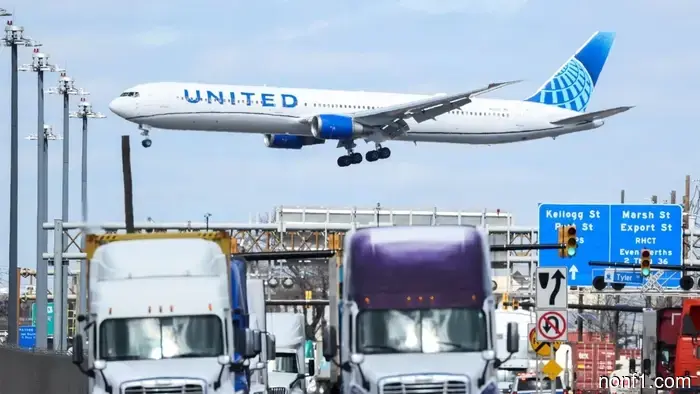 A Boeing 767 nearly landed on a bread-filled tractor trailer. Everyone is fine.
It is reported that a United flight collided with both a light and the roof of a semi-truck on the NJ Turnpike, resulting in only minor injuries to the truck's driver.
A Boeing 767 nearly landed on a bread-filled tractor trailer. Everyone is fine.
It is reported that a United flight collided with both a light and the roof of a semi-truck on the NJ Turnpike, resulting in only minor injuries to the truck's driver.
Martin Brundle on the results of the Miami Grand Prix
Former Formula 1 driver, Sky Sport F1 commentator Martin Brundle summarized the Miami Grand Prix...