

What is better – to increase the tanks or to shorten the race distance?
Yesterday, the FIA unveiled an action plan for the upcoming months – teams and engine manufacturers will rapidly implement changes to the design of power units to meet the 2027 deadline.
The discussion is about abandoning the 50/50 power ratio generated by internal combustion engines and electric systems, shifting this proportion closer to 60/40. However, this is still theoretical, and solving such a task in practice is not straightforward.
To achieve this, a number of challenges must be overcome, as reported by The Race. Sources from the publication indicate that discussions on some key issues have already begun. It is important to understand that the decisions made recently only define the task that needs to be solved, but it is still unclear what specific changes will need to be made to the design of power units and chassis.
However, it is already becoming clear that the energy limit stored by the battery during recuperation will need to be increased – currently, it is set at 350 kW. Additionally, more powerful batteries may be required. Their current capacity is limited to 4 MJ, and one possible solution is to increase the energy storage capacity to 5 MJ.
But in Formula 1, there are no simple solutions, and yesterday's FIA press release hints at this, particularly mentioning an increase in fuel consumption. This means that the fuel tank capacity will also need to be increased to ensure that, despite the higher fuel consumption, it is still sufficient to complete the entire race distance.
However, teams in the championship must operate under limited budgets, and such modifications will inevitably lead to a significant increase in costs. According to The Race, several teams (possibly around half) planned to use nearly the same chassis in the next season as they did in 2026. But if the fuel tank capacity needs to be increased, those plans will have to be abandoned.
Especially if larger capacity batteries are to be installed in the cars. Therefore, some compromises will inevitably have to be made.
Three possible scenarios for the future development of events exist. The essence of the first is that budget limits need to be adjusted, allowing teams to spend more money on the necessary modifications to the cars.
The second option, which would avoid the need to increase fuel tank capacity, involves shortening the race distances. If we assume that fuel consumption is expected to increase by about 10%, then the distance of each Grand Prix would need to be shortened by approximately that amount.
However, there are immediate concerns that reaching an agreement on this will not be easy. Therefore, there is a third scenario, which seems the simplest: to increase fuel consumption only during qualifying, while keeping it at the current level during races.
Then, on Saturdays, car speeds would increase, while on Sundays they would remain as they are now – it seems this would not affect the spectacle of the races.
Which path Formula 1 will take is still unclear, but all necessary decisions must be made fairly soon.
Other articles
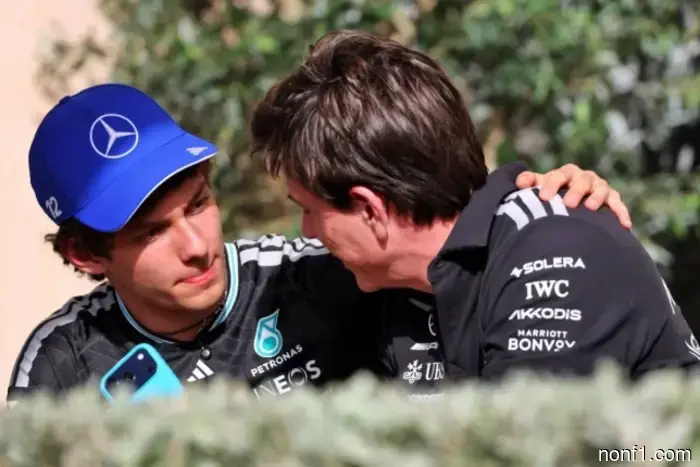 Toto Wolff: Kimi is a diamond that needs to be cut.
The team leader of Mercedes does not hide that he is happy for Kimi Antonelli, but at the same time he is worried about him...
Toto Wolff: Kimi is a diamond that needs to be cut.
The team leader of Mercedes does not hide that he is happy for Kimi Antonelli, but at the same time he is worried about him...
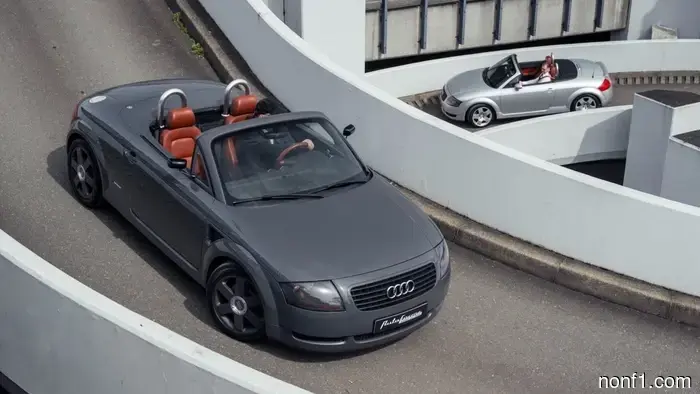 The First-Generation Audi TT Is Already Being Transformed Into a Restomod.
While some restomods prioritize horsepower, this particular one seeks to align the TT Roadster's appearance more closely with the concept car that came before it.
The First-Generation Audi TT Is Already Being Transformed Into a Restomod.
While some restomods prioritize horsepower, this particular one seeks to align the TT Roadster's appearance more closely with the concept car that came before it.
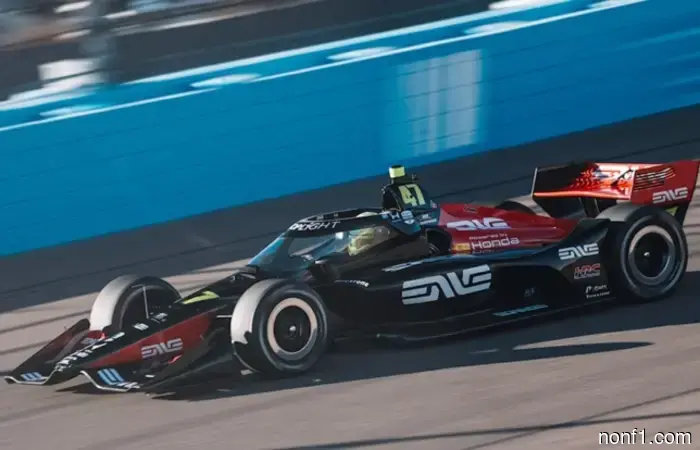 Mick Schumacher: The hype around the Indy 500 doesn't affect me.
In May, Mick Schumacher will make his debut at the Indy 500, but he assures that he views it just as another race of the season...
Mick Schumacher: The hype around the Indy 500 doesn't affect me.
In May, Mick Schumacher will make his debut at the Indy 500, but he assures that he views it just as another race of the season...
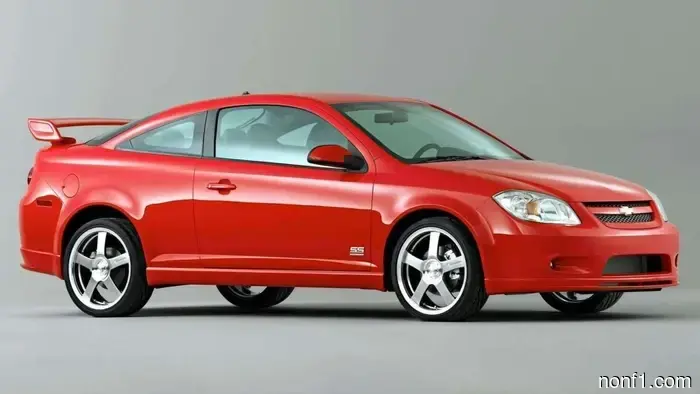 Gen Z Fans Are Fond of Japanese Cars and the Chevy Cobalt SS, According to Hagerty Data
One of these items is different from the rest, yet even the Japanese models aren't what you would anticipate.
Gen Z Fans Are Fond of Japanese Cars and the Chevy Cobalt SS, According to Hagerty Data
One of these items is different from the rest, yet even the Japanese models aren't what you would anticipate.
 Chevy is phasing out the medium-duty Silverado produced by International.
The trucks originate from a joint venture established in 2015, which GM has chosen not to pursue further.
Chevy is phasing out the medium-duty Silverado produced by International.
The trucks originate from a joint venture established in 2015, which GM has chosen not to pursue further.
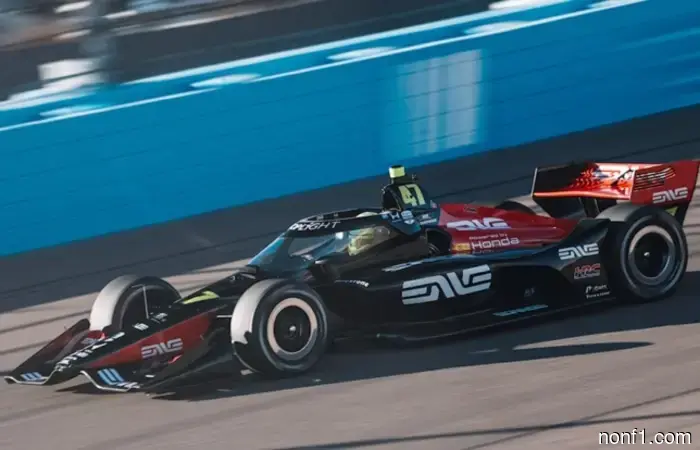 Mick Schumacher: The hype around the Indy 500 doesn't affect me.
In May, Mick Schumacher will make his debut at the Indy 500, but he assures that he views it just as another race of the season...
Mick Schumacher: The hype around the Indy 500 doesn't affect me.
In May, Mick Schumacher will make his debut at the Indy 500, but he assures that he views it just as another race of the season...
What is better – to increase the tanks or to shorten the race distance?
The changes to the regulations, which became known yesterday, will inevitably lead to a number of consequences, and it is still unclear which direction Formula 1 will take...