
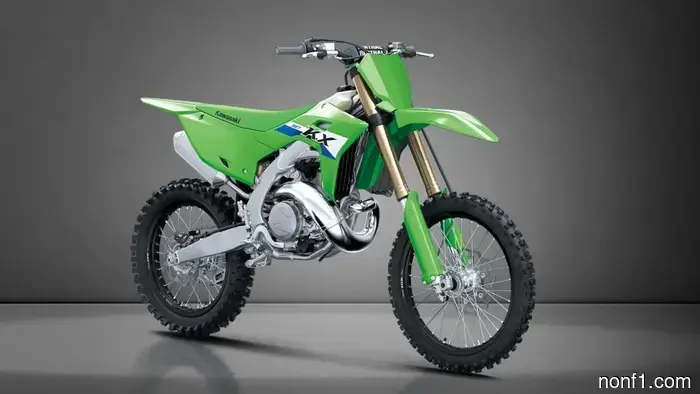
The Big Two-Stroke Dirt Bikes are making a comeback: Kawasaki has announced the KX327, its largest model in over two decades.
Kawasaki
The latest car news and reviews, no nonsense
Our complimentary daily newsletter delivers the important stories straight to your inbox every weekday.
Did you believe that two-stroke motorcycles were disappearing? Kawasaki is happy to announce that this isn't true. The manufacturer known for its green-and-black colors has revealed the KX327 and KX327X, its most powerful two-stroke bikes since the KX500 was discontinued in 2004.
This new engine marks Kawasaki’s inaugural fuel-injected, single-cylinder two-stroke. The company claims this precise fueling method guarantees “smooth, predictable power output from ultra-low to mid rpm.” The starting process is also simplified due to this system.
Two-stroke engines are favored in powersports because they can deliver significant power with minimal displacement. Their characteristic “Ring-ding-ding-ding” sound evokes nostalgia—though many have vanished from the market due to being loud and somewhat polluting.
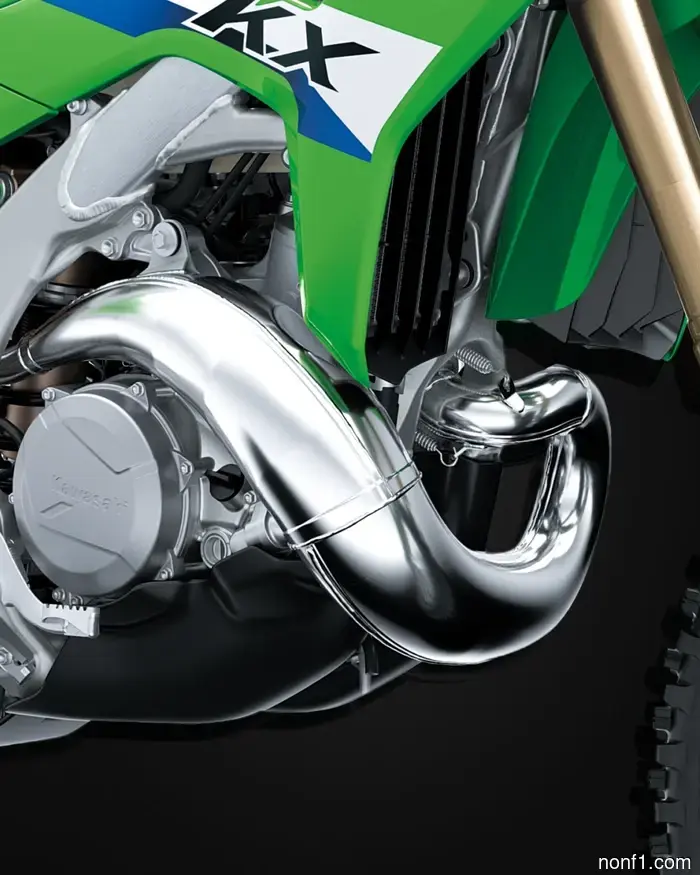
Kawasaki emphasized the exhaust valve system in its announcement. According to the press release, it aims to enhance low-end torque and provide smoother acceleration as engine speed increases. The goal is to make these motorcycles more manageable in challenging conditions, a feature supported by the KX327's close-ratio five-speed gearbox and the KX327X's six-speed that includes an ultra-low first gear.
It appears that the engineers have managed to alleviate the typical weaknesses of two-strokes while preserving their advantages. You can be assured that the throttle response remains incredibly quick, and with such displacement, it’s clear that these bikes will excel at high RPMs.
The KX327 and KX327X even include selectable drive modes, enabling riders to switch between two ECU maps. Although I haven’t ridden a two-stroke since high school, I can confidently say I’ve never experienced a bike with that feature before. (Seeing multiple drive modes on a high-performance sportbike isn’t unusual, but it seems somewhat amusing on a dirt bike.)
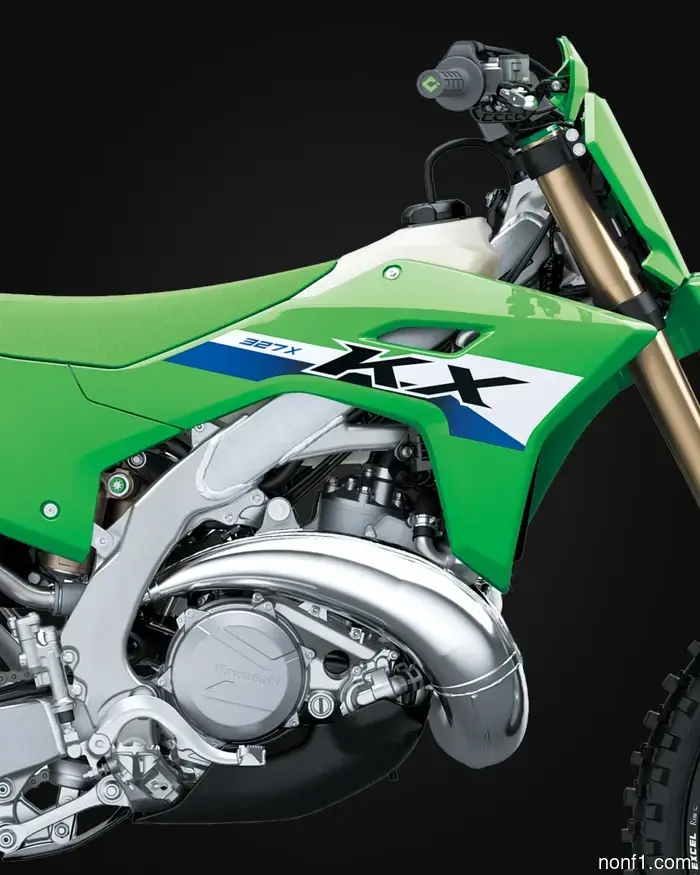
The aluminum perimeter frame takes inspiration from the successful four-stroke KX450F, yet these bikes are approximately six pounds lighter. Both models utilize a 48-millimeter inverted AOS coil-spring fork at the front, while the Uni-Trak rear suspension is designed to help distribute all that power to the ground. Some differences between the motocross and cross-country versions include a 19-inch rear wheel for the non-X model, alongside a full-length skid plate and a larger 2.2-gallon fuel tank on the X variant.
To clarify, these new Kawasaki models are not the biggest two-strokes available today. However, they are quite close. That title currently belongs to the Beta 350RX, and while these models are smaller than the old 500cc two-strokes of the past, the latest group of bikes is undoubtedly impressive. I wouldn’t stand a chance in handling one.
Kawasaki
Deliveries for the KX327 and KX327X are set to begin later in 2026, with the KX327 priced at $9,099 and the KX327X at $9,699.
Have a tip or question for the author? Reach out directly: caleb@thedrive.com
Other articles
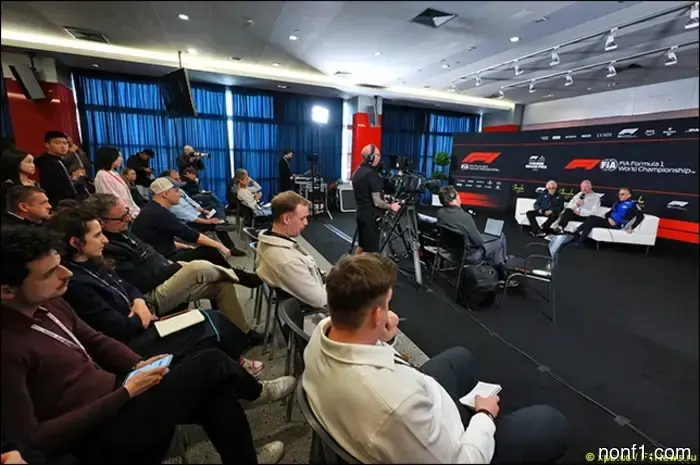 Monaco Grand Prix: Press Conference Schedule
The FIA announced the participants of the official press conferences for the Monaco Grand Prix.
Monaco Grand Prix: Press Conference Schedule
The FIA announced the participants of the official press conferences for the Monaco Grand Prix.
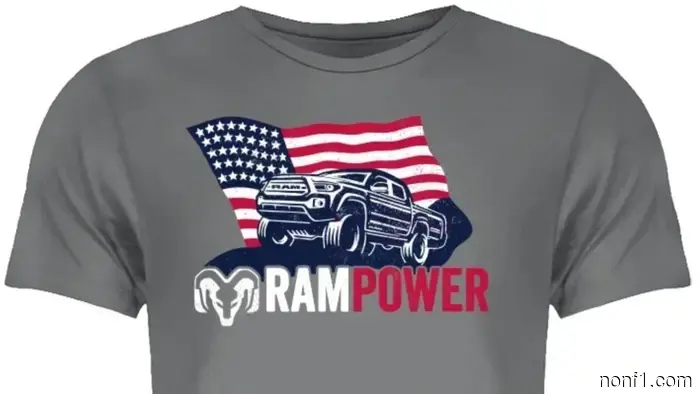 Ram attempted to sell a 'Patriotic T-Shirt' featuring an AI-generated Tacoma and a poorly designed American flag.
That's a cool-looking Ram... oh, hold on.
Ram attempted to sell a 'Patriotic T-Shirt' featuring an AI-generated Tacoma and a poorly designed American flag.
That's a cool-looking Ram... oh, hold on.
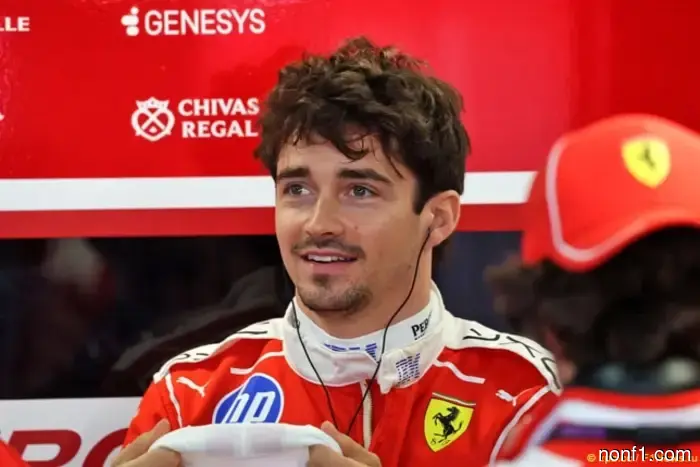 Leclerc will earn almost 200 million euros in 4 years.
The French press managed to find out the terms of Charles Leclerc's new contract with Ferrari and the driver's salary.
Leclerc will earn almost 200 million euros in 4 years.
The French press managed to find out the terms of Charles Leclerc's new contract with Ferrari and the driver's salary.
 Leclerc will earn almost 200 million euros in 4 years.
The French press managed to find out the terms of Charles Leclerc's new contract with Ferrari and the driver's salary.
Leclerc will earn almost 200 million euros in 4 years.
The French press managed to find out the terms of Charles Leclerc's new contract with Ferrari and the driver's salary.
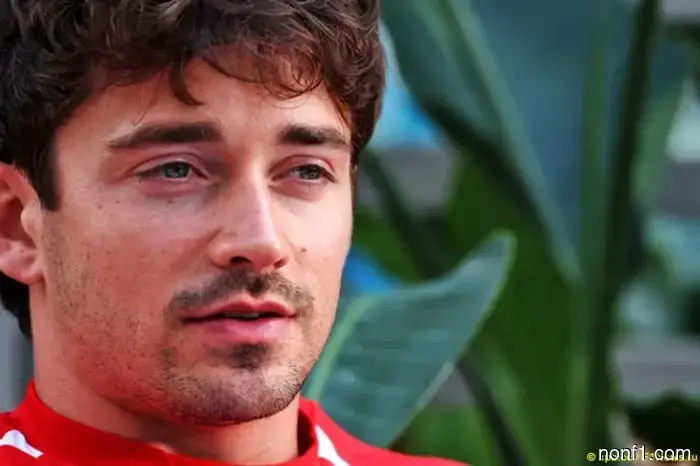 Leclerc: In Monaco, my favorite track and favorite weekend.
The Monaco Grand Prix is a home race for Charles Leclerc. Before the start of the race weekend, Ferrari's press service asked their driver three questions.
Leclerc: In Monaco, my favorite track and favorite weekend.
The Monaco Grand Prix is a home race for Charles Leclerc. Before the start of the race weekend, Ferrari's press service asked their driver three questions.
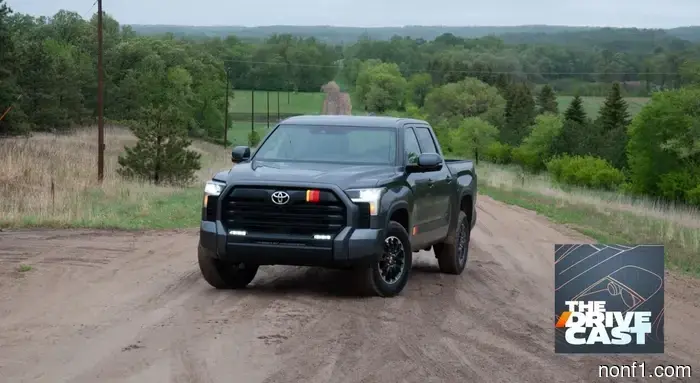 Toyota Established Its Reputation on Dependability. The Tundra May Be Putting That at Risk.
The largest car manufacturer globally has recalled approximately 270,000 engines and still cannot completely clarify the reasons behind their ongoing failures — and this is only the start of the issue.
Toyota Established Its Reputation on Dependability. The Tundra May Be Putting That at Risk.
The largest car manufacturer globally has recalled approximately 270,000 engines and still cannot completely clarify the reasons behind their ongoing failures — and this is only the start of the issue.
The Big Two-Stroke Dirt Bikes are making a comeback: Kawasaki has announced the KX327, its largest model in over two decades.
Kawasaki has not produced a two-stroke motorcycle exceeding 250cc since 2004, but that is about to change.