
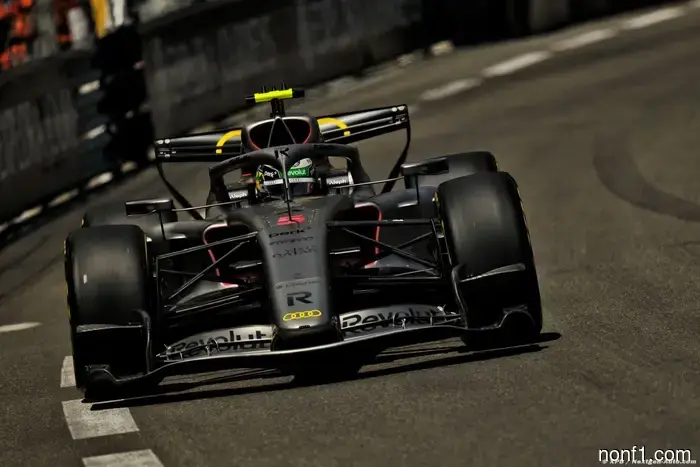
The CEO of Audi defends the company's position in Formula 1 as discussions about the engines progress.
Audi CEO Gernot Dollner has defended the German automaker's stance in the escalating engine debate within Formula 1, asserting that the company is not obstructing a compromise regarding the contentious 2027 regulations. This topic has been a major focus behind the scenes in Monaco, where Formula 1, the FIA, and manufacturers are working on modifications aimed at reducing the criticized energy-management racing that has faced backlash from both drivers and fans.
Audi has often been labeled as one of the manufacturers least keen on substantial regulatory changes, having joined Formula 1 primarily due to the new hybrid framework. However, Dollner stated, "Our position is clear - we fundamentally want predictability." He emphasized, "We only recently entered Formula 1 and have invested significantly in the current powertrain concept," indicating a lack of interest in major short-term alterations.
Dollner refuted claims that Audi is leading the discussions, noting, "We are one of five engine manufacturers in Formula 1. We have one vote and we contribute our position, nothing more." The company favors turbocharged engines over naturally aspirated V8s. "From our point of view, yes," Dollner confirmed when asked if they would prefer to maintain turbo technology. "The efficiency gain through turbocharging is more important to us than the discussion about the number of cylinders." Nonetheless, he clarified that Audi does not have an inherent opposition to V8s. "We have no inherent problems with the V8," he remarked. "Otherwise, it wouldn’t be in the Nuvolari."
Dollner made these comments while unveiling Audi’s new Nuvolari supercar in Monaco and acknowledged the broader transformation underway in both Formula 1 and the automotive sector. "After a very strong focus on electromobility, we’re currently experiencing a certain counter-movement," he noted. "In the long term, electrification will continue to increase, but combustion engines will still play a role in the coming decades."
Despite reports suggesting that teams are nearing a compromise for increased combustion-engine output starting in 2027, key figures in Monaco insisted that no agreements have been reached yet. Cadillac’s Dan Towriss stated, "It’s still a work in progress. There’s nothing written in stone at this point." Flavio Briatore, an advisor for Alpine, echoed this sentiment: "Absolutely the same. Nothing else to tell." Aston Martin representative Pedro de la Rosa added, "We cannot say things we don’t know, really."
Cadillac appears open to whatever direction Formula 1 ultimately takes. Towriss confirmed that General Motors remains committed to launching its planned V6 power unit in 2029 but would also be receptive to a future V8 formula. "We’d be very happy to build a V8 engine as well," he said.
On a separate note, Fernando Alonso expressed significant dissatisfaction with the current regulations. After Friday practice in Monaco, the Aston Martin veteran offered what might be his harshest critique yet, saying, "This is probably the worst generation of cars I’ve ever driven in Monaco." He acknowledged that while Monaco's characteristics have lessened some battery-management issues present in other venues, the fundamental problem persists. "The way you charge the battery with brakes and going off the gas creates a lot of unpredictability in braking on the engine," he explained. "If your battery is completely full, you no longer charge the battery because it is full. Then you don’t have engine braking and it’s like being pushed forward."
For Alonso, the resolution is straightforward. "The problem is just in the rules," he stated. "Hybrid cars simply should not race, period."
Other articles
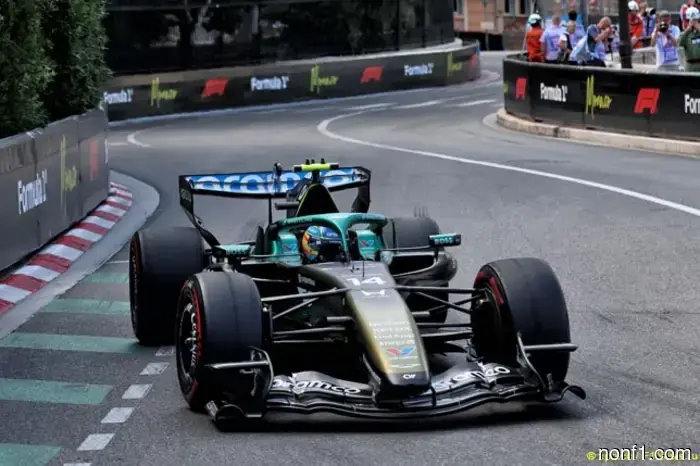 Alonso: We thought it would be a bit easier in Monaco.
Fernando Alonso showed the twentieth time in the second practice of the Monaco Grand Prix. In the comments after the session, the Aston Martin driver mentioned that there were more difficulties than the team had expected.
Alonso: We thought it would be a bit easier in Monaco.
Fernando Alonso showed the twentieth time in the second practice of the Monaco Grand Prix. In the comments after the session, the Aston Martin driver mentioned that there were more difficulties than the team had expected.
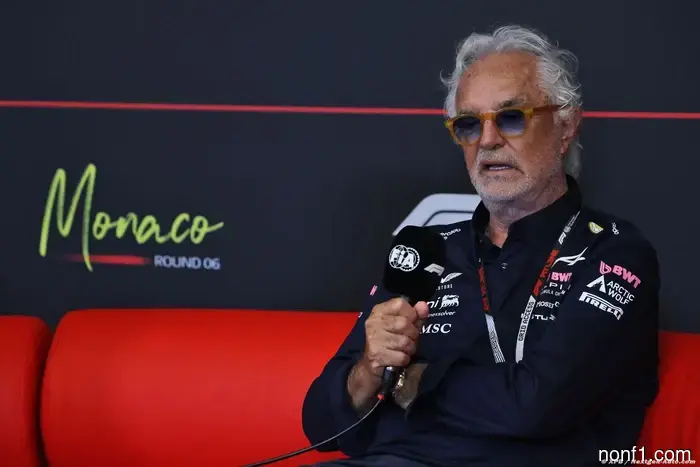 Continued F1 discussions for BYD as connections to Horner remain persistent.
Formula 1 | The Chinese automotive powerhouse BYD has heightened its Formula 1 aspirations, with top executives engaging in discussions in Monaco, while Christian Horner (…)
Continued F1 discussions for BYD as connections to Horner remain persistent.
Formula 1 | The Chinese automotive powerhouse BYD has heightened its Formula 1 aspirations, with top executives engaging in discussions in Monaco, while Christian Horner (…)
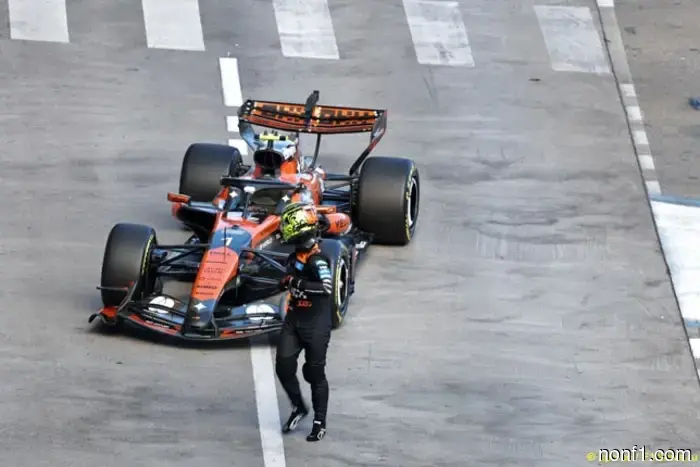 The McLaren team has been fined 30,000 euros.
The McLaren team has been fined 30,000 euros for the failure of the clutch disengagement system (CDS) on Lando Norris's car.
The McLaren team has been fined 30,000 euros.
The McLaren team has been fined 30,000 euros for the failure of the clutch disengagement system (CDS) on Lando Norris's car.
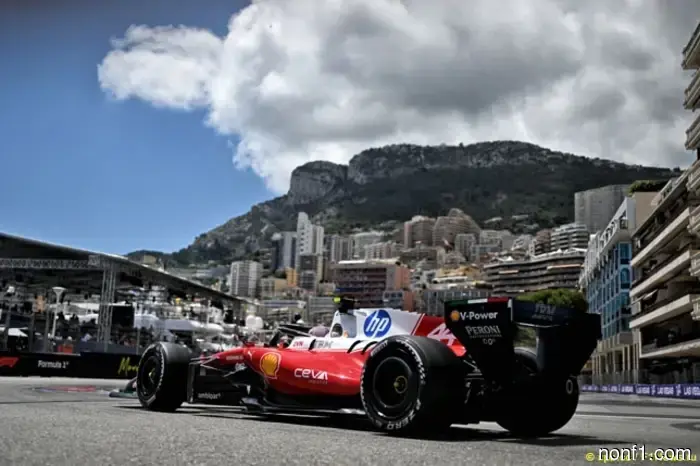 Lewis Hamilton: We believe that we can still improve.
Lewis Hamilton topped the protocol of the second free practice session of the Monaco Grand Prix. Charles Leclerc confirmed Ferrari's speed on the city circuit, finishing eleven hundredths behind his teammate.
Lewis Hamilton: We believe that we can still improve.
Lewis Hamilton topped the protocol of the second free practice session of the Monaco Grand Prix. Charles Leclerc confirmed Ferrari's speed on the city circuit, finishing eleven hundredths behind his teammate.
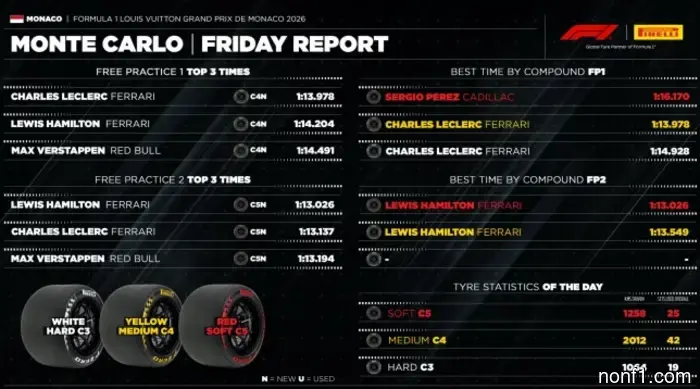 Simone Berra: The C4 and C5 compositions work quite stably.
Pirelli tire manufacturers summarized the first day of practice on the track in Monaco, where the Ferrari drivers were the fastest, but Max Verstappen in the Red Bull Racing car lost to them by just a little...
Simone Berra: The C4 and C5 compositions work quite stably.
Pirelli tire manufacturers summarized the first day of practice on the track in Monaco, where the Ferrari drivers were the fastest, but Max Verstappen in the Red Bull Racing car lost to them by just a little...
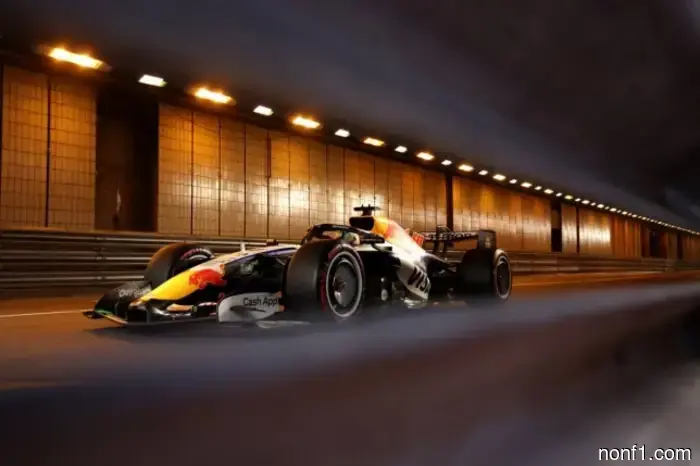 Alan Permain: It's not worth dramatizing the situation.
The Racing Bulls team started the weekend in Monaco not in the best way, however, team leader Alan Permain is confident that the situation can still be corrected...
Alan Permain: It's not worth dramatizing the situation.
The Racing Bulls team started the weekend in Monaco not in the best way, however, team leader Alan Permain is confident that the situation can still be corrected...
The CEO of Audi defends the company's position in Formula 1 as discussions about the engines progress.
Formula 1 | Audi's CEO Gernot Dollner has supported the German brand's stance in the escalating engine discussion within Formula 1, affirming that the company is not (…)