
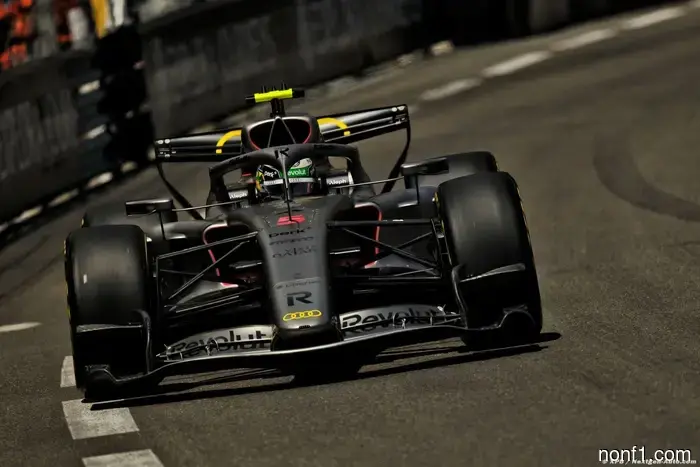
The CEO of Audi supports the company's position on Formula 1 as discussions about engine specifications progress.
Audi CEO Gernot Dollner has defended the German brand’s stance in the growing engine debate within Formula 1, stating that the company is not obstructing a compromise regarding the contentious 2027 regulations. This topic has been a major point of discussion behind the scenes in Monaco, where Formula 1, the FIA, and manufacturers are working on adjustments aimed at minimizing the unpopular energy-management racing that has faced backlash from both drivers and fans.
Audi has often been seen as one of the manufacturers least keen on significant rule changes, having entered Formula 1 mainly due to the new hybrid regulations. However, Dollner clarified: "Our position is clear - we fundamentally want predictability." He noted, "We have just recently entered Formula 1 and made substantial investments in the current powertrain concept. Thus, we have little interest in major short-term changes."
Dollner refuted claims that Audi is leading the discussions. "We are one of five engine manufacturers in Formula 1," he explained. "We hold one vote and present our stance, nothing more." Audi favors turbocharged engines over naturally aspirated V8s. "From our perspective, yes," Dollner replied when asked about the company's preference for maintaining turbo technology. "The efficiency gained from turbocharging is more important to us than the discussion regarding the number of cylinders." Nonetheless, he emphasized that Audi is not intrinsically against V8s. "We have no inherent issues with the V8," he commented. "Otherwise, it wouldn’t be in the Nuvolari."
Dollner was in Monaco for the launch of Audi’s new Nuvolari supercar and recognized the broader transformations occurring in both Formula 1 and the automotive sector. "After a strong emphasis on electromobility, we are currently seeing a certain counter-movement," he mentioned. "Long-term, electrification will continue to advance, but combustion engines will still have a role in the coming decades."
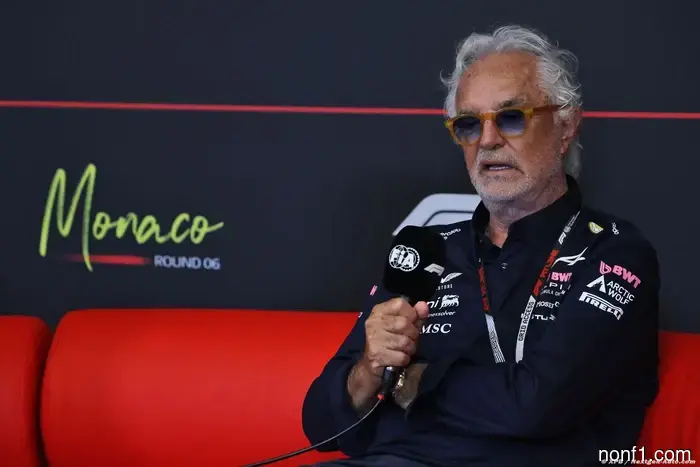
Despite indications that teams are nearing a consensus on increasing combustion-engine output from 2027, key figures in Monaco asserted that no agreement has been reached. "It’s still a work in progress," stated Cadillac’s Dan Towriss. "There’s nothing set in stone at this moment." Alpine advisor Flavio Briatore concurred, saying, "Absolutely the same. Nothing else to tell." Aston Martin representative Pedro de la Rosa added, "We cannot comment on things we do not know, really."
Cadillac appears receptive to any direction Formula 1 chooses. Towriss confirmed that General Motors is still committed to launching its proposed V6 power unit in 2029 but would also be happy with a future V8 formula. "We’d be very happy to build a V8 engine as well," he stated.
Meanwhile, one driver who remains dissatisfied with the current regulations is Fernando Alonso. After Friday practice in Monaco, the Aston Martin veteran expressed perhaps his strongest critique to date, saying, "This is probably the worst generation of cars I’ve ever driven in Monaco," commented the 44-year-old Spaniard. Although Monaco’s layout has alleviated some of the battery-management issues seen elsewhere, Alonso insists that the fundamental problem persists. "The method of charging the battery with brakes and off-throttle driving leads to a lot of unpredictability in braking on the engine," he explained. "When your battery is completely charged, you stop charging it. Then you lack engine braking, and it feels as though you’re being pushed forward."
For Alonso, the answer is straightforward. "The problem lies within the rules," he stated. "Hybrid cars simply should not race, period."
Other articles
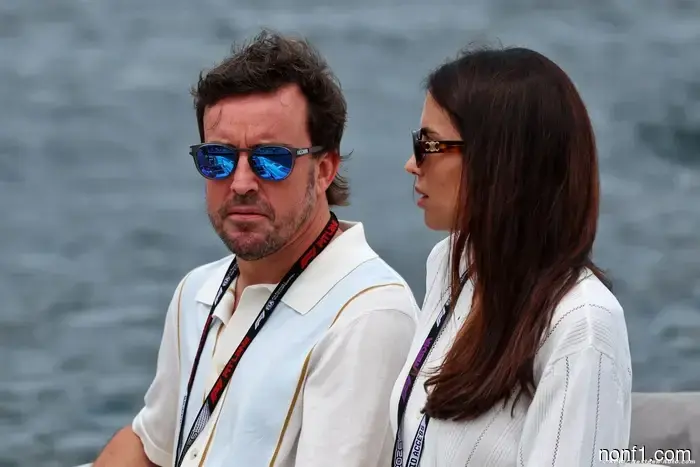 Jimenez makes a comeback as Alonso alleviates tensions at DAZN.
Formula 1 | Fernando Alonso seems to have resolved his media standoff with Spanish broadcaster DAZN following the return of his partner Melissa Jimenez from maternity leave (…)
Jimenez makes a comeback as Alonso alleviates tensions at DAZN.
Formula 1 | Fernando Alonso seems to have resolved his media standoff with Spanish broadcaster DAZN following the return of his partner Melissa Jimenez from maternity leave (…)
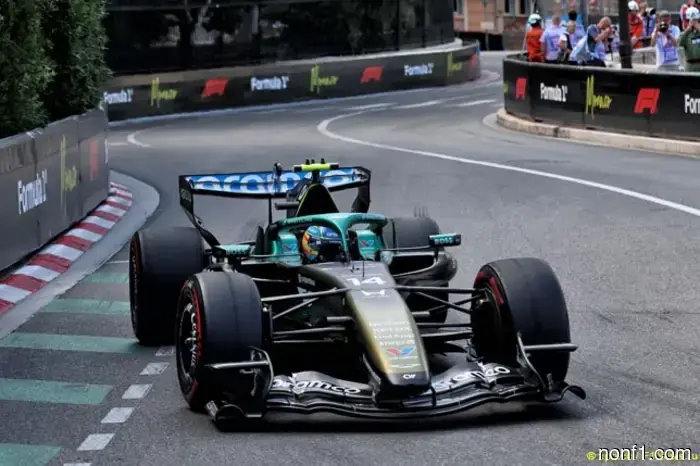 Alonso: We thought it would be a bit easier in Monaco.
Fernando Alonso showed the twentieth time in the second practice of the Monaco Grand Prix. In the comments after the session, the Aston Martin driver mentioned that there were more difficulties than the team had expected.
Alonso: We thought it would be a bit easier in Monaco.
Fernando Alonso showed the twentieth time in the second practice of the Monaco Grand Prix. In the comments after the session, the Aston Martin driver mentioned that there were more difficulties than the team had expected.
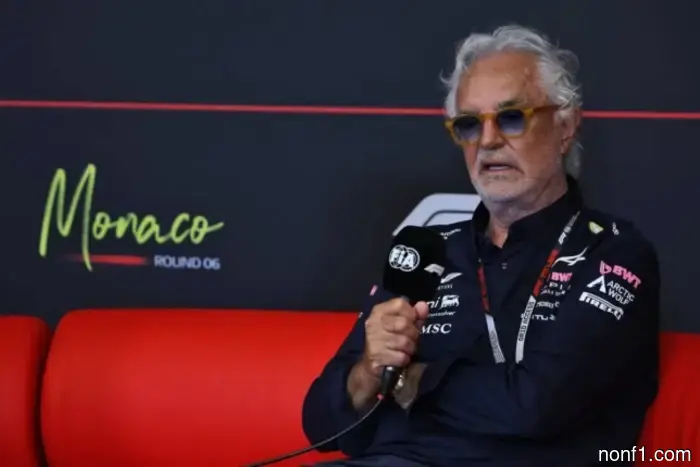 Briatore: Otro – a problem for Renault Group, not the team.
Mercedes has withdrawn from further participation in negotiations to acquire 24% of the shares of the Alpine F1 team, and Flavio Briatore was asked to comment on this...
Briatore: Otro – a problem for Renault Group, not the team.
Mercedes has withdrawn from further participation in negotiations to acquire 24% of the shares of the Alpine F1 team, and Flavio Briatore was asked to comment on this...
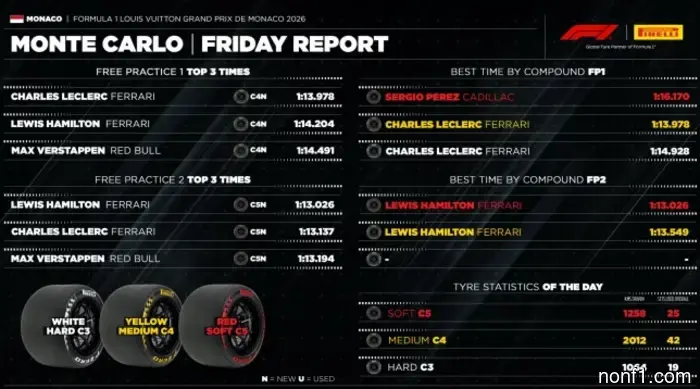 Simone Berra: The C4 and C5 compositions work quite stably.
Pirelli tire manufacturers summarized the first day of practice on the track in Monaco, where the Ferrari drivers were the fastest, but Max Verstappen in the Red Bull Racing car lost to them by just a little...
Simone Berra: The C4 and C5 compositions work quite stably.
Pirelli tire manufacturers summarized the first day of practice on the track in Monaco, where the Ferrari drivers were the fastest, but Max Verstappen in the Red Bull Racing car lost to them by just a little...
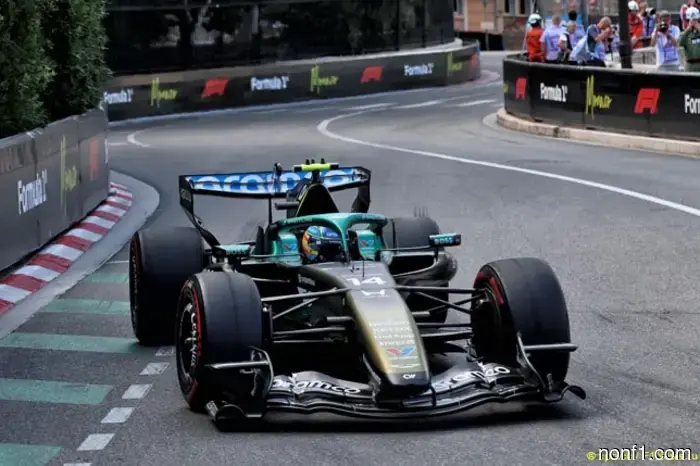 Alonso: We thought it would be a little easier in Monaco.
Fernando Alonso showed the twentieth time in the second practice of the Monaco Grand Prix. In the comments after the session, the Aston Martin driver mentioned that there were more difficulties than the team had expected.
Alonso: We thought it would be a little easier in Monaco.
Fernando Alonso showed the twentieth time in the second practice of the Monaco Grand Prix. In the comments after the session, the Aston Martin driver mentioned that there were more difficulties than the team had expected.
 Continued F1 discussions for BYD as connections to Horner remain persistent.
Formula 1 | The Chinese automotive powerhouse BYD has heightened its Formula 1 aspirations, with top executives engaging in discussions in Monaco, while Christian Horner (…)
Continued F1 discussions for BYD as connections to Horner remain persistent.
Formula 1 | The Chinese automotive powerhouse BYD has heightened its Formula 1 aspirations, with top executives engaging in discussions in Monaco, while Christian Horner (…)
The CEO of Audi supports the company's position on Formula 1 as discussions about engine specifications progress.
Formula 1 | Audi CEO Gernot Dollner has backed the German brand's stance in the intensifying engine discussion within Formula 1, asserting that the company is not (…)