
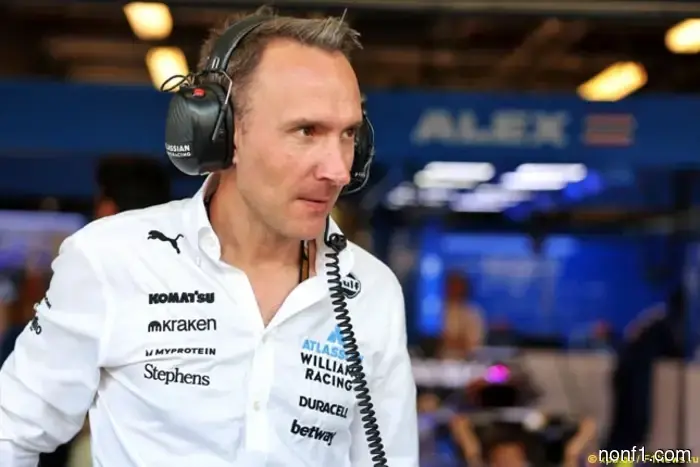
Paul Williams on the features of the track in Barcelona
The chief engineer of the Williams racing team, Paul Williams, spoke about the technical factors that could influence the course and outcomes of the Barcelona-Catalonia Grand Prix.
Question: What are the main technical challenges teams face in Barcelona?
Paul Williams: The asymmetric configuration of the track, with fast right turns and slow to medium-speed left turns, creates one-sided loads and uneven tire wear. In such conditions, there are opportunities for asymmetric chassis setups.
The front wheels often lock up in the fifth, seventh, and tenth turns, which are left turns, requiring careful management of brake balance and corner entry control.
Additionally, the track has limited overtaking opportunities, as it is quite difficult to closely follow an opponent's car exiting the thirteenth and fourteenth turns. Therefore, qualifying and track position remain critically important, despite the long run to the first turn.
Question: Does the 2026 regulations affect the approach to work during the weekend?
Paul Williams: Barcelona is a challenging track in terms of energy management. There are several fast corners followed by long straights. Navigating the corners with the throttle fully down or lifting off the throttle significantly affects the optimal energy distribution strategy throughout the lap. We expect a lot of super clipping during the race, and drivers may use coasting movements for control. In the last races, there was no such necessity.
Question: How challenging is the track for tires in Barcelona?
Paul Williams: Compared to 2025, we will have softer compounds – C2, C3, and C4, which is quite an aggressive choice for Barcelona, traditionally known for high wear.
Here, tires experience high lateral loads with relatively low loads during braking and acceleration. In the third, ninth, thirteenth, and fourteenth turns, there are very high loads on the left front and rear tires, leading to significant wear and overheating. This is the "toughest" track of the season since the winter tests in Bahrain, which exacerbates mechanical wear and overheating. In qualifying, it is difficult to make the tires last an entire lap, so this is clearly a track for a single fast lap.
Question: What strategy options are possible in the race?
Paul Williams: We expect a race with two pit stops. The pit stop windows are quite wide, so teams will have to choose between early aggressive pit stops, losing time on the distance, or a more time-optimized strategy with the risk of losing position on the track.
The likelihood of a real or virtual safety car is average. Its deployment around the middle of the distance could lead to part of the peloton switching to a three-stop strategy.
Other articles
 Ferrari's regret deepens as Antonelli's momentum continues to rise.
Formula 1 | As Kimi Antonelli's impressive title pursuit gains traction, inquiries are once more arising regarding why Ferrari did not manage to secure Italy's most (…)
Ferrari's regret deepens as Antonelli's momentum continues to rise.
Formula 1 | As Kimi Antonelli's impressive title pursuit gains traction, inquiries are once more arising regarding why Ferrari did not manage to secure Italy's most (…)
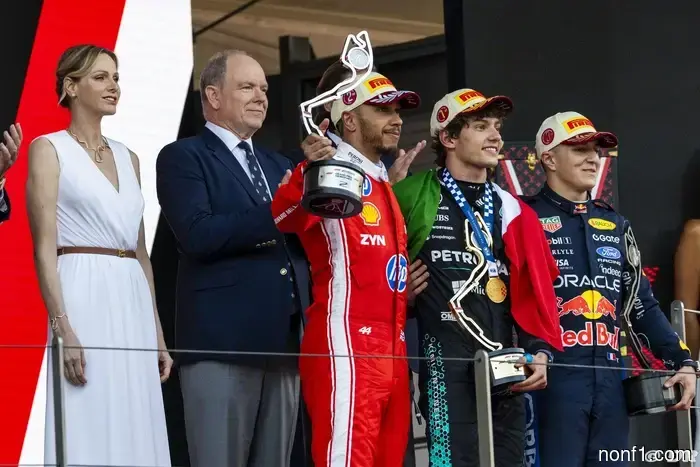 Ferrari's regrets increase as Antonelli's momentum persists.
Formula 1 | As Kimi Antonelli's impressive title pursuit gains traction, inquiries are once more arising regarding why Ferrari did not manage to secure Italy's most (…)
Ferrari's regrets increase as Antonelli's momentum persists.
Formula 1 | As Kimi Antonelli's impressive title pursuit gains traction, inquiries are once more arising regarding why Ferrari did not manage to secure Italy's most (…)
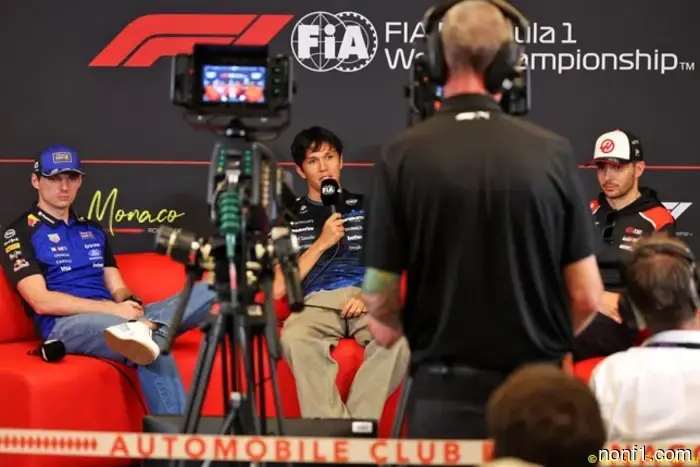 Barcelona Grand Prix: Press Conference Schedule
The FIA announced the lineup of participants for the official press conferences of the Barcelona-Catalonia Grand Prix.
Barcelona Grand Prix: Press Conference Schedule
The FIA announced the lineup of participants for the official press conferences of the Barcelona-Catalonia Grand Prix.
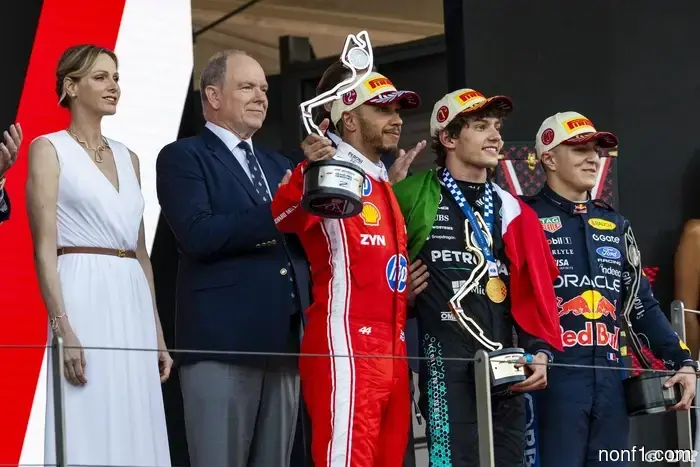 Honda denies having any objections to the changes in F1 engine regulations.
Formula 1 | Honda has rebutted claims that it is obstructing the proposed engine changes for 2027, while also indicating its willingness to engage in discussions about (…)
Honda denies having any objections to the changes in F1 engine regulations.
Formula 1 | Honda has rebutted claims that it is obstructing the proposed engine changes for 2027, while also indicating its willingness to engage in discussions about (…)
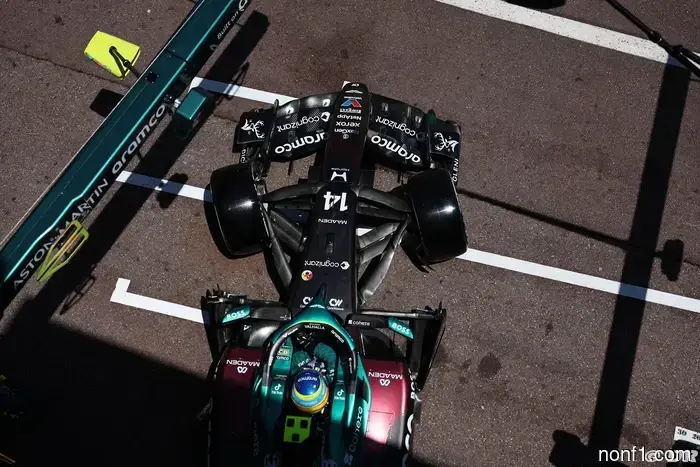 Improved Aston Martin 'chassis' is on the way - de la Rosa
Formula 1 | Adrian Newey has finally spoken out in Monaco regarding Aston Martin's poor beginning to 2026, asserting that a significant upgrade package is forthcoming. (...)
Improved Aston Martin 'chassis' is on the way - de la Rosa
Formula 1 | Adrian Newey has finally spoken out in Monaco regarding Aston Martin's poor beginning to 2026, asserting that a significant upgrade package is forthcoming. (...)
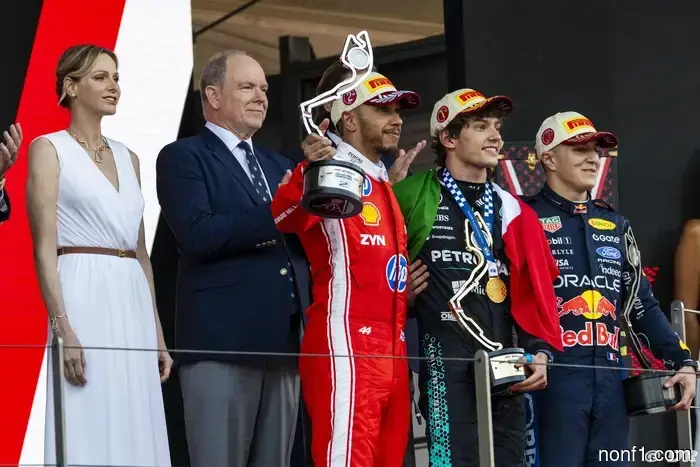 Ferrari's regrets deepen as Antonelli's rise persists.
Formula 1 | As Kimi Antonelli's impressive title pursuit gains traction, there are renewed inquiries into why Ferrari has not managed to capture Italy's most (…)
Ferrari's regrets deepen as Antonelli's rise persists.
Formula 1 | As Kimi Antonelli's impressive title pursuit gains traction, there are renewed inquiries into why Ferrari has not managed to capture Italy's most (…)
Paul Williams on the features of the track in Barcelona
The chief engineer of the Williams racing team, Paul Williams, spoke about the technical factors that could influence the course and results of the Barcelona-Catalonia Grand Prix.