
Why No One Seems to Be Accountable for Repairing Your Street: An Explanation
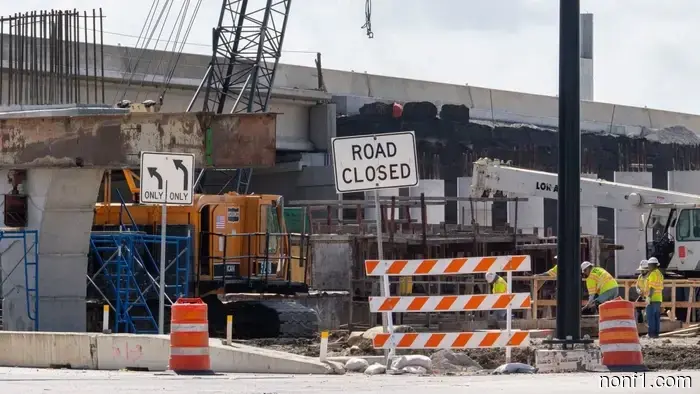
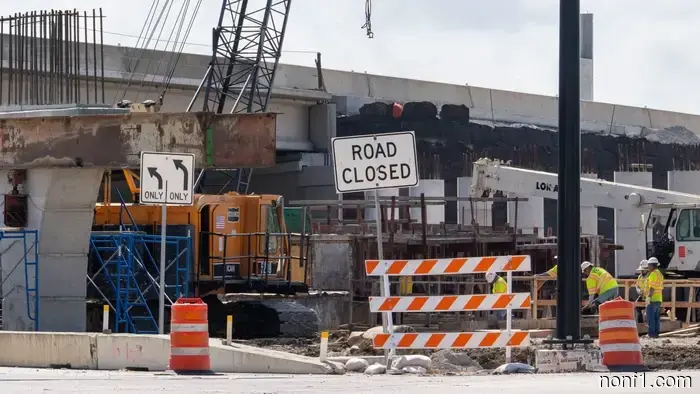
LA MARQUE, TX - MAY 13: Construction workers and equipment can be seen looking south on I-45 Gulf Freeway South as roadwork continues in La Marque on Tuesday, May 13, 2025.
Kirk Sides/Houston Chronicle via Getty Images
The most significant automotive news and reviews, no fluff.
Subscribe to our free daily newsletter for the essential stories sent directly to your inbox every weekday.
Who finances your street? Often, it’s homeowners, rather than local governments, who shoulder the burden of street maintenance.
A brief history of street development. Streets were frequently constructed by developers before being taken over by municipalities, which influences who is responsible for their upkeep.
Costs associated with road construction and maintenance. Constructing a two-lane road can range from $1 to $5 million, with maintenance costs differing by location and materials used.
Mechanisms for road funding. Roads can be financed through private, public, or mixed models, with taxpayers ultimately covering the expenses.
In summary: Grasping who is accountable for street costs uncovers a complicated blend of historical developments, funding models, and homeowner obligations.
AI-assisted, editor-reviewed
As a suburban homeowner, I reside on an asphalt-paved street with tidy concrete sidewalks flanked by old maple trees. Like many others in my situation, I have complaints about the condition of my street, especially following the harsh winter we had in the Midwest. Potholes are popping up everywhere, and it would be great to see them repaired.
Having lived in the neighborhood for only a few years, I was unsure who to approach about this issue, so I inquired with neighbors. Some suggested it was the county's responsibility; others indicated it fell to the township. A few merely responded with a knowing smile. I decided to investigate who exactly is financially accountable for the street I use daily.
This single concern led me to explore the intricate world of how street infrastructure is funded in America. So, who is responsible for fixing the mess outside? It turns out that the answer is me.
Who constructed your street?
Do you know who constructed the street you reside on? Finding the answer may require more research than you expect; typically, it depends on when and where your home was built. If you live on a significant street, tracing its history may be easier. Passionate infrastructure enthusiasts across America meticulously document these details.
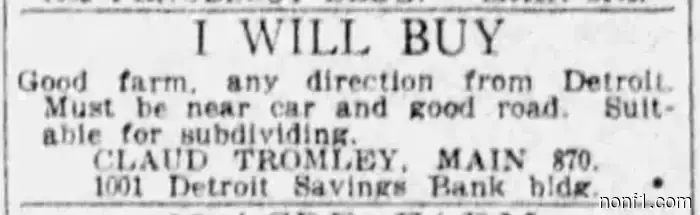
If you reside on a quieter, two-lane road, as many Americans do, finding information can be trickier. However, the developer-improvement model has been around for quite some time. Over a century ago, farms were frequently developed into new single-family home tracts, akin to today’s trends. Numerous subdivisions that are now integrated into larger cities were once rural land. The rapid expansion of streetcar lines in the late 19th and early 20th centuries made these "remote" areas accessible for people without horses or cars. Speculators capitalized on this by acquiring farmland to divide into single-family neighborhoods.
An advertisement from 1921. “Car” denotes a streetcar line. Detroit Free Press, February 23, 1921, Page 17, via Newspapers.com
Amenities such as gas, electricity, public water, and sewer systems were highly sought after in communities built during the pre-Depression housing boom. They attracted buyers who anticipated that these neighborhoods would be incorporated into nearby urban areas. In the early 1900s and leading up to the late 1920s economic slump that preceded the Great Depression, annexation was happening swiftly across the country. As a result, annexing municipalities became responsible for the debts of the areas annexed, while benefiting from a larger tax base and increased borrowing capacity for further expansion.
To accomplish this, cities borrowed against their increasing values to rapidly develop infrastructure in the first half of the 20th century. The Great Depression was only a minor setback; in fact, many urban areas owe their completed infrastructure to the New Deal, which addressed much of what was left unfinished during the 1920s. During World War II, some citizens were even encouraged to forfeit bonds they had bought to finance expansion two decades earlier, effectively eliminating that debt.
What else is hidden beneath?
In many cases, early 20th-century real estate developers were also responsible for constructing the streetcar lines themselves, along with amenities located at the residential end of the line, such as parks and recreational spaces; the opposite end typically housed major labor centers. In between would be shops, offices, and other bustling properties, often owned by the same developer. It was a classic example of vertical integration!
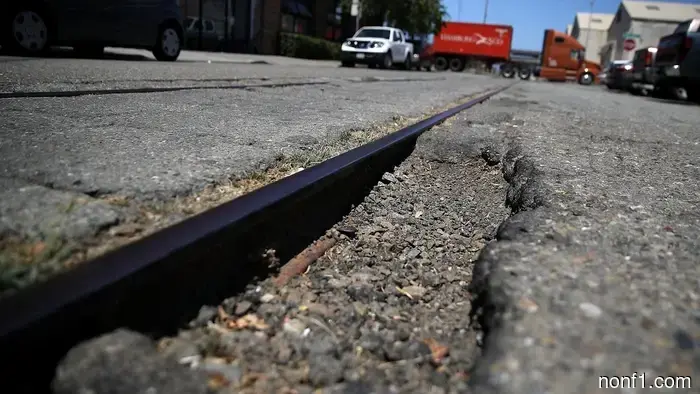
Like the roads themselves, streetcar lines were eventually consolidated under different private firms or were acquired (often post-bankruptcy) by public transit authorities—another financial burden that ultimately fell on taxpayers. The rise of the automobile led many of these businesses to fail, but remnants of these lines continue to exist beneath contemporary urban streets—an additional consideration
Other articles
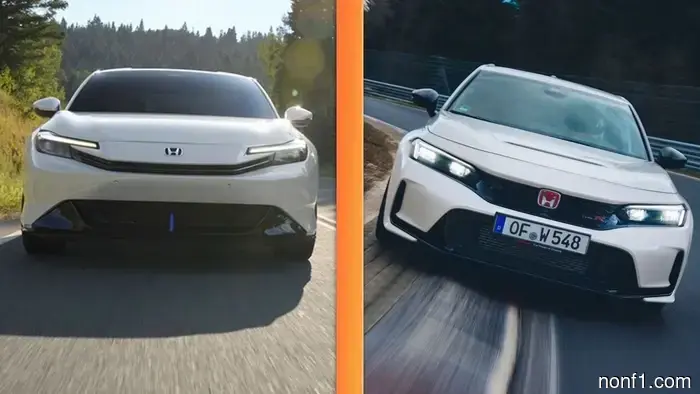 Here’s the reason why the Honda Prelude and Civic Type R have gas caps while other models do not.
It turns out that there are many more similarities between the two Japanese enthusiast cars than we were initially informed.
Here’s the reason why the Honda Prelude and Civic Type R have gas caps while other models do not.
It turns out that there are many more similarities between the two Japanese enthusiast cars than we were initially informed.
 BMW Dealer Required to Pay an Additional $5,000 for Used X3 Due to AI Chatbot Mistake
Utilizing AI instead of a human salesperson significantly impacted this dealership's profitability.
BMW Dealer Required to Pay an Additional $5,000 for Used X3 Due to AI Chatbot Mistake
Utilizing AI instead of a human salesperson significantly impacted this dealership's profitability.
 In India, they are analyzing the prospects of the return of the F1 race.
The Ministry of Sports of India has decided to create a commission that will analyze the state of affairs in national motorsport in the context of efforts to bring Formula 1 racing back to the country...
In India, they are analyzing the prospects of the return of the F1 race.
The Ministry of Sports of India has decided to create a commission that will analyze the state of affairs in national motorsport in the context of efforts to bring Formula 1 racing back to the country...
 Claire Williams is worried about George Russell.
Before the start of the season, Claire Williams was confident that George Russell was the main contender for the title. But now, with seven Grands Prix behind, she has to slightly adjust her opinion...
Claire Williams is worried about George Russell.
Before the start of the season, Claire Williams was confident that George Russell was the main contender for the title. But now, with seven Grands Prix behind, she has to slightly adjust her opinion...
 2026 Chevrolet Corvette E-Ray Brief Review: Underrated and Excellent
The all-wheel-drive hybrid Corvette is not what you might expect. It's actually much more impressive.
2026 Chevrolet Corvette E-Ray Brief Review: Underrated and Excellent
The all-wheel-drive hybrid Corvette is not what you might expect. It's actually much more impressive.
 Formula E: Jake Dennis's victory and Pepe Marti's podium
The Formula E race on the urban circuit on the Chinese island of Hainan promised to be hot in every sense – the air temperature reached +33 degrees by the start, and the asphalt heated up to 64 degrees...
Formula E: Jake Dennis's victory and Pepe Marti's podium
The Formula E race on the urban circuit on the Chinese island of Hainan promised to be hot in every sense – the air temperature reached +33 degrees by the start, and the asphalt heated up to 64 degrees...
Why No One Seems to Be Accountable for Repairing Your Street: An Explanation
Gas taxes, highway funds, and local budgets are all lacking — which means you end up footing the bill for your street.