
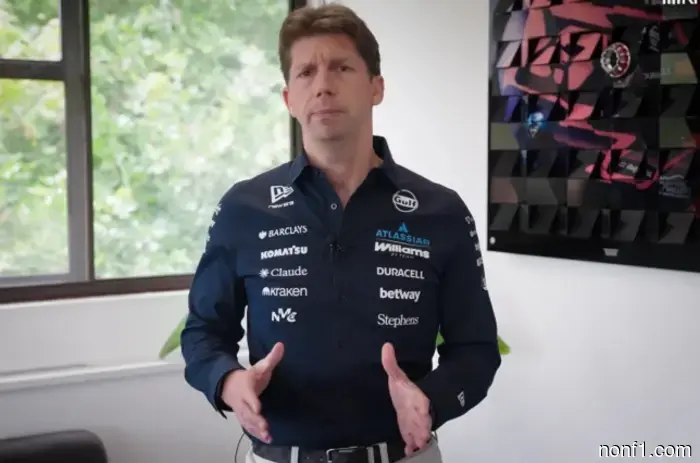
James Vowles: There is still time to solve problems.
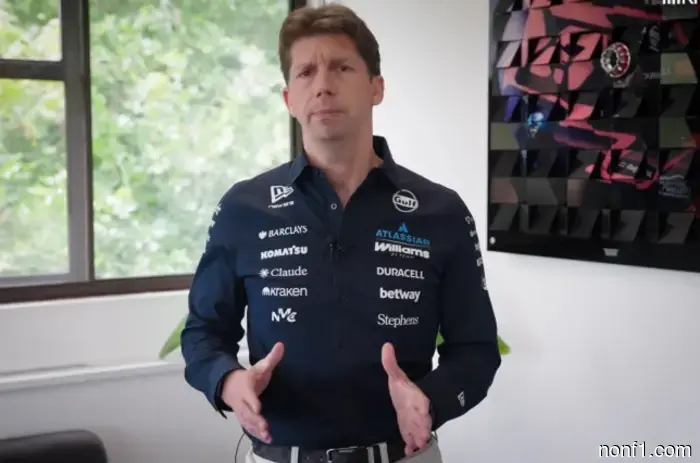
James Vowles, head of the Williams team, summarized the grim results of the Barcelona-Catalonia Grand Prix and answered a couple of questions from fans...
James Vowles: The weekend in Barcelona was incredibly challenging. The car was not fast enough, and we also faced quite a few issues regarding technical reliability. All of this simply does not meet our standards or the standards we strive for.
But it is important that we discovered quite a few new aspects related to the car's performance that manifested specifically in Barcelona. The conclusions we have drawn will influence the team's further work, as preparations for the FW48 upgrade continue at Williams, and we must ensure that such difficulties do not recur.
Before this, in Miami, Montreal, and Monaco, on three different types of tracks, we saw that the car was capable of decent speed, which allowed us to earn points. However, in Barcelona, the weaknesses of this chassis became apparent, and some of them we have been talking about for a long time, such as the car's excessive weight, and in hot weather conditions, all of this put us at a disadvantage.
And this is just a small part of what went wrong last weekend. But please believe me, we are preparing to improve the efficiency of the FW48, which will happen gradually; we expect that already in Silverstone we will be able to make some progress, but a more significant step in this direction will be made closer to the stage in Baku.
I expect that in the upcoming races, the weaknesses of the car will not be as noticeable as in Barcelona, although some problems cannot be solved quickly.
Question: Why did the car's deficiencies manifest specifically in Barcelona?
James Vowles: This is not the first time this has happened; we have been facing this for several years. From Williams' history, I remember that the last time the team showed a good result in Barcelona was in 2012 (when Pastor Maldonado won the race driving the FW34), but then the characteristics of the track might have suited that car. However, now our approach to work, how we envision the overall concept of the chassis, largely does not meet what is required from the car in Barcelona.
Drivers need the right balance when navigating corners, starting from braking, entering them, to the apex and exiting the corner. Usually, this is a quite predictable sequence, but in Barcelona, all the weaknesses of the chassis immediately become apparent, and this can happen at any of these stages. And we have quite a few such weaknesses. But I repeat, the positive aspect is that we have identified three or four issues that we had not paid attention to before. And all of this is quite fixable.
Question: How do you plan to reduce the gap from the teams that are currently ahead of Williams?
James Vowles: In the three races preceding Barcelona, we managed to earn points, but last weekend we faced a setback, which is related to certain characteristics of the track and a number of deficiencies in the car. Of course, we have a plan to address these deficiencies, and the team is preparing a whole range of decent technical innovations.
They will not all be implemented at once; some we will present in Silverstone, some will be postponed until Spa, and some will be ready after the August break. But after this break, we intend to implement a whole set of improvements. You could say we will present a significantly updated car when there are still nine races left in the season, so I want to say that we still have time to solve the problems.
Other articles
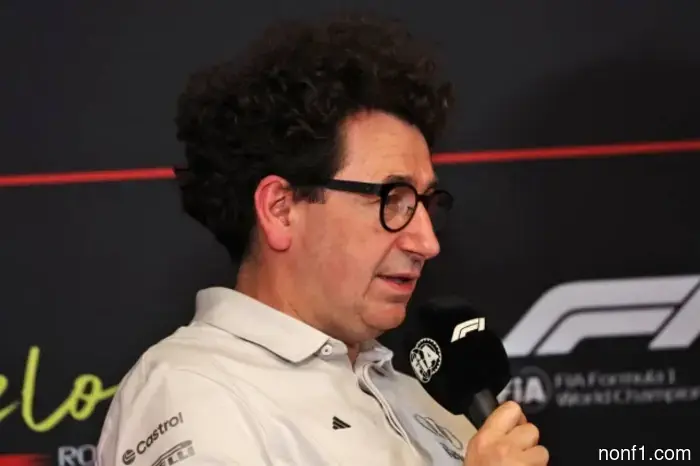 Mattia Binotto proposes to change the ADUO system.
Mattia Binotto proposed to adjust the ADUO program to better align with the 2026 technical regulations...
Mattia Binotto proposes to change the ADUO system.
Mattia Binotto proposed to adjust the ADUO program to better align with the 2026 technical regulations...
 Vatanabe: There will be no significant and rapid changes.
Honda hopes that in this new chapter of history, now associated with Aston Martin, they will gradually be able to return to their previous level of results...
Vatanabe: There will be no significant and rapid changes.
Honda hopes that in this new chapter of history, now associated with Aston Martin, they will gradually be able to return to their previous level of results...
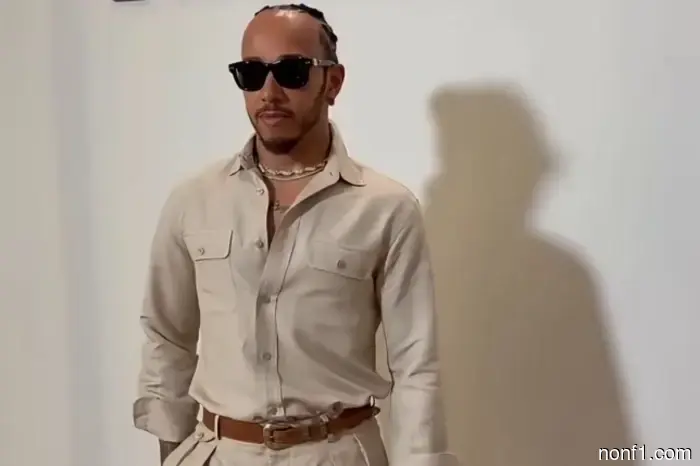 Hamilton in the spotlight at Milan Fashion Week
A few days after his impressive victory at the Barcelona-Catalonia Grand Prix, Lewis Hamilton headed to Milan Fashion Week and found himself in the spotlight...
Hamilton in the spotlight at Milan Fashion Week
A few days after his impressive victory at the Barcelona-Catalonia Grand Prix, Lewis Hamilton headed to Milan Fashion Week and found himself in the spotlight...
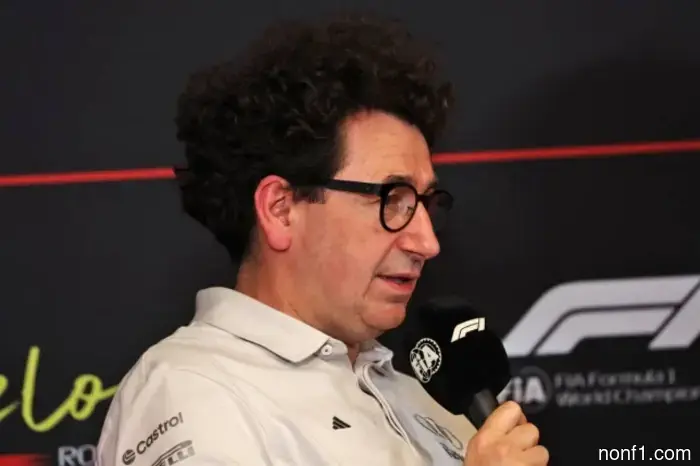 Mattia Binotto proposes to change the ADUO system.
Mattia Binotto proposed to adjust the ADUO program to better align with the 2026 technical regulations...
Mattia Binotto proposes to change the ADUO system.
Mattia Binotto proposed to adjust the ADUO program to better align with the 2026 technical regulations...
 James Vowles: There is still time to solve problems.
James Vowles, the head of the Williams team, summarized the grim results of the Barcelona-Catalonia Grand Prix and answered a couple of fan questions...
James Vowles: There is still time to solve problems.
James Vowles, the head of the Williams team, summarized the grim results of the Barcelona-Catalonia Grand Prix and answered a couple of fan questions...
 Vatanabe: There will be no significant and rapid changes.
Honda hopes that in this new chapter of history, now associated with Aston Martin, they will gradually be able to return to their previous level of results...
Vatanabe: There will be no significant and rapid changes.
Honda hopes that in this new chapter of history, now associated with Aston Martin, they will gradually be able to return to their previous level of results...
James Vowles: There is still time to solve problems.
James Vowles, the head of the Williams team, summed up the grim results of the Barcelona-Catalonia Grand Prix and answered a couple of fan questions...