

If phones are causing harm to pedestrians, why is this issue primarily occurring in America?
IIHS
The most significant news and reviews about cars, without any nonsense
Our daily newsletter, free of charge, delivers the important stories directly to you every weekday.
Pedestrian fatalities in the U.S. are on the rise. Unlike the global trend of smartphone usage, only America experiences a notable increase in deaths.
In contrast, regions like Europe and Japan report reductions, maintaining safer road conditions even with similar technology adoption.
Distracted driving is not the only factor. Data indicates that other elements play a role in America's distinct issue.
Worldwide comparisons emphasize the problem. Countries such as Canada and Australia do not reflect the trends seen in the U.S.
In summary: The pedestrian safety crisis in America is distinct, with rising death rates not solely attributed to smartphone usage.
AI-assisted and editor-reviewed
Recently, the New York Times released a critical study regarding the ongoing pedestrian safety crisis in America. Perhaps you noticed our coverage; maybe you read about it elsewhere. You might even be among those with strong feelings on the matter. We’ve certainly received many opinions on it. As I write this, that article has accumulated over 260 comments on our site alone.
Many of those comments express a similar sentiment: “It’s the cell phones, stupid!”
But is it really? While it’s a valid argument at first glance, consider this: The iPhone debuted in 2007; pedestrian deaths in the U.S. began to rise about two years later and peaked during the pandemic. I understand; I was also frequently on my phone during that time.
There’s data supporting this widely accepted view. One diligent redditor even created a visual representation showing pedestrian deaths, vehicle weights, and U.S. cellphone adoption. Everything seems to align perfectly—if not for one small detail: other countries have cell phones too.
What’s the significance of that? Simply put: If cell phones are causing the increase in pedestrian deaths, then a similar trend should be observable where smartphone usage and car ownership intersect—essentially, in major global economies. If you’ve followed this far, you likely anticipate what comes next: The numbers don't add up.
Data gathered from https://w3.unece.org/PXWeb/en/Table?IndicatorCode=59 and charted using Google Sheets; visualization enhanced by Gemini.
Since we appreciate visual representations, here’s another. The above is based on public information from the UN Economic Commission for Europe (and the U.S. statistics are corroborated by NHTSA), depicting a clear image.
If my trend lines aren’t to your liking, rest assured that others have explored this topic in much more detail. Regardless of whose graphs you examine, they all illustrate the same trend—and it’s not a positive one.
In 2013, the total number of pedestrian fatalities in the U.S. was roughly on par with that of Western Europe. This was four years into the rise in pedestrian deaths reported in America, and we observe that Europe has continued its steady decline, aside from a bump in 2016. By 2021, America’s pedestrian fatality rate had more than doubled that of Western Europe; according to IIHS, not much has changed since then.
The situation is similar beyond Europe. Japan, which has faced challenges with pedestrian safety due to its historically dense infrastructure, has also seen a decrease in fatalities during this same timeframe, supported by a culture prioritizing pedestrian safety. Australia has experienced an uptick since the pandemic, but it doesn't follow the same pattern as the U.S. Canada shows a similar trend.
China, on the other hand, is somewhat of an enigma. One estimate put its pedestrian fatality rate as high as 17 per 100,000, which, while it might not seem alarming at first glance, indicates that walkers and cyclists are being killed at a rate reminiscent of America's urban centers in the 1920s, when such figures peaked at 12 per 100,000; today, America’s pedestrian fatality rate is around 2.3. These figures highlight rapid industrialization and are likely not solely linked to the number of citizens on TikTok.
Is distracted driving (and walking/cycling) a concern? Absolutely. But is it the main reason why U.S. roads are becoming increasingly hazardous for pedestrians and cyclists? You can form your own opinion, but the statistics tend to be revealing.
Do you have a story tip? Reach out to us at tips@thedrive.com!


Other articles
 If phones are endangering pedestrians, why is this only occurring in America?
The rise in smartphone usage closely aligns with the increase in pedestrian fatalities in America. The issue is that other countries also have smartphones.
If phones are endangering pedestrians, why is this only occurring in America?
The rise in smartphone usage closely aligns with the increase in pedestrian fatalities in America. The issue is that other countries also have smartphones.
 Kolapinto: Thanks to Flavio Briatore, I learned a lot.
Recently, Flavio Briatore spoke very highly of Franco Colapinto, and on Thursday in the paddock of the Red Bull Ring, the Argentine Alpine F1 driver was asked what he thinks about it...
Kolapinto: Thanks to Flavio Briatore, I learned a lot.
Recently, Flavio Briatore spoke very highly of Franco Colapinto, and on Thursday in the paddock of the Red Bull Ring, the Argentine Alpine F1 driver was asked what he thinks about it...
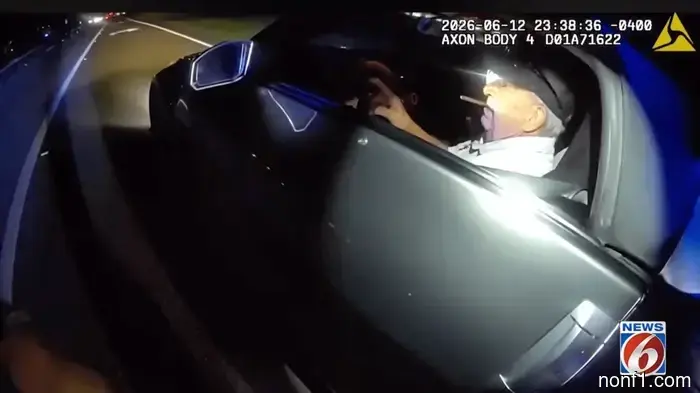 85-Year-Old Charged with Alleged Street Racing in His Nissan Z
Grandpa has a craving—he craves speed.
85-Year-Old Charged with Alleged Street Racing in His Nissan Z
Grandpa has a craving—he craves speed.
 Texas Real Estate Enthusiast Aims to Build a $21,500 Truck. He Secured 5,500 Reservations in Just Six Days.
Zach De Bernardi and his company REO, driven by a love for straightforward, easily repairable Toyotas, aim to provide a new solution that remains gasoline-powered.
Texas Real Estate Enthusiast Aims to Build a $21,500 Truck. He Secured 5,500 Reservations in Just Six Days.
Zach De Bernardi and his company REO, driven by a love for straightforward, easily repairable Toyotas, aim to provide a new solution that remains gasoline-powered.
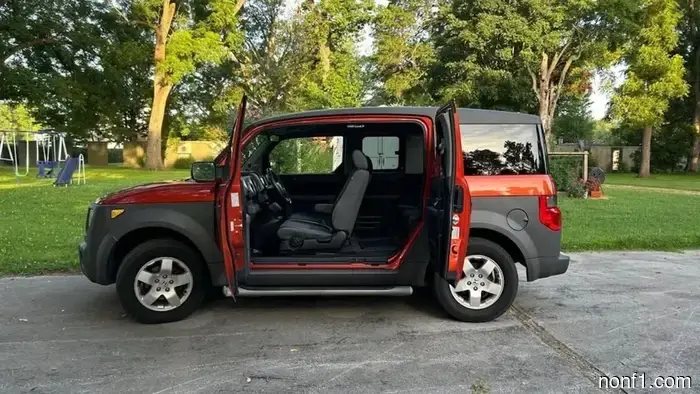 Report: The Honda Element is set to make its comeback in 2029 as a hybrid crossover manufactured in the US.
Honda is looking to attract adventurous consumers and take sales away from the Ford Bronco Sport by reviving the Element.
Report: The Honda Element is set to make its comeback in 2029 as a hybrid crossover manufactured in the US.
Honda is looking to attract adventurous consumers and take sales away from the Ford Bronco Sport by reviving the Element.
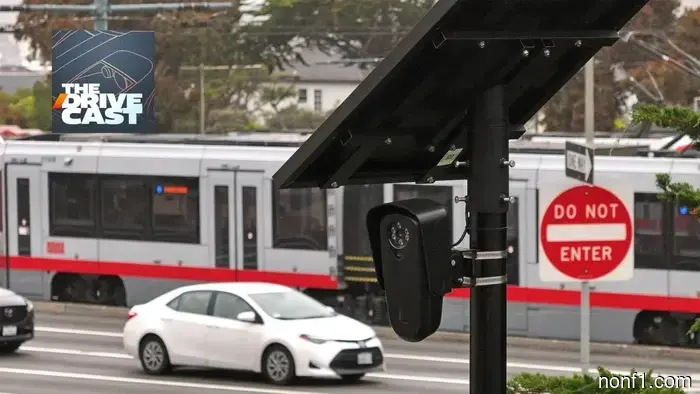 License plate cameras are monitoring your activities without the need for a warrant.
The cameras are already in place, actively gathering data, and there is no configuration, legislation, or way to turn them off that can prevent this.
License plate cameras are monitoring your activities without the need for a warrant.
The cameras are already in place, actively gathering data, and there is no configuration, legislation, or way to turn them off that can prevent this.
If phones are causing harm to pedestrians, why is this issue primarily occurring in America?
The rise in smartphone usage closely parallels the increase in pedestrian fatalities in the United States. The issue is that other countries also have smartphones.